Exhibits that make visitors stop and wonder
Bruce designs hands-on demonstrations that work for a crowd: simple to use, hard to forget, and built on solid physics.
A demonstrator's eye for the "aha" moment
After 41 years of performing demonstrations for students, Bruce knows which phenomena hold attention, which ones visitors can operate themselves, and which ones explain themselves without a sign.
- Exhibit concepts and interactive design
- Working prototypes built and tested
- Physics accuracy and label copy review
- Demonstration shows and staff training
- Adapting classroom demos to public-floor scale
From classroom demo to exhibit floor
Each of these demonstrations scales up well. Here is how they might work as public interactives.
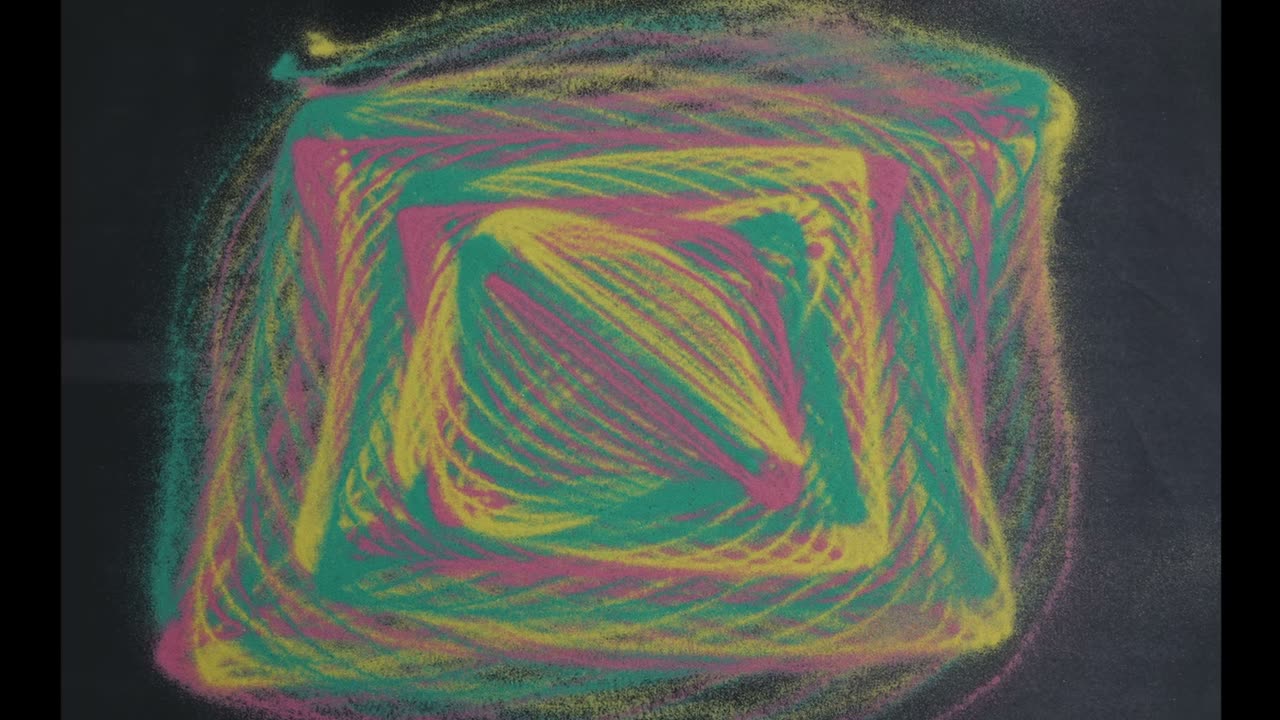
Can a swinging bottle of sand draw a picture?
A large funnel-shaped bob hangs from a Y of cords over a wide, dark-floored sand tray, with a sliding clamp that lets visitors raise or lower the knot of the Y. Visitors scoop sand into the funnel, set the knot, pull the bob back and release it, then watch two swings at different speeds trace a Lissajous pattern in a thin stream of sand. A chart beside the tray shows which knot positions give which shapes, and a wide squeegee clears the tray for the next visitor.
How can a fountain run with no pump?
A large Hero's fountain built from clear jugs or acrylic tanks lets visitors see every part of the loop: water falling into the sealed lower tank, air moving up a clear tube, and colored water rising out of the nozzle into an open basin. Visitors pour a pitcher of water into the basin to start it, then use a crank or lift platform to raise and lower the lower tank and watch the fountain grow, shrink and stop. A labeled panel traces the water path and the air path in two colors.
How high do you have to start to loop the loop?
A large metal loop-the-loop track with a ramp marked in numbered release gates. Visitors choose a gate, predict whether the ball will make the loop, and release it; a display shows the loop height, the ideal minimum release height, and how close the real minimum is.
Why do the two sliders never crash?
A tabletop trammel about 3 feet across, with sliders in clear-topped tracks so visitors can see them pass through the crossing, and a long handle that visitors crank. A second station holds a pen on the handle above a roll of paper, so visitors draw their own ellipse and can switch between two marked pivot spacings to compare the shapes.
Why does a spinning cup fly up instead of falling down?
A cup-flyer launch lane lets visitors wind a rubber band around a lightweight foam flyer, set it in a simple launcher, and send it down a netted tunnel. Visitors choose how to load the flyer to give it backspin, topspin or sideways spin, and markings on the tunnel walls show whether the flyer climbed, dove or curved. A slow-motion camera at the launch point replays each flight on a screen so visitors can see the spin.
What does your voice look like?
A large drumhead, two to three feet across, sits inside a clear enclosure with a thin layer of sand on top and a speaker underneath. Visitors turn a frequency dial and watch the sand jump into a new figure each time they reach a resonant note, then sing or hum into a microphone or tube to compare their own voice. A reset button briefly vibrates the membrane to scatter the sand for the next visitor.
How can you make a loop of string fly?
A shop-vacuum-driven PVC string shooter, mounted on a pivot behind a rail, sends a long loop of fuzzy yarn sailing across a high open space. Visitors swing the pipe to aim the loop up, sideways or down, press a button to add or remove a constriction behind the feed hole, and watch the loop collapse and restart, while a nearby clear-tube station shows sugar or confetti being drawn into the airflow.
Can the long way be the fast way?
A long twin-lane track at waist height, a few meters long, with a straight high road beside a low road that can be swapped between a single deep dip and a hilly version. Visitors place two identical balls in a start gate, pull a lever to release them together, and see the low-road ball win, with lights or a buzzer marking which ball reaches the finish first.
How can a marble make a tube flip end over end?
A long notched ladder track or textured ramp holds a row of oversized clear tumblers: one with a single heavy ball, one with many small beads, one with colored water and one with a thick liquid like dish soap. Visitors place a tumbler at the top, watch the contents shift and the tube flip end over end, and race the tumblers to see which is fastest and why. A slow liquid tumbler can run as a long-running race against a clock.
How can a cardboard toy walk with no motor?
A long adjustable ramp with a rough surface on one lane and a smooth surface on the other lets visitors release large walkers, such as wooden ducks and rabbits like Bruce's or a pizza-box-scale cardboard walker, and compare walking with sliding. A lever sets the slope to a few fixed angles, and a nearby design table with pre-cut cardboard blanks lets visitors fold their own small walker and test it on a mini ramp.
How can water climb up and out of a jar?
Two large clear acrylic tanks on adjustable platforms are joined by a long transparent siphon tube that loops high overhead, with dyed water so the flow is easy to follow. Visitors crank one tank up or down and watch the flow slow, stop and reverse as the water levels cross, while a second station lets air gaps into the line to show that the siphon keeps going.
Why does this can roll back to you?
A large come-back drum, built from a wide cylinder with clear end panels, sits on a long carpeted lane with distance markings on the floor. Visitors give it a push, watch the weighted band twist inside through the clear end, and read how far it went out and how far it returned, with a sign asking where the missing energy went.
How can a butterfly balance on the tip of your finger?
An oversized balancing butterfly or eagle with weighted wingtips rests by its head on a tall pedestal point, and visitors tap it to see it rock and settle back. Next to it, a balance station lets visitors slide weights along a figure's arms and find the positions where it balances, tilts or falls, with a sign showing where the center of gravity sits.
Why does the same bottle sing high when you blow but low when you tap?
A row of large, sealed clear tubes or bottles with colored water at fixed levels, each with a padded mallet and a mouthpiece-free air nozzle that visitors press to blow across the opening. Visitors play the row both ways and see a label challenge them to explain why the order of notes flips between tapping and blowing.
Which falls faster: a big cone or a small one?
A tall clear drop tower with a release button at the top and a light-gate timer at the bottom. Visitors pick cones from a bin (single, stacked, wide, narrow, big, small or colored) or build their own at a cone station, drop them two at a time side by side, and read the times on a large display to see which variables really matter.
How can a paper card hold up a cup of water?
A water table where visitors lift clear tubes, closed at the top, up out of a basin and cap the open bottom with a flexible cover, so the water stays held up and a balloon stretched over the top of the tube pulls inward. A companion station lets visitors flip a covered cup over a large basin and test different covers, while a pressure gauge on a tall tube shows the pressure drop at the top of the water column.
Is this a free energy motor?
A row of solar motors of different sizes, from cup drums up to 5-gallon bucket rotors, runs in a sunny atrium or window, with a bank of incandescent or halogen lamps on a timer for cloudy days. Visitors slide a shade panel over a motor and watch it coast to a stop, pull it back to see it restart, and aim a mirror to speed one up while a simple counter shows RPM. A panel asks 'Free energy?' and shows the energy chain from light to heat to motion.
Can a toy motor play music?
A sound table where a toy-motor driver plays music through a rod that visitors can press against a row of mounted surfaces: a foam plate, a thin wooden panel, a plastic bowl, a cardboard box and a block of foam rubber. A clear window shows the motor shaft not spinning, and a button switches the motor between a battery (it spins) and music (it shivers).
Can a string and two wheels make you stronger?
Three or four pulley stations side by side, each lifting an identical sealed weight with a different rig (1, 2, 4 and 6 strands), with a built-in dial scale on each pull rope and a ruler showing how far the rope travels. Visitors pull each rope, feel and read the force drop, and see the pull distance grow by the same factor.
Why do waves crawl on a spinning rope?
A long loop of brightly colored rope hangs from a motor-driven spool high in a stairwell or atrium, as Bruce does from a school balcony. Visitors turn a speed dial and tap a padded paddle against the rising side to launch waves, watching them crawl down in slow motion, then try the falling side and feel it act rigid. A panel with Bruce's river analogy asks: is the wave slow, or is the rope fast?
How can you snap a stick that's resting on two cups of water without knocking them over?
A clear enclosed chamber holds a thin breakable rod resting on two cups. Visitors first push a slow plunger that presses on the middle of a rod and tips the cups, then press a button that drops a weighted striker onto a fresh rod while a high-speed camera replays the break in slow motion on a screen, showing the pieces' outer ends flipping up off the rims.
Why does a diver sink when you squeeze the bottle?
A row of large, clear sealed tubes or jars with brightly colored divers, each topped with a rubber bulb or a flexible panel visitors press, lets everyone race a diver to the bottom. A tall tube shows that a diver sent too deep stays down until the pressure is reduced, and a remote-control pair joined by tubing shows Pascal's principle across a distance.
Can you blow up a balloon inside a bottle?
A row of large clear sealed jugs, each with a balloon inside and two tubes through the stopper: a hand pump on the balloon tube and a vent with a push-button valve. Visitors pump with the vent open, then closed, and see the balloon refuse to grow; a third station with a gentle vacuum bulb on the vent lets them inflate the balloon "without blowing into it."
Can a tube of water crush a bottle?
In a tall atrium or stairwell, visitors crank a sealed, water-filled flexible container up a marked vertical track while its hose stays submerged in a basin below; the container visibly crumples and a large vacuum gauge beside it shows the pressure falling every 2.3 feet. A companion station lets visitors try to pull apart a pair of Magdeburg hemispheres connected to the same kind of water column.
Can you catch a raw egg without breaking it?
A drop tower where visitors release a sturdy sensor 'egg' (an accelerometer inside an egg-shaped shell) onto interchangeable landing pads: a steel plate, a gym mat, a hanging sheet, a foam block. A screen shows each impact as a force-versus-time graph, so visitors see the hard landing as a tall, thin spike and the sheet as a low, wide hump with about the same area.
How fast does sound travel?
At a science center with a long wall or courtyard, visitors stand on a marked spot a known distance from a large reflecting wall and strike a pair of mounted wooden clappers or a hand-cranked clapper. A sound sensor at the spot records the clap and its echo and shows the time between them on a big display, along with the calculated speed of sound and the current air temperature.
A simple process
Conversation
Your audience, space, budget and learning goals.
Concepts
Sketches and demonstration options to choose from.
Prototype
A working model, tested with real visitors.
Handoff
Plans, label copy and staff guidance for your fabricators.