Homemade Sciencewith Bruce Yeany
Homemade Science Jr.

Science by kids, for kids.

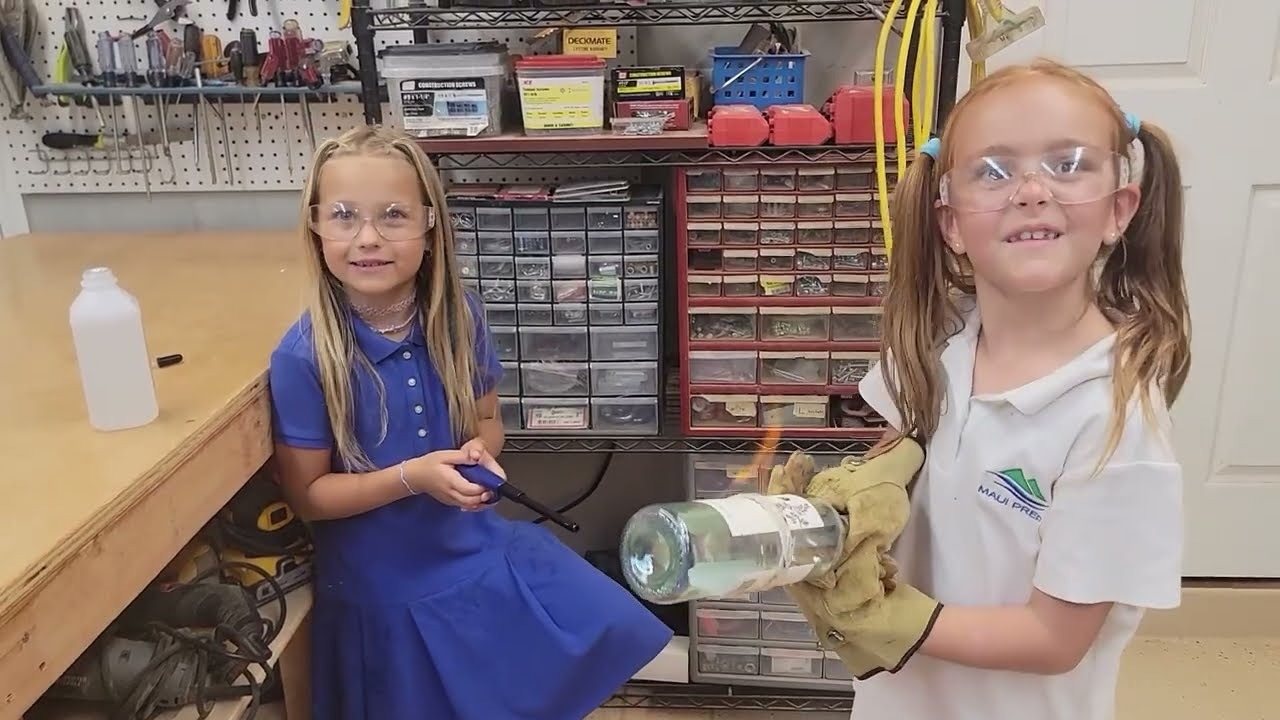
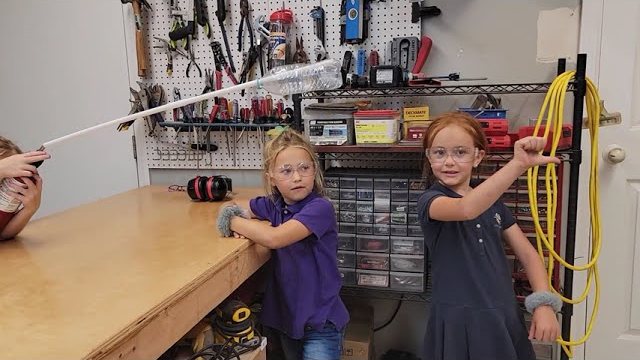
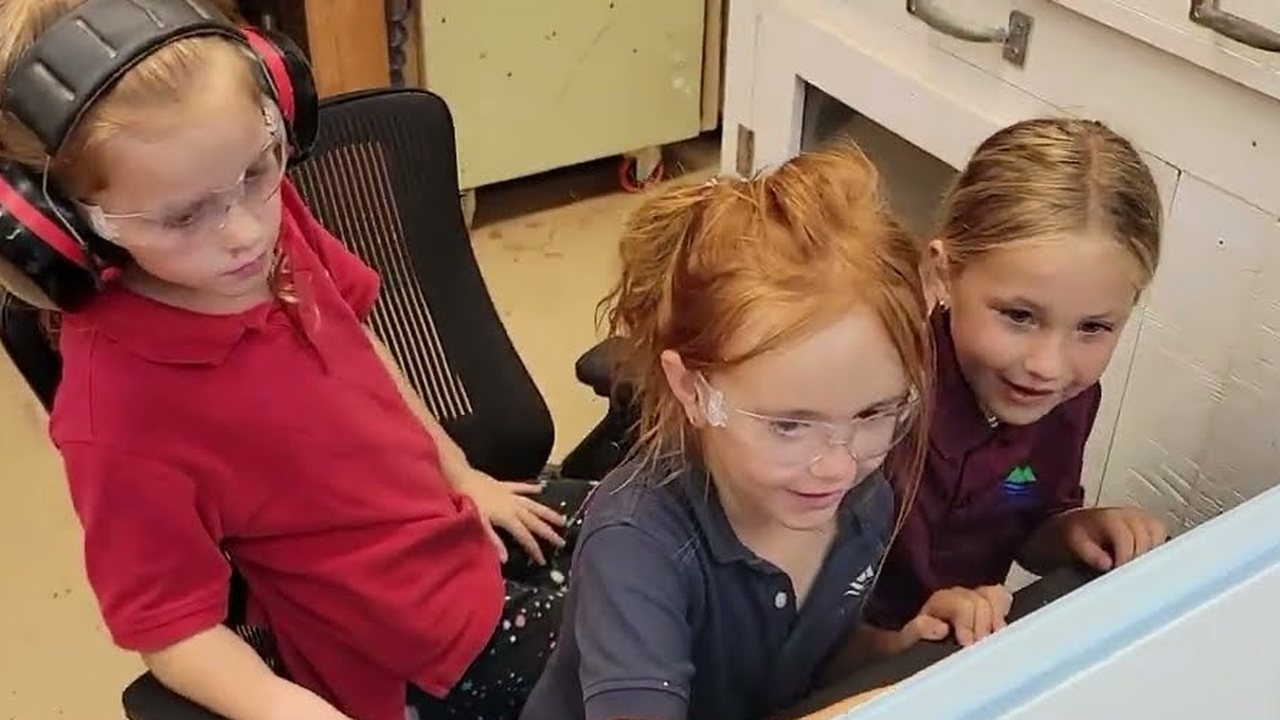
The Homemade Science Jr. crew films its own experiments. Watch a video, grab a grown-up, and try it yourself.

Grown-ups: every activity here should have an adult nearby. Steps marked Grown-up are for adults only, and the fire and explosion videos at the bottom are for watching, not trying.
Homemade Science Jr.

Try it at home

↑ All videos

Kitchen-table science. Have a grown-up nearby, and read the safety note before you start.

Ages 7+, with a grown-up15 minutesMess ●●●

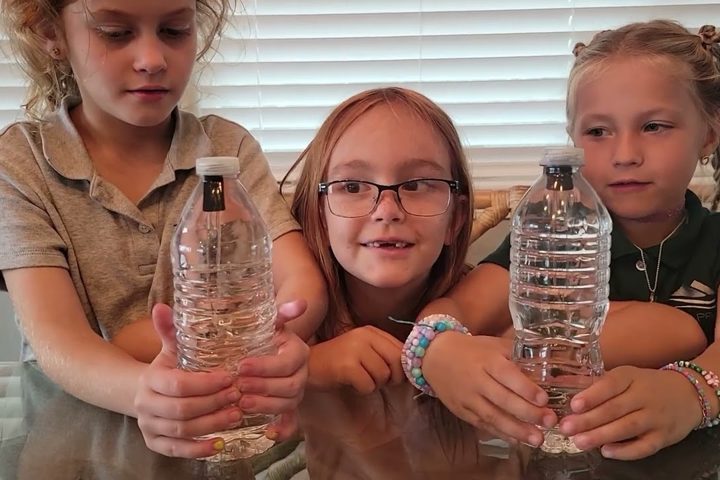
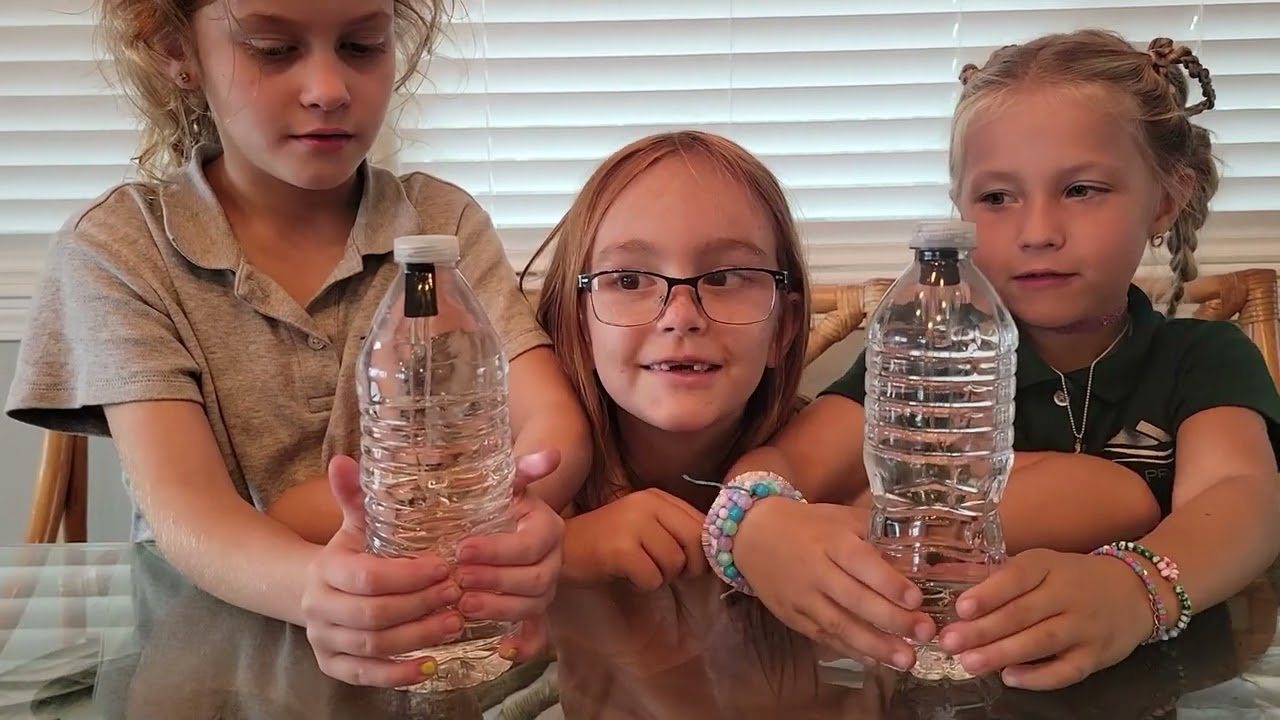
Cloud in a Bottle

Make a real cloud appear and disappear inside a bottle.

You need

  • A clear plastic bottle with its cap
  • Rubbing alcohol (a grown-up handles it)
  • Safety glasses

Try it

  1. Grown-up: pour a few drops of rubbing alcohol into the bottle, put the cap on, and swirl it so the inside is coated.
  2. Put on safety glasses.
  3. Squeeze the bottle as hard as you can, or twist it tight like wringing out a towel.
  4. Let go all at once. A cloud appears inside!
  5. Squeeze again and the cloud disappears. Let go and it comes back.
What's happening? Squeezing the air inside the bottle warms it up a little. When you let go, the air spreads out and cools down fast. Cool air can't hold as much vapor, so tiny droplets form. That's a cloud, the same way clouds form in the sky.
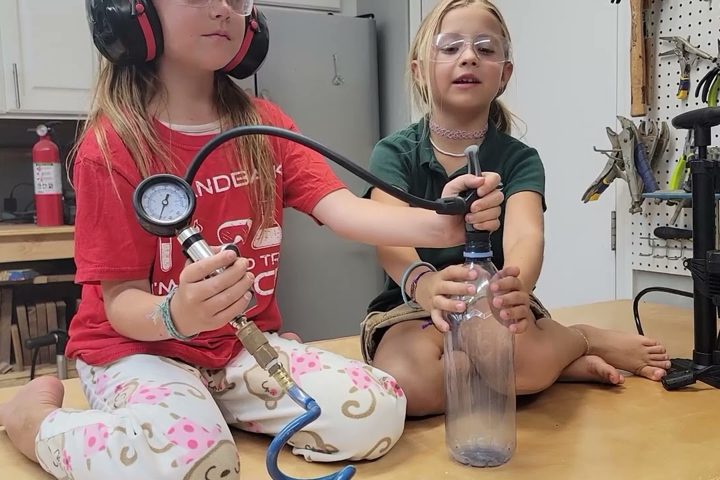
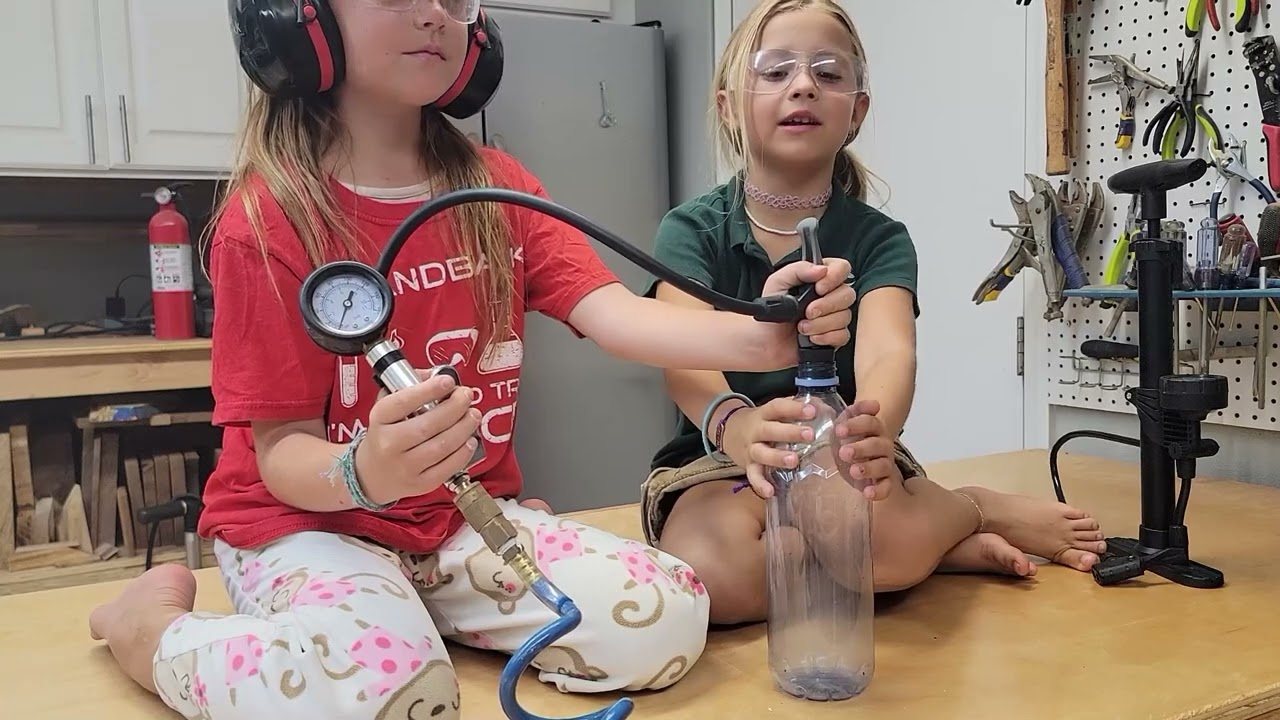
Safety. Rubbing alcohol is flammable: keep it away from any flame and let a grown-up handle it. In the video they also pump air in with a bike pump. That builds up pressure, so a grown-up should do that part, with safety glasses on.

Try next: Does the cloud look thicker if the bottle starts out warm?
Ages 5+15 minutesMess ●●●

Water That Won't Spill

Hold water in a straw with your thumb, and flip a cup of water upside down without spilling.

You need

  • A clear plastic straw
  • A cup of water
  • A playing card or a stiff piece of cardboard
  • A sink or tray to work over

Try it

  1. Straw: dip the straw into the cup of water.
  2. Press your thumb tight over the top of the straw and lift it out. The water stays inside!
  3. Lift your thumb and the water falls out.
  4. Card: fill the cup all the way to the top. Slide the card over it so there are no air bubbles.
  5. Over the sink, hold the card and flip the cup upside down. Slowly let go of the card. The water stays in!
What's happening? Air is pushing on everything all the time. That's air pressure. With your thumb on the straw, air can't push down on the water from the top, but it still pushes up from the bottom, so the water stays. Under the card, the air pushing up holds the card and the water in place.
Safety. Use a plastic cup, and do it over a sink, just in case.

Try next: Does it still work if the cup is only half full?

Want to go further? See Bruce's version: Upside-Down Water Glass.

Ages 7+30 minutesMess ●●●

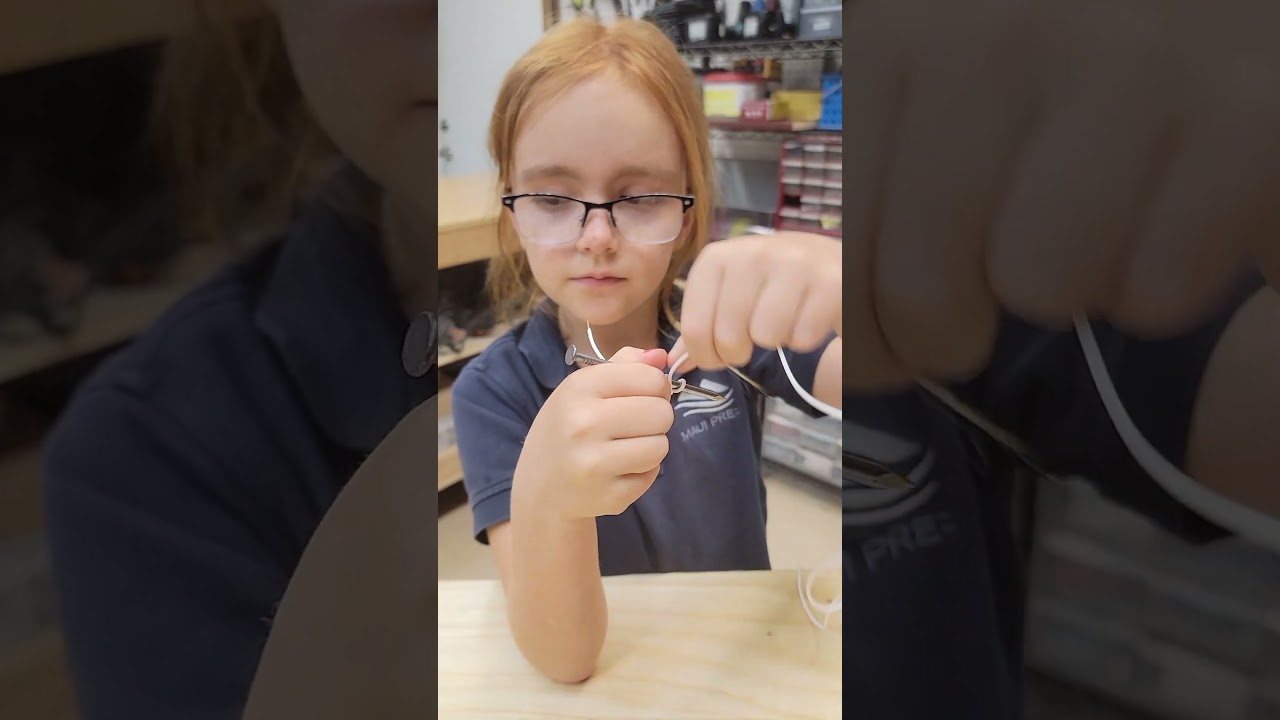
Conductor Tester

Which things let electricity through? Build a tester and find out.

You need

  • 2 AA batteries in a battery holder
  • A small flashlight bulb or an LED
  • 3 wires with alligator clips
  • Things to test: a coin, foil, a paper clip, a pencil lead, a rubber band, a plastic straw, a wooden spoon

Try it

  1. Clip one wire from the battery holder to the bulb.
  2. Clip a second wire to the other side of the bulb. Leave its other end loose.
  3. Clip a third wire to the other side of the battery holder. Leave its end loose too.
  4. Touch the two loose clips together. The bulb lights up! (If you use an LED and it doesn't light, swap the wires on the LED.)
  5. Now touch both loose clips to one thing at a time. If the bulb lights, that thing is a conductor. If not, it's an insulator.
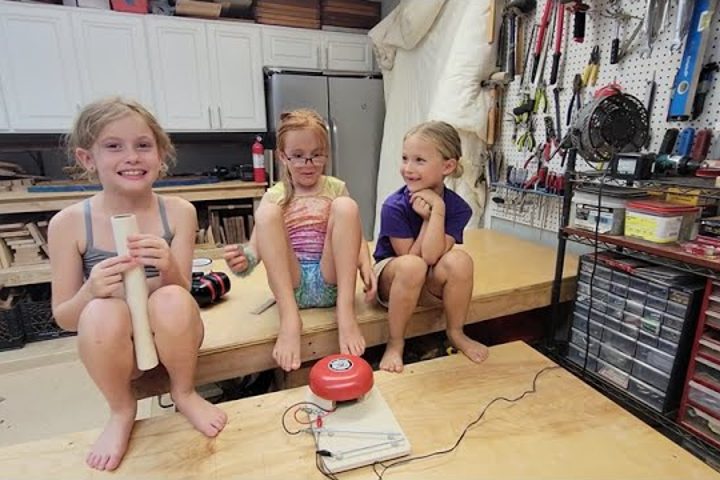
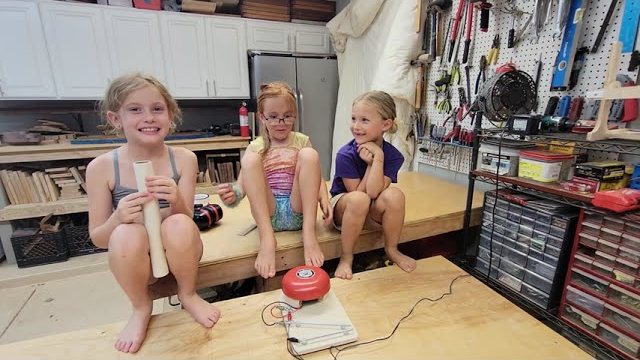
What's happening? Electricity can only flow through a complete loop called a circuit. Metals let it flow easily: they're conductors. Plastic, rubber and wood stop it: they're insulators. In the video the crew used a very loud fire bell instead of a bulb!
Safety. Use small batteries only. Never test anything with a wall outlet.

Try next: Try salt water and plain water. Does the bulb glow?

Ages 8+30 minutesMess ●●●

DIY Foghorn

A bottle, a balloon and a straw make a booming horn.

You need

  • An empty plastic sports drink bottle
  • A balloon
  • A straw
  • Rubber bands
  • A drill (grown-up only)

Try it

  1. Grown-up: drill one hole in the side of the bottle that's just big enough to blow into, and a small hole in the bottom that fits the straw.
  2. Cut the neck off the balloon and stretch it tight over the bottle's mouth. Hold it with a rubber band.
  3. Push the straw in through the bottom hole until its end just touches the balloon from inside.
  4. Blow into the side hole.
  5. Move the straw a tiny bit closer or farther until you get a big honk.
What's happening? Your breath pushes the balloon away from the straw. Air rushes out, the balloon snaps back, and it happens again and again, very fast. That buzzing balloon is the sound, and the bottle makes it louder.
Safety. Grown-ups do the drilling. Don't blow so hard you get dizzy, and take breaks.

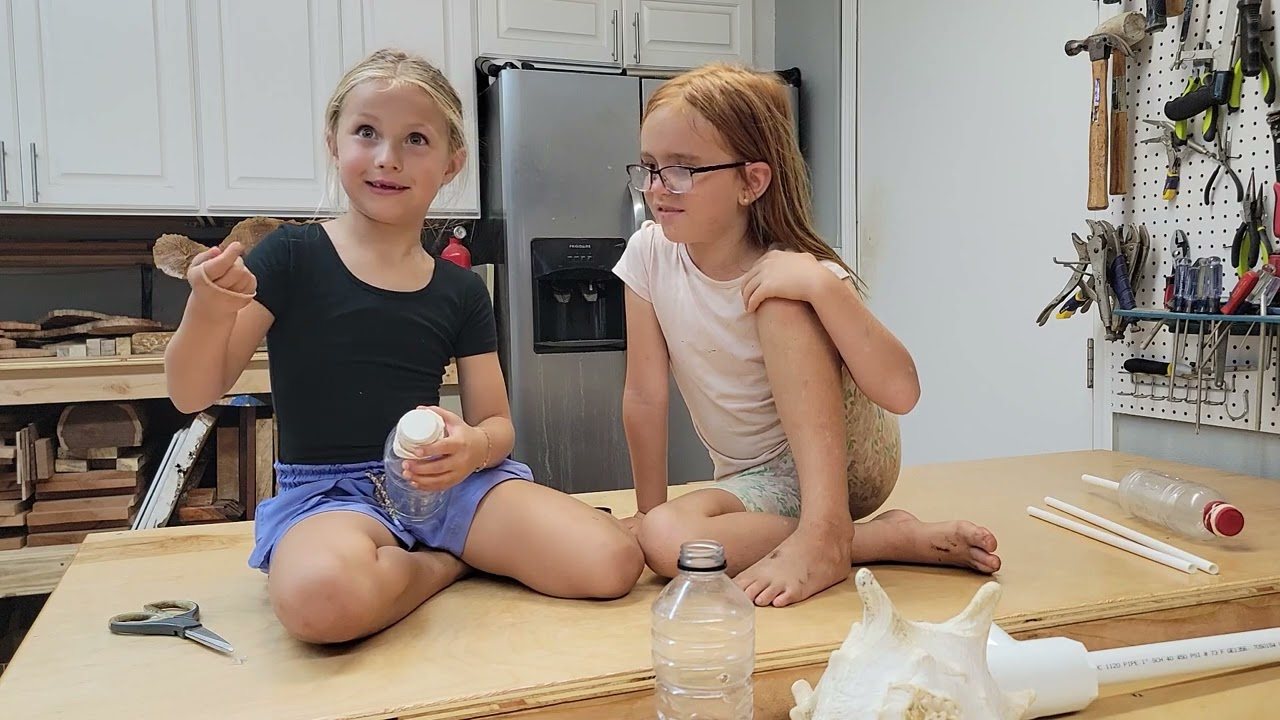
Try next: In the video they also play a real conch shell by buzzing their lips like a trumpet. Can you?

Ages 8+, with a grown-up20 minutesMess ●●●

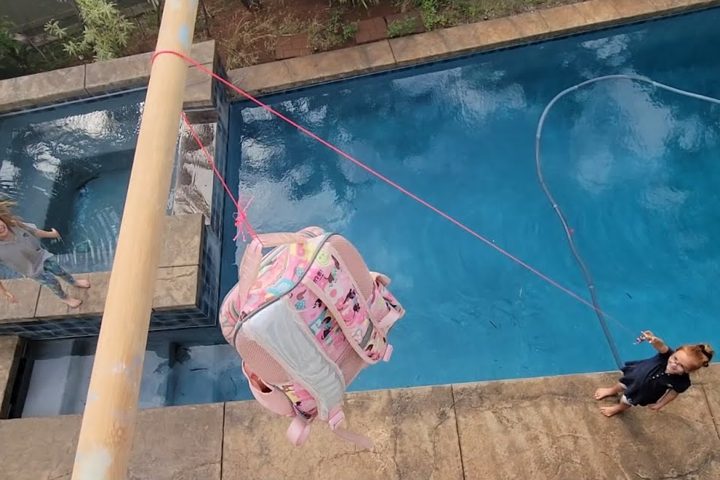
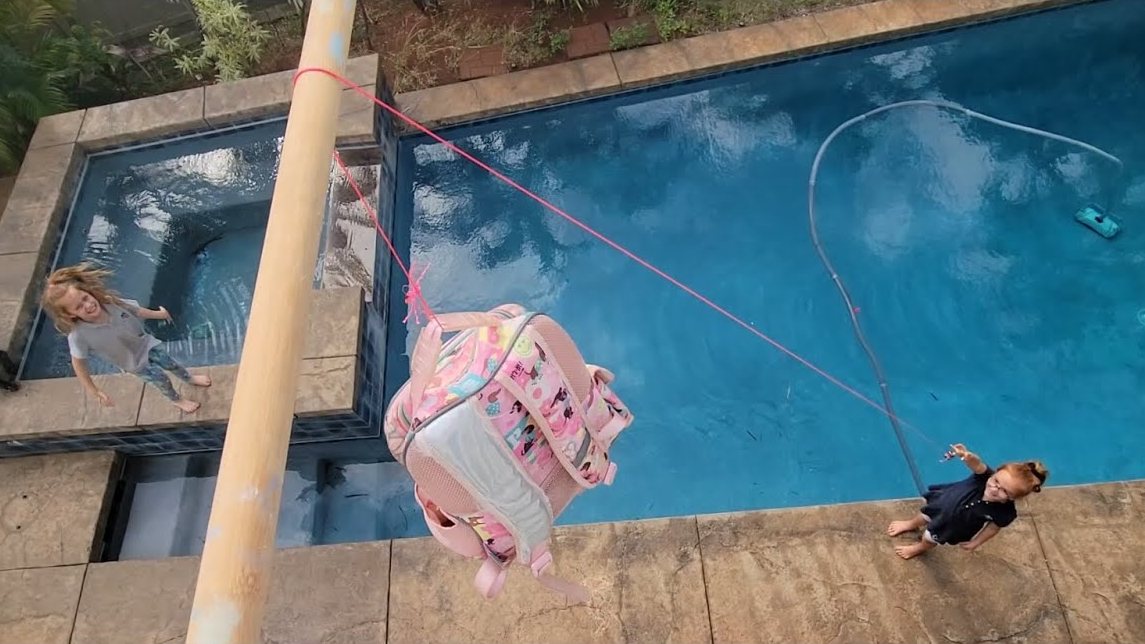
Rotating Pendulum

Two weights wrap around a pole. Which one winds up faster?

You need

  • A sturdy pole (like a swing-set post)
  • Two pieces of strong string the same length
  • A light weight and a much heavier weight (like a tennis ball and a filled water jug)

Try it

  1. Tie each weight to a string.
  2. Tie both strings to the pole at the same height.
  3. Pull both weights out to the same side and hold them level.
  4. Let go of both at the same moment.
  5. Watch them swing and wrap around the pole. Count the wraps.
What's happening? As the string wraps around the pole, it gets shorter, so the weight speeds up as it spins closer to the pole. That's like a skater spinning faster by pulling in their arms. Watch closely to see whether the heavy and light weights act differently.
Safety. Keep faces and heads away from the swinging weights, and tie strong knots. A grown-up should check the setup.

Try next: What happens with a longer string?

Ages 8+20 minutesMess ●●●

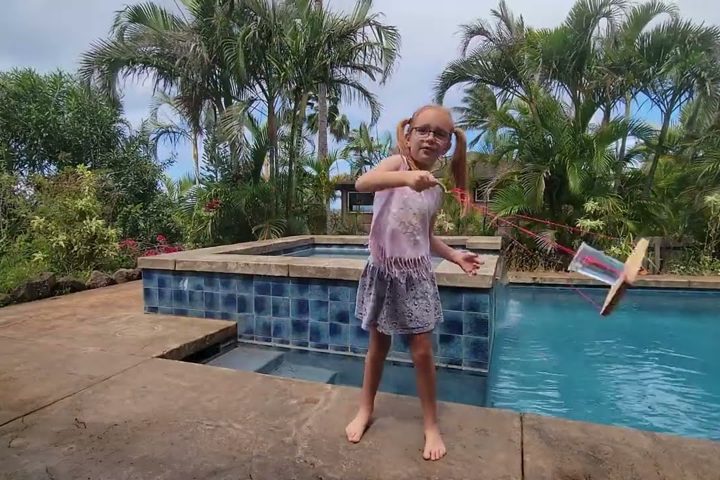
Cup of Water Swing

Swing water upside down over your head without spilling a drop.

You need

  • A small bucket with a strong handle
  • Water
  • Lots of room outdoors

Try it

  1. Go outside to an open spot, away from people.
  2. Fill the bucket about a quarter full.
  3. Swing it back and forth by your side, a little higher each time.
  4. When it's going fast, swing it all the way over your head in a full circle. Keep it moving!
  5. Slow down gradually and let it swing back and forth to stop.
What's happening? When something moves in a circle, it's always being pulled toward the middle of the circle. Here that pull comes from your arm through the handle. Swinging fast keeps the water pressed into the bucket, even at the top.
Safety. Outdoors only, with plenty of room. Hold the handle tight. If you slow down at the top, you'll get wet!

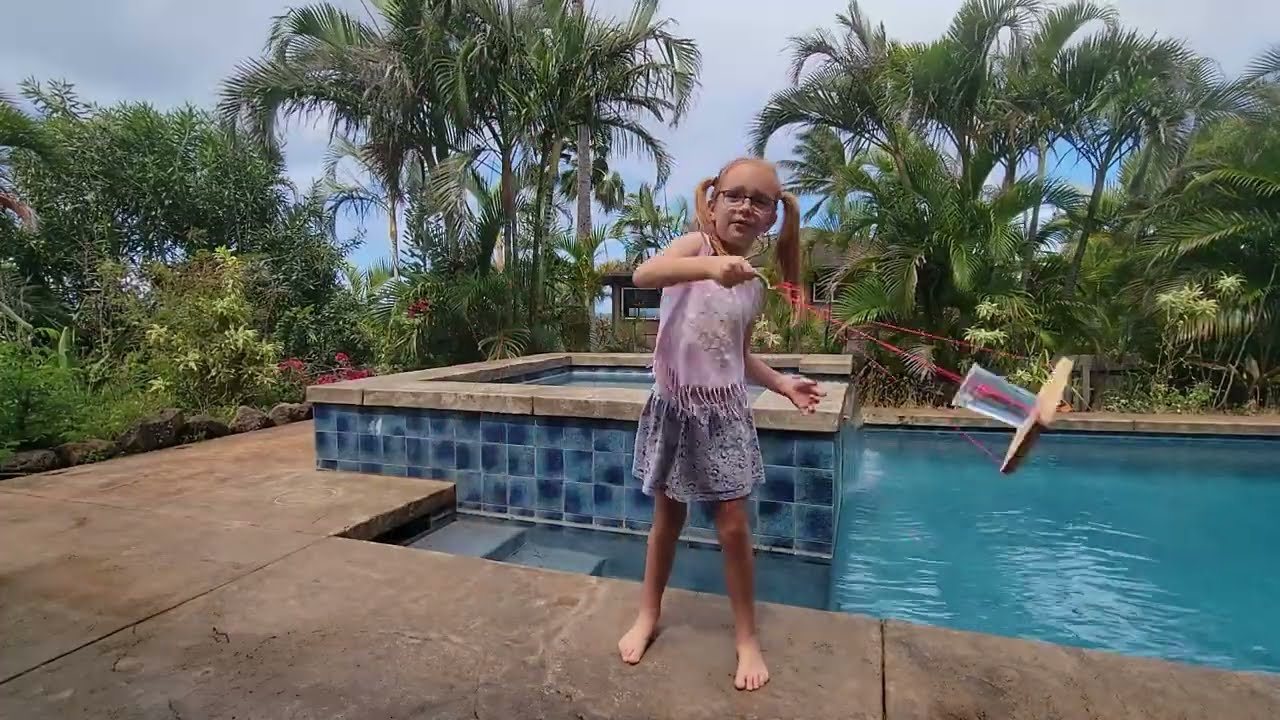
Try next: In the video they also swing a cup of water on a tray hung from strings. Try it with a plastic cup.

Ages 8+15 minutesMess ●●●

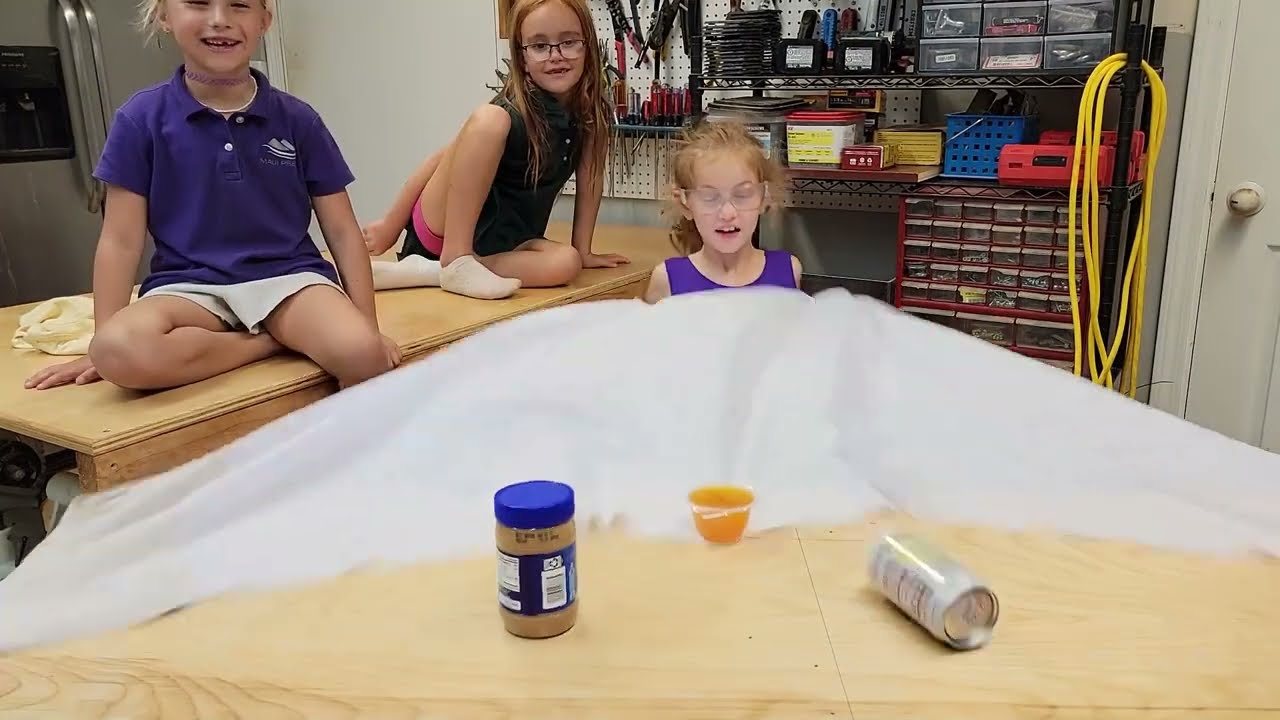
Tablecloth Trick

Yank the tablecloth out and leave the dishes behind.

You need

  • A smooth cloth with no hems or fringe (a pillowcase cut open works)
  • A table
  • Plastic plates and cups only

Try it

  1. Lay the cloth on the table so a long piece hangs over your edge.
  2. Put a plastic plate and a cup on the cloth, near the middle.
  3. Grab the hanging cloth with both hands.
  4. In one super-fast move, pull the cloth straight toward you and down. Don't lift it up!
  5. If things slide, practice the pull with just one plate first.
What's happening? Objects that are sitting still want to stay still. That's inertia, Newton's first law. If you pull fast enough, the cloth slides out before friction has time to drag the dishes along.
Safety. Plastic dishes only. Clear the floor around the table, and keep people back.

Try next: Does it work better with a full cup or an empty one? Why?

Ages 7+20 minutesMess ●●●

Inertia: Pennies and the Egg Drop

Knock a penny out of a stack and the rest stay put. Then drop an egg into a glass of water.

You need

  • About 10 pennies
  • A ruler or a stiff card
  • A glass or plastic cup of water
  • A pie tin or plastic plate
  • An empty toilet paper tube
  • A hard-boiled egg (or a raw one once you're good at it)

Try it

  1. Pennies: stack the pennies on a smooth table.
  2. Hold the ruler flat on the table and slide it quickly into the bottom penny. Only the bottom penny shoots out!
  3. Egg drop: set the cup of water near the edge of the table, over a towel or a sink. Put the pie tin on top of the cup.
  4. Stand the tube in the middle of the tin, right over the water. Lay the egg on top of the tube.
  5. Hit the edge of the pie tin hard and straight, sideways. The tin and tube fly away, and the egg drops into the water.
What's happening? Things that are sitting still want to stay still. That's called inertia, and it's Newton's first law. The quick hit moves the bottom penny or the pie tin so fast that there's almost no time for it to drag the rest along. Then gravity pulls the egg straight down.
Safety. Start with a plastic cup and a hard-boiled egg. Hit the tin sideways, never down toward the glass.

Try next: Can you knock out the bottom penny again and again until only one is left?

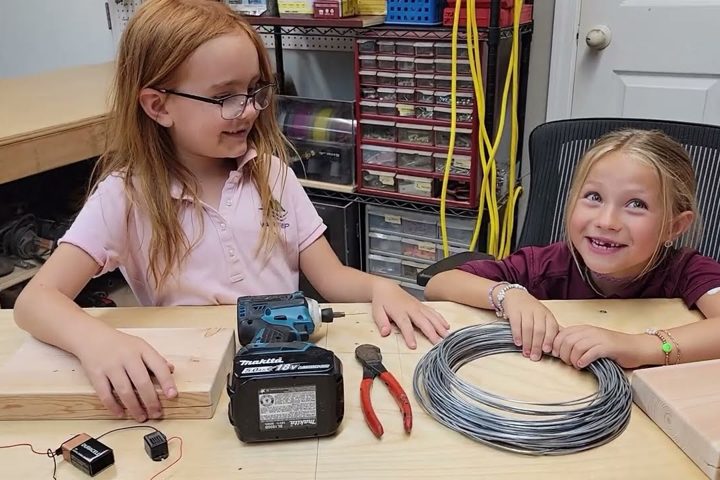
Ages 8+1 hourMess ●●●

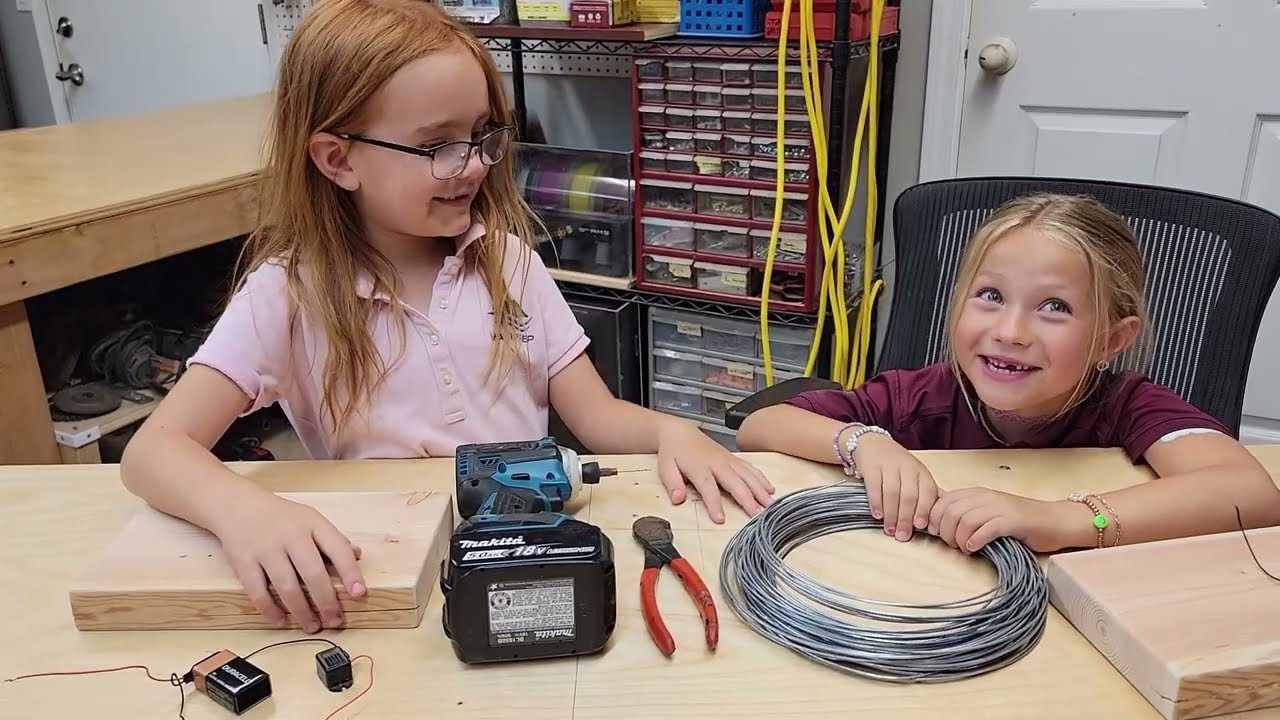
Wire Loop Buzz Game

Steady hands! Guide a loop along a twisty wire without making it buzz.

You need

  • Stiff bare wire, about 60 cm (a wire coat hanger works)
  • Insulated wire
  • A 9-volt battery and a battery clip
  • A small buzzer (3 to 9 volts)
  • A block of wood
  • Electrical tape

Try it

  1. Grown-up: drill two holes in the block. Cut the stiff wire and bend it into a twisty path. Sand any paint off the ends.
  2. Push the ends of the twisty wire into the holes so it stands up.
  3. Make the handle: bend a short piece of stiff wire into a small loop at one end, around the twisty wire.
  4. Connect: battery + to buzzer +, buzzer - to one end of the twisty wire, and a long insulated wire from battery - to the handle. Tape the connections.
  5. Move the loop from one end to the other without touching. If they touch: BUZZ!
What's happening? Electricity needs a complete loop, called a circuit, to flow. The twisty wire and the handle are two ends of a broken circuit. When they touch, the metal closes the gap, electricity flows, and the buzzer sounds.
Safety. Tape over the sharp wire ends. Never touch the two battery terminals together with metal: the battery gets hot.

Try next: Make the path harder, or add a light that turns on along with the buzzer.

Ages 9+, with a grown-up30 minutesMess ●●●

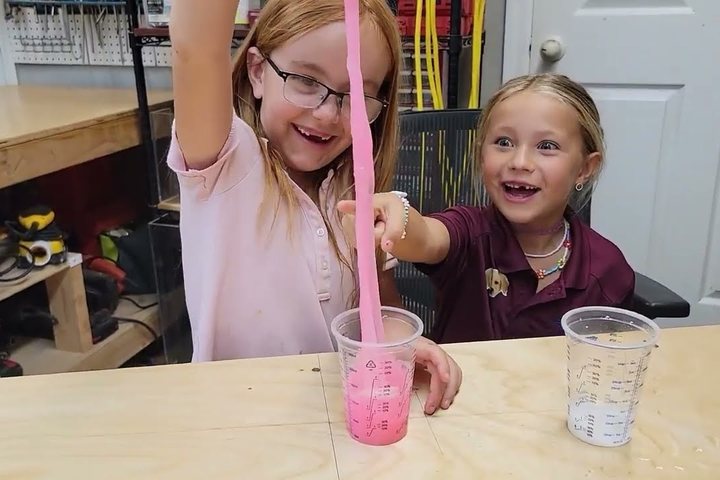
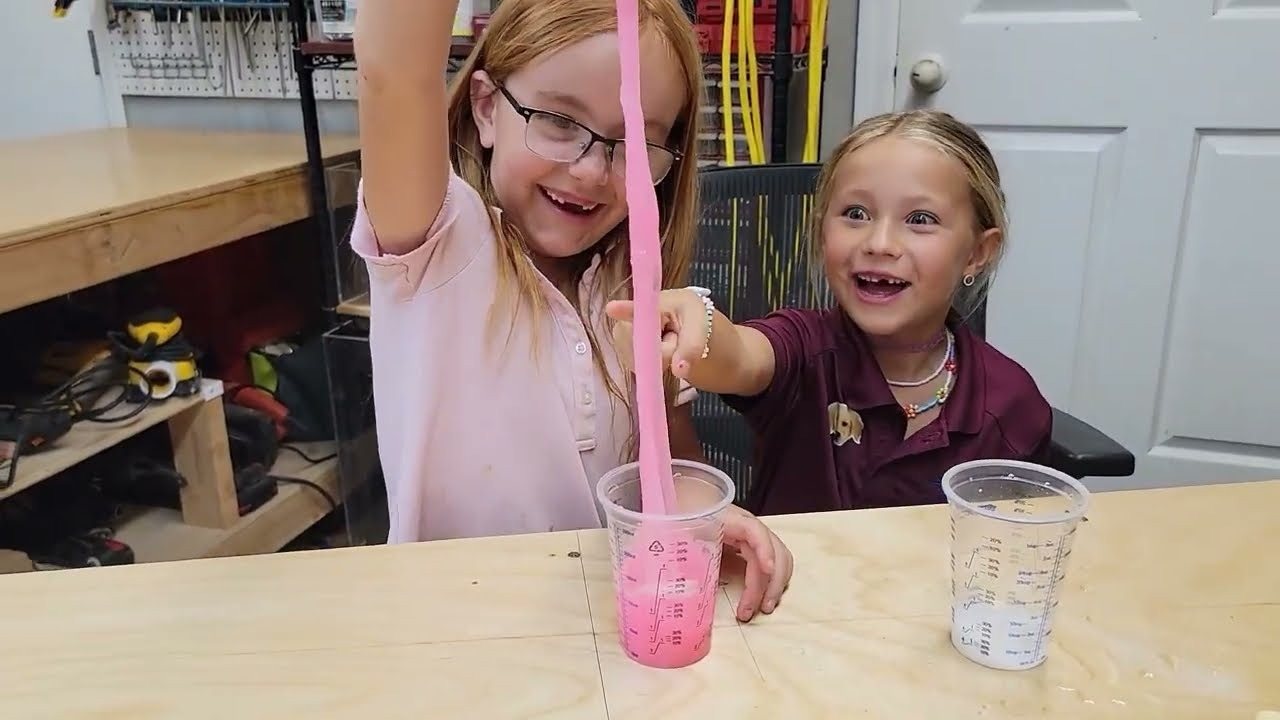
Magnetic Slime

Slime that crawls toward a magnet.

You need

  • White or clear school glue, 1/2 cup
  • Water
  • Borax (a grown-up handles it)
  • Iron filings or iron oxide powder, 1 to 2 tablespoons
  • A strong magnet
  • Bowls, a spoon, and disposable gloves

Try it

  1. Mix 1/2 cup of glue with 1/2 cup of water in a bowl.
  2. Grown-up: stir 1 teaspoon of borax into 1 cup of warm water in a separate cup until it dissolves.
  3. Add the borax water to the glue a spoonful at a time, stirring, until it turns into slime. Knead it with your hands.
  4. Grown-up: with gloves on and over a tray, sprinkle the iron powder onto the slime. Fold and knead until it's evenly gray.
  5. Hold the magnet near the slime and watch it stretch toward it.
What's happening? Glue is made of long, stringy molecules. Borax links them together into a stretchy net, which is the slime. The tiny pieces of iron in the slime are pulled by the magnet, and they drag the slime along with them.
Safety. Don't breathe in the iron powder. Strong magnets pinch fingers and are dangerous if swallowed, so keep them away from little kids. Wash your hands afterward, and keep slime off carpets.

Try next: Does the slime move faster toward a stronger magnet?

Ages 7+15 minutesMess ●●●

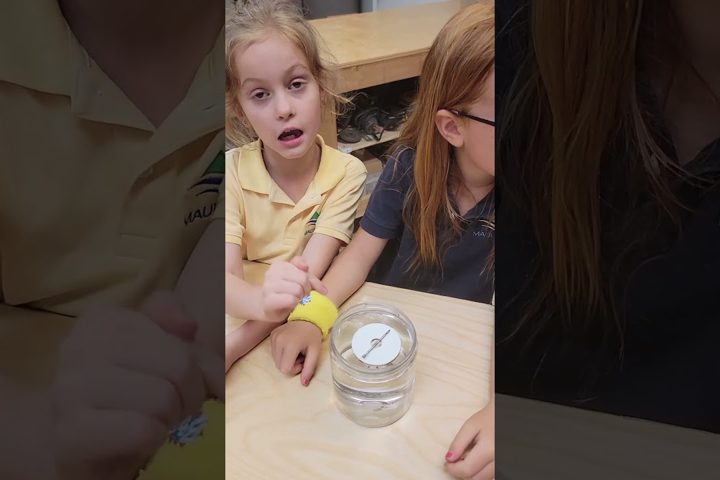
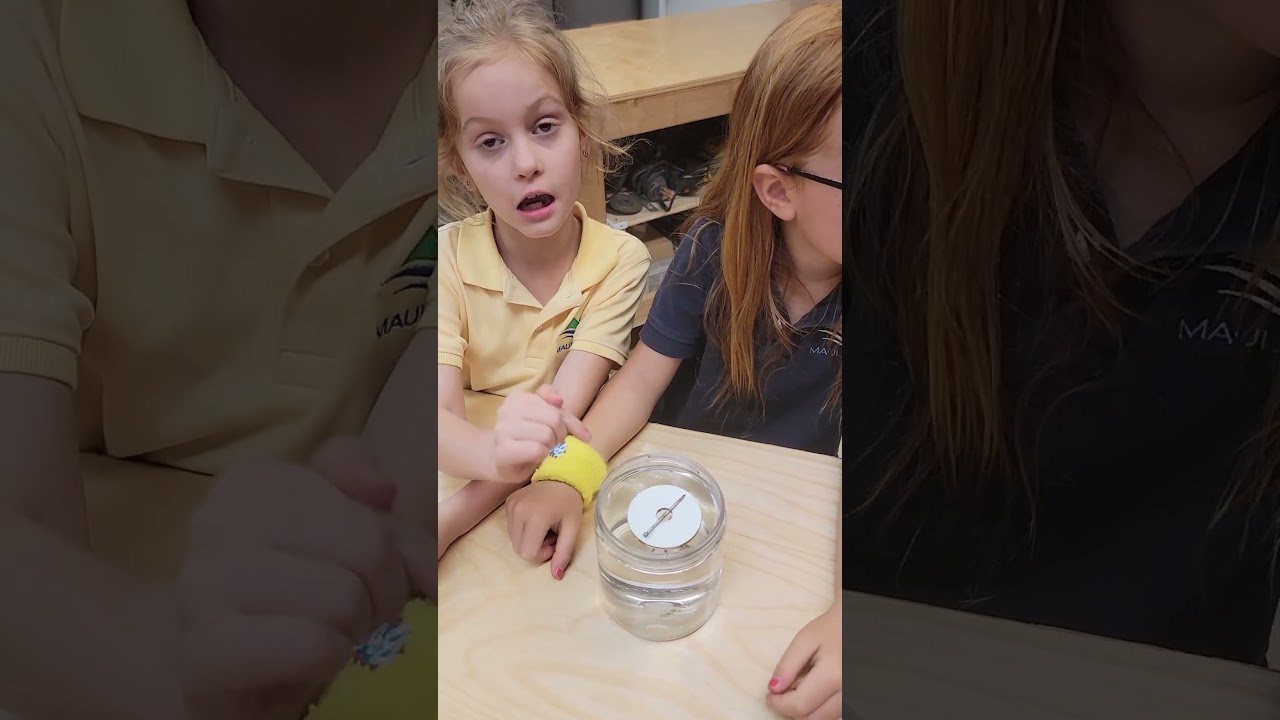
DIY Magnetic Compass

A floating needle that points north.

You need

  • A sewing needle
  • A magnet
  • A small piece of cork or foam
  • A bowl of water

Try it

  1. Stroke the needle with one end of the magnet about 30 times, always in the same direction.
  2. Lay the needle on the cork.
  3. Float the cork in the middle of the bowl of water.
  4. Wait for it to stop turning. The needle points north and south.
  5. Check it against a compass app on a phone.
What's happening? Rubbing the needle with a magnet lines up the tiny magnetic parts inside the steel, so the needle becomes a magnet itself. The Earth is a giant magnet too, so the floating needle turns to line up with it.
Safety. Needles are sharp. A grown-up can handle the needle for younger kids.

Try next: Bring the magnet near your compass. What happens?

Ages 8+, with a grown-up20 minutesMess ●●●

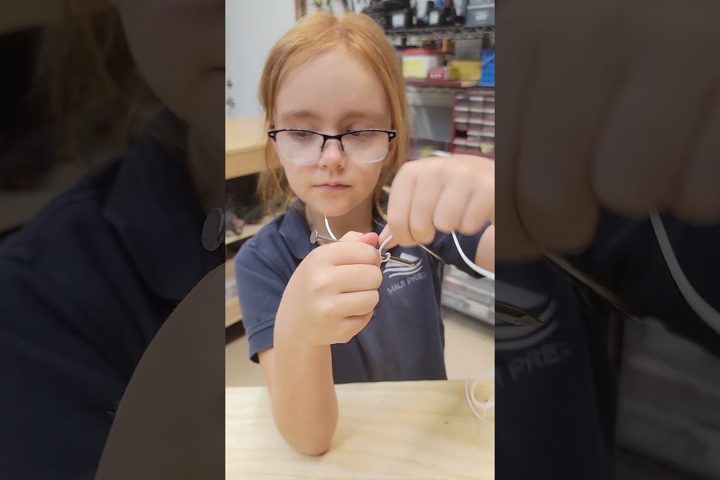
Nail Electromagnet

Turn a nail into a magnet that switches on and off.

You need

  • A large iron nail
  • About 1 meter of thin insulated wire
  • One D-size battery
  • Electrical tape
  • Paper clips

Try it

  1. Grown-up: strip about 2 cm of plastic off each end of the wire.
  2. Wrap the wire tightly around the nail, all in the same direction. Leave both ends loose.
  3. Tape one end of the wire to one end of the battery.
  4. Touch the other end of the wire to the other end of the battery for a few seconds, and pick up paper clips with the nail.
  5. Let go of the wire. The clips fall off!
What's happening? Electricity flowing through a wire makes a magnetic field around it. Coiling the wire stacks up the fields, and the iron nail makes the magnetism stronger. When the electricity stops, the magnet switches off.
Safety. The wire and battery get hot fast, so only connect for a few seconds at a time. Use one ordinary battery, never a wall outlet.

Try next: Count the paper clips. Do more wraps of wire pick up more clips?

Ages 6+20 minutesMess ●●●

Cartesian Diver

Squeeze a bottle and a diver sinks. Let go and it floats back up.

You need

  • A clear plastic bottle with a cap
  • An eyedropper
  • Water
  • A glass of water for testing

Try it

  1. Fill the bottle all the way to the top with water.
  2. Squeeze a little water into the eyedropper. Test it in the glass: it should float with just the very top sticking out. Add or squeeze out water until it does.
  3. Put the dropper in the bottle, top the bottle up with water, and screw the cap on tight.
  4. Squeeze the bottle. The diver sinks!
  5. Let go, and it floats back up. Can you make it stop in the middle?
What's happening? Squeezing the bottle pushes a little water into the dropper and squashes the air bubble inside it. With less air, the diver is heavier for its size, so it sinks. Let go, and the air bubble springs back and lifts it up.

Try next: Make two divers with different amounts of water. Which one sinks first?

Want to go further? See Bruce's version: Cartesian Divers.

Ages 5+10 minutes, then 1 to 3 days of waitingMess ●●●

Bouncy Egg

Soak an egg in vinegar for a few days and the shell disappears.

You need

  • A raw egg
  • White vinegar
  • A cup or jar

Try it

  1. Gently put the egg in the cup.
  2. Pour in vinegar until the egg is completely covered. Look closely: tiny bubbles start forming on the shell.
  3. Leave it for a day. Then pour off the old vinegar and add fresh vinegar.
  4. After 2 or 3 days, take the egg out and rinse it. Gently rub off any shell that is left.
  5. Bounce it on a tray from just a few centimeters up. Then try a little higher. Sooner or later it will break!
What's happening? Eggshell is made of calcium carbonate. The acid in vinegar dissolves it and makes carbon dioxide bubbles. What's left is the thin, stretchy skin under the shell, called the membrane. That's what makes the egg bouncy.
Safety. It's still a raw egg inside. Bounce it over a tray, and wash your hands afterward.

Try next: Measure around the egg before and after. Does it get bigger?

Ages 5+15 minutesMess ●●●

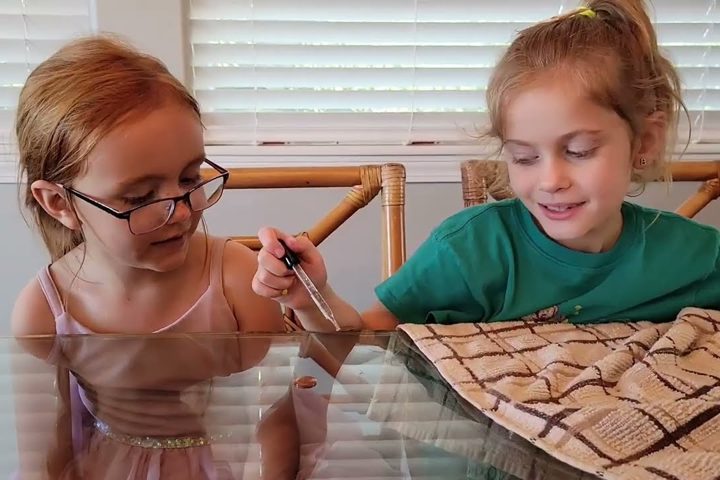
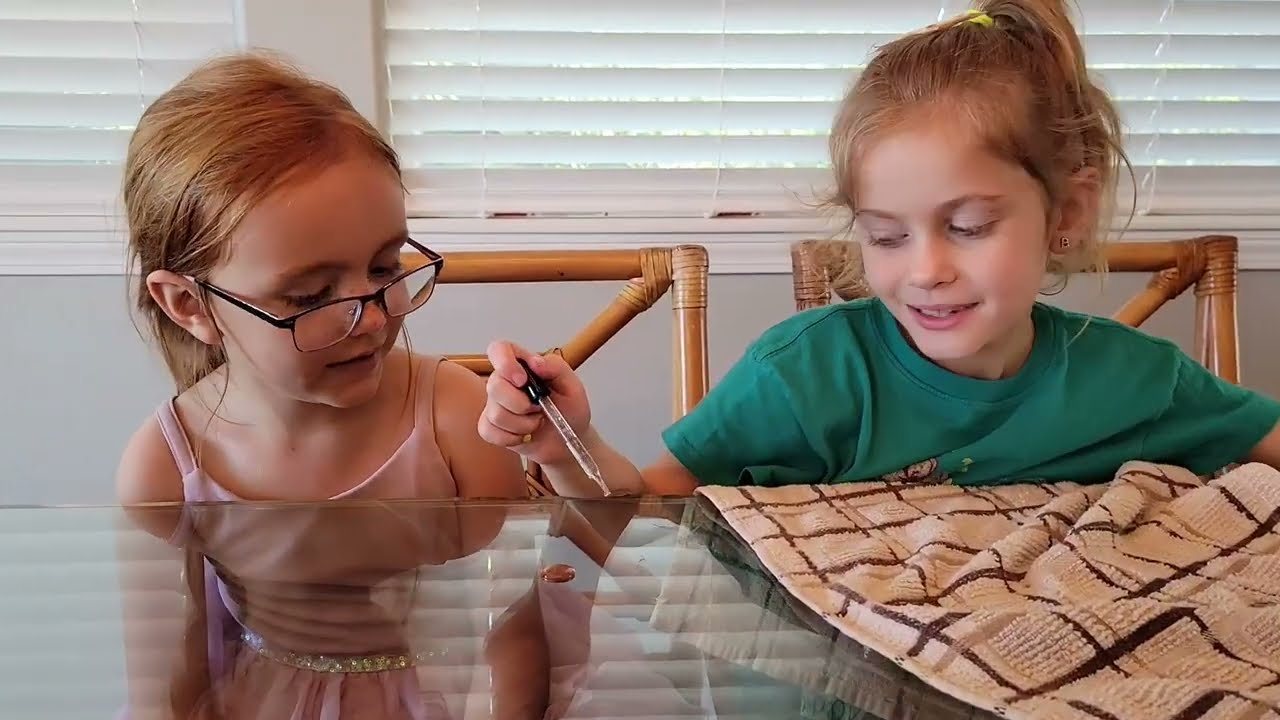
How Many Drops on a Penny?

Guess how many water drops fit on one penny. Then count.

You need

  • A penny
  • An eyedropper
  • A cup of water
  • A paper towel
  • Dish soap (for the second try)

Try it

  1. Lay the penny flat on a paper towel.
  2. Guess how many drops will fit, and write it down.
  3. Fill the dropper and add water to the penny one drop at a time. Count every drop.
  4. Watch the water bulge up into a dome. Keep going until it spills over the edge.
  5. Dry the penny. Now add one tiny drop of dish soap to your water and try again.
What's happening? Water drops cling to each other. At the surface they pull together like a stretchy skin, called surface tension, so the water piles up into a dome instead of spilling. Soap weakens that skin, so the penny holds fewer drops.

Try next: Which side holds more drops: heads or tails? Try a nickel or a quarter too.

Ages 6+30 minutesMess ●●●

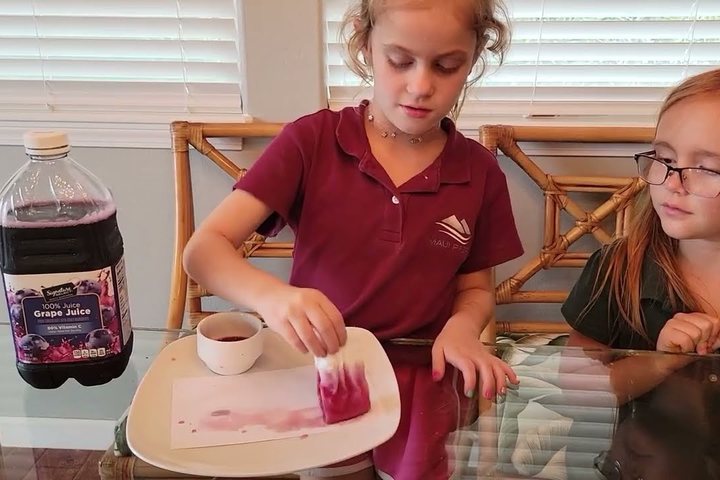
Invisible Ink, 3 Ways

Write a secret message, then make it appear.

You need

  • Lemon juice
  • Milk
  • Baking soda and water
  • Purple grape juice
  • Cotton swabs or paintbrushes
  • White paper
  • A hair dryer (with a grown-up)

Try it

  1. Pour a little lemon juice, a little milk, and a spoonful of baking soda mixed with a spoonful of water into three small cups.
  2. Dip a cotton swab in one ink and write a message on white paper. Use a new swab and a new paper for each ink.
  3. Let the messages dry completely. They should be invisible.
  4. Lemon and milk messages: a grown-up heats the paper with a hair dryer on hot until the writing turns brown.
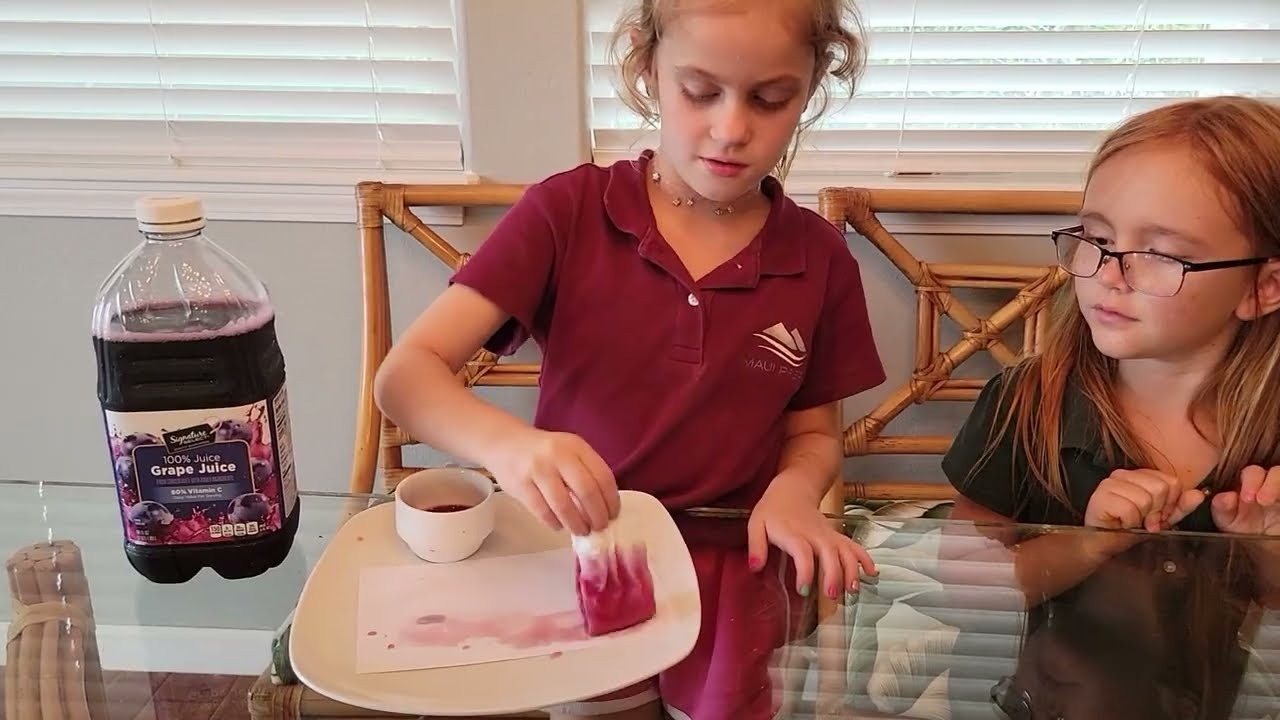
  5. Baking soda message: paint purple grape juice over the paper with a swab. Watch the message change color.
What's happening? Lemon juice and milk dry clear, but heat makes the sugars and proteins in them turn brown before the paper does. Grape juice is a natural color-changer: it turns a different color when it touches a base like baking soda.
Safety. Use a hair dryer, never a candle, stove or flame. Heated paper can catch fire.

Try next: Which ink makes the clearest message? Try orange juice or apple juice too.

Ages 4+15 minutesMess ●●●

Fizzing Lemon Volcano

A lemon that bubbles over with colorful foam.

You need

  • A lemon
  • Baking soda
  • Food coloring
  • Dish soap (optional, for extra foam)
  • A craft stick
  • A tray or plate

Try it

  1. Grown-up: cut the lemon in half. Slice a little off the bottom so it stands up on the tray.
  2. Poke and twist the craft stick around inside the lemon to free up the juice.
  3. Add a few drops of food coloring on top. Add a drop of dish soap if you want more foam.
  4. Sprinkle a big spoonful of baking soda on top.
  5. Stir and poke with the stick and watch it erupt. Add more baking soda when it slows down.
What's happening? Lemon juice contains citric acid. Baking soda is a base. When an acid and a base meet, they react and make carbon dioxide gas, which is the fizz. The soap traps the gas in bubbles, so you get foam.
Safety. Lemon juice stings, so keep your fingers away from your eyes and wash your hands afterward.

Try next: Try a lime or an orange. Which fruit makes the biggest eruption?

Ages 7+10 minutesMess ●●●

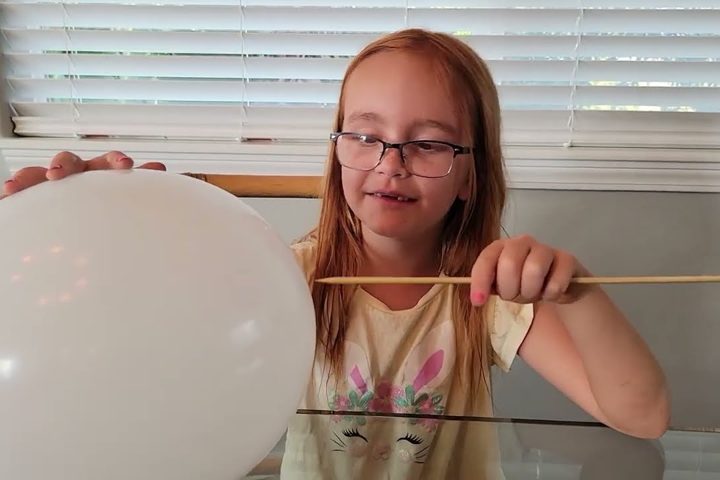
Skewer Through a Balloon

Push a pointy stick right through a balloon without popping it.

You need

  • A balloon
  • A wooden skewer
  • Dish soap or a little cooking oil

Try it

  1. Blow up the balloon only part of the way and tie it. A grown-up can help.
  2. Rub a little soap on the pointy end of the skewer.
  3. Find the darker, thicker spot next to the knot.
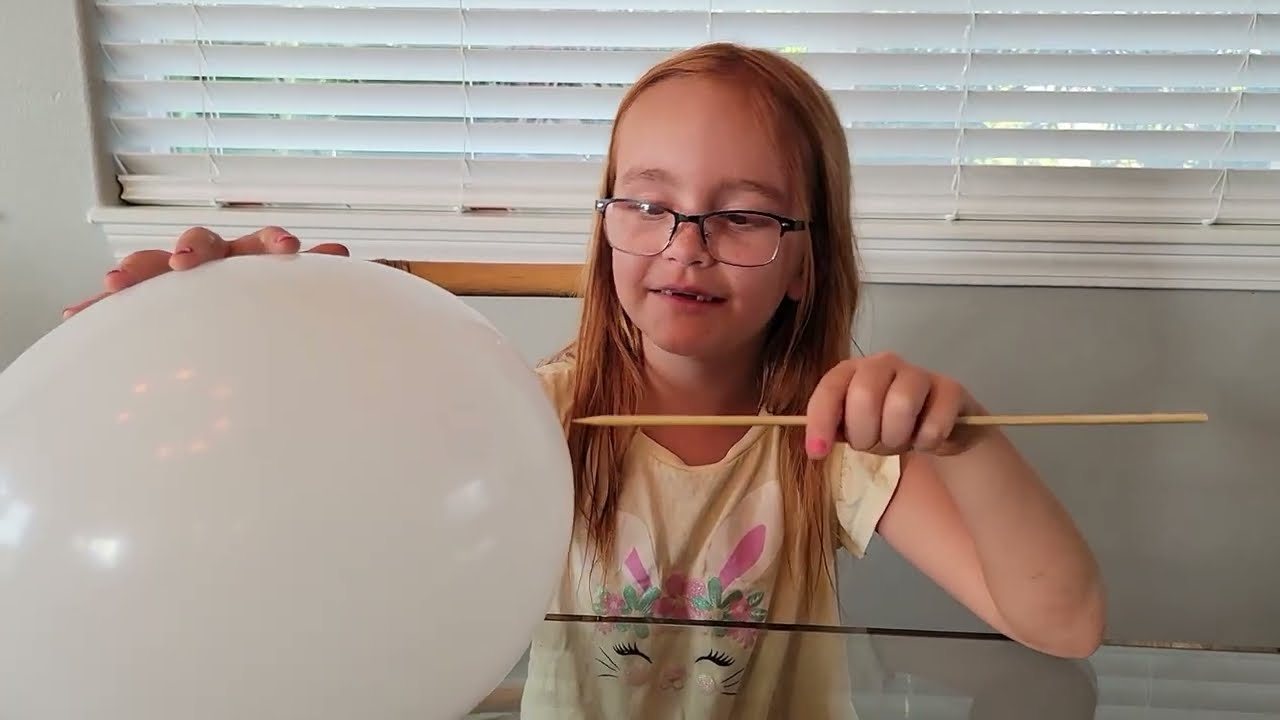
  4. Gently twist the skewer into that spot and push it through the balloon. Aim for the dark spot on the opposite end and twist it out there.
  5. Now poke the side of the balloon. Pop!
What's happening? A balloon is made of rubber, which is full of long, stretchy molecules. Near the knot and at the opposite end, the rubber isn't stretched very much, so it can stretch around the skewer and seal it. On the sides, the rubber is already stretched thin, so one poke pops it.
Safety. Skewers are sharp. Point them away from people, and keep the balloon away from your face.

Try next: How many skewers can you fit through one balloon?

Ages 4+15 minutesMess ●●●

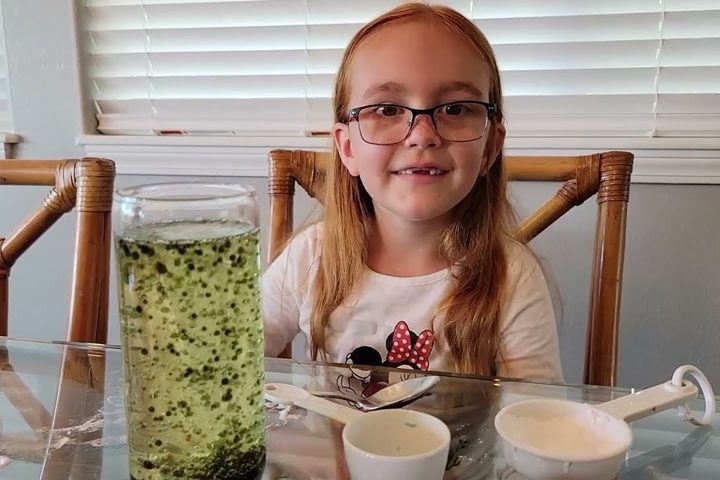
Lava Lamp

Colored blobs rise and fall through oil, with no electricity at all.

You need

  • A tall clear glass or plastic bottle
  • Vegetable oil
  • Baking soda
  • White vinegar
  • Food coloring
  • A small cup and a spoon

Try it

  1. Fill the glass about three-quarters full with vegetable oil.
  2. Spoon in two big spoonfuls of baking soda. Watch it sink to the bottom.
  3. In the small cup, mix some vinegar with two drops of food coloring.
  4. Slowly drip or pour the colored vinegar into the oil.
  5. Watch the colored blobs sink, fizz, rise to the top and sink again. Add more vinegar to keep it going.
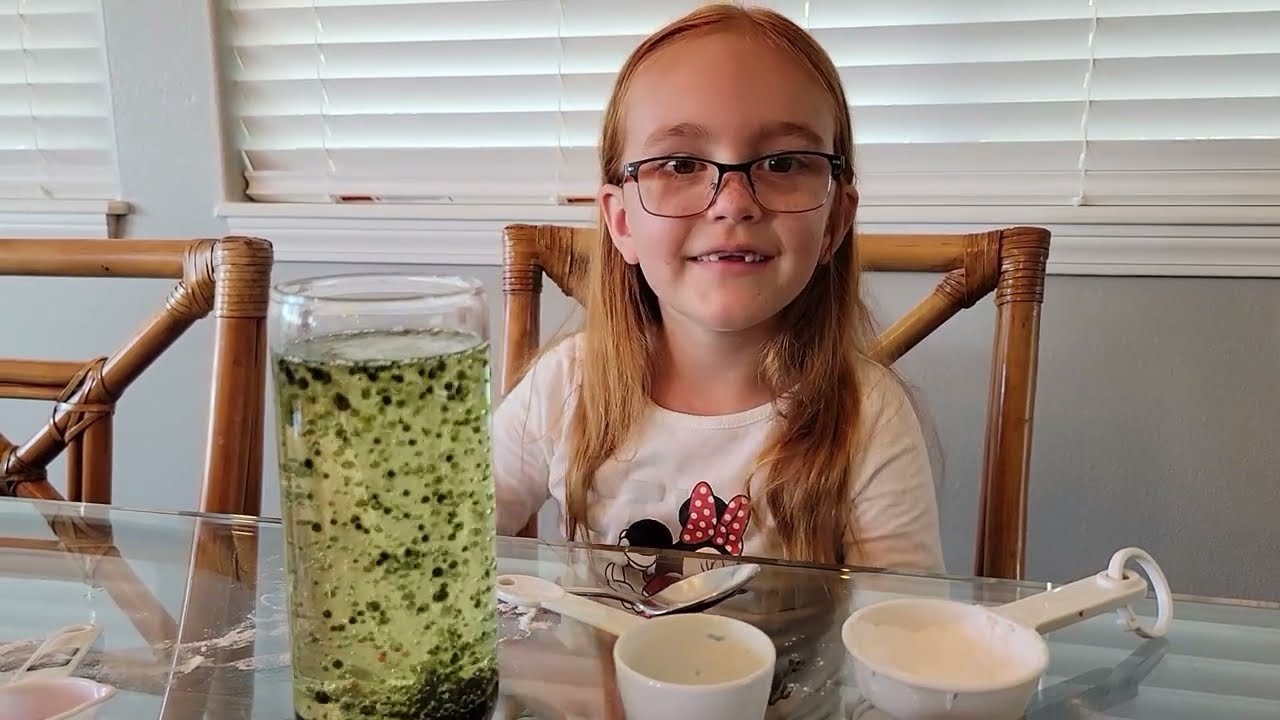
What's happening? Vinegar is heavier than oil, and the two don't mix, so the vinegar sinks in blobs. When it reaches the baking soda, the two react and make carbon dioxide gas. The bubbles carry the vinegar up to the top, pop, and let the vinegar sink back down.
Safety. When you're done, don't pour the oil down the sink. Put it in a closed container and throw it away.

Try next: Does it work faster with more baking soda? Try two glasses side by side.

Ages 5+10 minutesMess ●●●

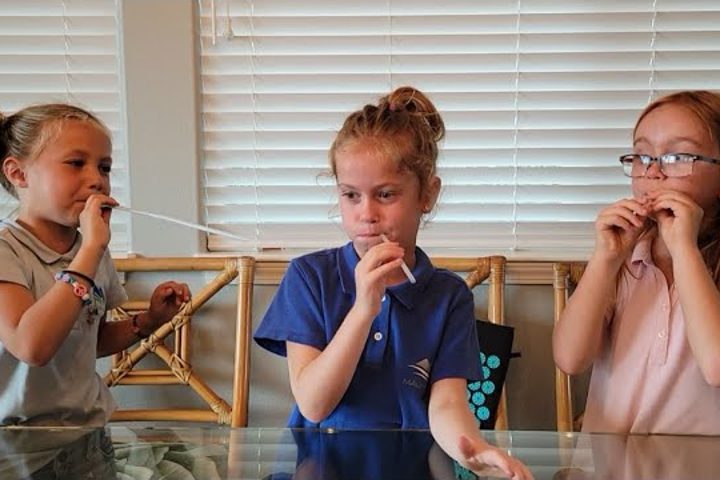
Straw Noisemaker

Turn a plain straw into a loud, buzzy horn.

You need

  • A plastic straw
  • Scissors

Try it

  1. Pinch one end of the straw flat.
  2. Cut that end into a point, like the letter V.
  3. Put the V end in your mouth, just past the point.
  4. Press your lips tight just behind the V and blow hard. It takes some practice!
  5. Cut the straw shorter and listen. What happens to the sound?
What's happening? When you blow, the two flaps of the V shake back and forth very fast. That shaking, called vibration, makes the air vibrate too, and vibrating air is sound. A shorter straw makes a higher note.
Safety. A grown-up can help with the scissors. Don't run with the straw in your mouth.

Try next: Snip off a little at a time while you blow. Can you play a song?

Want to go further? See Bruce's version: Musical Bottles.

Homemade Science Jr.

Try it with a grown-up

↑ All videos

These use a flame or a hot stove. A grown-up does the hot part; you do the watching, predicting and explaining.

Ages 7+ (grown-up lights it)10 minutesMess ●●●

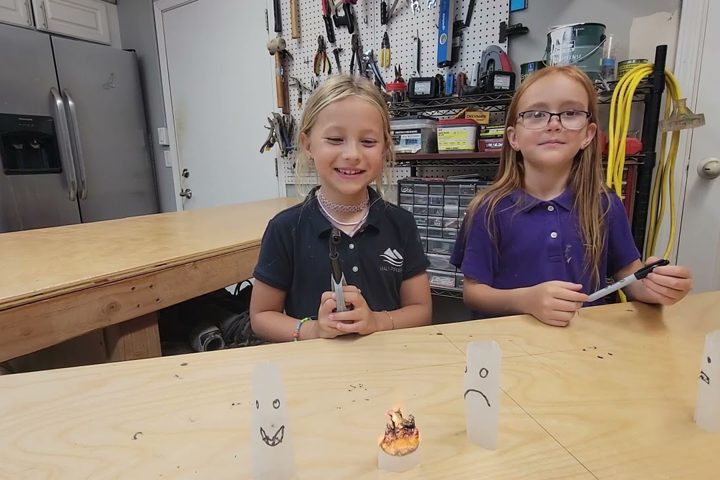
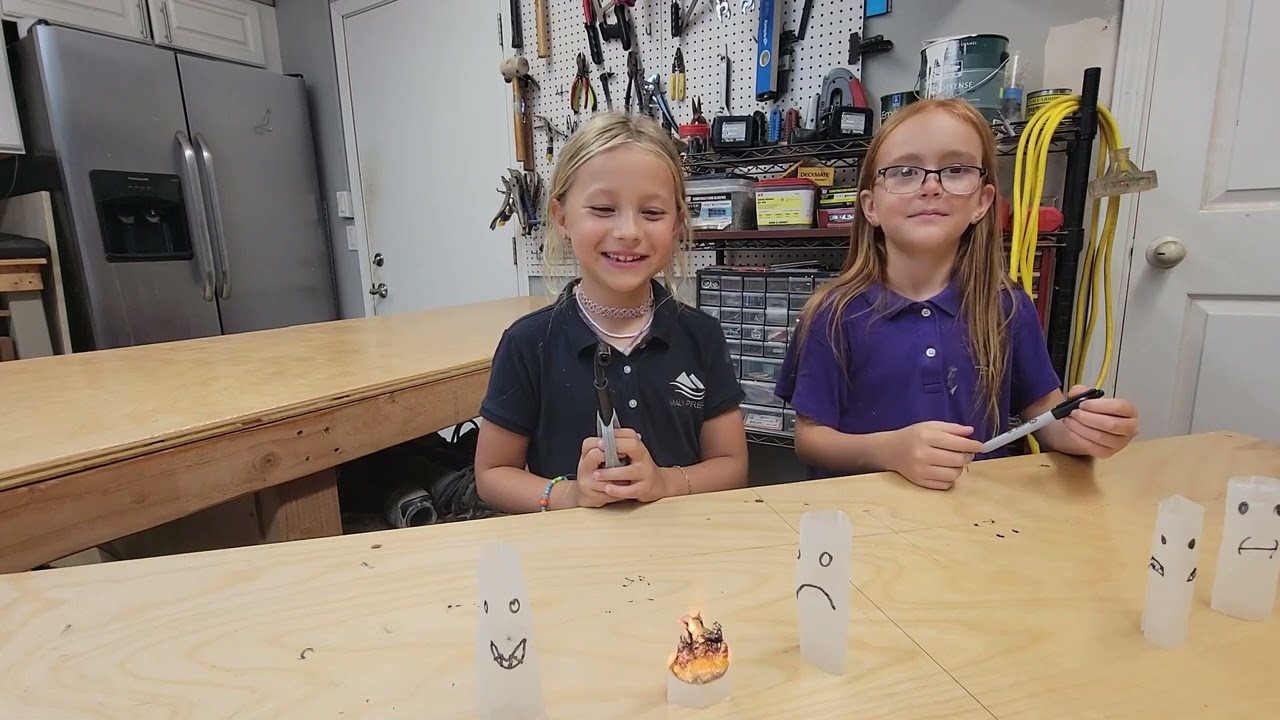
Floating Tea Bag

A burning tea bag turns to ash and floats up into the air.

You need

  • A tea bag (the kind with no staple)
  • Scissors
  • A plate
  • A lighter (grown-up only)

Try it

  1. Cut the top off the tea bag and pour out the tea.
  2. Open the bag into a tube and stand it up on the plate. You can draw a ghost face on it first!
  3. Grown-up: light the top of the tube.
  4. Watch it burn down. Just before it finishes, the ash lifts off and floats up.
What's happening? The flame heats the air inside the tube. Hot air is lighter than the cool air around it, so it rises. When the tea bag has burned to ash, it's so light that the rising hot air carries it up.
Safety. Grown-ups light it. Do it on a plate, away from curtains and paper, and keep a cup of water nearby.

Try next: Does a taller tube fly higher?

Ages 7+ (grown-up handles the flame)15 minutesMess ●●●

DIY Fire Extinguisher

Put out a candle by pouring an invisible gas over it.

You need

  • A short candle in a deep bowl
  • Baking soda
  • White vinegar
  • A tall cup
  • A lighter (grown-up only)

Try it

  1. Grown-up: light the candle in the bowl.
  2. Put a spoonful of baking soda in the tall cup.
  3. Pour in some vinegar. It fizzes up!
  4. When the fizzing slows, tip the cup over the candle like you're pouring water, but don't let any liquid come out.
  5. The flame goes out, as if by magic.
What's happening? Vinegar and baking soda make carbon dioxide gas. Carbon dioxide is heavier than air, so you can pour it like an invisible liquid. It pushes the air away from the flame, and fire can't burn without the oxygen in air.
Safety. Grown-ups light and handle the candle. Keep hair, sleeves and paper away, and have water nearby.
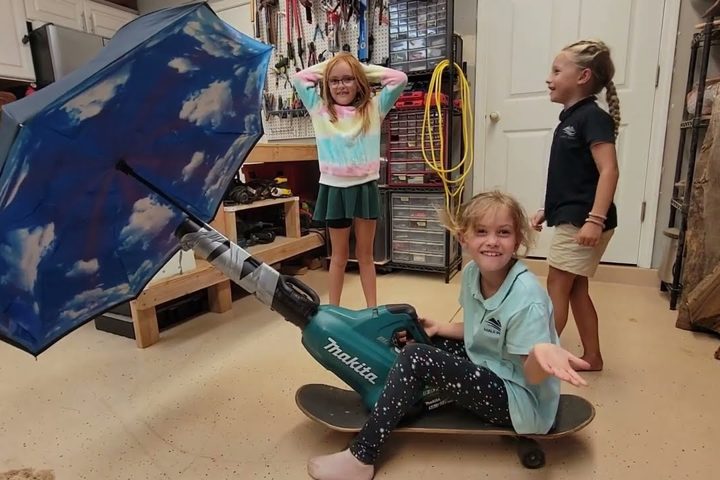
Ages 8+ (grown-up runs the leaf blower)30 minutesMess ●●●

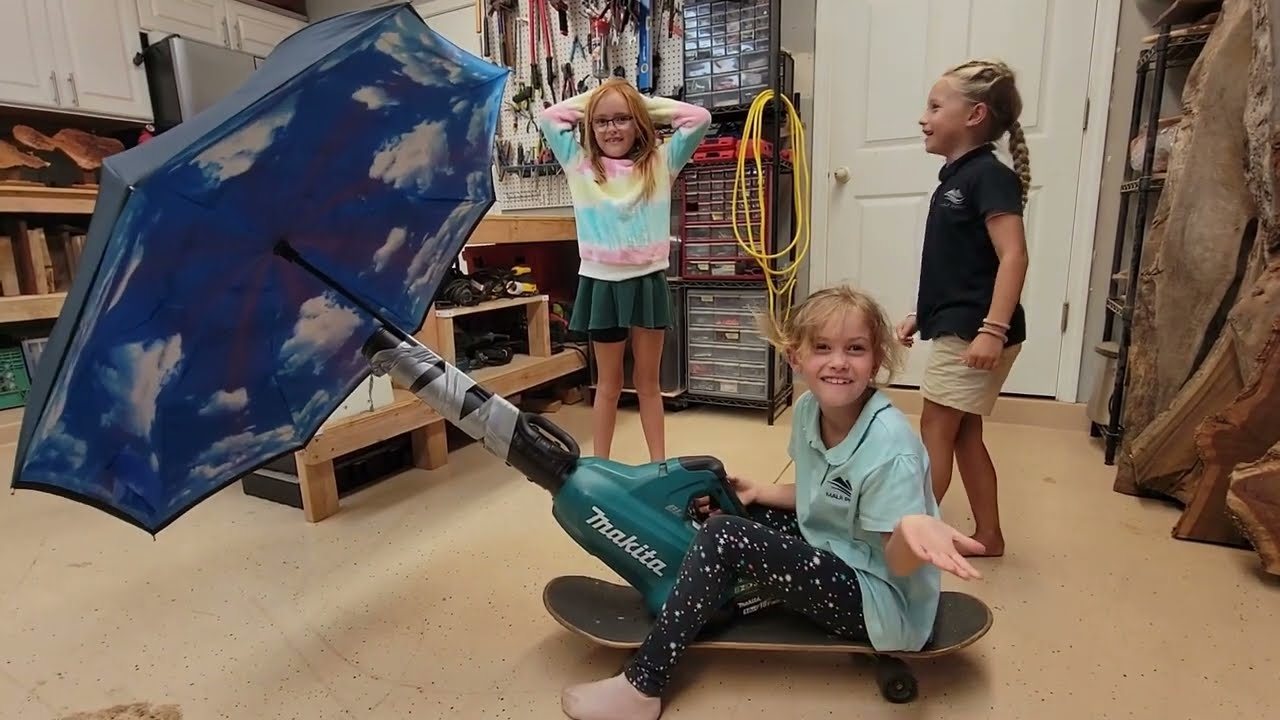
Leaf Blower Skateboard

Can a leaf blower push you along? Newton's third law on wheels.

You need

  • A skateboard
  • A battery leaf blower
  • A big umbrella
  • A helmet and knee and elbow pads
  • A flat, empty driveway or parking area

Try it

  1. Put on the helmet and pads, and sit on the skateboard.
  2. Try 1: hold the open umbrella in front of you and blow the leaf blower into it. Do you move?
  3. Try 2: put the umbrella down and point the leaf blower behind you. Now do you move?
  4. Try 3: a grown-up stands behind and blows into the umbrella while you hold it.
  5. Talk about which ones worked, and why.
What's happening? For every push, there's an equal push back the other way. That's Newton's third law. Blowing air backward pushes you forward. But blowing into your own umbrella pushes you both ways at once, so you hardly move.
Safety. Helmet and pads on, sitting down, on flat ground away from streets and cars. A grown-up runs the leaf blower and never points it at faces.
Ages 6+ (grown-up does the fire)15 minutesMess ●●●

Balloon in a Bottle

Air pushes a balloon into a bottle all by itself.

You need

  • A glass bottle with a neck a little narrower than the balloon
  • A small water balloon filled with water, a bit bigger than the bottle's opening
  • A strip of paper
  • Matches (grown-up only)

Try it

  1. Grown-up: light the strip of paper and drop it into the bottle.
  2. Right away, set the water balloon on top of the bottle's opening.
  3. Watch. When the fire goes out, the balloon wiggles and gets pushed into the bottle.
What's happening? The fire heats the air in the bottle, so it expands and some of it escapes past the balloon. When the fire goes out, the air left inside cools down and takes up less space. Now the air outside pushes harder than the air inside, and it shoves the balloon in.
Safety. Grown-ups handle the matches and the fire. Use a glass bottle, never plastic, and keep hair and sleeves away.

Try next: Can you get the balloon back out? Hint: think about warming the bottle.

Want to go further? See Bruce's version: Balloon in a Bottle.

Ages 8+ (grown-up does the hot part)15 minutesMess ●●●

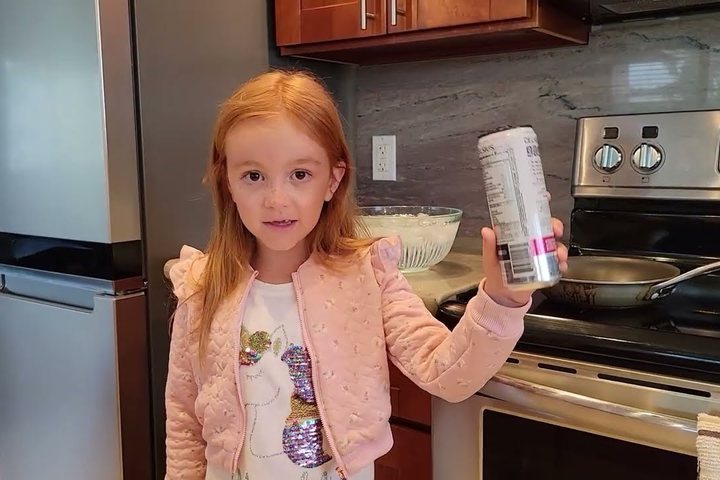
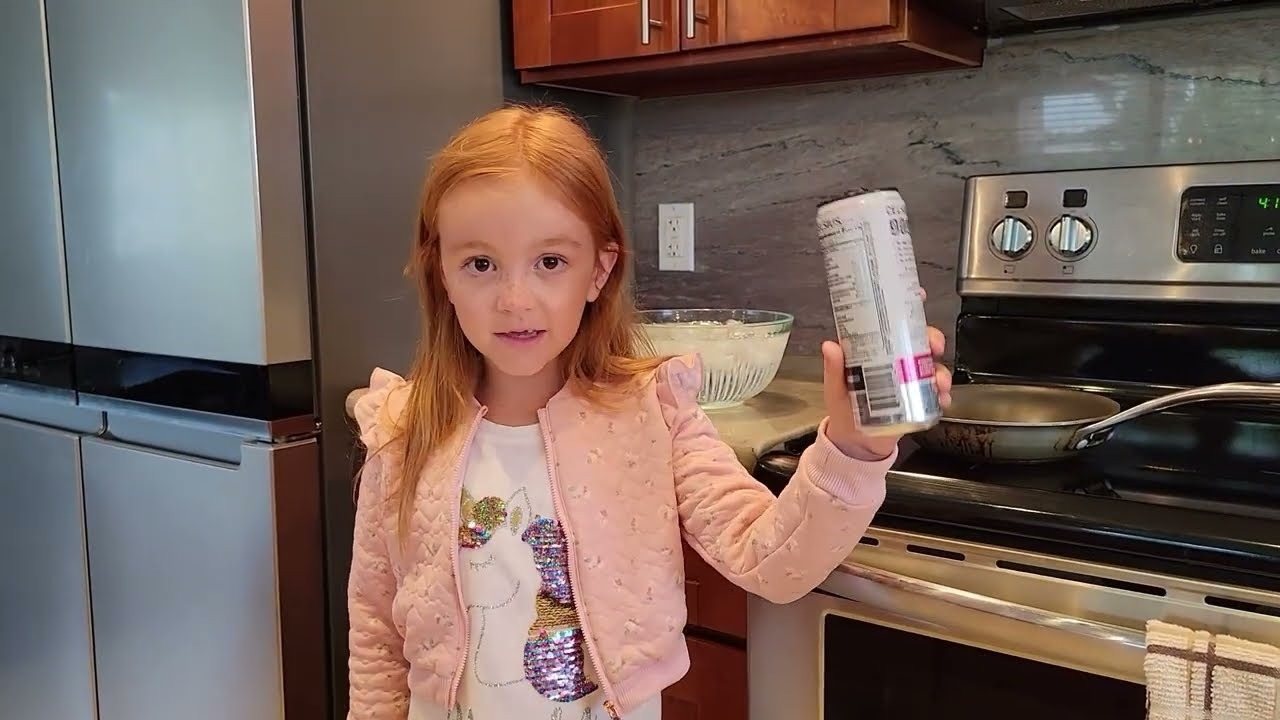
Can Crush

Air pressure flattens a soda can in a split second.

You need

  • An empty soda can
  • A tablespoon of water
  • A stove or hot plate (grown-up)
  • Kitchen tongs
  • A bowl of ice water
  • Safety glasses

Try it

  1. Put a tablespoon of water in the can.
  2. Grown-up: heat the can on the stove until steam puffs out of the opening.
  3. Grown-up: grab the can with tongs and quickly flip it upside down into the ice water.
  4. CRUNCH! The can is crushed.
What's happening? The steam pushes the air out of the can. The ice water turns the steam back into a few drops of water almost instantly, leaving almost nothing inside. The air outside is still pushing on the can, and with nothing pushing back from inside, it crushes it.
Safety. Grown-ups only for the hot can and the stove: steam burns. Wear safety glasses.

Try next: What happens if the can goes into the water right side up instead?

Want to go further? See Bruce's version: Crushing Cans with Water.

Homemade Science Jr.

Grown-ups only: watch, don't try

↑ All videos

These are dramatic demonstrations done by adults with safety gear, outdoors. Enjoy the videos, learn the science, and leave the fire to the grown-ups.

Don't try this at home

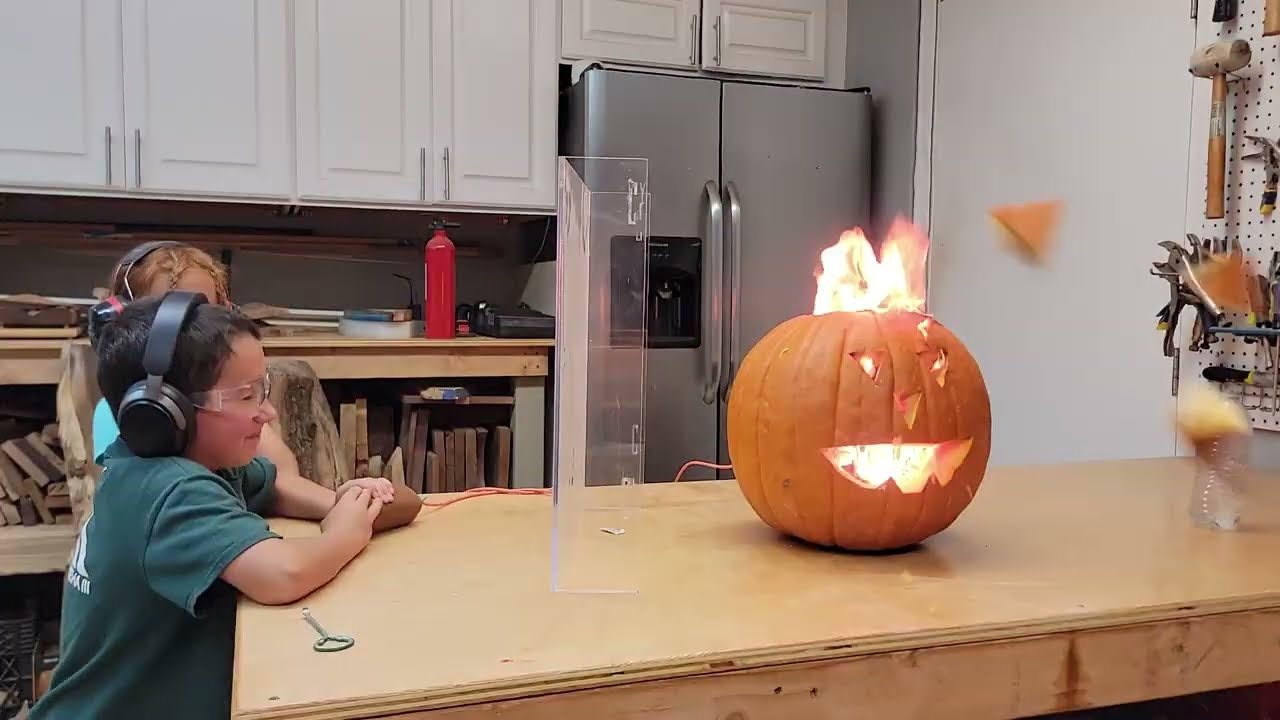
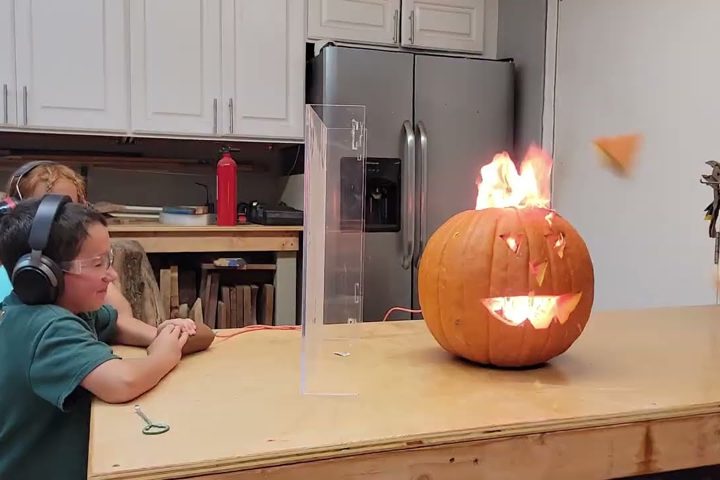
Pumpkin Explosion

A gas made inside a pumpkin bursts into flame and pops the lid off.

The science: Some chemicals make a flammable gas when they touch water. When the gas burns, it heats up and expands very fast, and that pushes the pumpkin's lid off.

↑ All videos
Don't try this at home

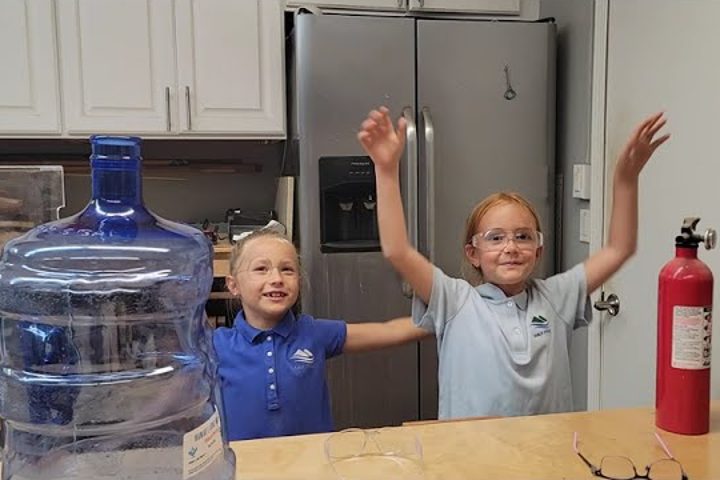
Whoosh Bottle

Burning vapor inside a big jug makes a giant WHOOSH.

The science: A liquid that evaporates easily fills the jug with vapor. When it burns, the hot gases expand and rush out of the jug's opening all at once, which makes the sound.

↑ All videos
Don't try this at home

Dust Fireball

A cloud of fine powder blown through a flame makes a fireball.

The science: A pile of powder doesn't burn easily. But spread out into a cloud, every tiny grain touches air, so the whole cloud burns at once. That's why flour mills have to be so careful about dust.

↑ All videos
Don't try this at home

Fire and Ice Bottle Breaking

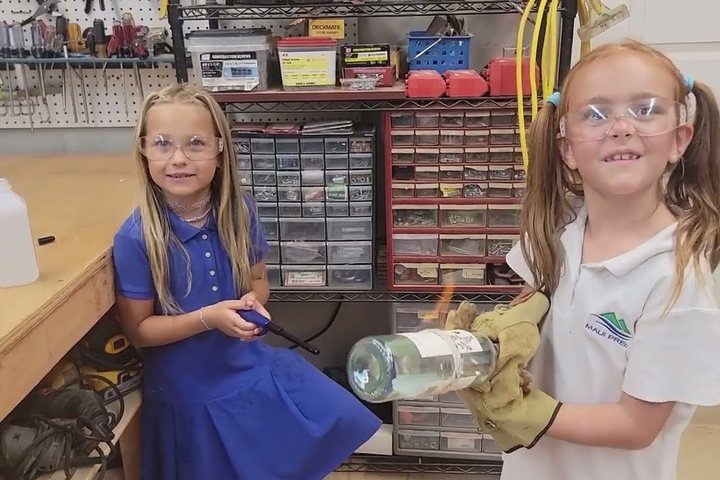
Heat a glass bottle, plunge it into ice water, and it breaks in two.

The science: Heat makes glass expand, and cold makes it shrink. When one part of a bottle changes temperature much faster than the rest, the stress cracks it. That's called thermal shock.

↑ All videos
Don't try this at home

Propane Bottle Rocket

Newton's third law with a whoosh: burning gas shoots a bottle into the air.

The science: For every action there is an equal and opposite reaction. Hot gas blasts out of one end of the bottle, so the bottle shoots off the other way.

↑ All videos
Don't try this at home

Sugar Octopus

Burning sugar and baking soda grows a long black 'snake' that wiggles like an octopus.

The science: Heat breaks the sugar down into carbon, the black part. At the same time, baking soda gives off carbon dioxide gas, which puffs the carbon up and pushes it out into long snakes.

↑ All videos
Don't try this at home

Trusting Pendulum

Let a heavy pendulum go from your nose. Will it come back and hit you?

The science: A swinging pendulum can never come back higher than where it started, because energy can't be created from nothing. Air and friction take a little energy each swing, so it always stops just short of where you let go, as long as you don't push it.

↑ All videos
Homemade Science Jr.

Maker corner

↑ All videos

Building things with real tools and machines.

CNC Names and Shapes

A computer-controlled cutter carves names, hearts and turtles.

The science: A CNC machine follows a drawing made on a computer. It moves a spinning cutter left, right, forward, back, up and down to carve the shape exactly.

↑ All videos

Want more?

Bruce has dozens more experiments, with worksheets, explained for kids and for grown-ups.