Teachers / Lesson plans / Cup Flyers
Lesson plan · Grades 3-8Why does a spinning cup fly up instead of falling down?
Students build a cup flyer from two foam cups and a rubber band chain, launch it, and discover that the spinning cups climb instead of falling. They then change one variable at a time, such as spin direction or cup orientation, to see how the direction of spin controls whether the flyer rises, dives or curves sideways.
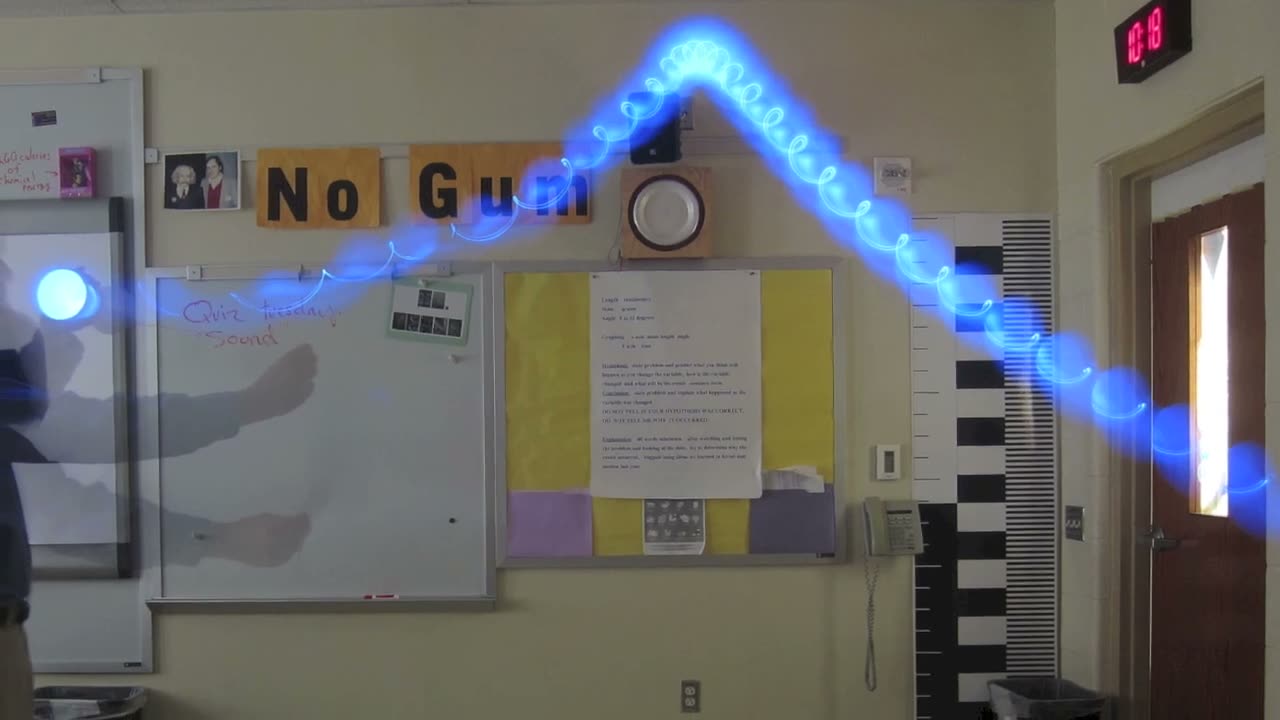
Why does a pair of cups launched forward by a rubber band swoop upward instead of falling to the floor like a thrown ball?
Learning objectives
- Students will be able to describe the flight path of a spinning cup flyer and compare it to the path of a thrown object that is not spinning.
- Students will be able to predict how reversing the spin direction or turning the cups on end will change the flight path, and test the prediction.
- Students will be able to explain, using the idea of the Magnus effect, why a backspinning flyer is pushed upward as it moves through the air.
- Students will be able to design a fair test that changes only one variable, such as the number of wraps or cup size.
Lesson flow (5E)
Gently toss a taped pair of cups forward without the rubber band so students see it fall. Then launch the demonstration flyer wound for backspin and let students watch it climb. Ask students to describe how the two paths were different and to predict what causes the difference.
Pairs tape their two cups bottom to bottom, loop four rubber bands into a chain, hold one end against the tape, wind it three or four times so the band comes off the underside, stretch it out and release. After a few launches, they wind the band the other way and launch again, then stand the cups on end and launch a third time. They record which way the flyer curved each time and watch which way the cups were spinning.
Use the class observations, plus slow-motion video if available, to show that the cups spin backward (top moving back toward the launcher) when they climb. Explain that the spinning cups drag a thin layer of air around with them and throw air downward behind them, so the air pushes the cups up. This push is called the Magnus effect. Reversing the spin throws air upward, so the flyer dives; standing the cups on end turns the push sideways. Older students can connect this to Bernoulli's principle: faster-moving air on one side has lower pressure, and the cups are pushed toward that side.
Each pair picks one variable to change (number of wraps, cup size, cup material, or how far the band is stretched), keeps everything else the same, and runs three launches for each setting. Pairs measure distance or note how high the flyer climbed, then share the result with the class. Connect the idea to sports: backspin helps a golf ball stay up, topspin makes a tennis ball dip, and sideways spin makes a curveball curve.
Students complete the worksheet items for their age group and answer an exit ticket: draw the flyer from the side with an arrow showing its spin when it climbs, and write one sentence explaining why it rises.
Discussion questions
- How was the flyer's path different from a cup that was simply tossed without spinning?
- Which way were the cups spinning when the flyer climbed? How could we find out for sure?
- What changed when you wound the rubber band the other way, or stood the cups on end?
- Why do you think spinning makes the air push on the cups? What is the air doing as the cups spin through it?
- Why might light foam cups climb much more than a heavy ball spinning the same way?
- Where in sports have you seen spin make a ball curve, rise or dip?
Common misconceptions
Assessment
- Exit ticket: draw the flyer from the side with an arrow showing which way it spins when it climbs, and explain in one sentence why it rises.
- Check the 8-10 worksheet table for four launches with one change each and a recorded curve direction for each.
- Quick performance task: ask a pair to wind a flyer that will dive on purpose, predict its path, and launch it.
- Older students: use the 11-14 worksheet to explain why the flyer must move forward for the Magnus effect to work.
Differentiation
Support: Give younger students pre-taped cups and pre-looped rubber band chains, and help them wind the band. Focus on the 5-7 worksheet: did the cups go up or down, and were they spinning? Use a simple hand motion to show backspin.
Extend: Older students measure launch distance for several numbers of wraps or cup sizes and graph the results. They can watch slow-motion video to count spins, research how backspin and topspin are used in golf, tennis and baseball, or build the curve-ball flinger from a paper towel tube and a foam ball to see the same effect.