Build plans / Centrifugal Bottles
Centrifugal Bottles
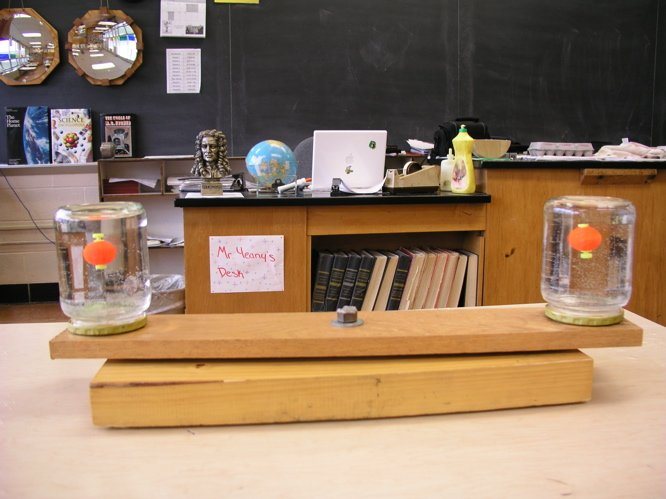
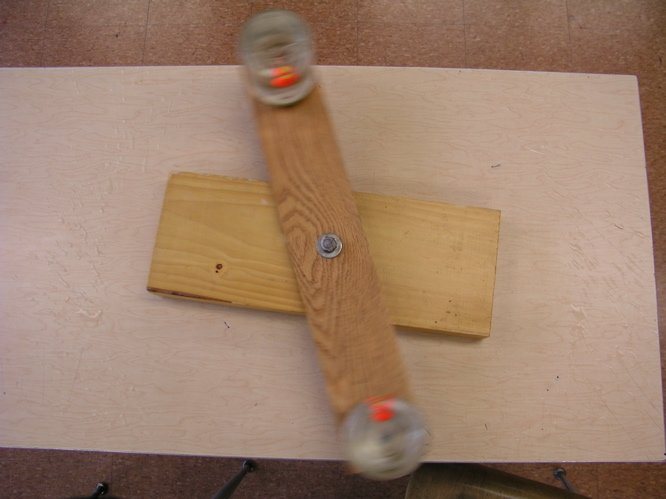
Two water-filled jars, each with a fishing bobber tethered inside, ride on the ends of a board that spins on a bolt. When the arm whirls, the bobbers lean toward the center, the opposite of what almost everyone predicts. It is a simple, sturdy build that challenges the idea of an outward 'centrifugal force' and introduces how a centrifuge separates materials by density.
Written from Bruce's original workshop handout. Bruce's final review of this plan is in progress.
What it shows
Spin two jars of water and everyone expects the floats to fly outward. They move inward instead.
Key ideas: inertia, centripetal force, centrifugal force (fictitious), density, buoyancy, centrifuge
Build it
Prepare the base
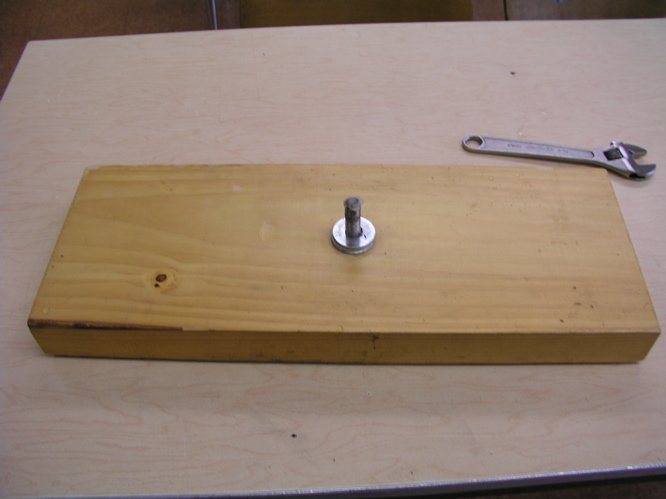
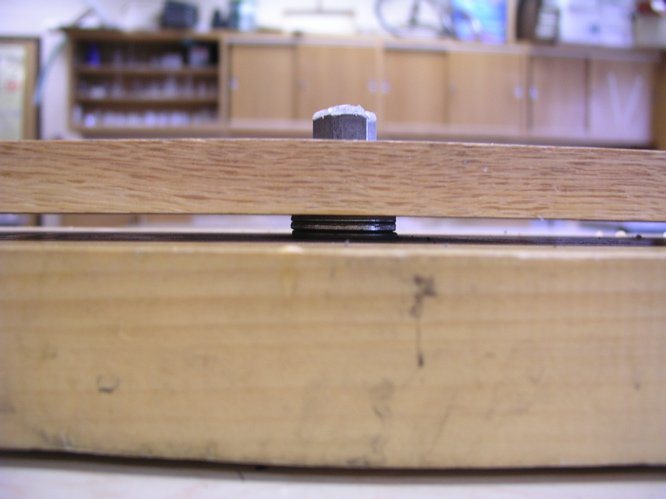
Drill a hole for the 3 1/2 in bolt through the center of the 2 x 10 base. Enlarge the first 1/2 in of the hole on the underside so the bolt head sits flush, then insert the bolt from underneath.
Check the underside
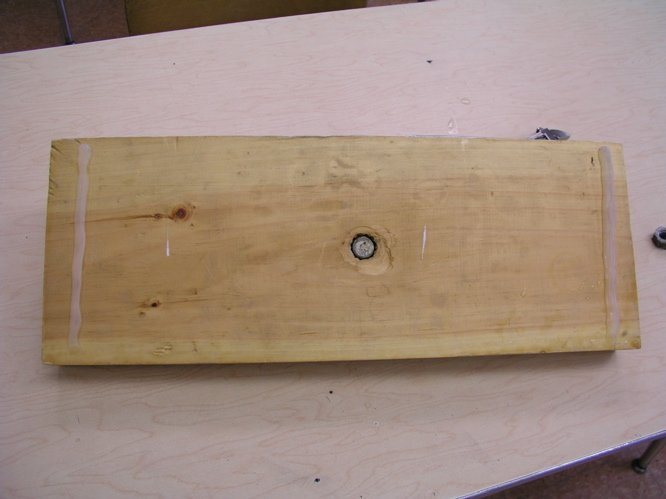
Make sure the bolt head is flush so the base sits flat on the table.
Mount the lids
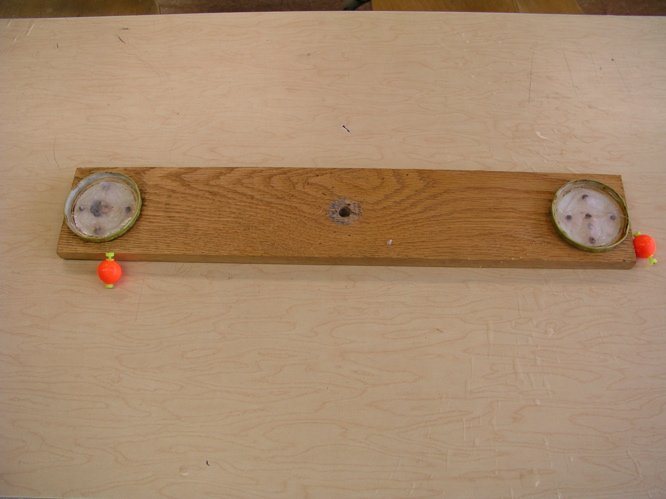
Screw a jar lid, open side up, to each end of the 1 x 4 arm. Cover the screw heads inside the lids with silicone to keep them from rusting.
Tether the bobbers
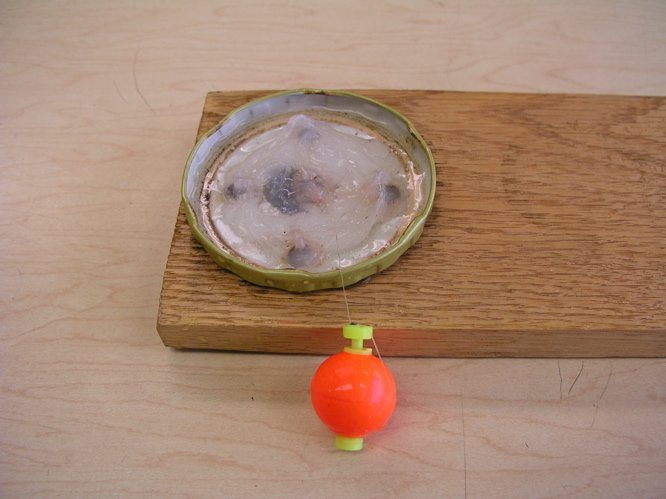
Drive a small screw into the center of each lid, tie a short piece of fishing line to it, and tie a bobber to the line so that, when the jar is full, the bobber floats an inch or two short of the far end of the jar.
Drill the arm
Drill a hole in the center of the arm just large enough for it to turn freely on the bolt.
Assemble the pivot
Slip a few washers over the bolt, then the arm, then another washer and the nut. Tighten only until the arm is snug but still spins freely, and put a drop of glue on the threads so the nut stays put.
Fill and attach the jars
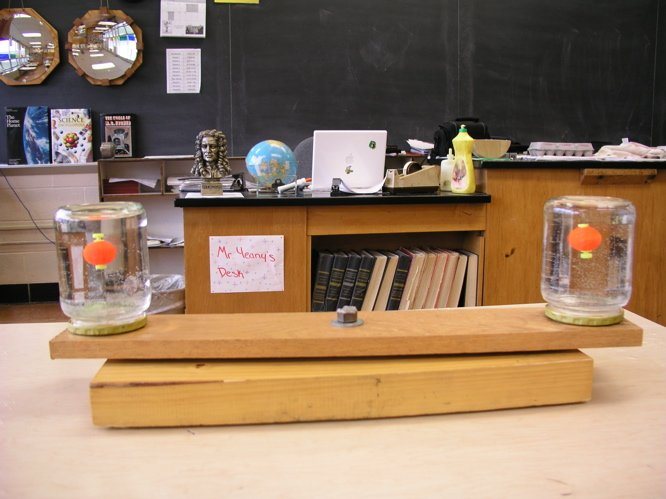
Fill both jars to the brim with water, then turn each upside down and screw it into its lid on the arm so the bobber floats inside on its line.
Spin it
Give the arm a firm push in either direction and look down through the jars. The bobbers lean toward the center; the moment the arm stops, they straighten up again.
How it works
To travel in a circle, everything in the jar must be pushed toward the center. That inward push is the centripetal force. If nothing pushed, each bit of water would keep going in a straight line; the outward 'centrifugal force' we seem to feel is really just that inertia.
The jar wall pushes the water inward, and the water presses outward against the wall. This makes the water pressure rise toward the outer side of the jar, the same way pressure rises with depth under gravity.
The bobber is less dense than water. Just as a float rises against gravity, it is pushed toward lower pressure, which is now toward the center of the spin. The denser water ends up on the outside and the lighter bobber on the inside. A laboratory centrifuge uses the same effect to separate materials of different density.
Using it
- Before spinning, ask students to predict which way the bobbers will lean. Most will say outward.
- Spin it both directions to show the direction of rotation does not matter.
- Ask what would happen with a heavy sinker tethered in the jar instead of a float. (It swings outward.)
- Connect to a car going around a curve: a helium balloon in the car leans into the turn while passengers feel pushed out.
- Introduce centrifuges used in medical labs and dairies to separate blood cells or cream.
Variations
- Fill the jars with oil and colored water, shake, then spin to watch the liquids separate faster than they would by gravity alone.
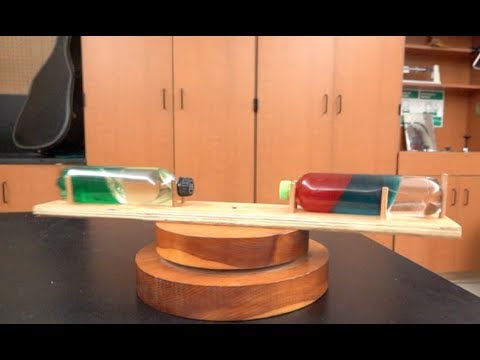
- Use clear plastic bottles taped or strapped to the arm instead of screw-lid jars.
Troubleshooting
More build plans
Balancing Nails Challenge
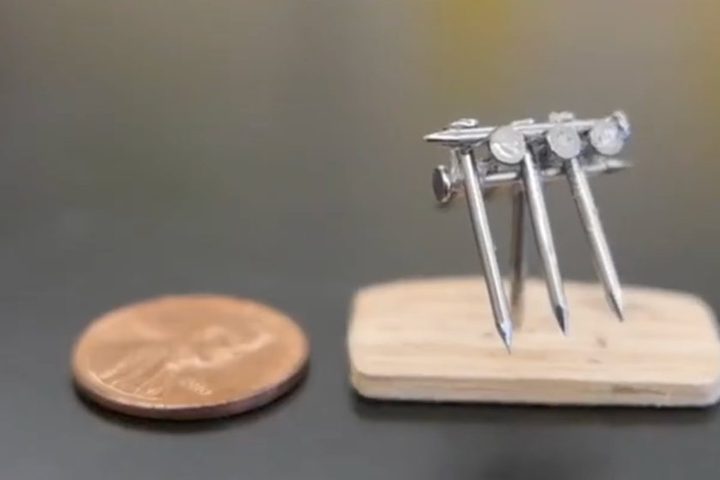
Twelve big nails balanced on one nail head looks impossible. Then Bruce doubles it.
Bar Pendulum vs. Simple Pendulum
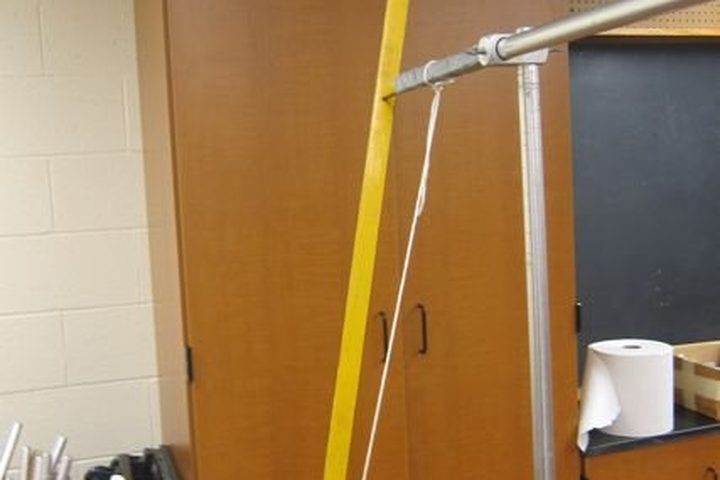
A swinging meterstick keeps the same beat whether it hangs from its end or from a point a third of the way down. Why?
Block Stacking Challenges
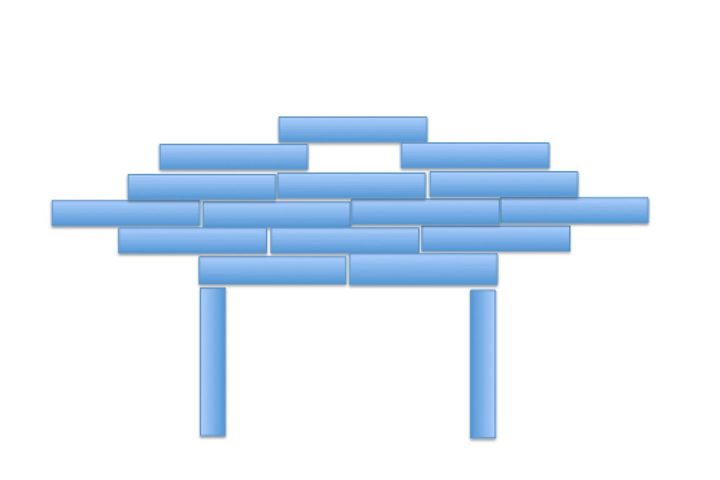
How few blocks does it take to make the top block hang completely past the edge of the bottom one?
© Bruce Yeany · Homemade Science with Bruce Yeany · youtube.com/@YeanyScience
Free for personal and classroom use. Please don't resell or republish. Build and use at your own risk; follow the safety notes and supervise children.