Build plans / Impulse Blowgun and Egg-in-a-Sheet
Impulse Blowgun and Egg-in-a-Sheet
A paper tube rolled around a dowel fires mini marshmallows. Each time you trim the barrel, the push from your breath acts for less time and the dart lands closer, a clear and cheap demonstration of impulse. Pair it with the classic egg-in-a-sheet toss, where stretching out the stopping time keeps a raw egg from breaking.
Written from Bruce's original workshop handout. Bruce's final review of this plan is in progress.
What it shows
Cut the barrel shorter and shorter and watch the marshmallow fall shorter every time.
Key ideas: impulse, momentum, Newton's second law, force and time
Build it
Gather the materials
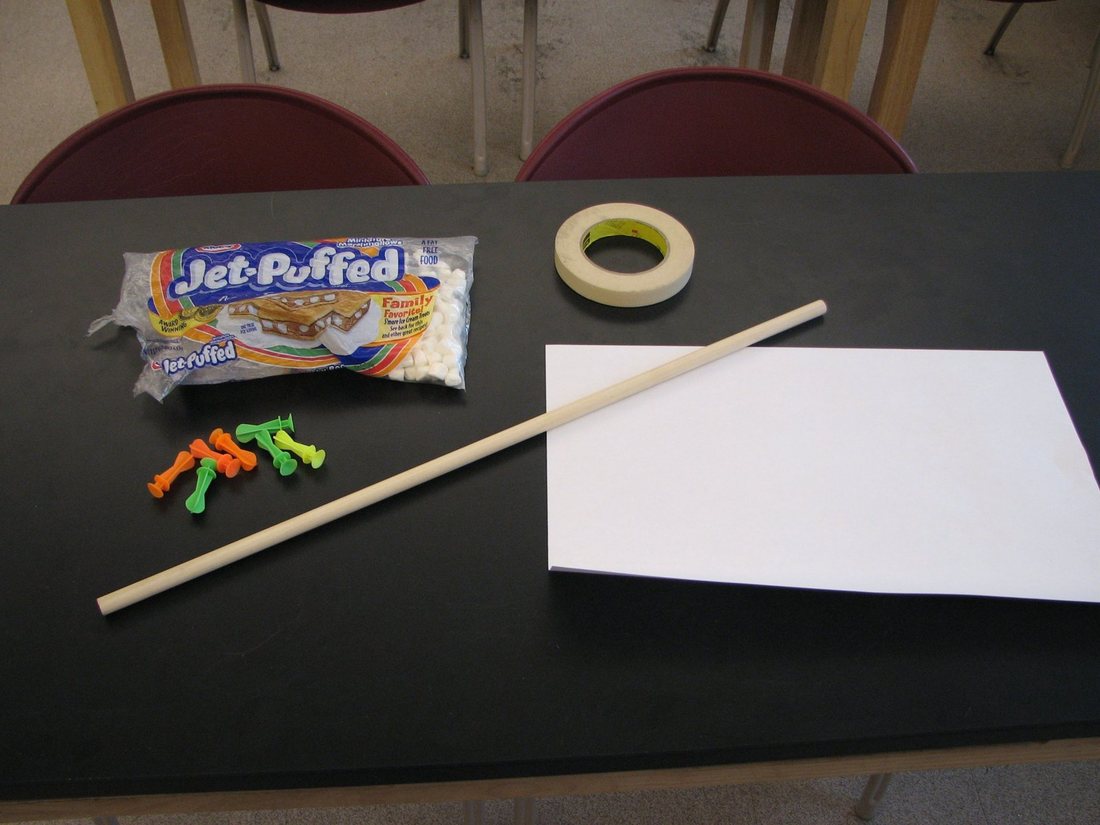
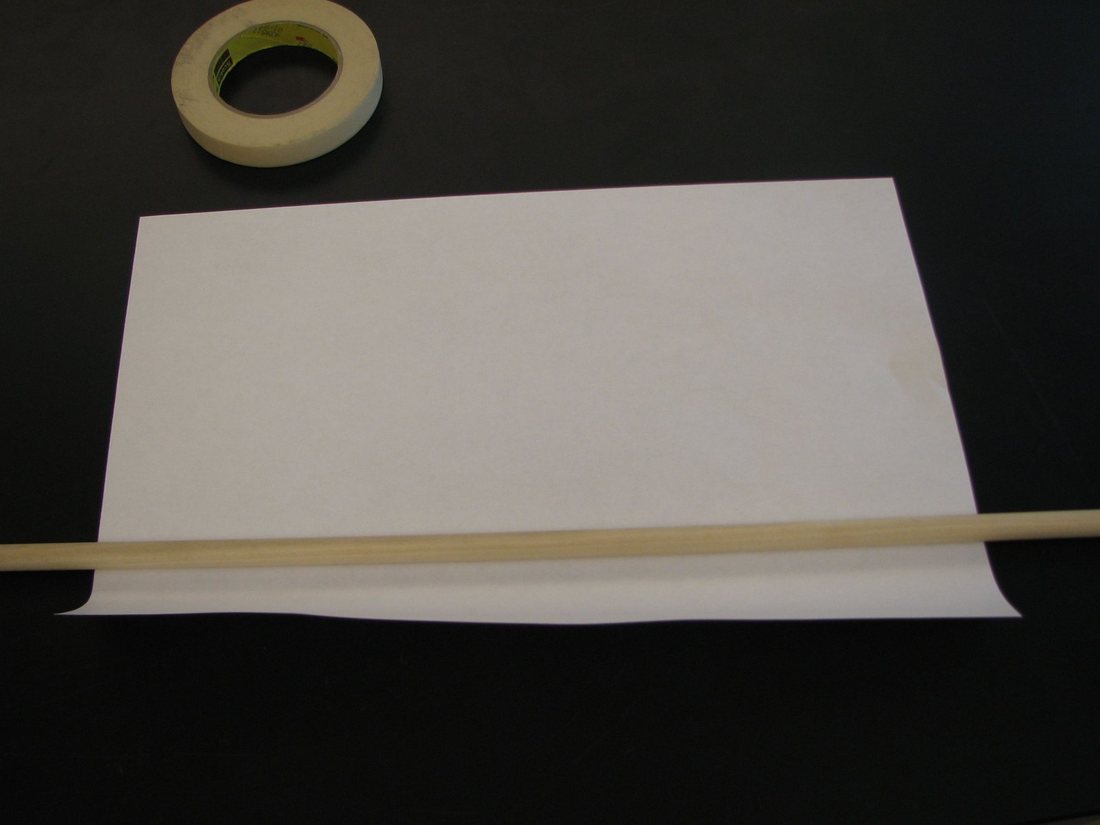
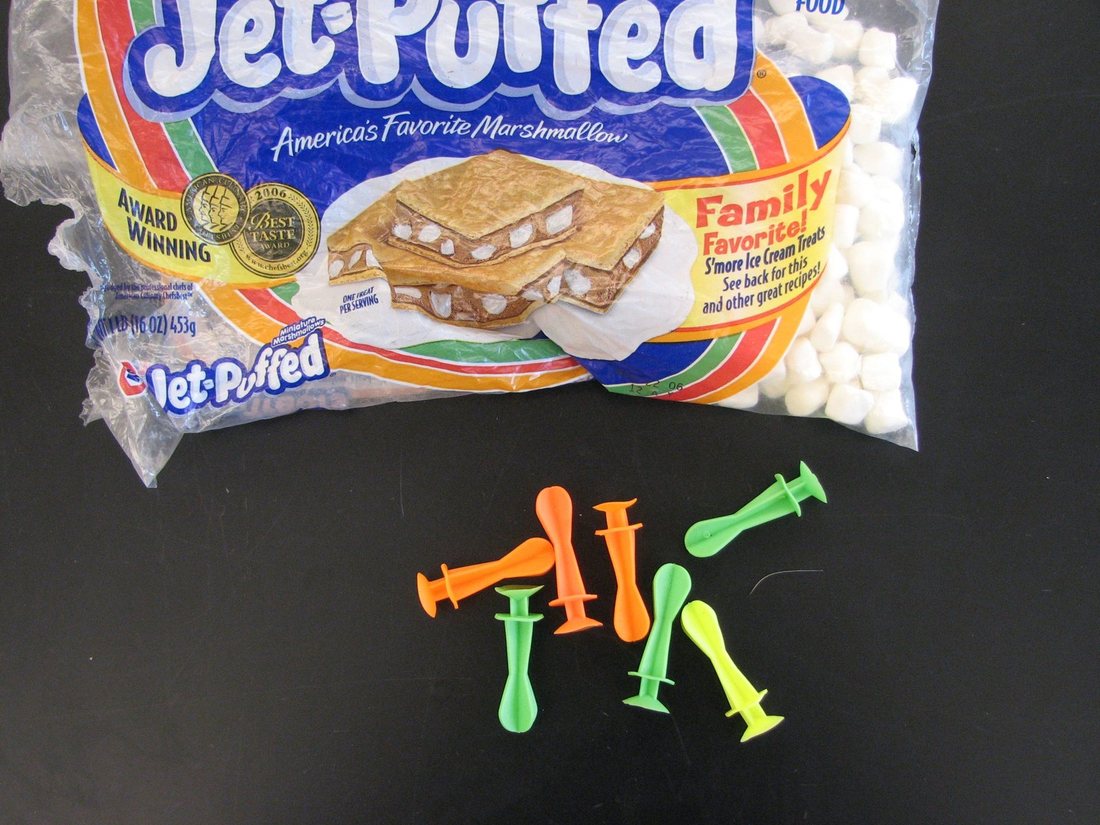
You need legal-size paper, masking tape, a wooden dowel about the same diameter as your darts, and a bag of mini marshmallows or soft toy darts.
Roll the barrel
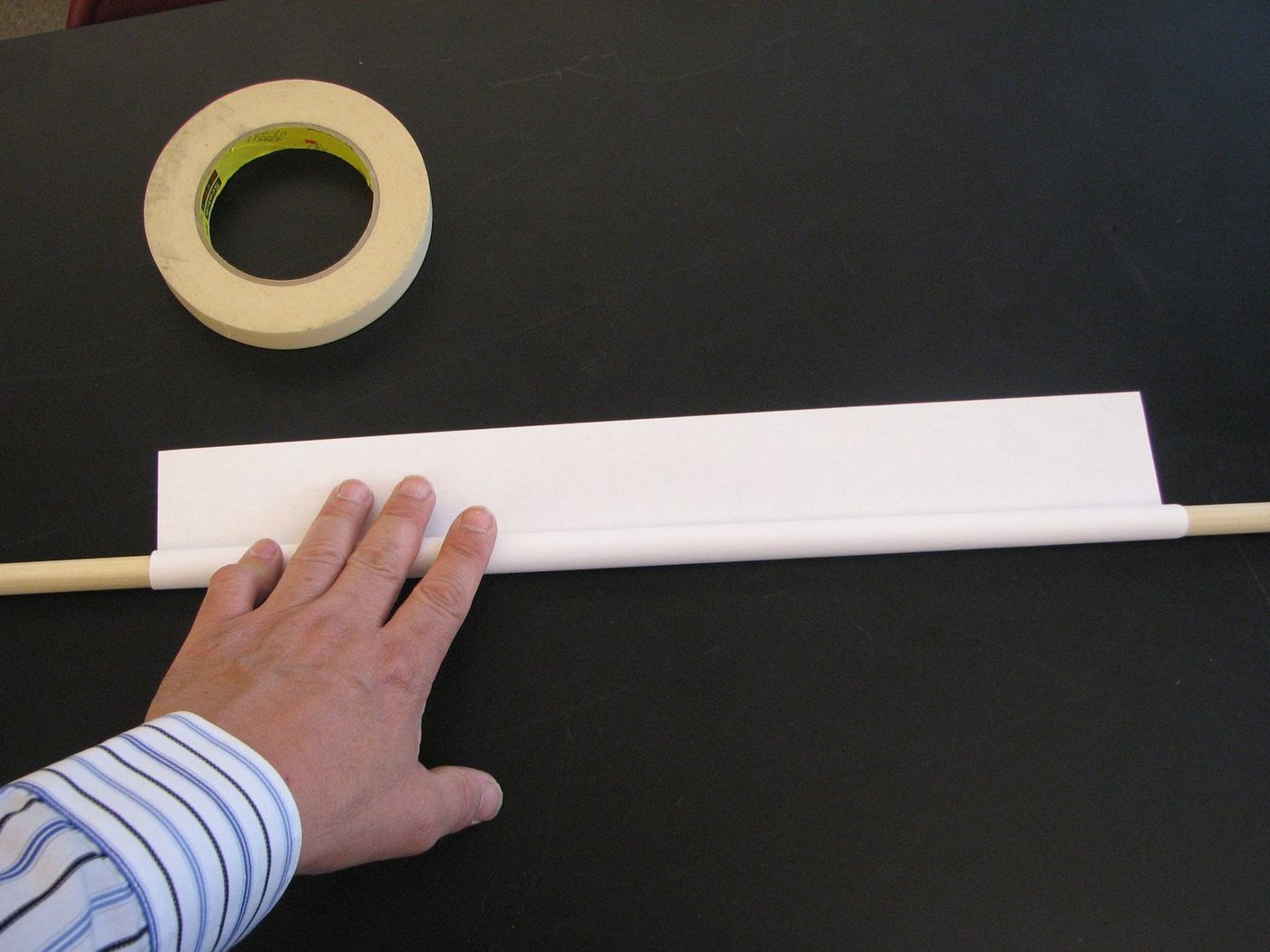
Lay the dowel along the long edge of the paper and roll the paper lengthwise around it into a long, snug tube.
Tape it in several places
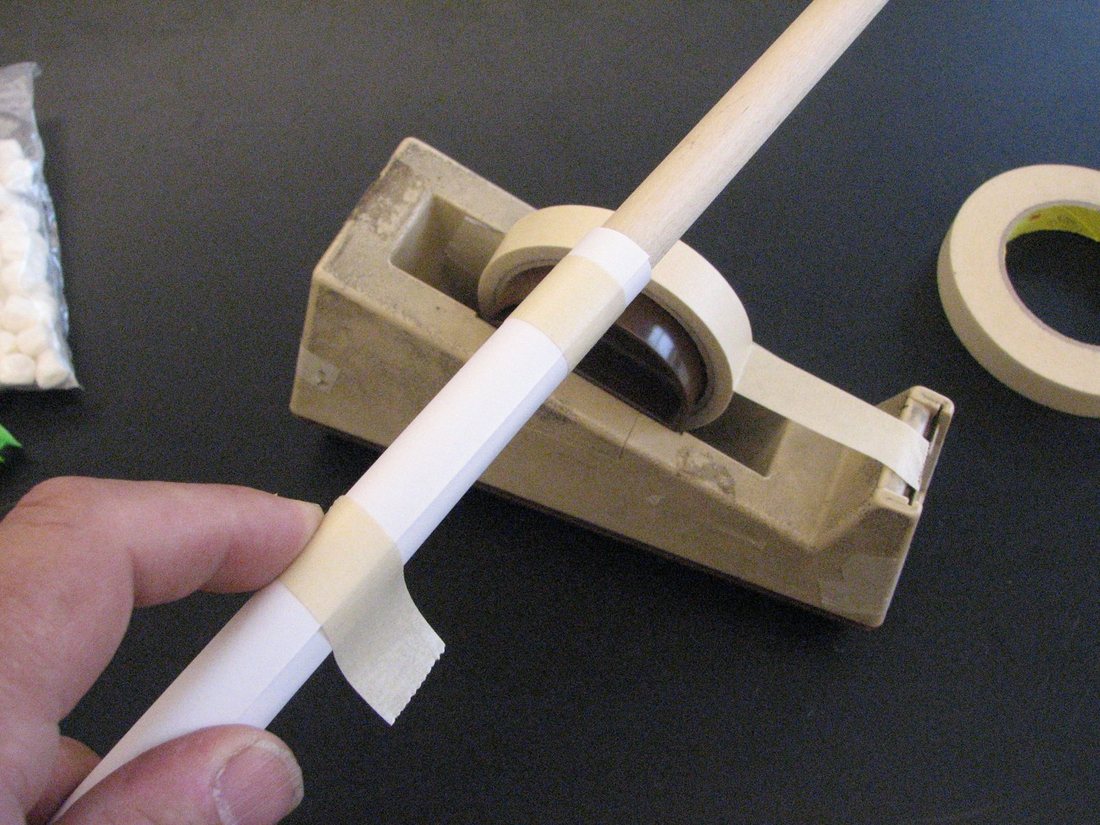
Tape the tube at several points along its whole length. The barrel will be cut shorter during the demonstration, so every section needs its own tape.
Slide out the dowel and load
Remove the dowel and drop a marshmallow or dart into the mouth end of the tube.
Take baseline shots
Hold the barrel level at the same height each time and blow with the same effort. After a few tries the darts should land in about the same place. Mark and measure the distance.
Cut the barrel shorter
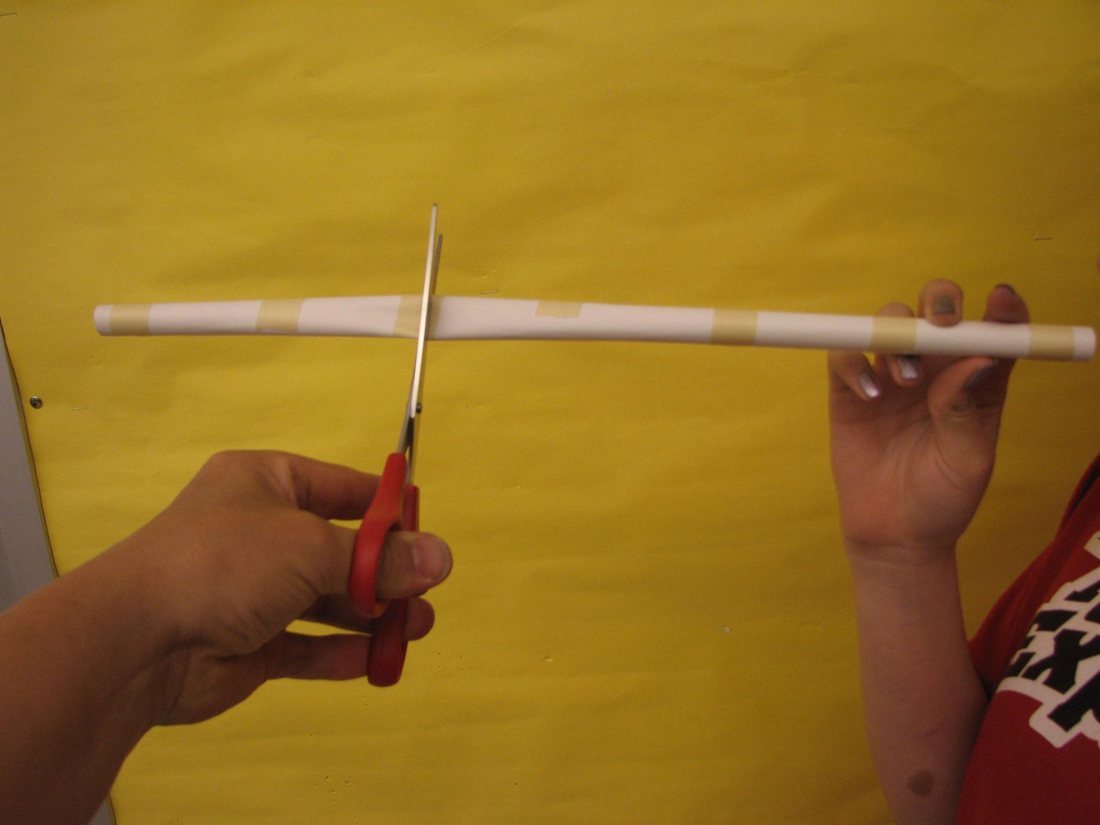
Cut about 25 percent off the barrel. Ask for predictions, then shoot again with the same effort and measure.
Repeat
Keep trimming the barrel and shooting. Record barrel length and distance each time and graph the results.
Set up the egg sheet
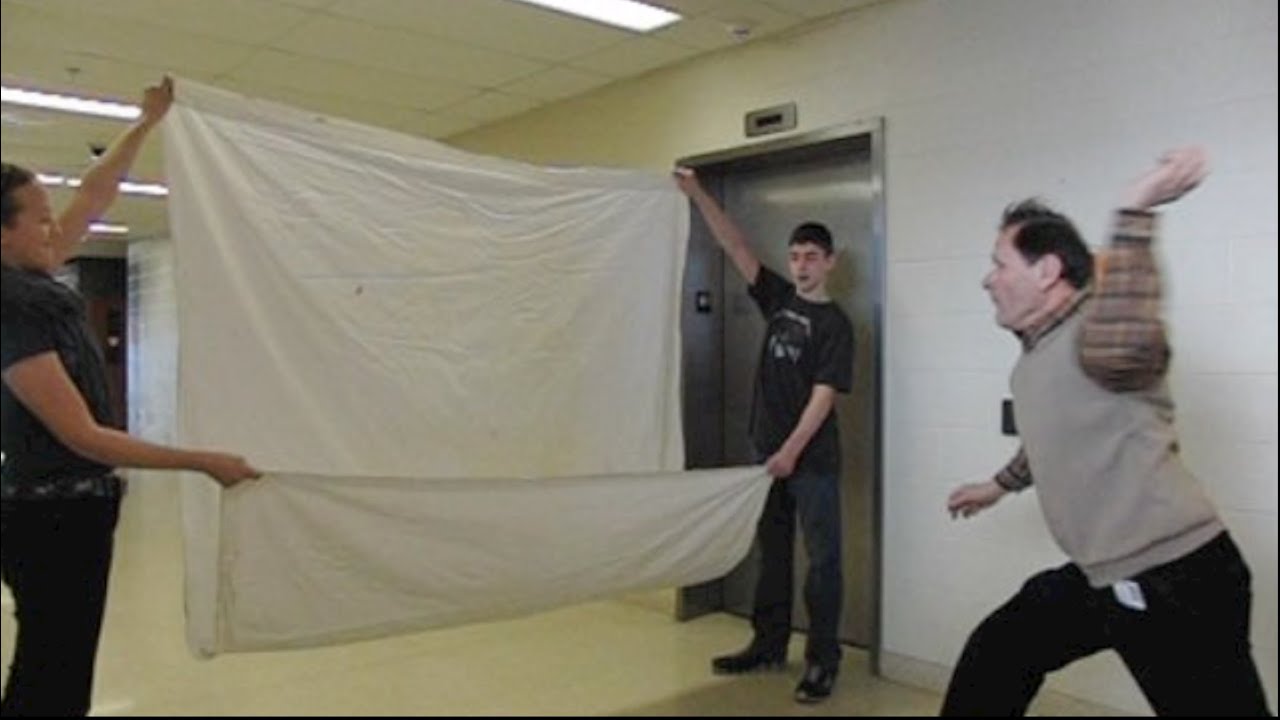
Two people hold a bed sheet up by its top corners, with the bottom edge folded up and held to form a pocket so a caught egg rolls into the fold and stays there.
Throw eggs into the sheet
First show that a raw egg breaks when thrown against a hard surface outdoors. Then throw eggs into the middle of the sheet, softly at first and then harder. They do not break.
Measure the speed (optional)
Record the throws on video and step through frame by frame. Using the camera's frame rate and a measured distance, calculate the egg's speed and how long it takes to stop.
How it works
Impulse is force multiplied by the time the force acts, and it equals the change in an object's momentum. A small force for a long time can produce the same change in momentum as a large force for a short time.
In the blowgun, your breath pushes on the dart the whole time it is in the barrel. If you blow with about the same force each time, a shorter barrel means the push lasts a shorter time, so the dart leaves with less momentum and speed and lands closer.
Stopping an egg requires the same change in momentum whether it hits a wall or a sheet. The wall stops it in a tiny fraction of a second, which takes a very large force, and the shell breaks. The sheet gives way and stretches the stopping time out, so the force needed is much smaller and the egg survives. Car crumple zones, air bags, padding and catching a ball with 'soft hands' all work the same way.
Using it
- Ask: which shoots farther, a long blowgun or a short one? Have students predict the distance after each cut.
- Ask how the barrel length changes the time part of impulse, and whether it should change the force (ideally not).
- What would happen with the same barrel length if you blew harder or softer?
- Apply the idea to rifles versus handguns, golf swing follow-through, or a long jump run-up.
- For the eggs: if you played catch with raw eggs, how would you catch them? Relate it to crumple zones and an egg-drop project.
Variations
- Bruce also made a reusable set of blowguns from PVC pipe cut to different lengths.
- Graph distance against barrel length and look for the pattern.
- Try the egg toss with a towel held tight versus held loosely.
Troubleshooting
More build plans
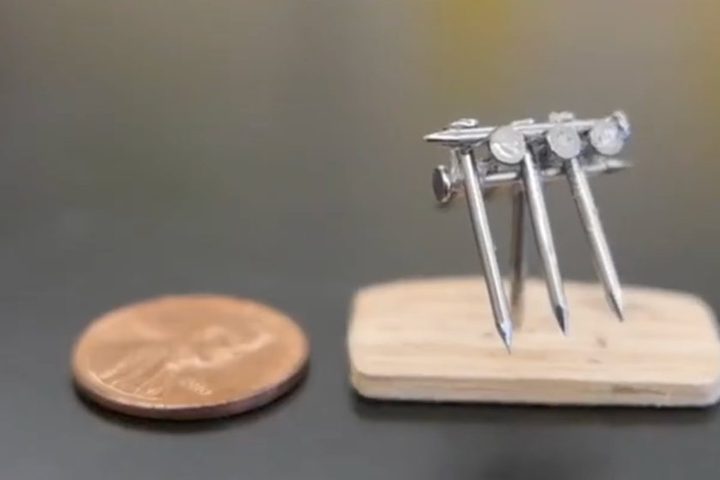
Balancing Nails Challenge
Twelve big nails balanced on one nail head looks impossible. Then Bruce doubles it.
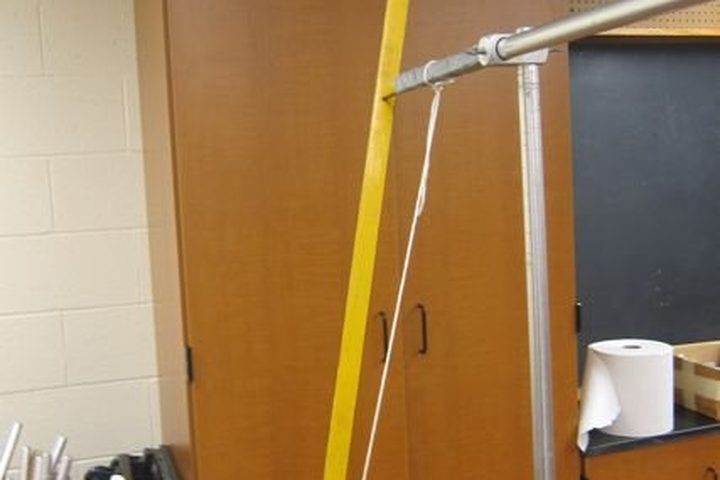
Bar Pendulum vs. Simple Pendulum
A swinging meterstick keeps the same beat whether it hangs from its end or from a point a third of the way down. Why?
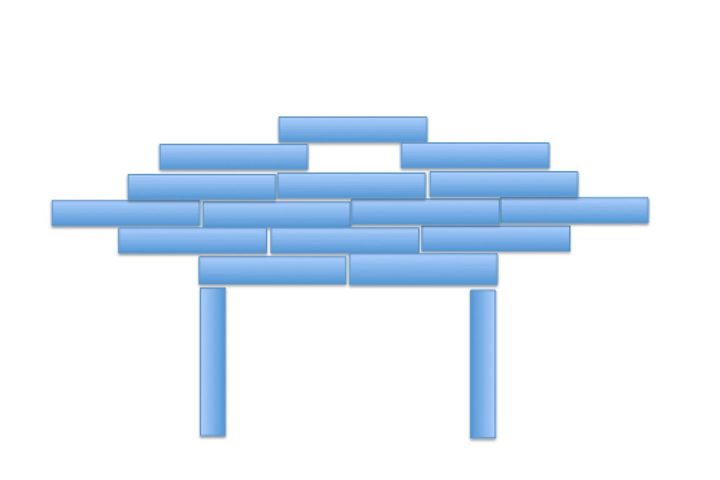
Block Stacking Challenges
How few blocks does it take to make the top block hang completely past the edge of the bottom one?
© Bruce Yeany · Homemade Science with Bruce Yeany · youtube.com/@YeanyScience
Free for personal and classroom use. Please don't resell or republish. Build and use at your own risk; follow the safety notes and supervise children.