Build plans / Activation Energy Track
Activation Energy Track
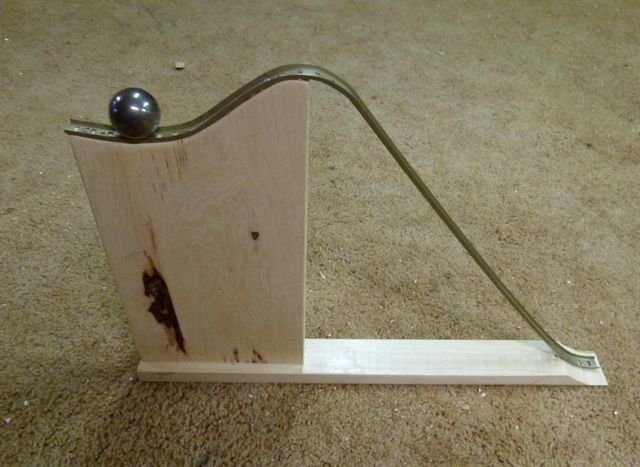
A metal shelf strip bent into a small hill followed by a long downhill run is screwed to a shaped wooden support. A ball resting in the dip at the top has energy but cannot roll down until it gets a small push over the hump, just as a chemical reaction needs activation energy to get started. It is a simple model that clears up a common misconception about why flames start fires.
Written from Bruce's original workshop handout. Bruce's final review of this plan is in progress.
What it shows
The ball sits up high, full of potential energy, yet it can't go anywhere until you lift it a little higher.
Key ideas: activation energy, exothermic reactions, catalysts, potential and kinetic energy
Build it
Gather the parts
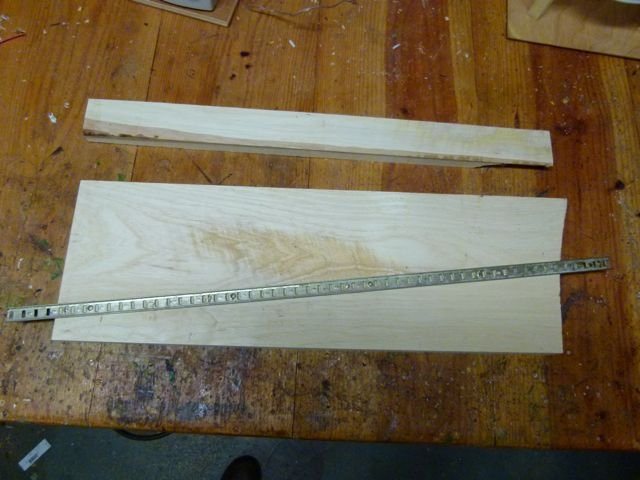
Lay out the base board, the support board, the metal strip, screws and ball.
Sketch the profile
Trace the shape you want on paper or on the support board: a shallow resting dip near the top, a small hump, then a long, steep downhill that levels out at the bottom.
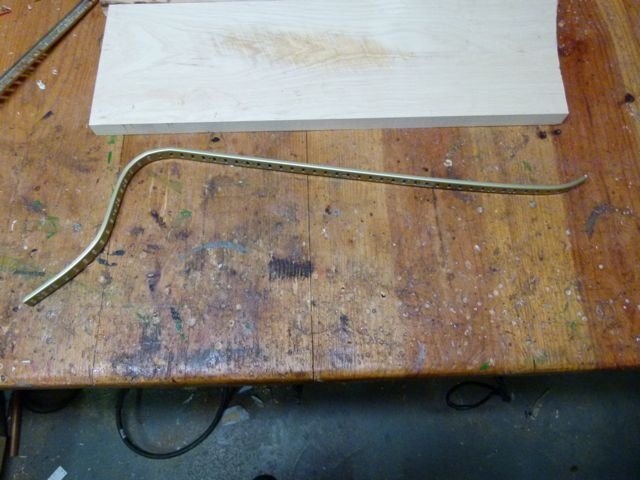
Bend the track
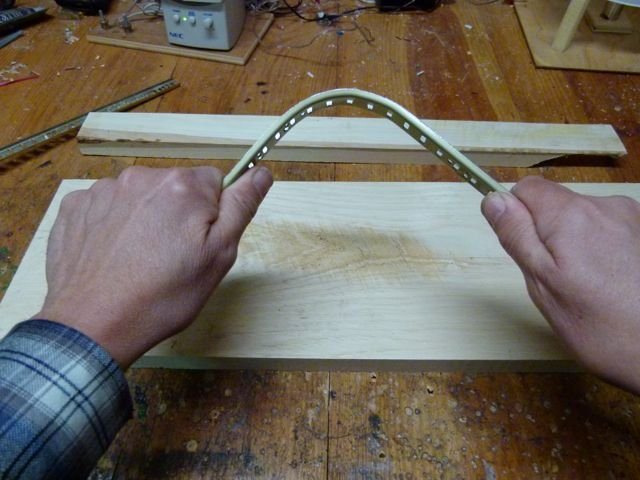
Wearing gloves, bend the strip by hand to match your sketch. Bend gradually and check it against the drawing often.
Shape the base
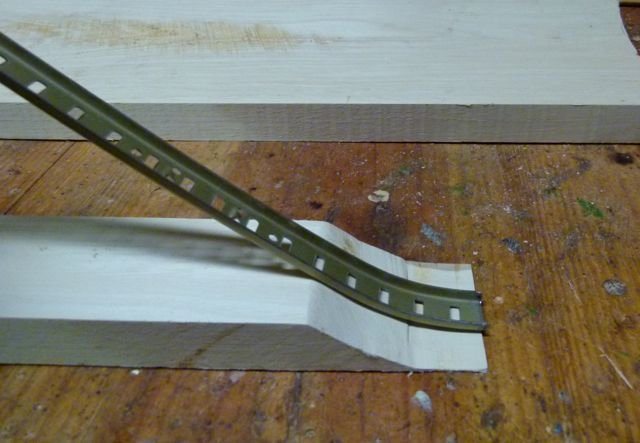
Cut a curve or bevel on the end of the base board so the bottom of the track lies flat along it.
Trace the support
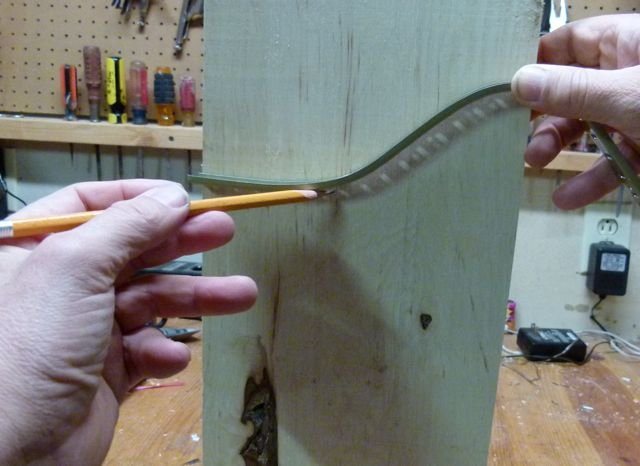
Hold the bent track against the support board and trace its curve with a pencil. Cut along the line so the top edge of the board matches the track.
Attach the support
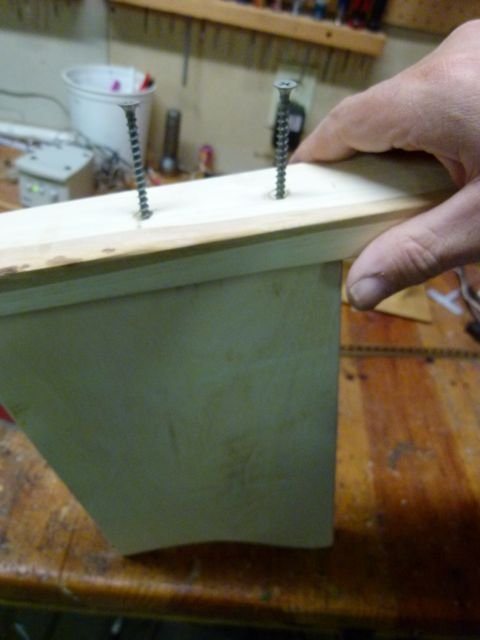
Screw the support to the base from underneath, countersinking the screws so they sit flush and the base sits flat.
Fasten the track
Lay the track along the shaped top edge and fasten it with very small screws through the slots.
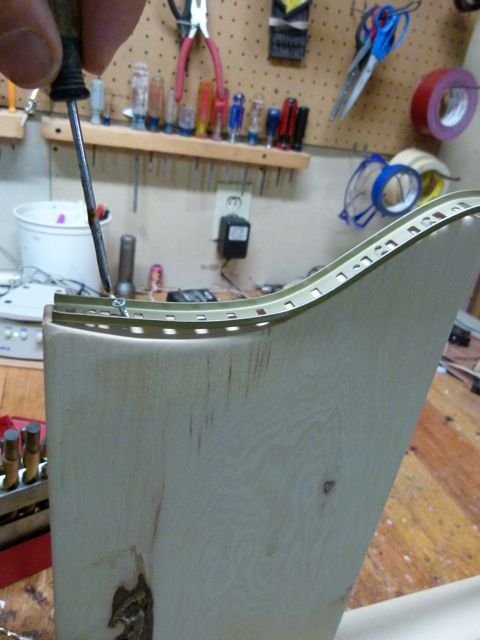
Test it
Place the ball in the dip at the top. It should stay put until it is lifted over the hump, then roll all the way down.
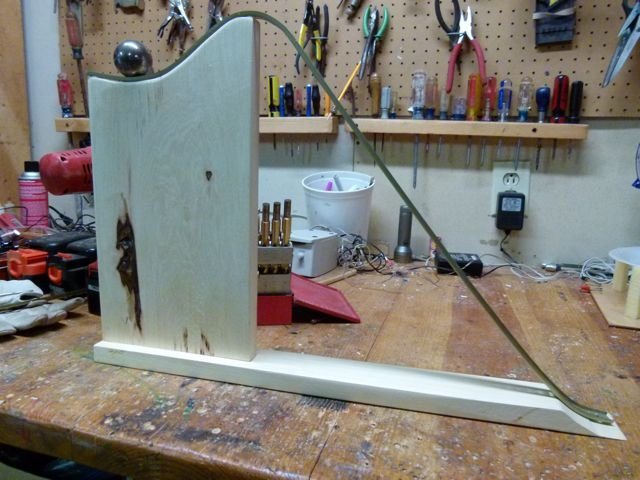
How it works
For a reaction to happen, particles must collide with enough energy to break and rearrange bonds. At ordinary temperatures many particles simply do not have enough energy, so nothing happens even though the reaction would release energy overall.
The ball in the dip is like the reactants: it has plenty of potential energy but cannot release it until it is lifted a little higher, over the hump. That small extra lift is the activation energy, a term introduced by the Swedish chemist Svante Arrhenius.
Once over the top, the ball rolls far below where it started, releasing much more energy than it took to get it going. In an exothermic reaction such as burning paper, the heat released keeps raising more particles over their hump, so the reaction continues until the fuel is used up. The products end at a lower energy than the reactants.
A catalyst works like a lower hump: it provides a path with a smaller activation energy, so the reaction starts more easily and runs faster. It is not used up, and it does not change the starting or ending energy. Catalysts in living things are called enzymes.
Using it
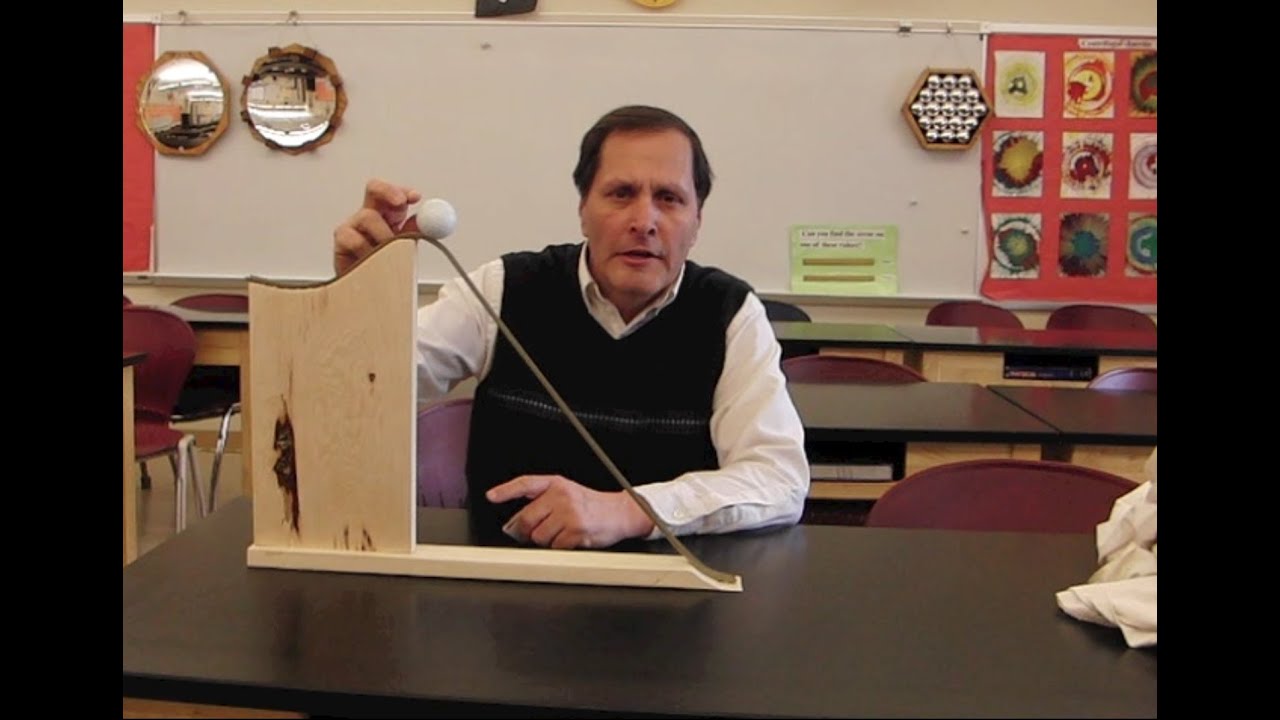
- Set the ball in the dip and ask: For the ball to roll down the big hill, what has to happen? Students usually realize it must go a little higher to end up much lower.
- Address the misconception that the match flame is part of the burning reaction: the flame only supplies the activation energy. Paper must reach roughly 450 degrees F before it ignites.
- Have students draw an energy diagram of a reaction and match each part to the track.
- Model a catalyst by holding a ruler or card over the hump to create a lower path, and discuss what changes and what stays the same.
- Compare exothermic reactions with endothermic ones, where the end of the track would sit higher than the start.
Variations
- Build a second track with a lower hump to represent the catalyzed reaction and set the two side by side.
- Make a track where the end is higher than the start to model an endothermic reaction.
Troubleshooting
More build plans

Fruit Racers
Pick a fruit, add wheels, and race it down a tilted table in a family-night challenge built on potential energy.
Rolling vs. Sliding Batteries
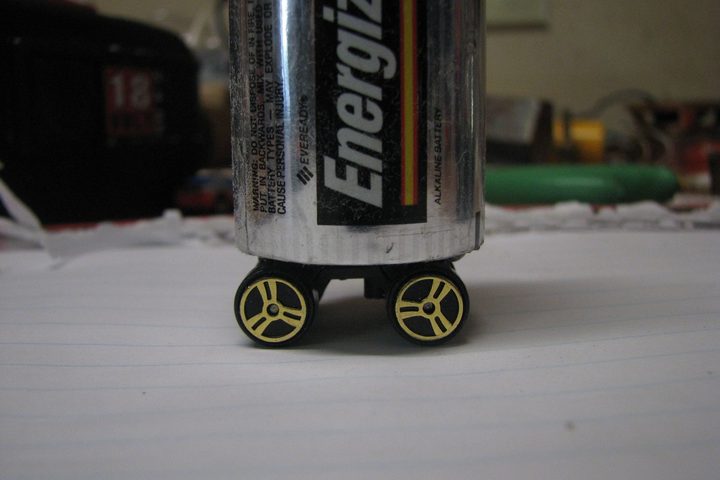
Two identical batteries race down a gentle slope: one rolls, one rides on tiny toy-car wheels. Most people bet on the wrong one.
High Road, Low Road Tracks
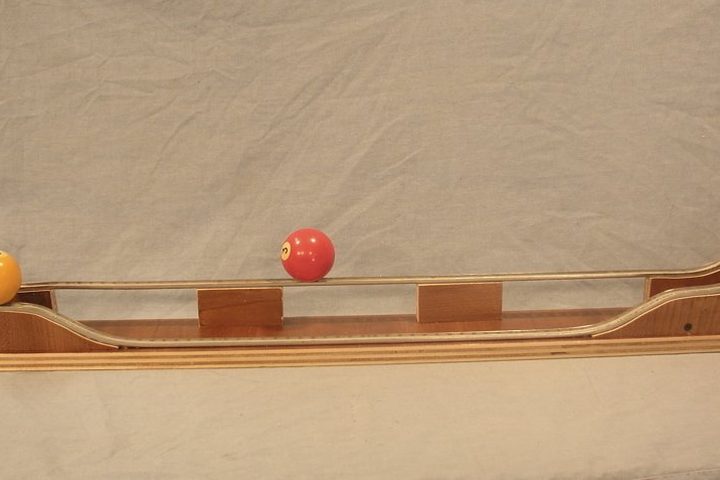
Two balls race across side-by-side tracks, and the one that takes the longer road through a dip wins every time.
© Bruce Yeany · Homemade Science with Bruce Yeany · youtube.com/@YeanyScience
Free for personal and classroom use. Please don't resell or republish. Build and use at your own risk; follow the safety notes and supervise children.