Build plans / Rolling vs. Sliding Batteries
Rolling vs. Sliding Batteries
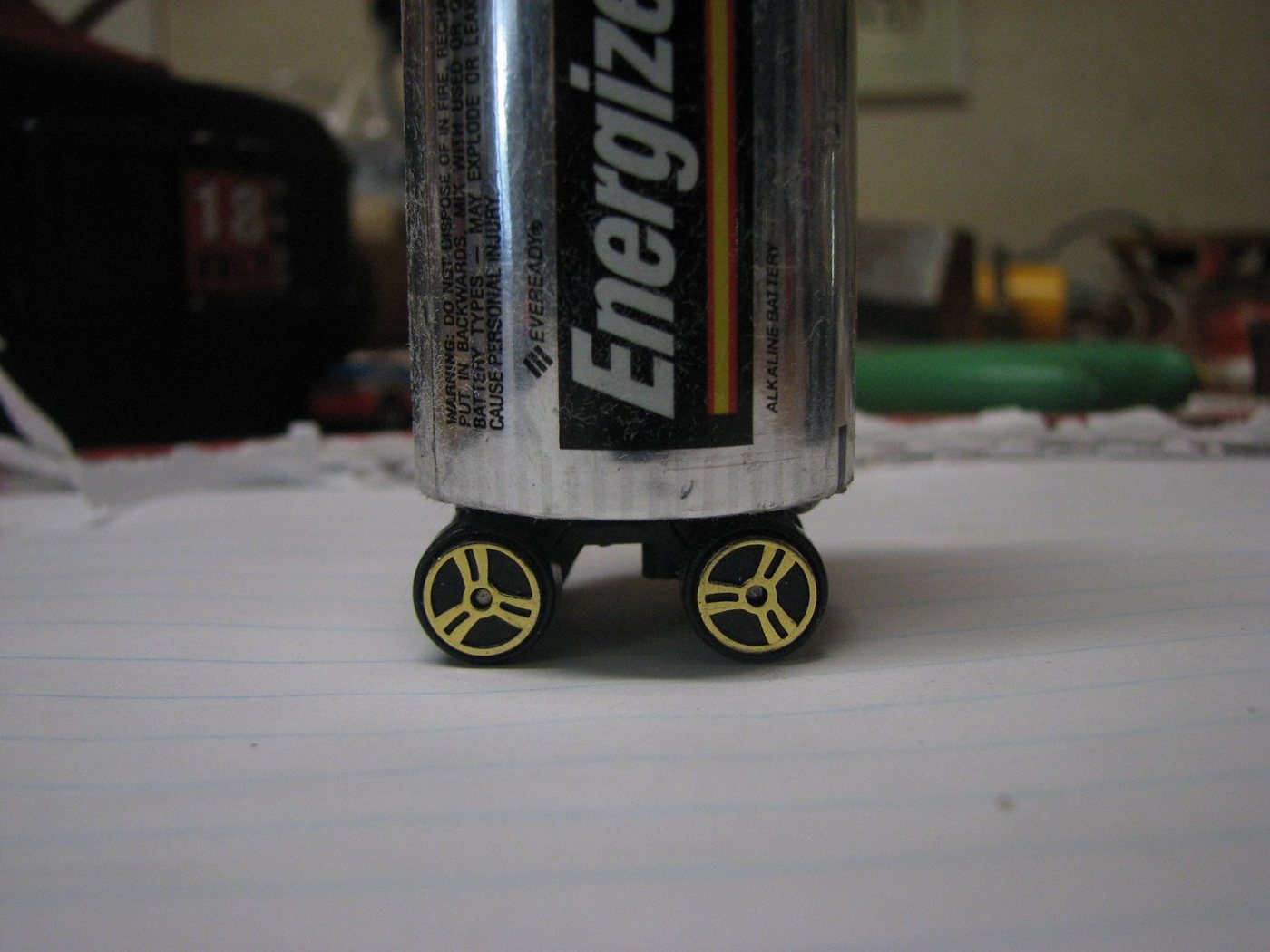
One D-cell battery rolls down an incline on its own. An identical battery has a small toy car's wheel set glued to it, so it travels without turning, almost as if it were sliding. The non-rolling battery wins, which opens up a discussion of translational and rotational kinetic energy and rotational inertia. It takes about ten minutes to build.
Written from Bruce's original workshop handout. Bruce's final review of this plan is in progress.
What it shows
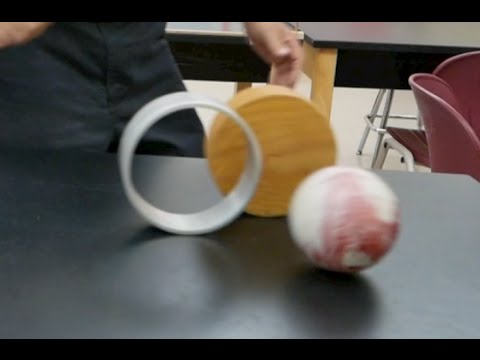
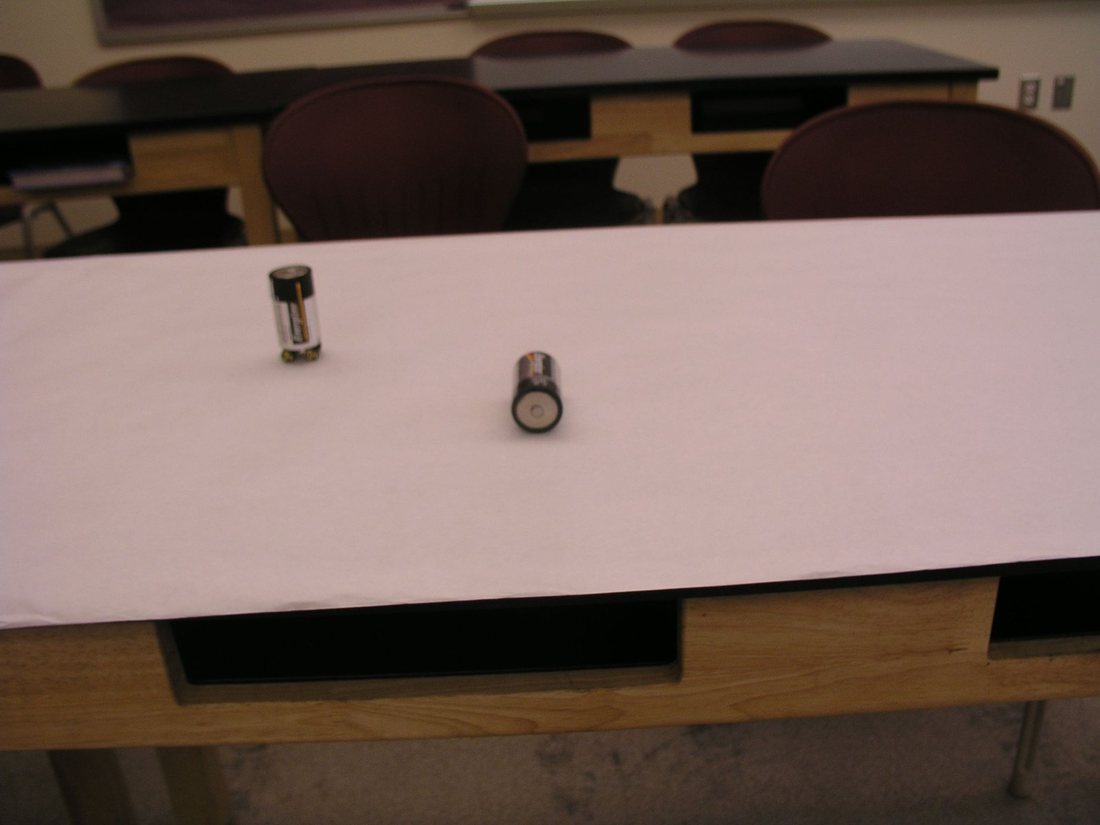
Two identical batteries race down a gentle slope: one rolls, one rides on tiny toy-car wheels. Most people bet on the wrong one.
Key ideas: translational kinetic energy, rotational kinetic energy, rotational inertia, friction, inclined plane
Build it
Pick a donor car
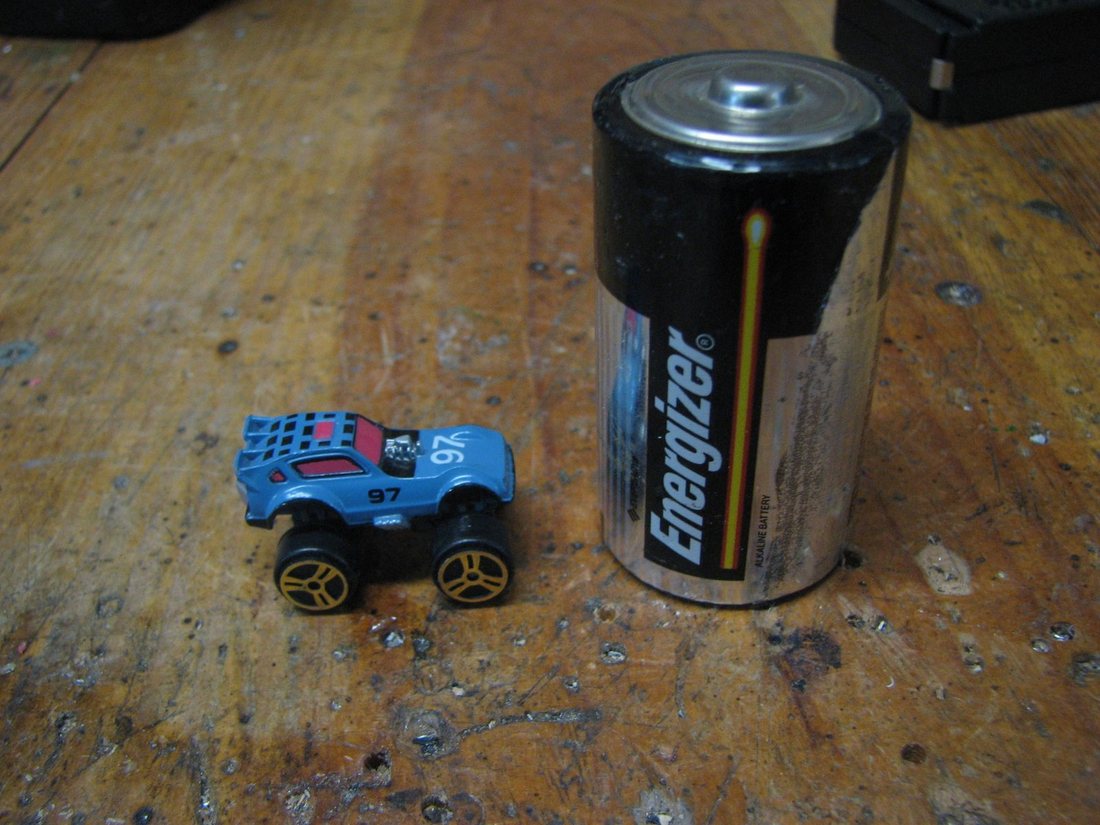
Find a small die-cast car whose wheel set is about as long as the battery is wide.
Take the car apart
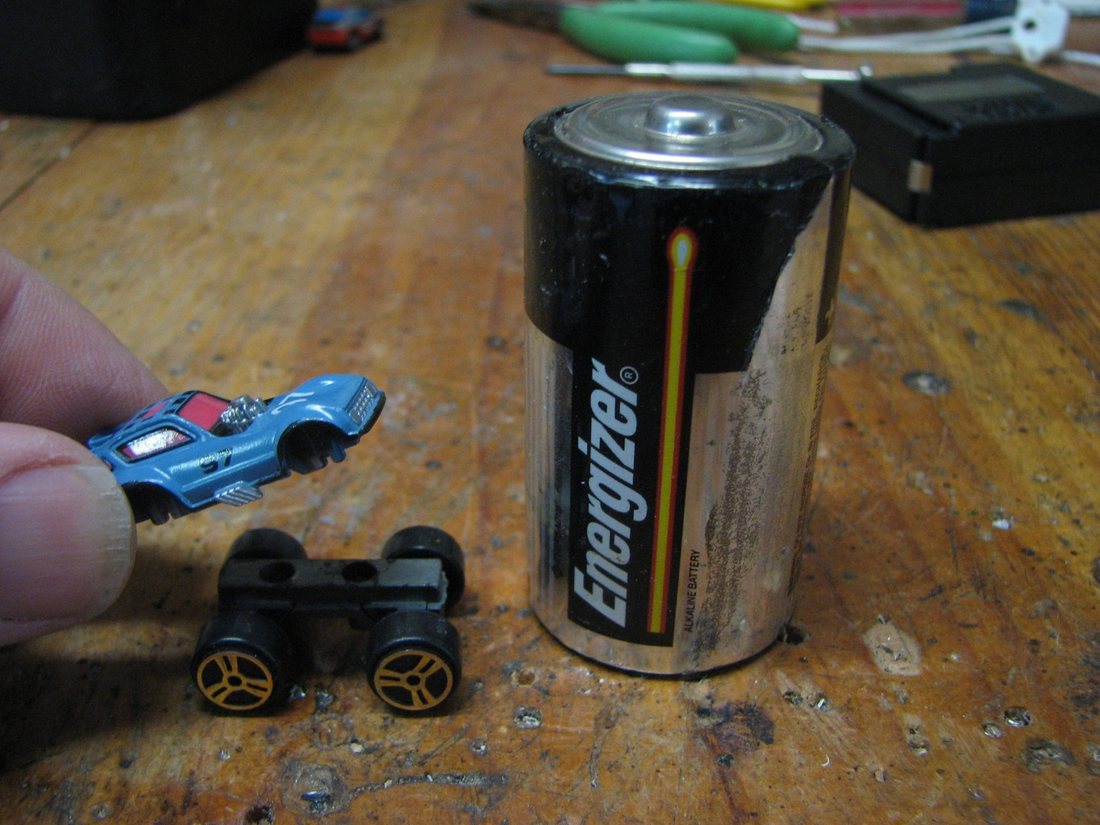
Most small cars are held together by a single screw or rivet underneath. Remove it and lift off the body, keeping the wheel and axle assembly in one piece.
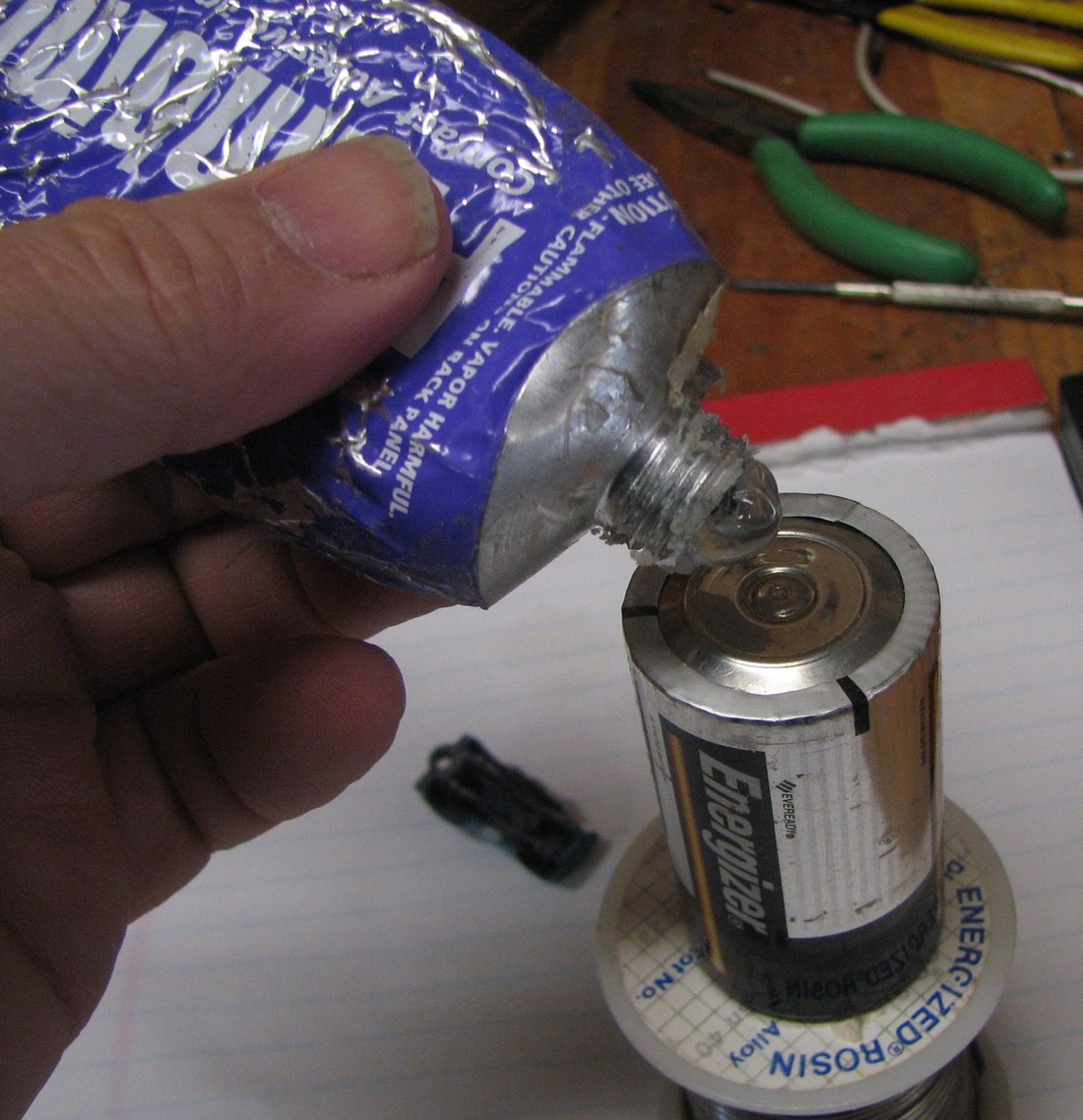
Glue the wheels to the battery
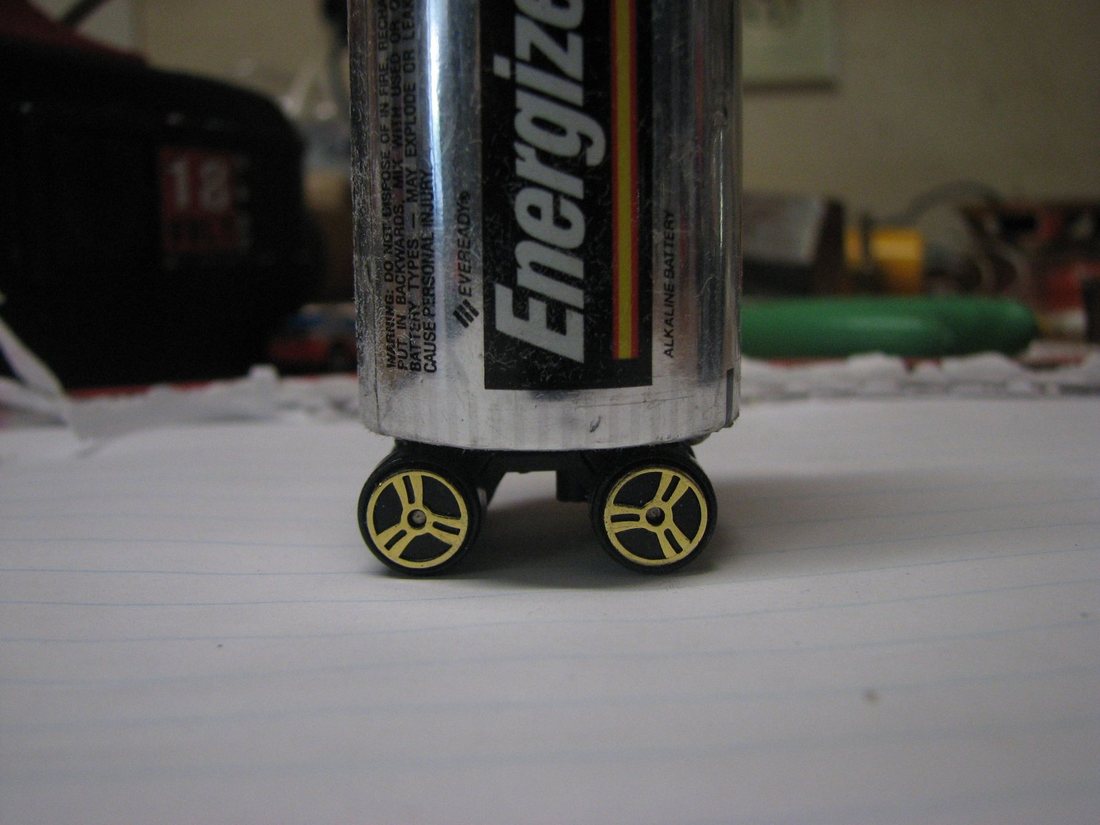
Glue the wheel assembly to the side of one battery so its wheels roll in the same direction the battery would roll. Center it so the battery sits level.
Let it dry
Let the glue cure fully. Check that the battery rides on the wheels without touching the table.
Set up the slope
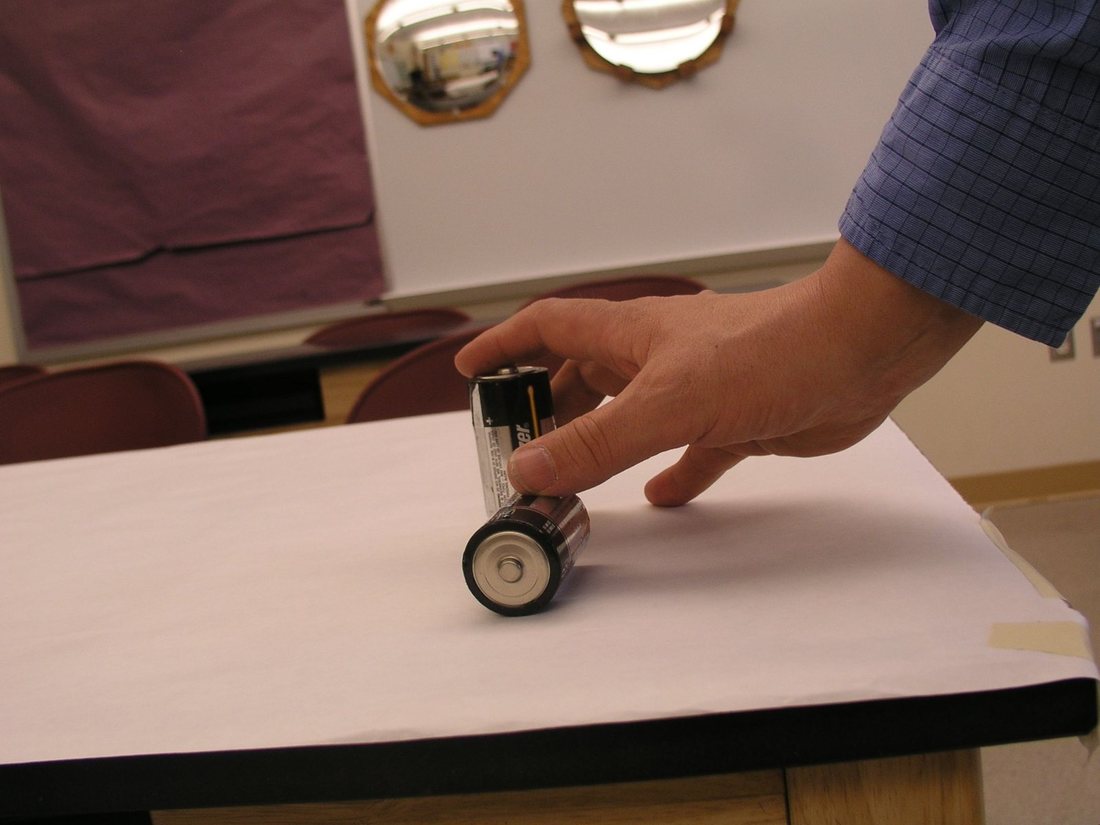
Raise one end of a table or board slightly. A very gentle slope gives the clearest race.
Race
Ask for predictions, then release both batteries side by side from the same line at the same moment.
How it works
Both batteries start with the same gravitational potential energy, and both turn it into kinetic energy as they move down the slope.
The battery on wheels only moves from place to place: almost all of its energy goes into translational kinetic energy, the energy of moving along. The tiny wheels spin, but they are so light that they take very little energy.
The bare battery has to roll. Friction with the table makes it turn, and because it has rotational inertia (a resistance to starting to spin), part of its energy goes into rotational kinetic energy. Less energy is left for moving down the slope, so it falls behind.
An object sliding with no friction at all would be the fastest of all. The wheeled battery is a close stand-in, but its wheels still have a little friction.
Using it
- Show both batteries and ask which will reach the bottom first and why. Have students write down a prediction and a reason.
- After the race, ask: if the batteries weigh nearly the same, where did the rolling battery's energy go?
- Students sometimes point out that the wheeled battery isn't really sliding. Ask what would happen with no friction at all.
- Use it to introduce a 'roller derby' lab: students find or build objects that roll down a table as fast as possible, and as slowly as possible.
- Race a solid can against a hollow can and discuss where the mass is placed.
Variations
- Tape the battery onto the roof of a small toy car instead of gluing on the wheels.
- Glue the battery crosswise onto a whole toy car.
- Use the same idea with other cylinders, such as a can or a dowel.
Troubleshooting
More build plans
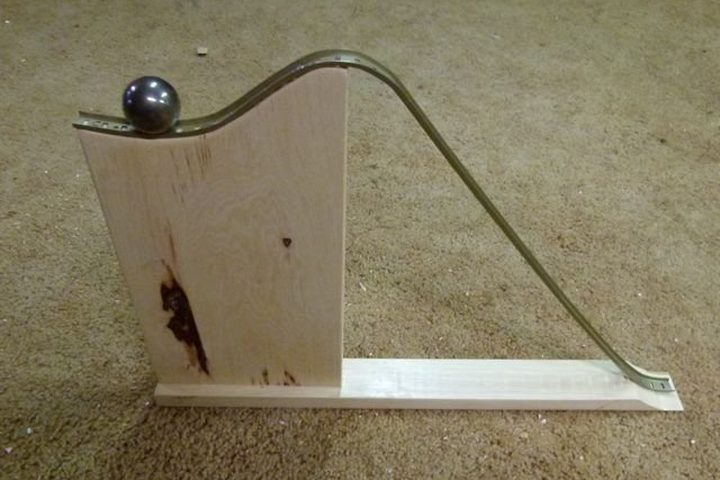
Activation Energy Track
The ball sits up high, full of potential energy, yet it can't go anywhere until you lift it a little higher.

Fruit Racers
Pick a fruit, add wheels, and race it down a tilted table in a family-night challenge built on potential energy.
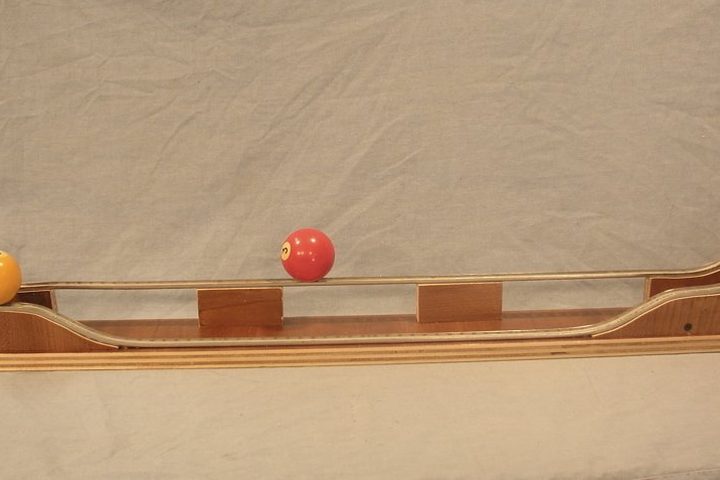
High Road, Low Road Tracks
Two balls race across side-by-side tracks, and the one that takes the longer road through a dip wins every time.
© Bruce Yeany · Homemade Science with Bruce Yeany · youtube.com/@YeanyScience
Free for personal and classroom use. Please don't resell or republish. Build and use at your own risk; follow the safety notes and supervise children.