Build plans / Balloon in a Bottle
Balloon in a Bottle
Try to blow up a balloon inside a sealed bottle and you can barely get started: the trapped air has nowhere to go. Give that air an escape route and the balloon inflates, then stays inflated with its mouth open once the route is closed. This plan covers a capped side-port bottle, a hidden-hole trick bottle, and Bruce's no-holes problem-solving challenge with three solutions that really work.
Written from Bruce's original workshop handout. Bruce's final review of this plan is in progress.
What it shows
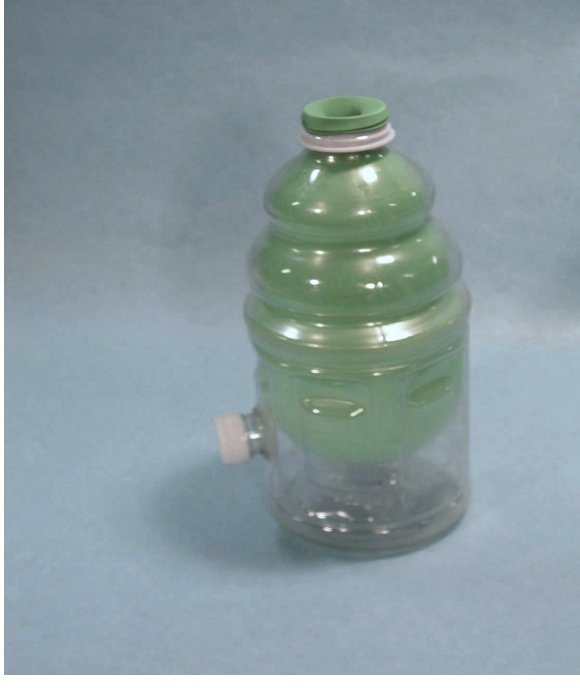
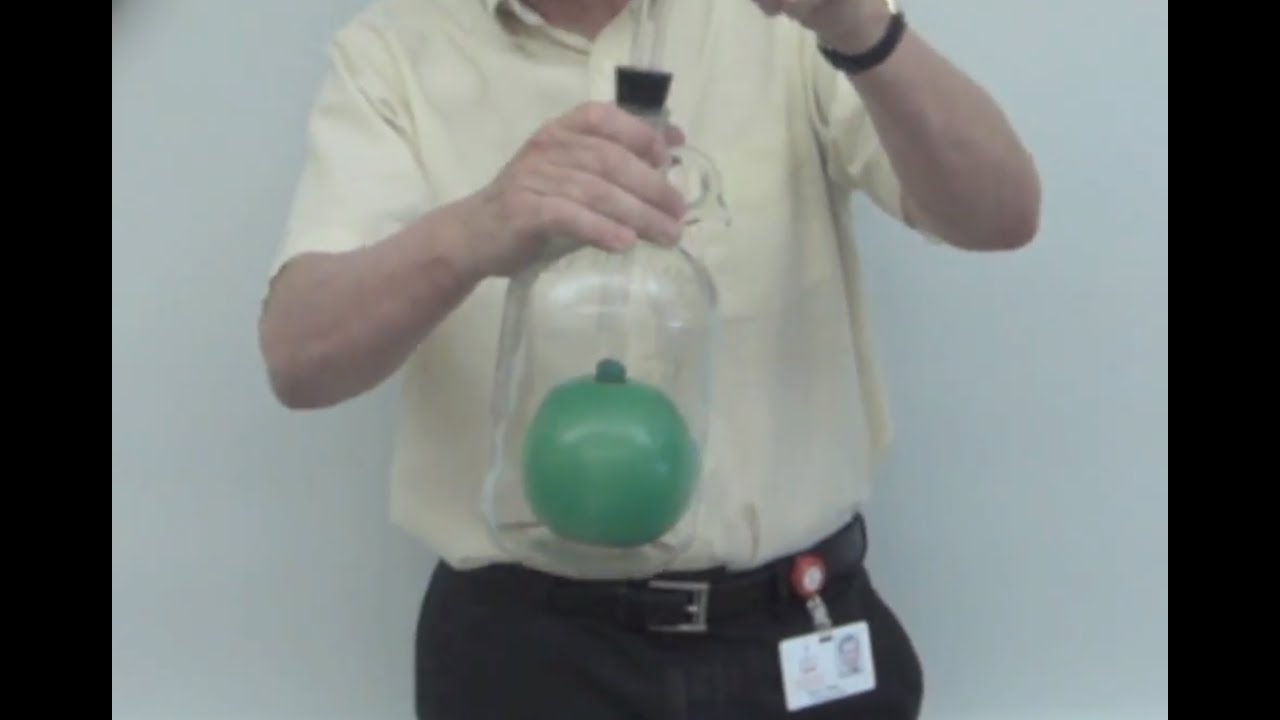
Blow up a balloon inside a bottle and it stays inflated with its mouth wide open.
Key ideas: air pressure, Boyle's law, displacement, problem solving
A version of this device appears in If You Build It, They Will Learn (NSTA Press).
About the bookBuild it
Try it the hard way first
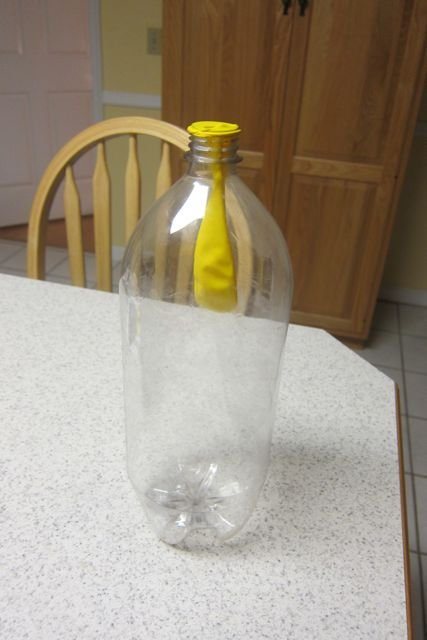
Push a balloon into the mouth of a plain 2 liter bottle, stretch its lip over the bottle's mouth, and try to blow it up. It hardly grows, because the air in the bottle has nowhere to go.
Make the hidden-hole bottle
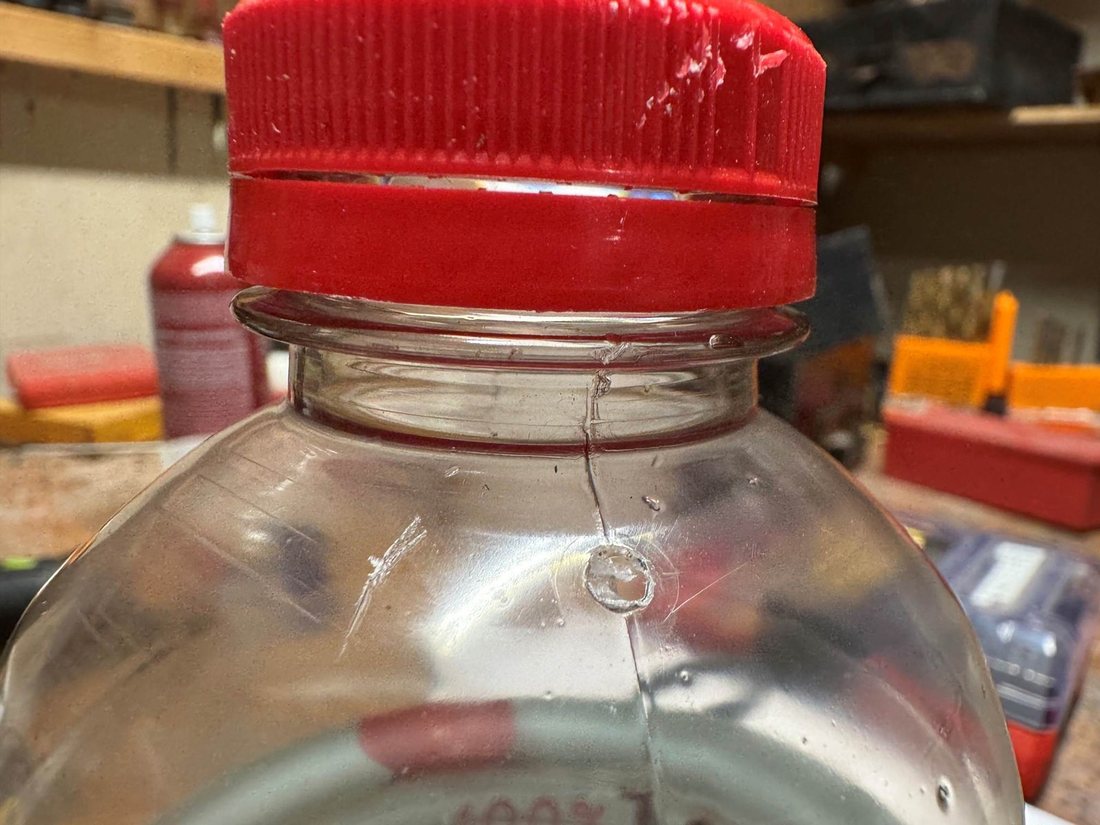
On a second bottle, an adult drills or pokes one small hole near the shoulder just below the cap threads, where a finger can cover it unnoticed. A hole in the bottom also works.
Inflate it secretly
Fit a balloon into the trick bottle and blow it up with the hole uncovered; the air inside escapes. Cover the hole with your finger before you stop blowing, and the balloon stays inflated with its mouth open.
Build the side-port bottle
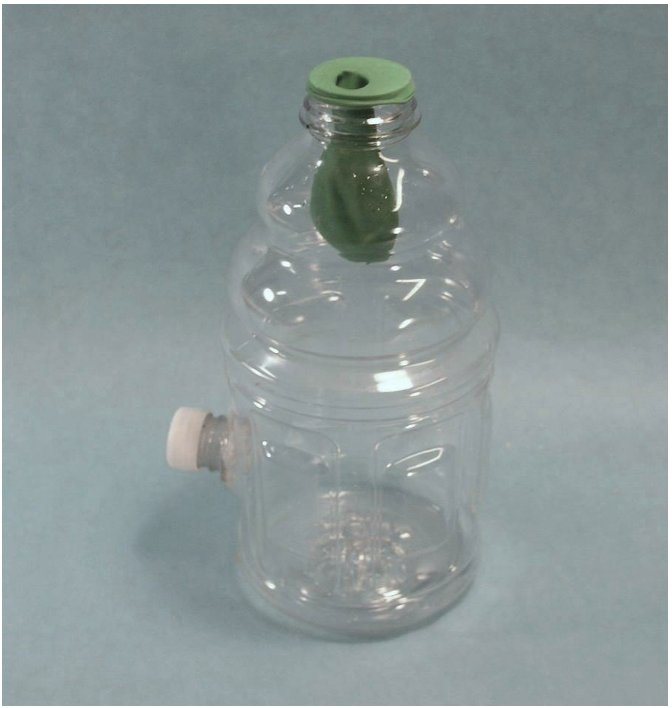
For a classroom version, cut a hole in the side of a bottle near the bottom and glue in a capped neck cut from another bottle. Inflate the balloon with the side cap off, then screw the cap on.
Show the open balloon
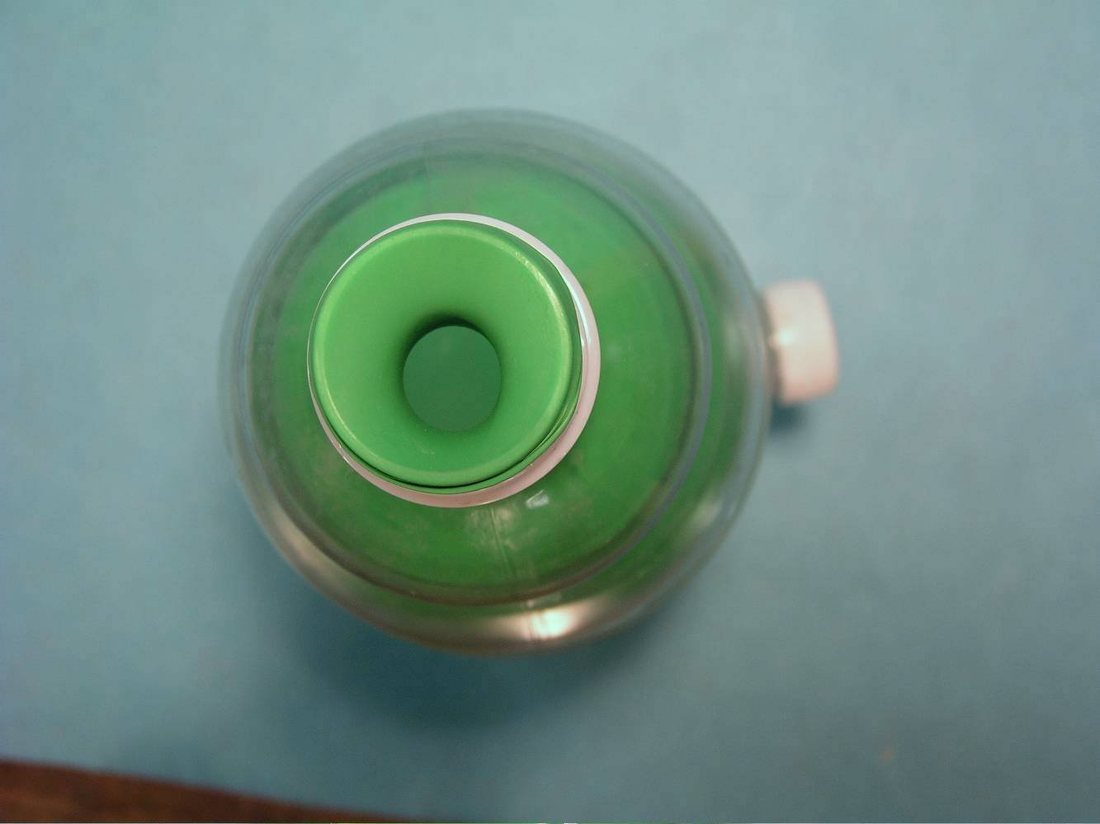
Look down into the bottle: the balloon stays full even though its mouth is open. Removing the side cap lets it collapse.
Set the no-holes challenge
Rules: a regular large balloon, a regular 2 liter bottle with no holes, and the balloon must end up at least half inflated inside with its mouth open over the bottle's mouth. Any other materials may be used.
Solution 1: straw and rubber band
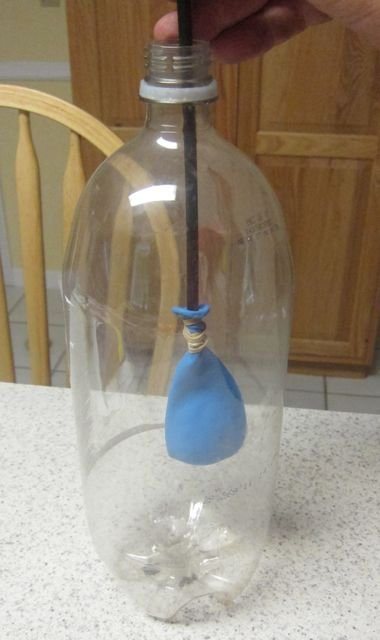
Fasten the balloon's mouth to the end of a straw with a rubber band, push the balloon all the way into the bottle and blow through the straw. Air escapes around the straw as the balloon grows.
Finish solution 1
Pinch the balloon, slide the straw out, and fold the balloon's lip back over the bottle mouth while a wet finger or a finger pressing the neck against the bottle wall keeps air from leaking. It takes practice, but this is the only method that fills the whole bottle.
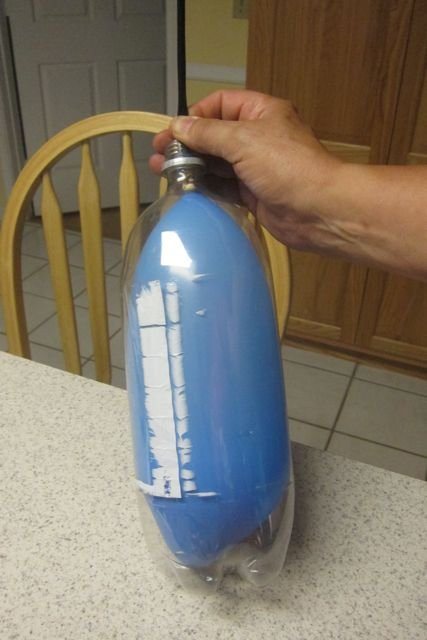
Solution 2: bypass straw
Put the balloon in the bottle mouth and slip a soapy straw or stick down beside it. The straw lets the bottle's air escape as you blow. Pinch the balloon closed, pull the straw out, and fold the lip back.
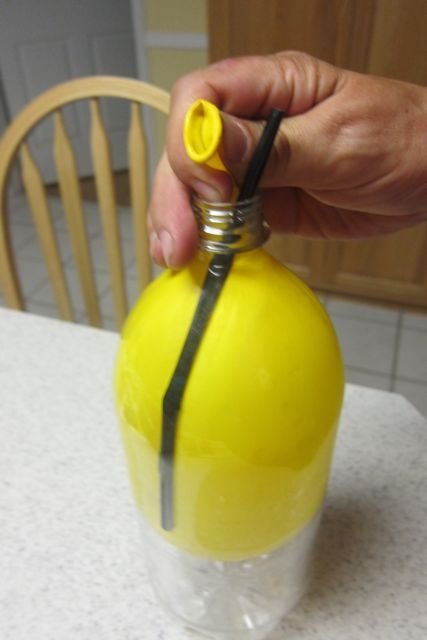
Solution 3: crush the bottle first
Step on the empty bottle to flatten it, then fit the balloon in its mouth. Blowing hard (or pumping with a hand pump pressed tightly to the balloon's mouth) inflates the balloon and the bottle together.
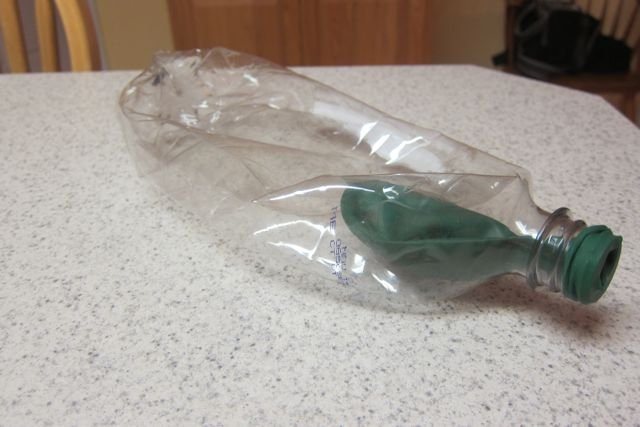
Admire the result
The crushed bottle pops back out around the balloon, a little crinkled but intact, with the balloon open at the top.
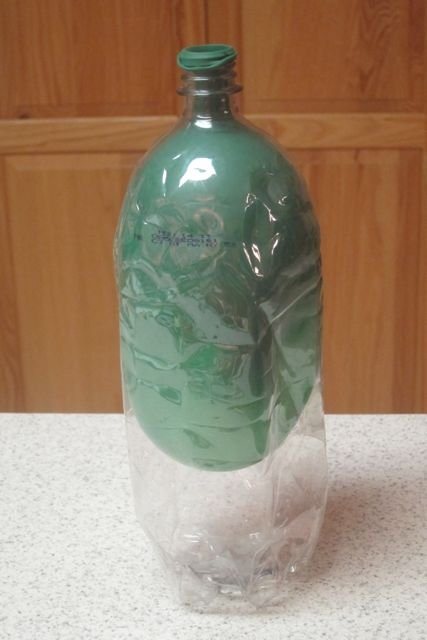
How it works
A sealed bottle is already full of air. To inflate the balloon inside, that air must be squeezed into a smaller space, and as Boyle's law describes, its pressure rises quickly as its volume shrinks. Your lungs cannot push hard enough to compress it much, so the balloon barely grows.
Opening a path for the air (a hole, a side port or a bypass straw) lets the bottle's air escape as the balloon takes its place.
Once the path is closed, the balloon stays inflated with its mouth open. The stretched rubber tries to shrink, but if it did, it would have to enlarge the sealed air space between the balloon and the bottle, lowering that air's pressure. The outside air pressure pushing into the balloon's open mouth is then greater than the pressure around the balloon, so it stays full.
Crushing the bottle first gives a different path: the bottle itself grows as the balloon grows, so the air between them is not compressed.
Using it
- Hand a student the plain bottle and blow up the hidden-hole bottle yourself. Then ask the class to figure out why one works and the other does not.
- Ask: why does the balloon stay inflated with its mouth open? What would happen if you uncapped the side port?
- Use the no-holes challenge as a problem-solving activity. Include ideas students cannot test and have them argue why each would or would not work.
- Thought experiments: what if you attached the balloon in the vacuum of space and came back inside? What if you took the bottle 34 feet down in the ocean? What if you chilled the bottle?
- Ask why the balloon only fills half the bottle in most methods but the whole bottle with the straw-and-rubber-band method.
Variations
- Draw a face or animal on the balloon before inflating it for a fun display.
- Try juice bottles, jars or flasks of different shapes.
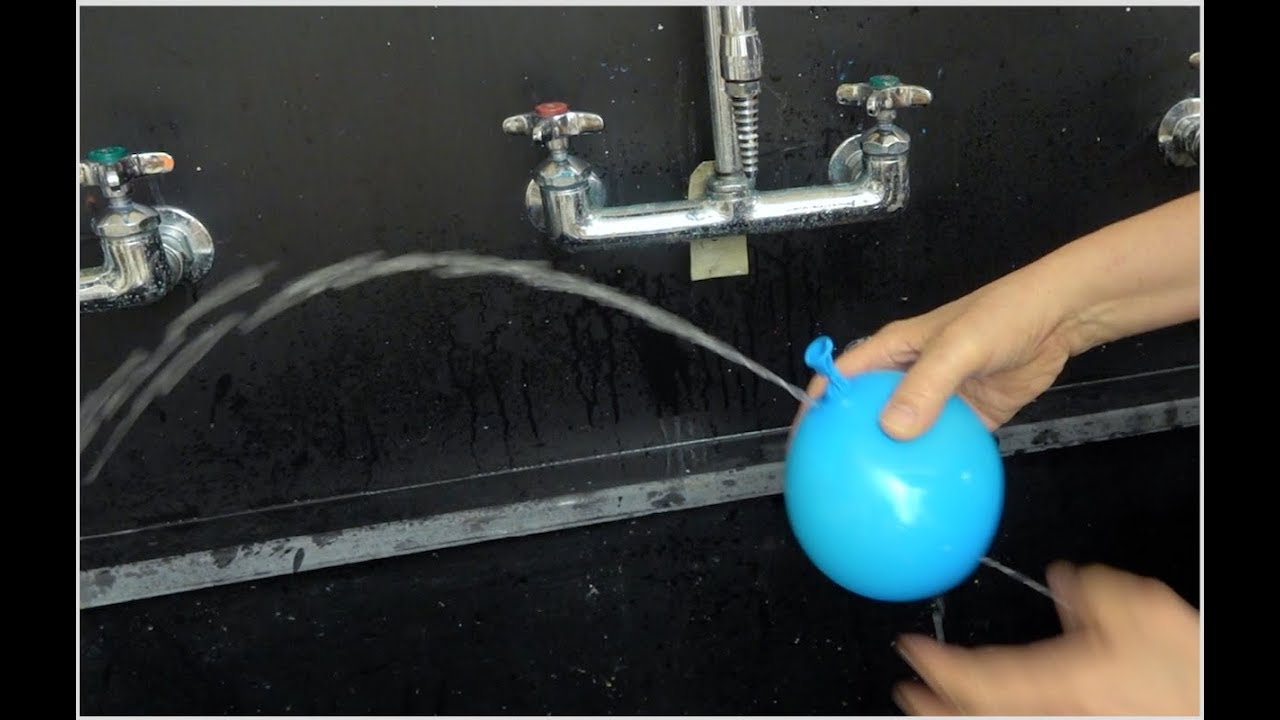
- Pour water into the open balloon and see what happens.
Troubleshooting
More build plans
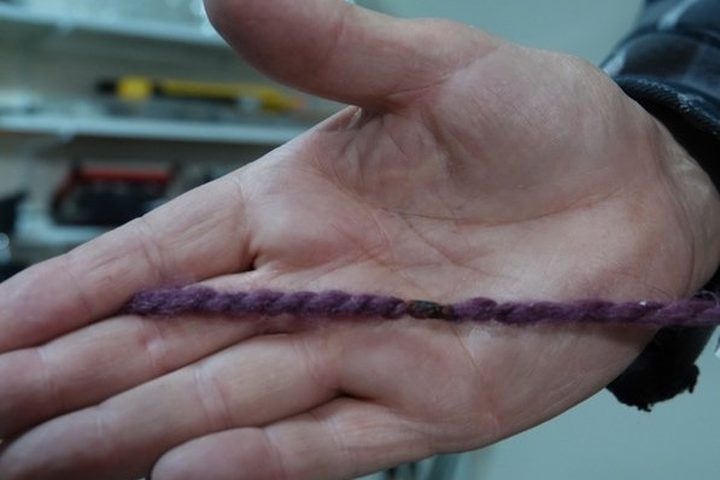
Air-Powered String Shooter
A loop of yarn shoots out of a PVC pipe and snakes through the air in a self-supporting arc, driven by nothing but a shop vac's exhaust.
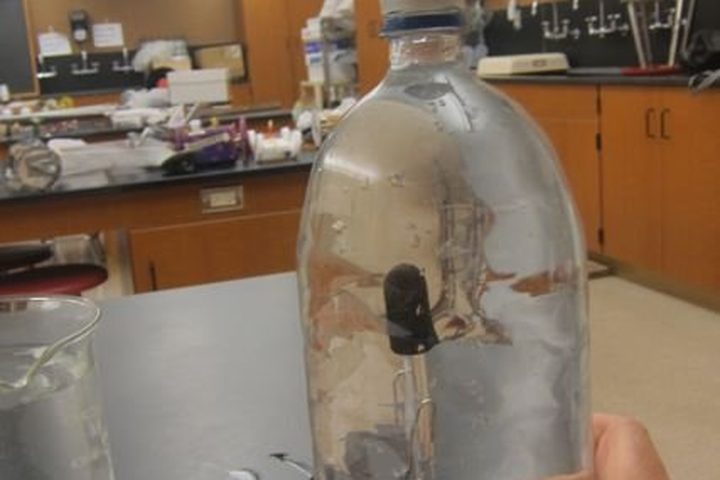
Cartesian Diver Collection
Squeeze a sealed bottle and a little diver sinks on command; let go and it floats back up.
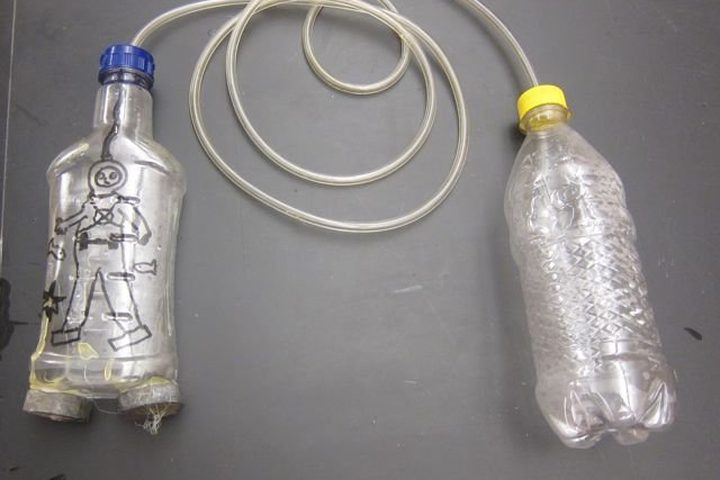
Diving Dan Remote Bottle Diver
Squeeze a bottle on the pool deck and a diver 10 feet down rises to the surface.
© Bruce Yeany · Homemade Science with Bruce Yeany · youtube.com/@YeanyScience
Free for personal and classroom use. Please don't resell or republish. Build and use at your own risk; follow the safety notes and supervise children.