Build plans / Diving Dan Remote Bottle Diver
Diving Dan Remote Bottle Diver
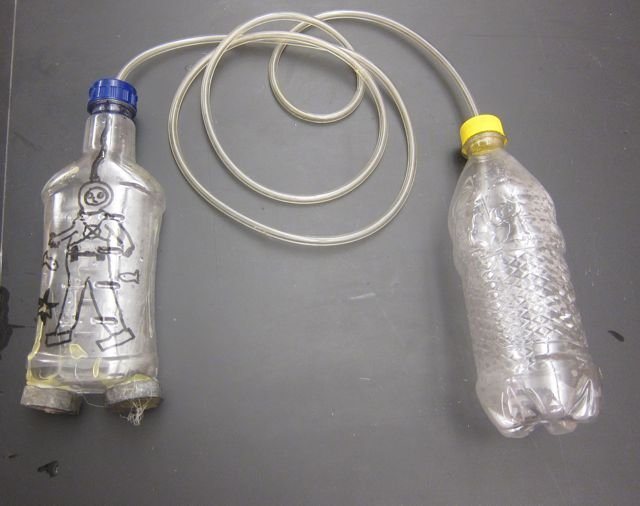
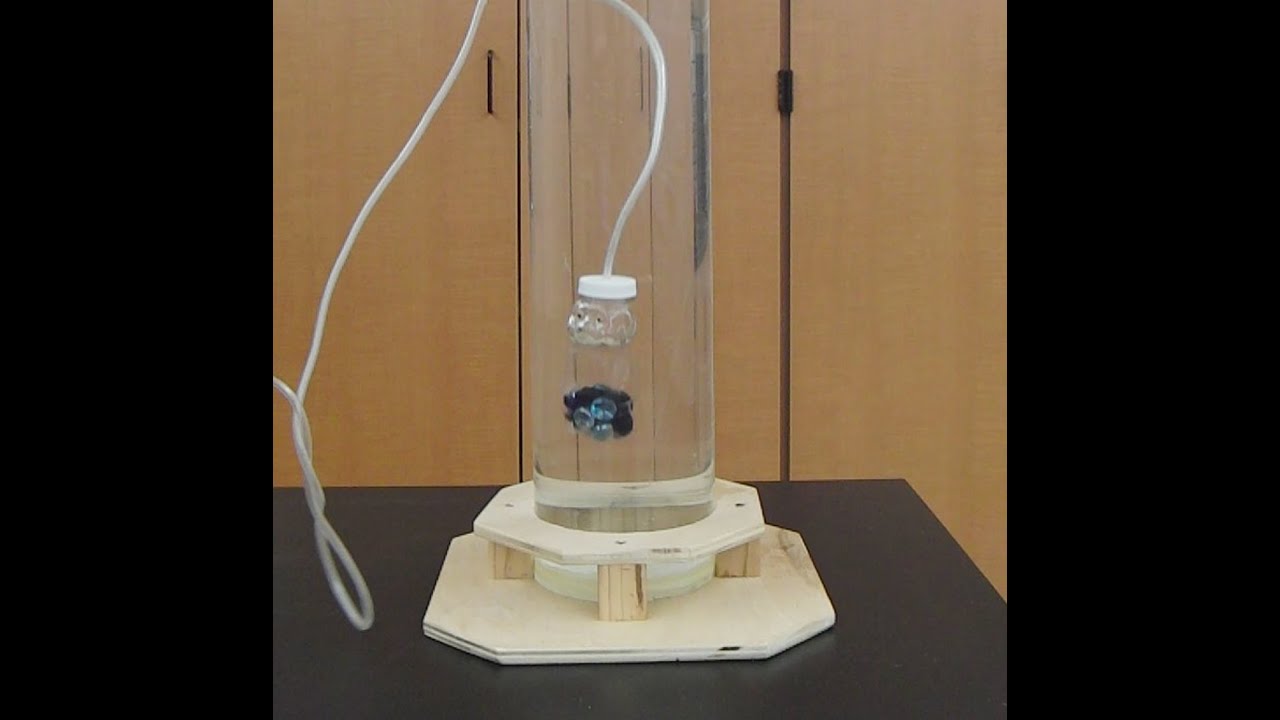
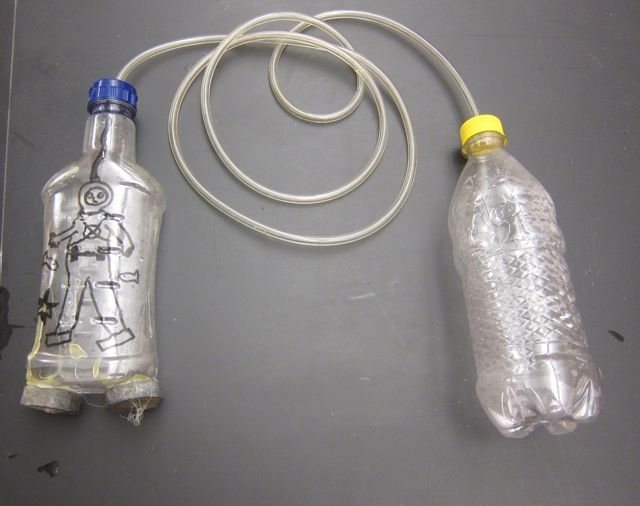
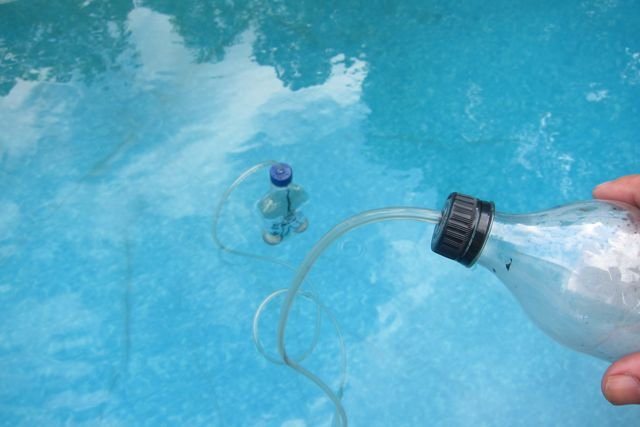
Diving Dan is a big Cartesian diver: an open-bottomed bottle diver linked by a long air hose to a sealed control bottle in your hand. Squeezing the control bottle pushes air down to the diver so it rises; relaxing lets water back in so it sinks. It works in a tall classroom tank or the deep end of a swimming pool and behaves much like a submarine's ballast tank.
Written from Bruce's original workshop handout. Bruce's final review of this plan is in progress.
What it shows
Squeeze a bottle on the pool deck and a diver 10 feet down rises to the surface.
Key ideas: Pascal's principle, buoyancy, density, ballast, pressure and depth
Build it
Choose your bottles
Pick a thin, flexible bottle for the diver and a sturdier one for the control bottle. Remove the labels so you can see the water level inside the diver.
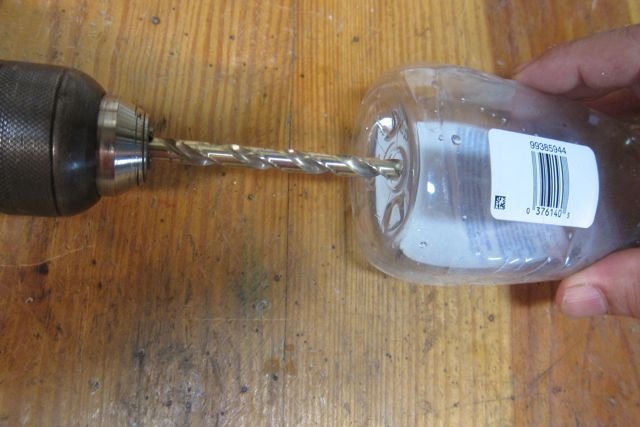
Drill the diver's bottom
Drill one or more small holes in the bottom of the diver bottle so water can move in and out as air is added or removed. Keep the holes small. (It can work without holes, but it takes more fiddling to set up.)
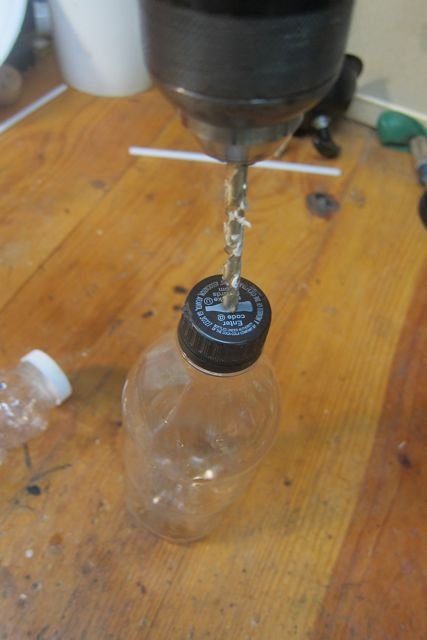
Drill both caps
Drill a hole in the center of each cap a few sizes smaller than the outside of the 1/4 in tubing. A tight hole holds the tube by friction and keeps air from leaking.
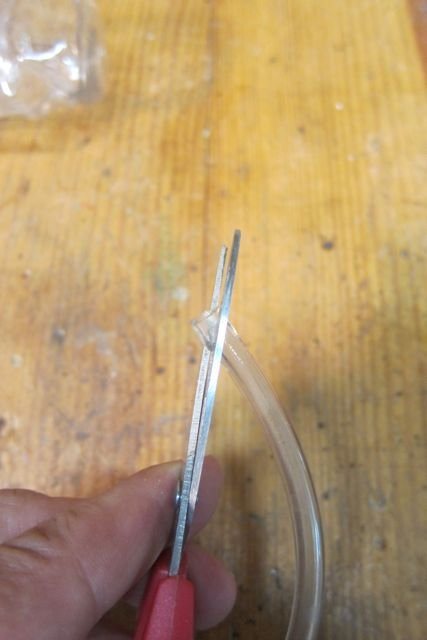
Cut the tube ends at an angle
Snip each end of the tubing on a slant. The pointed tip is much easier to start into the small cap holes.
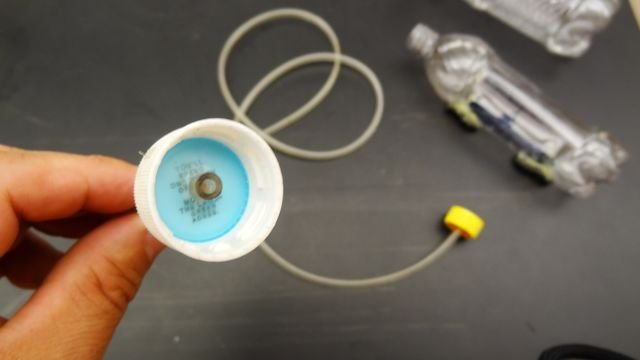
Fit the tube through the caps
Push one end of the tubing through each cap from the outside. Bruce prefers not to glue them, so he can swap a short indoor hose for a long pool hose.
Pad the control bottle (optional)
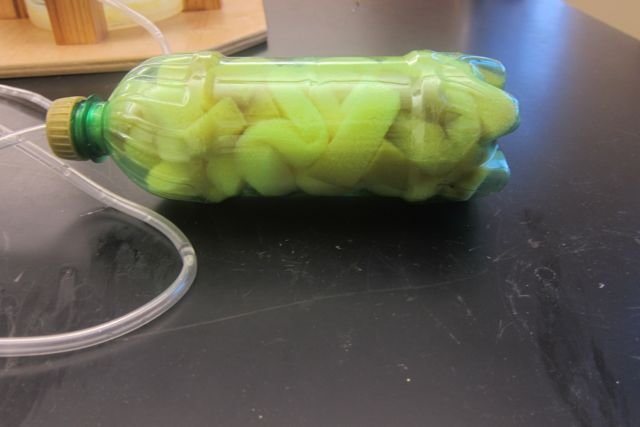
Stuff the control bottle loosely with foam rubber pieces. The foam keeps it from being squeezed completely flat.
Add ballast on the outside
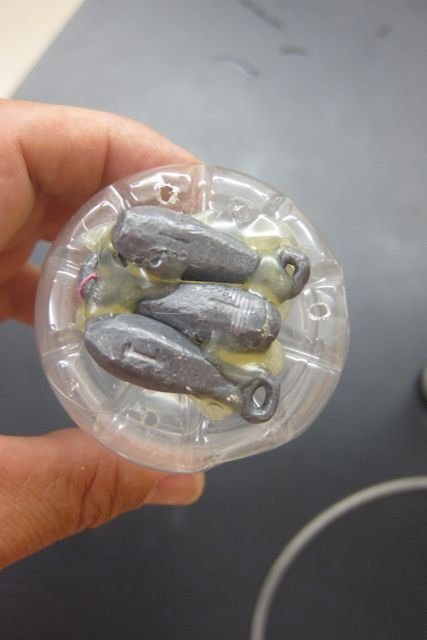
One option is to hot glue lead weights to the bottom of the diver bottle. It needs less weight than you might think. For a pool, wrap a heavy weight in foam rubber before taping it on so it cannot damage the pool bottom.
Or add ballast on the inside
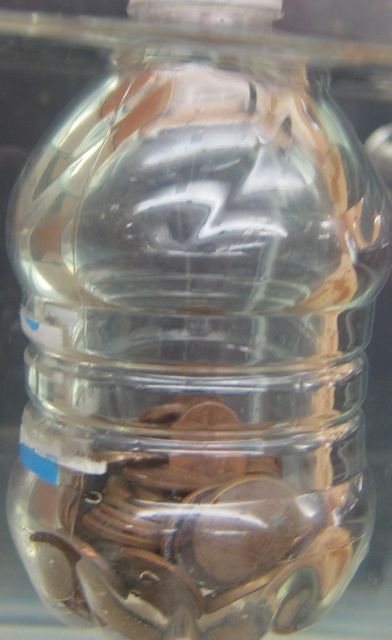
Marbles, pebbles or coins can go inside the diver instead; one small water bottle uses 20 pennies. Do not use sand or gravel small enough to fall out through the bottom holes.
Decorate your diver
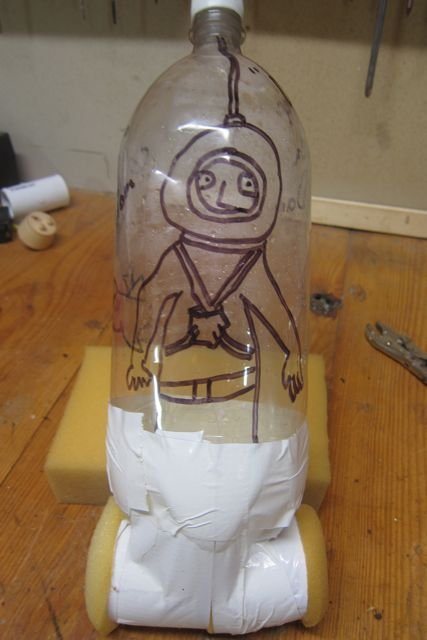
Draw a diver on the bottle with a permanent marker if you like. Screw both caps on tightly.
Set the diver's buoyancy
Put the diver in the water; it should float. Loosen the control bottle's cap slightly so air escapes and water seeps into the diver. The moment it just begins to sink, tighten the cap. You should not need to open it again.
Dive and surface
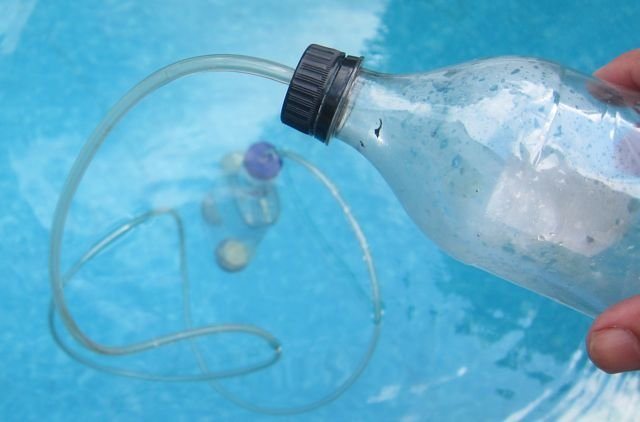
Let the control bottle relax and the diver sinks. Squeeze it and air travels down the hose, pushes water out of the diver's bottom holes, and Diving Dan rises. Ease off part way to make it hover.
Take it indoors
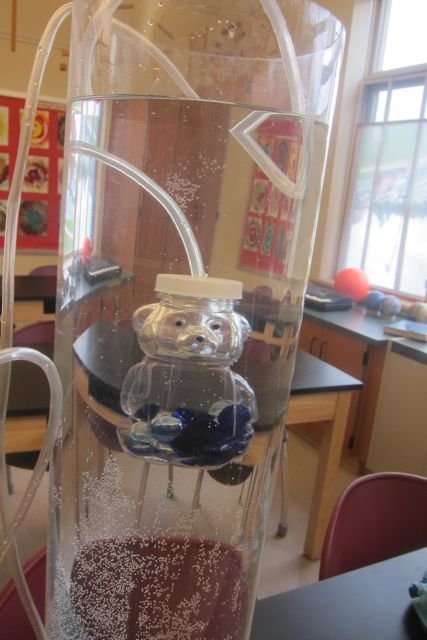
In a tall clear water tank, a clothespin clipped to the rim holds the hose in place. A plastic honey bear bottle makes a great small diver.
How it works
The diver bottle, the hose and the control bottle form one closed pocket of air. Squeezing the control bottle raises the pressure of that air, and by Pascal's principle the increase is felt all through it, including inside the diver. The higher pressure pushes water out through the holes in the diver's bottom.
With more air and less water inside, the diver displaces the same volume but weighs less, so the buoyant force (the weight of water displaced) wins and it rises. Letting go of the control bottle lowers the pressure, water seeps back in, the diver gets heavier for its size and sinks.
Depth makes it touchier. Water pressure grows by about 1 pound per square inch for every 2.3 feet, so as the diver sinks its air pocket is squeezed smaller and it sinks even faster. To bring it back from deep water you have to squeeze harder. A submarine's ballast tanks work the same way, using compressed air to blow water out.
Using it
- Before a demonstration, ask students to predict whether squeezing will make the diver sink or rise. Many expect it to sink, as in a Cartesian diver.
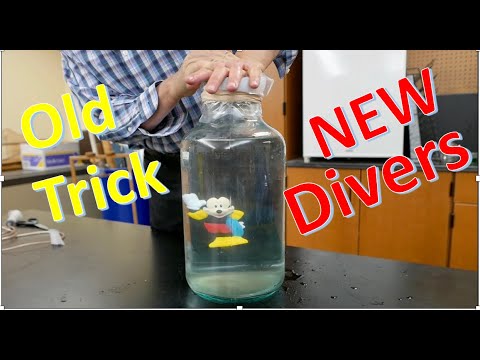
- Compare Diving Dan with a regular Cartesian diver: what is different about where the extra pressure goes?
- Experiment with how much ballast works best. What happens with a lot of ballast compared to just a little?
- In a pool, see how hard you must squeeze to raise the diver from 3 feet versus 10 feet, and connect it to water pressure and depth.
- Discuss how submarines, fish swim bladders and scuba buoyancy vests control depth.
Variations
- Pool diver: a 2 liter soda bottle diver with a 1/2 lb metal bar wrapped in foam and duct taped to its bottom, on 25 feet of hose, dives to the 10 foot deep end.
- Honey bear diver in a tall classroom tank.
- Clear bottles filled with colorful marbles or pennies make the ballast part of the display.
Troubleshooting
More build plans
Air-Powered String Shooter
A loop of yarn shoots out of a PVC pipe and snakes through the air in a self-supporting arc, driven by nothing but a shop vac's exhaust.
Balloon in a Bottle
Blow up a balloon inside a bottle and it stays inflated with its mouth wide open.
Cartesian Diver Collection
Squeeze a sealed bottle and a little diver sinks on command; let go and it floats back up.
© Bruce Yeany · Homemade Science with Bruce Yeany · youtube.com/@YeanyScience
Free for personal and classroom use. Please don't resell or republish. Build and use at your own risk; follow the safety notes and supervise children.