Build plans / Cold Floaters, Hot Sinkers Buoyancy Bottles
Cold Floaters, Hot Sinkers Buoyancy Bottles
A small, sealed glass bottle is ballasted until it barely floats in cold water. Because hot water is slightly less dense than cold, the bottle sinks in hot water, sinks fast in rubbing alcohol, and rides high in salt water. It is a cheap, student-made replacement for a commercial demonstration bar and makes the small density changes of water visible.
Written from Bruce's original workshop handout. Bruce's final review of this plan is in progress.
What it shows
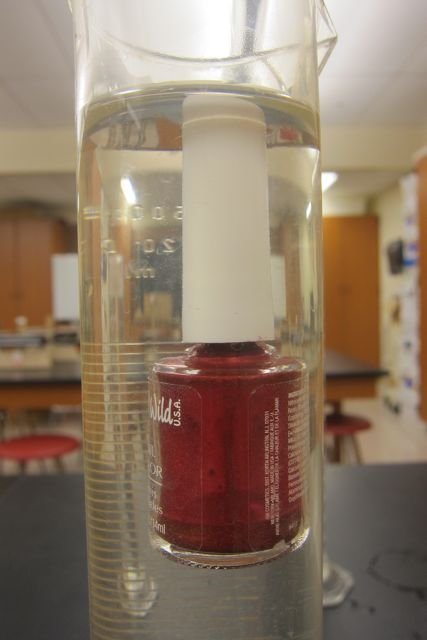
The same little bottle floats in cold tap water and sinks to the bottom in hot.
Key ideas: density, buoyancy, thermal expansion, Archimedes' principle, kinetic theory
Build it
Collect small rigid bottles
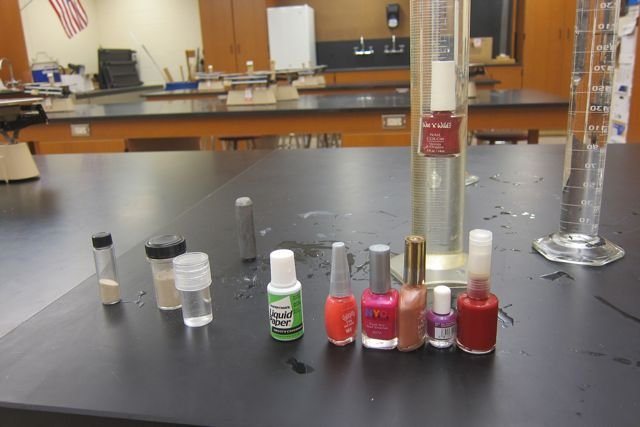
Gather small bottles with screw caps that seal well. Glass works best, hard plastic is next best, and soft squeezable bottles give inconsistent results. Expect about half of all nail polish bottles to be too heavy to float even when empty.
Empty nail polish outdoors
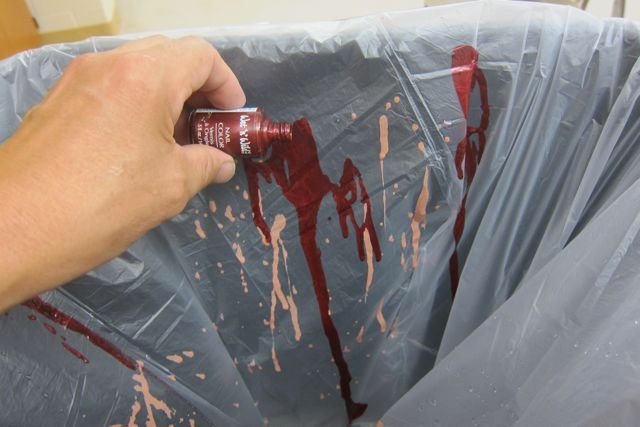
If you are using nail polish bottles, pour out most of the polish outside. Leave some in; it can serve as the ballast.
Float-test the bottle
Gently lower the capped bottle into a cup of water. If it sinks, remove very small amounts of the contents until it just barely floats. If it floats too easily, add a little water or a few grains of gravel back in.
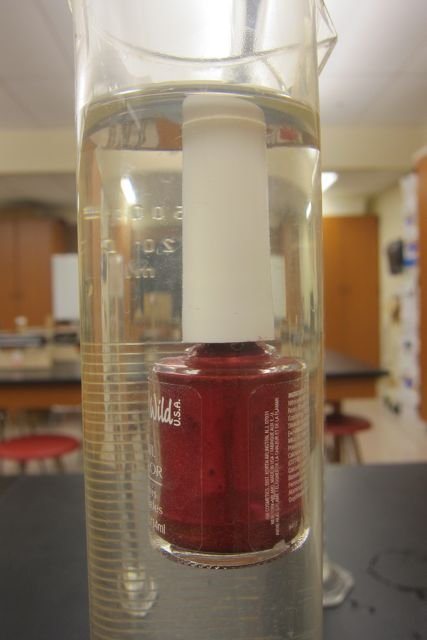
Use gravel for fine tuning
In plastic bottles, aquarium gravel is the easiest ballast: you can adjust a few grains at a time and it does not jam the threads like sand. Always leave an air bubble inside so the contents have room to expand when warmed.
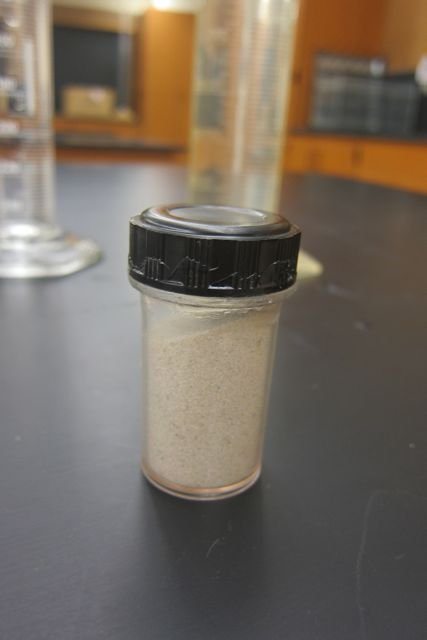
Seal the cap
Once the bottle barely floats, screw the cap down tightly and run glue around the cap edge. A leak lets air out in hot water and water in when it cools, which ruins the delicate balance.
Recheck the balance
When the glue is dry, test the bottle again in room-temperature water. It should float with only the cap and neck above the surface.
Set up the cylinders
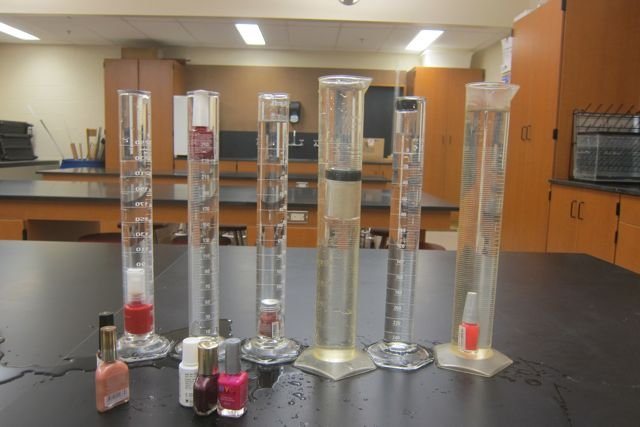
Fill graduated cylinders or tall glasses with: cold tap water; hot tap water; rubbing alcohol; cold water on the bottom with hot water carefully poured on top; and saturated salt water made the day before.
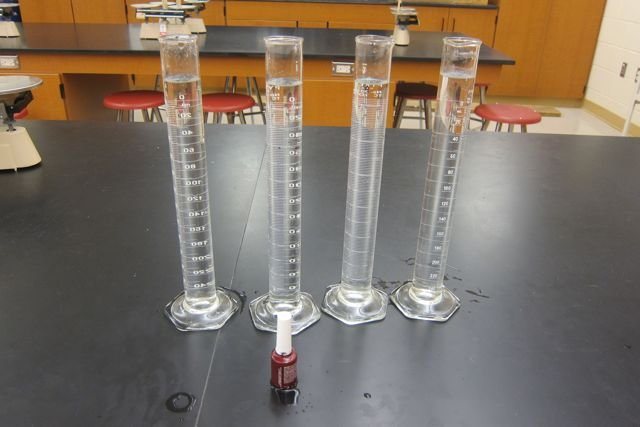
Run the demonstration
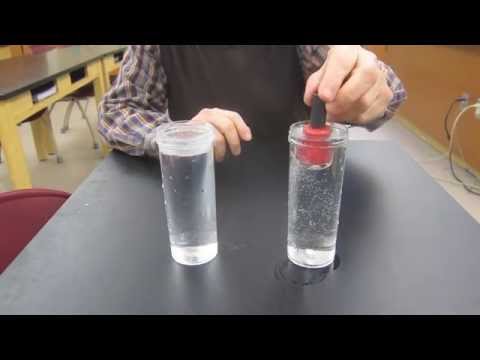
Move the same bottle from cylinder to cylinder. It floats in cold water, sinks in hot water, sinks quickly in alcohol, hangs in the middle of the layered cylinder, and floats noticeably higher in salt water.
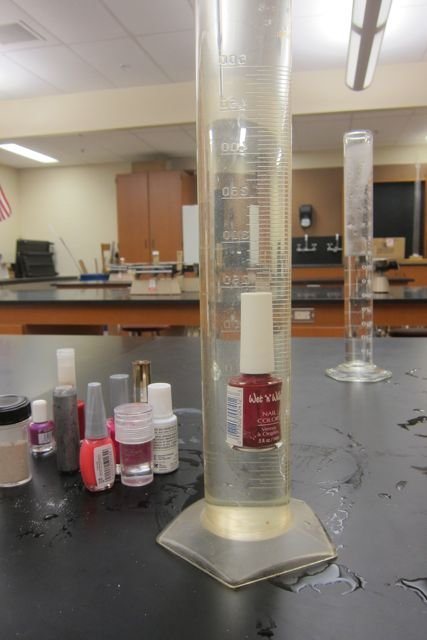
Let it sit
Leave the bottle at the bottom of the hot-water cylinder for a while. As the water cools, the bottle rises again.
How it works
Density is mass per volume. When water is heated its particles move faster and spread slightly farther apart, so the same mass takes up more room and the density drops. Room-temperature water is about 0.998 grams per milliliter; hot tap water is roughly 0.98 to 0.99.
The buoyant force on the bottle equals the weight of the water it pushes aside. The bottle has been tuned so its overall density is just under that of cold water, so it floats. In hot water, each milliliter displaced weighs a little less, the buoyant force falls below the bottle's weight, and it sinks. A rigid glass bottle barely changes size when warmed, which is why glass works best; a soft bottle would swell as its trapped air warms and spoil the effect.
Rubbing alcohol is much less dense than water, so the bottle sinks quickly in it. Saturated salt water is about 1.2 grams per milliliter, so the bottle floats higher in it and still floats even when the salt water is hot.
Water is unusual: it is densest at about 4 degrees C. Below that it expands slightly as it approaches freezing, and ice is less dense than liquid water, which is why ice floats.
Using it
- Show that several bottles all just barely float in a bucket of cold water, then ask students to predict what each will do in the prepared cylinders.
- Do not tell students what is in each cylinder; have them infer which liquid is denser from how the bottle behaves.
- Ask: the bottle sinks faster in alcohol than in hot water. What does that tell you about alcohol?
- In salt water, look at how high the top of the bottle rides compared to fresh water, and connect it to the buoyant force.
- Have students build and tune their own bottles, then test their ideas with the materials provided.
Variations
- Make a class set of bottles in different colors and use them together.
- The same idea works with bigger bottles in bigger containers of water.
- Small glass vials with water or sand as ballast also work, although water ballast can confuse some students about what is happening.
Troubleshooting
More build plans
Air-Powered String Shooter
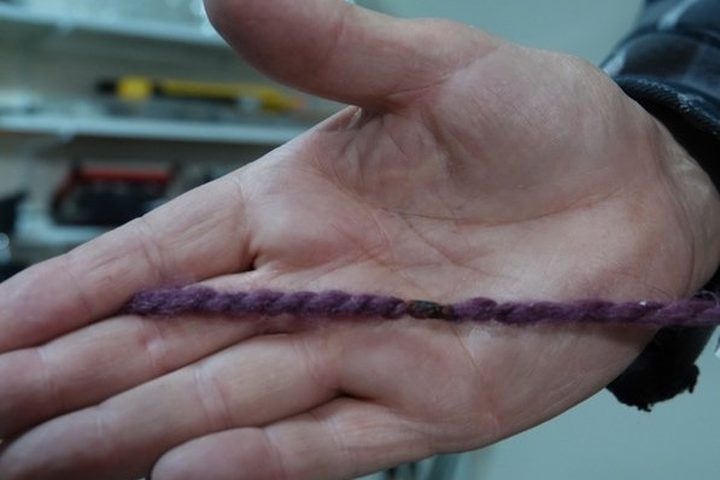
A loop of yarn shoots out of a PVC pipe and snakes through the air in a self-supporting arc, driven by nothing but a shop vac's exhaust.
Balloon in a Bottle
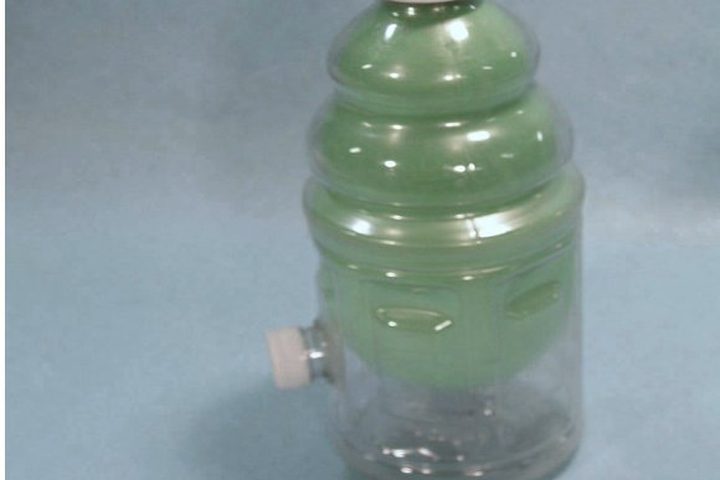
Blow up a balloon inside a bottle and it stays inflated with its mouth wide open.
Cartesian Diver Collection
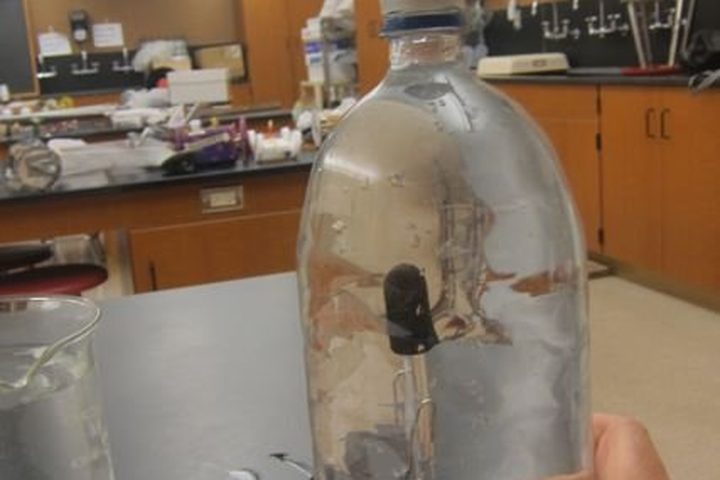
Squeeze a sealed bottle and a little diver sinks on command; let go and it floats back up.
© Bruce Yeany · Homemade Science with Bruce Yeany · youtube.com/@YeanyScience
Free for personal and classroom use. Please don't resell or republish. Build and use at your own risk; follow the safety notes and supervise children.