Build plans / Centripetal Swinging Tray
Centripetal Swinging Tray
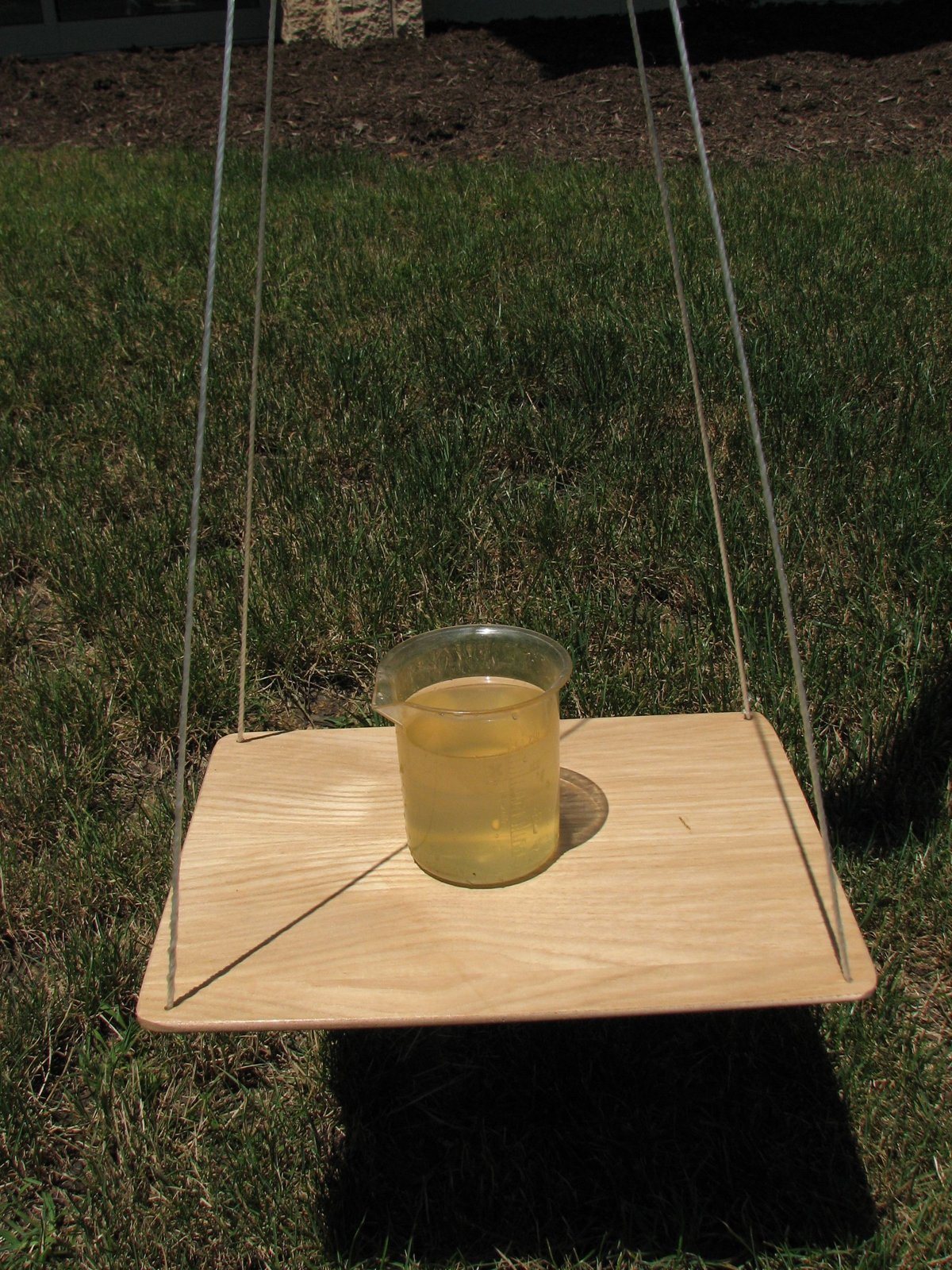
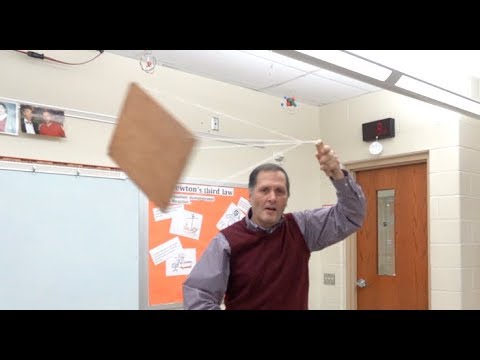
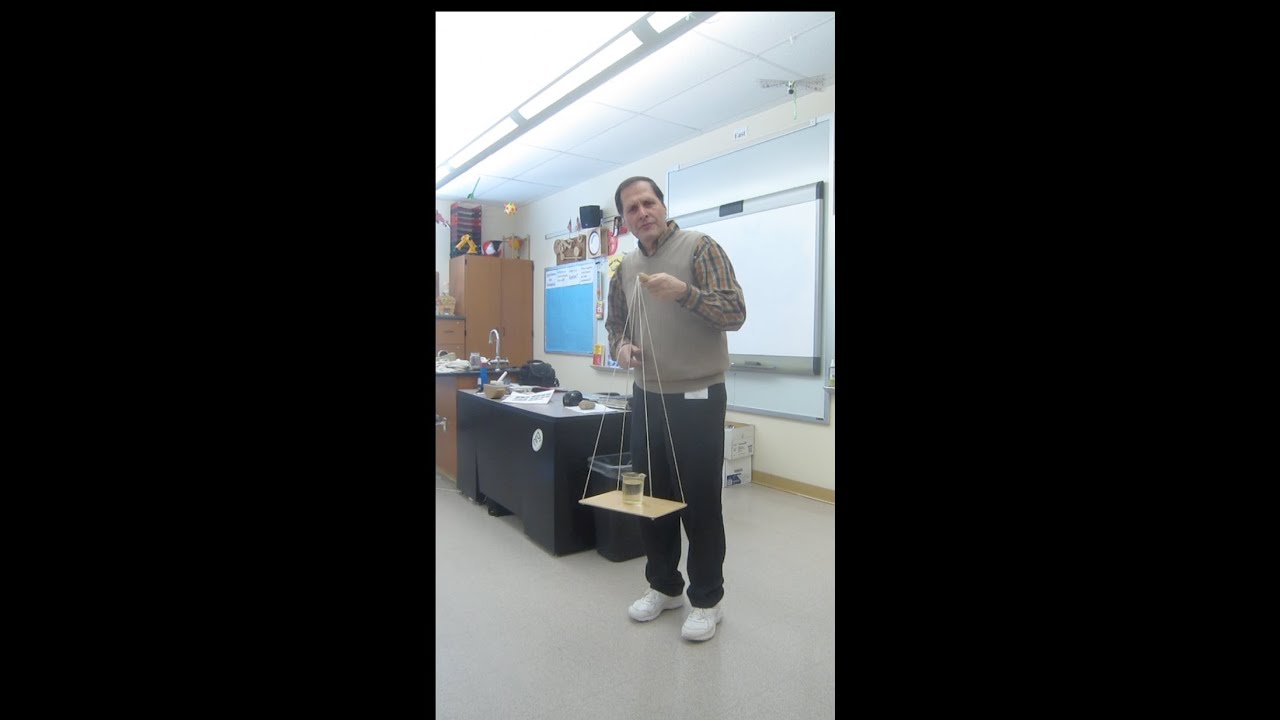
A small plywood platform hangs from a wooden handle on four cords. Set a cup of water on it and you can swing it like a pendulum, loop it overhead, and even whirl it horizontally while the water stays put. It is a more dramatic, easier-to-control version of the classic swinging bucket and leads naturally into a discussion of inertia and centripetal force.
Written from Bruce's original workshop handout. Bruce's final review of this plan is in progress.
What it shows
Swing a full cup of water over your head, then sideways, without spilling a drop.
Key ideas: inertia, centripetal force, centrifugal force (fictitious), Newton's first law, circular motion, free fall

Build it
Drill the platform
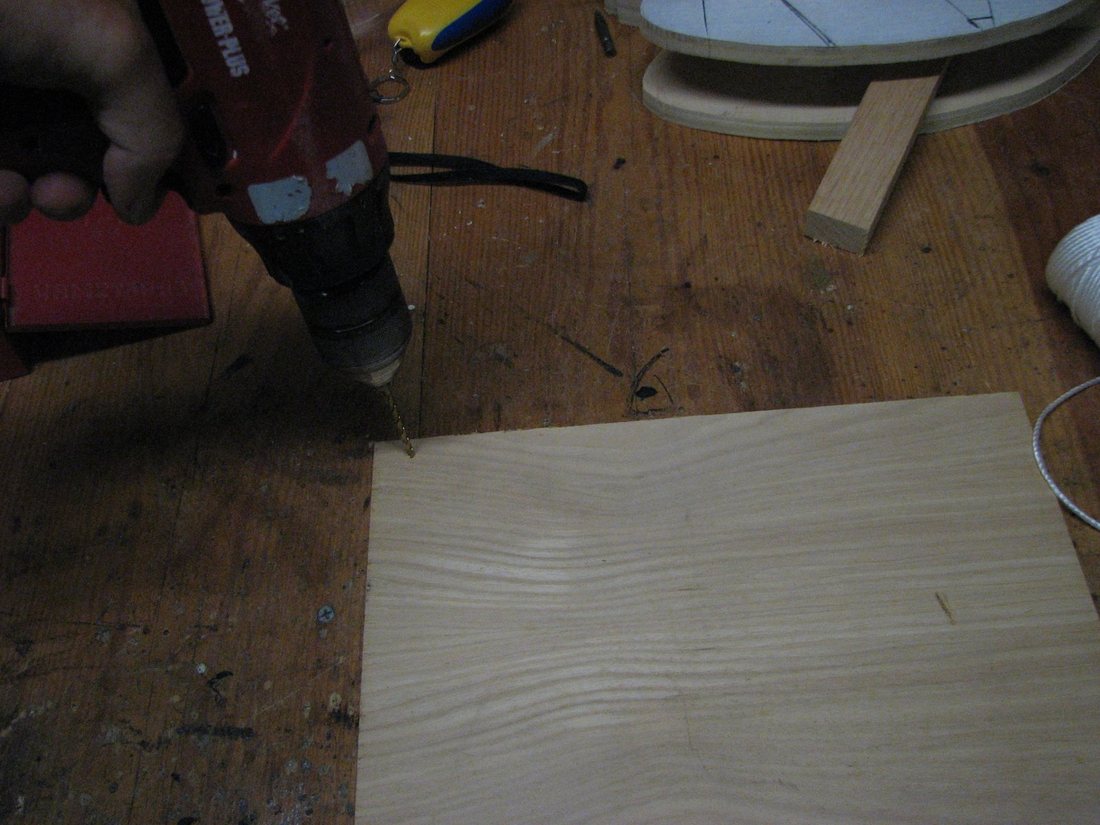
Drill a hole in each corner of the plywood, just large enough for the cord to pass through.
Round the corners
Round off the corners and sand all the edges smooth.
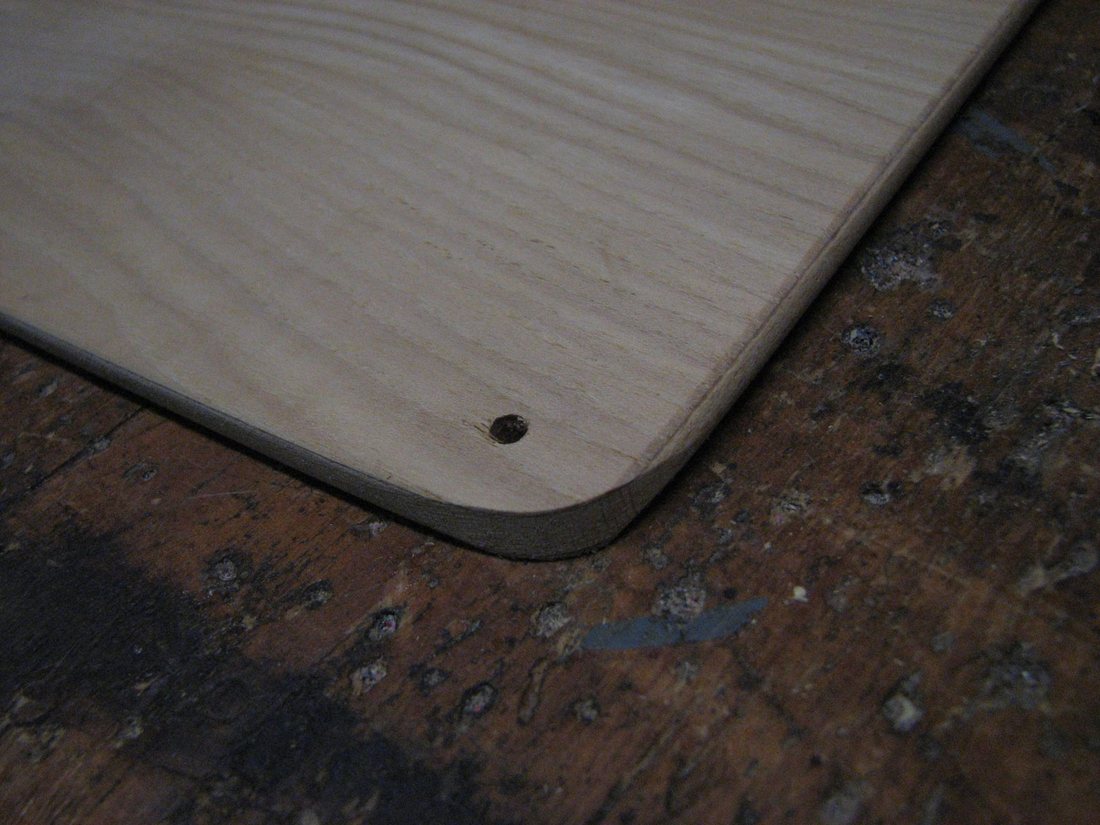
Drill the handle end
Clamp the handle block in a vise and drill into one end, about 1/2 to 3/4 in deep, with a hole large enough for four cords to pass through together.
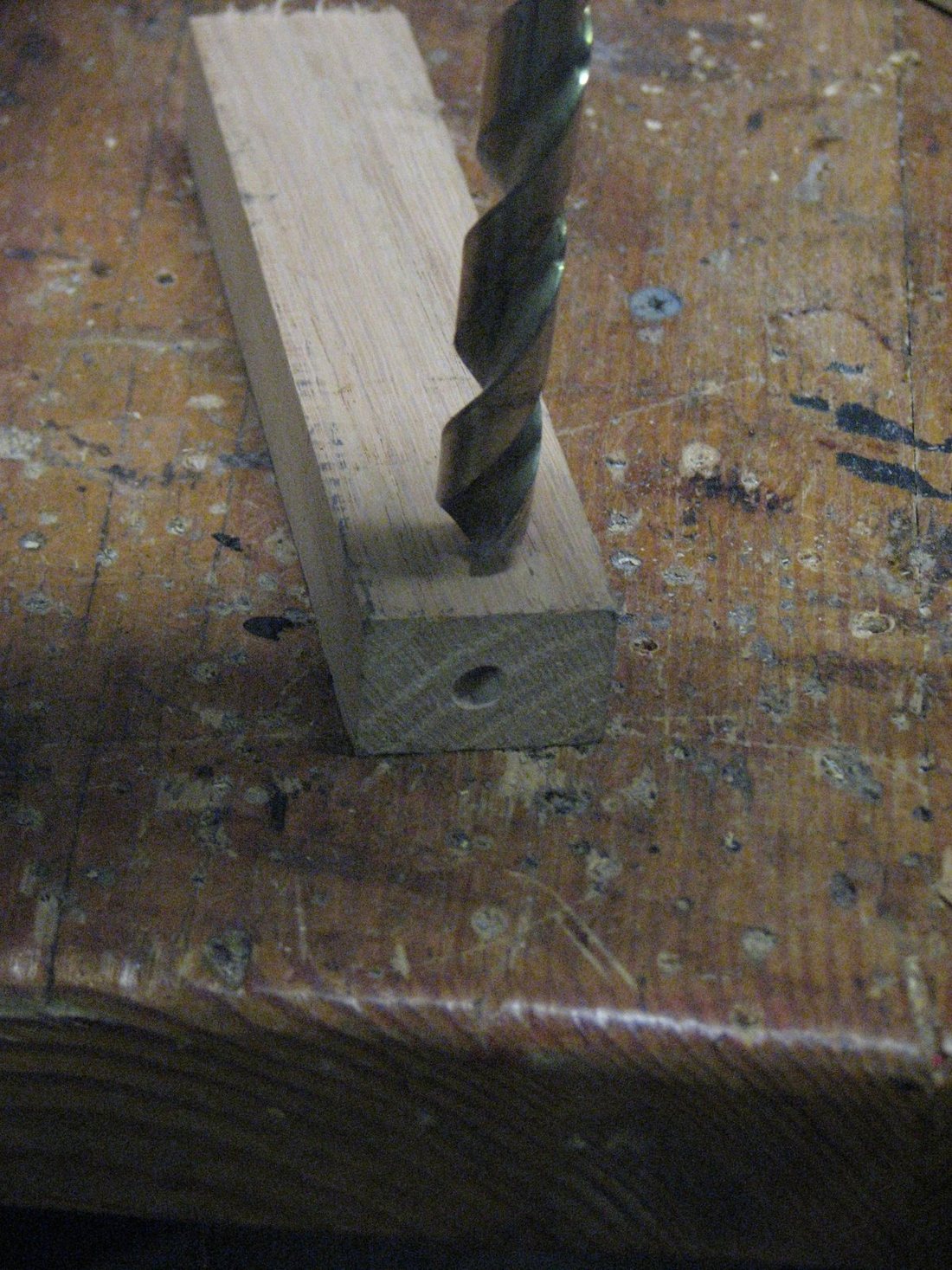
Drill the side hole
With a 1/2 in bit, drill into the side of the handle close to the same end so that it meets the end hole. The knot will sit in this larger hole.
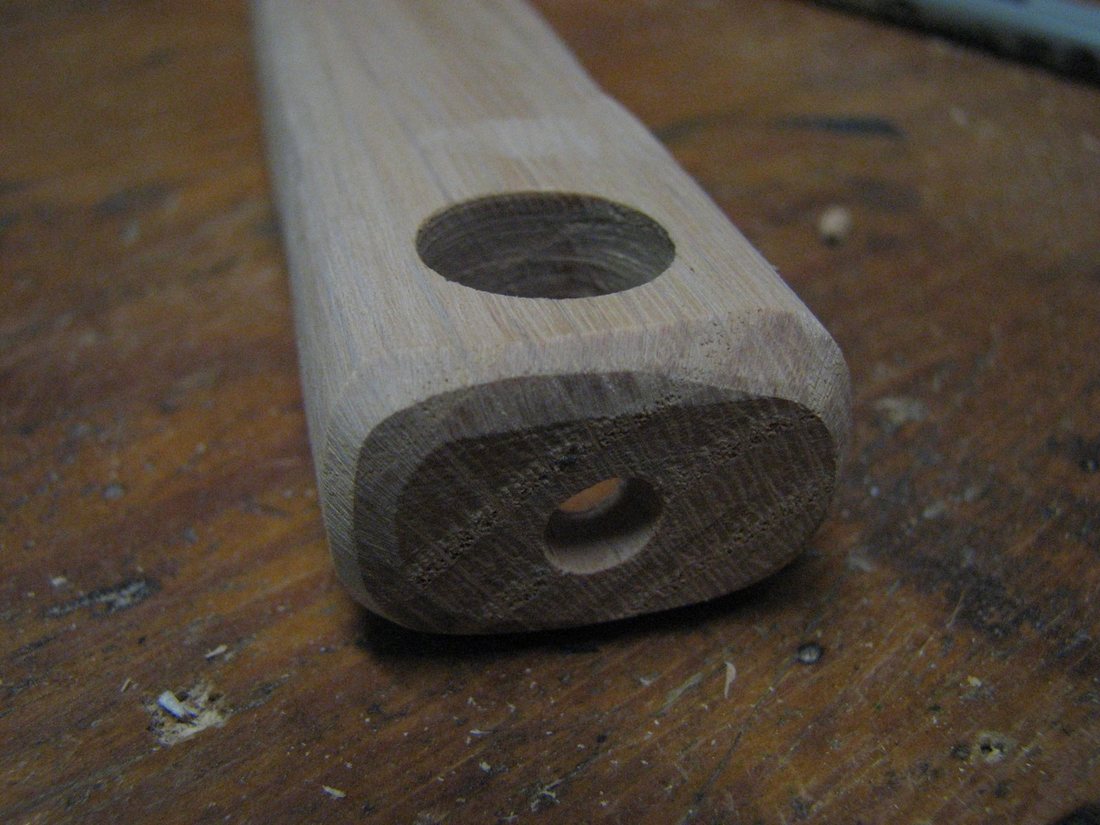
Attach the cords
Cut four equal cords, about 3 ft each. Pass one through each corner hole of the platform and knot it underneath.
Thread the handle
Wet the free ends so they are easier to thread, then push all four through the end hole of the handle and out through the side hole.
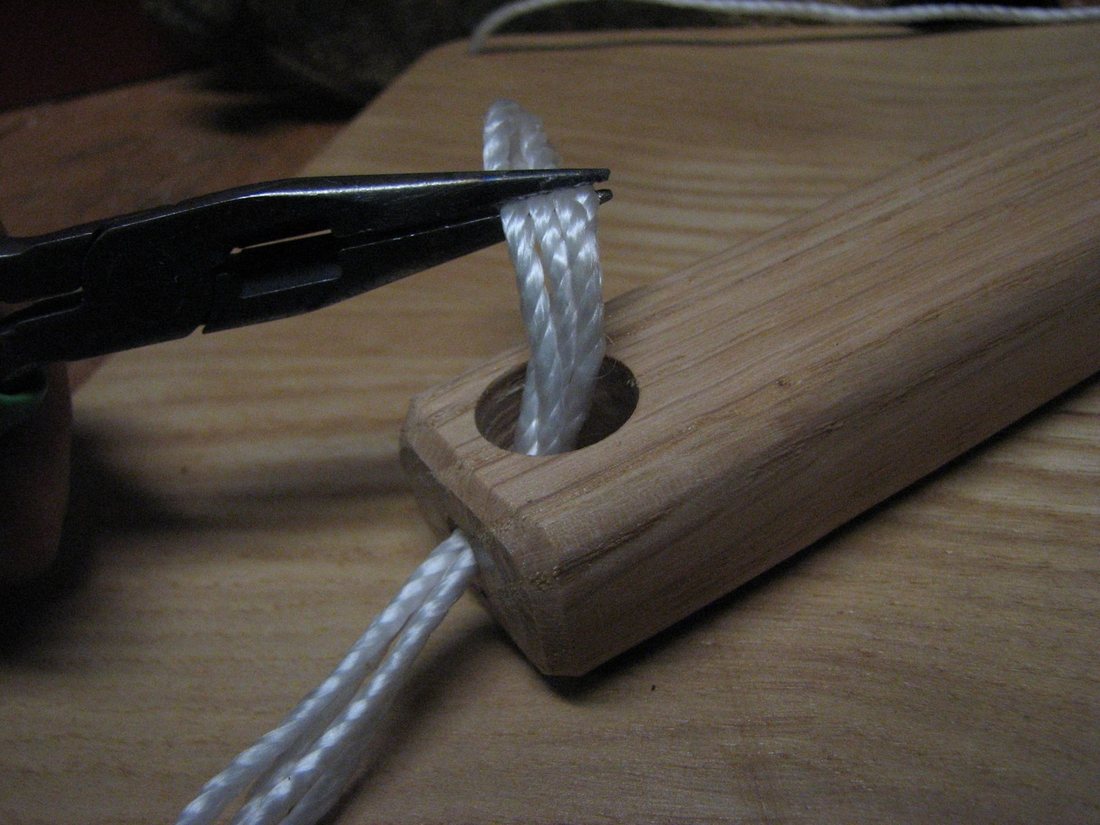
Level and knot
Hang the platform just off the floor by the four cords and adjust them until it is level. Tie all four together in one big knot, trim the ends, and pull the knot back into the side hole.
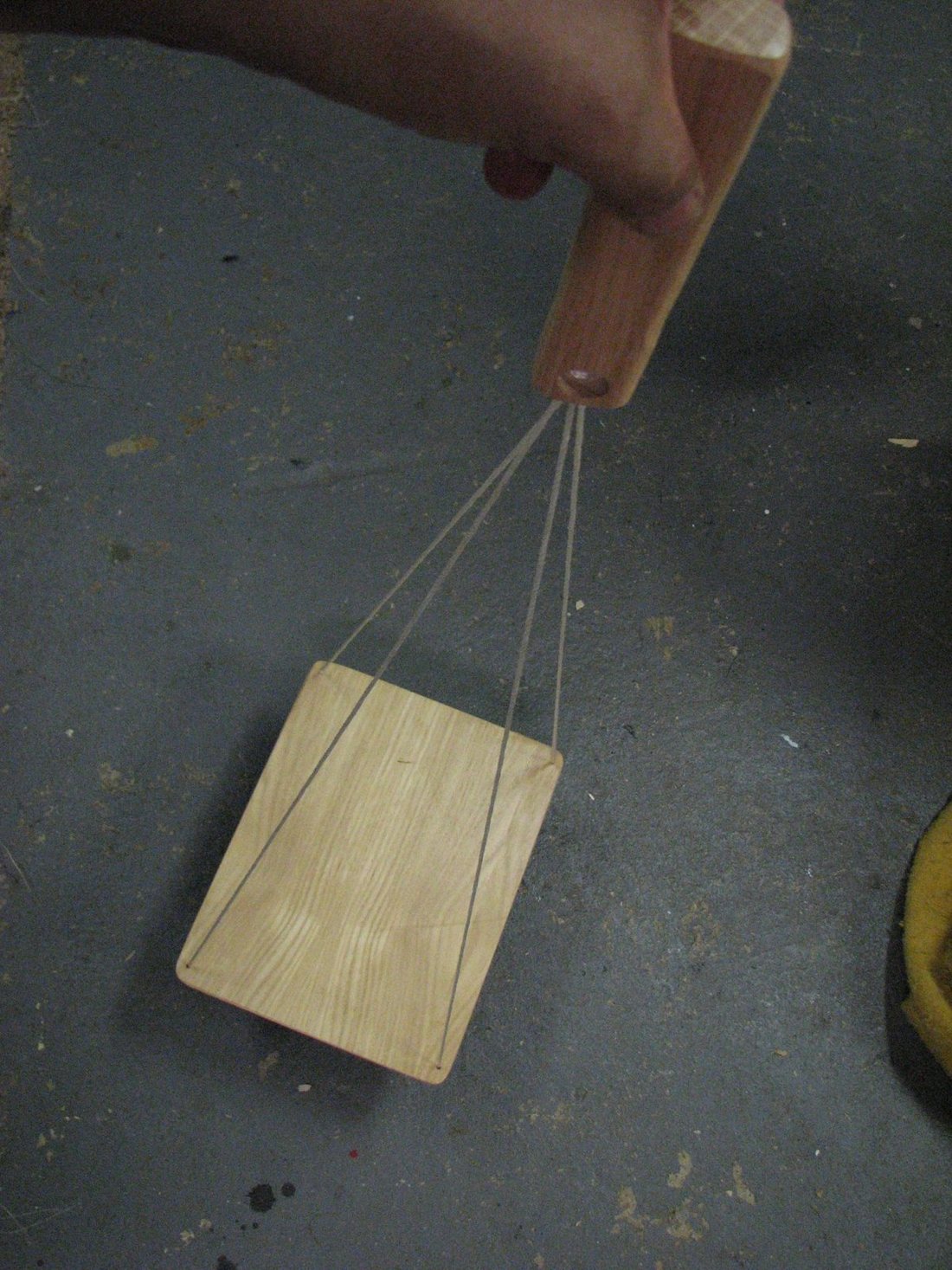
Test the level
Hold the handle and check that the platform hangs level. If it tilts, untie the knot and level it again; a tilted tray makes the cup more likely to slide.
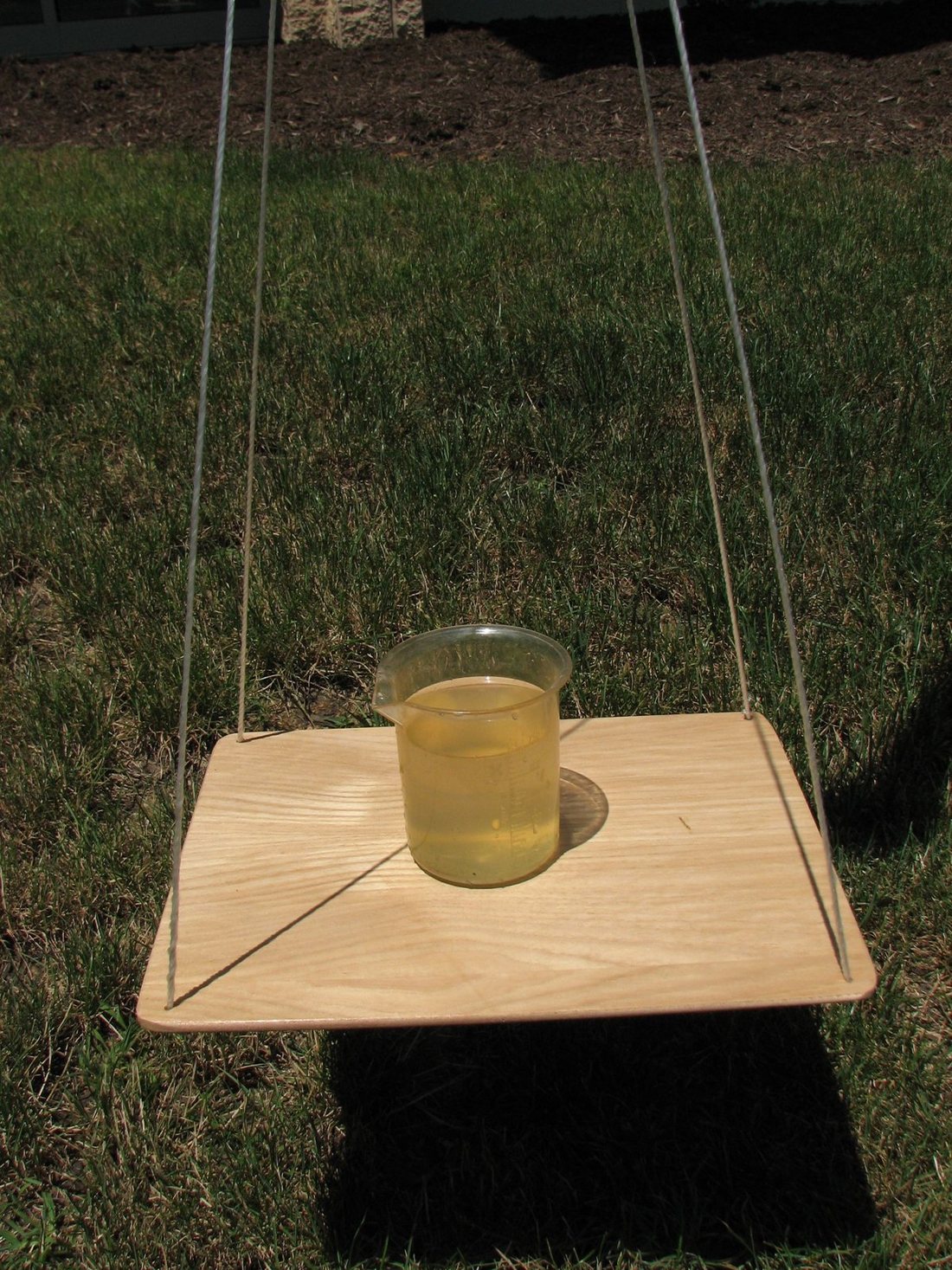
How it works
Newton's first law says a moving object keeps going at the same speed in a straight line unless something pushes it. As the tray goes around, the cup and the water are always trying to go straight, along a line tangent to the circle.
The cords pull the tray toward your hand, the tray pushes the cup toward the center, and the cup bottom pushes the water toward the center. That continual inward push, the centripetal force, keeps bending their path into a circle. The water presses into the cup bottom no matter which way the circle is tilted, vertical, horizontal or diagonal, which is why the horizontal swing works too.
At the top of a vertical loop, gravity alone would pull the water around the curve only if the tray were moving slowly. When the tray moves fast enough, more inward force is needed than gravity can supply, so the cup has to push the water down, and the water stays pressed into the cup. Swing too slowly at the top and gravity wins.
When the tray swings like a pendulum, the tray, cup and water all fall along the same curved path together, so nothing separates. Riders feel the same effect on a looping roller coaster: they are pressed into the seat even upside down.
Using it
- Start with gentle pendulum swings and ask why the water stays in. How high can the tray rock before things separate? Bruce gets close to horizontal.
- Next do the classic overhead loop, one direction and then the other, and point out that the cup and water do not shift.
- Then ask students to predict what happens if it is swung horizontally. Most expect a spill. With practice you can move from vertical to horizontal and back again.
- Use the icy-road car analogy: a car on ice slides straight ahead at a curve; on a dry road the car pushes you into the curve, just as the tray pushes the cup.
- Swap the cup for balancing toys, an egg perched on a short pipe, a coin balanced on a bolt, a pencil on end, or building blocks, and challenge students to invent their own.
Variations
- A swinging bucket of water outdoors: if released, the bucket and water fly off together along a tangent and the water stays in until the bucket lands.
- A tray with several cups, as in the 'Greek waiter' tray.
Troubleshooting
More build plans
Balancing Nails Challenge
Twelve big nails balanced on one nail head looks impossible. Then Bruce doubles it.
Bar Pendulum vs. Simple Pendulum
A swinging meterstick keeps the same beat whether it hangs from its end or from a point a third of the way down. Why?
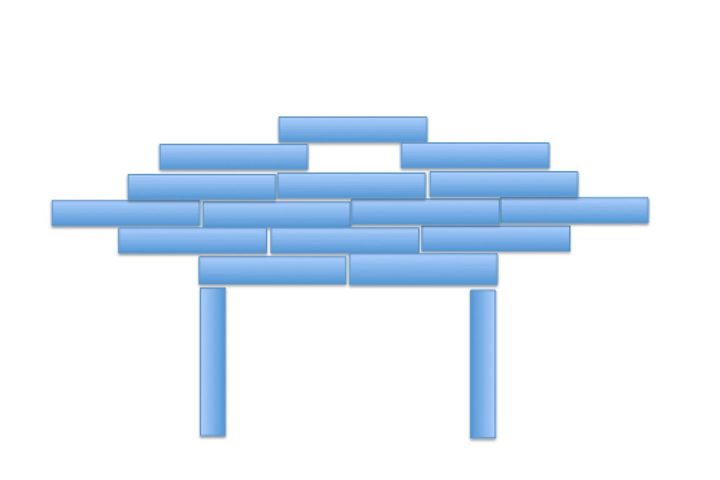
Block Stacking Challenges
How few blocks does it take to make the top block hang completely past the edge of the bottom one?
© Bruce Yeany · Homemade Science with Bruce Yeany · youtube.com/@YeanyScience
Free for personal and classroom use. Please don't resell or republish. Build and use at your own risk; follow the safety notes and supervise children.