Build plans / F.A.K.E.D. Resonance Pendulums
F.A.K.E.D. Resonance Pendulums
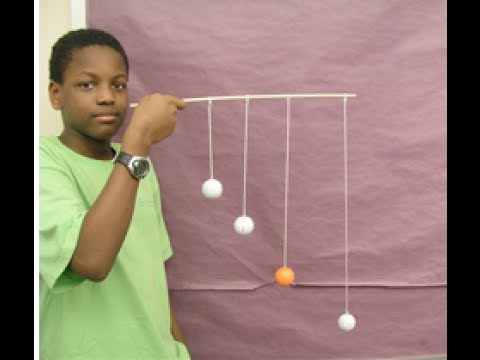
Four golf-ball pendulums of different lengths hang from a single stick. By moving the stick in tiny motions that match the period of one chosen pendulum, you can make that one swing widely while the others stay nearly still. Bruce calls it the Frequency Amplified Kinesthetic Energy Demonstration (F.A.K.E.D.): a playful, low-cost way to introduce resonance, and anyone can master it with about a minute of practice.
Written from Bruce's original workshop handout. Bruce's final review of this plan is in progress.
What it shows
Ask the class to move just the orange ball with their minds, and watch it swing while the other three hang nearly still.
Key ideas: resonance, natural frequency, pendulum period, driven oscillation, energy transfer
Build it
Steady the ball
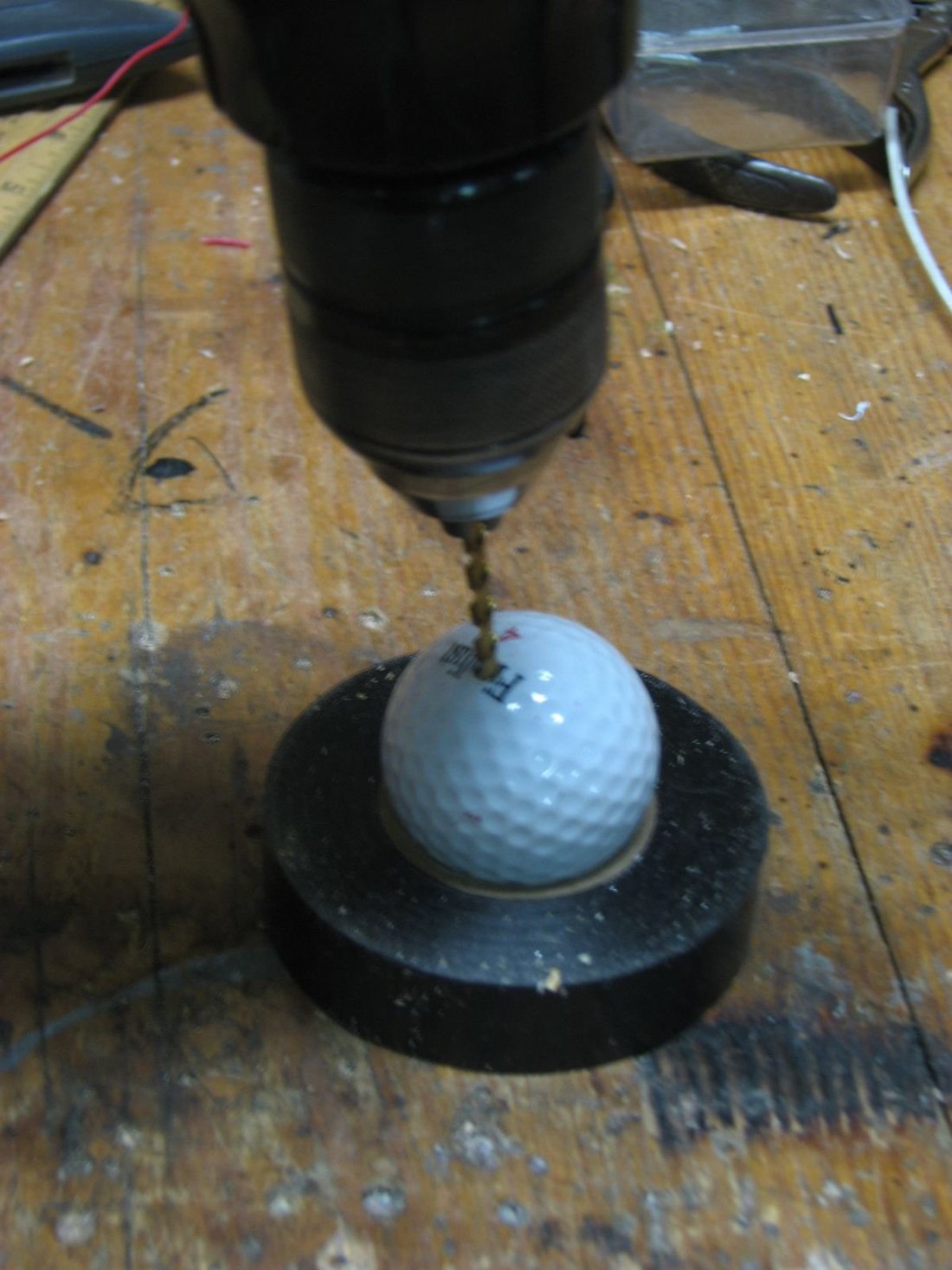
Set a golf ball on a roll of tape so it cannot roll around.
Drill the hole
Drill a 3/16 in hole straight into the center of the ball.
Knot the string
Tie a knot in the end of a length of nylon string.
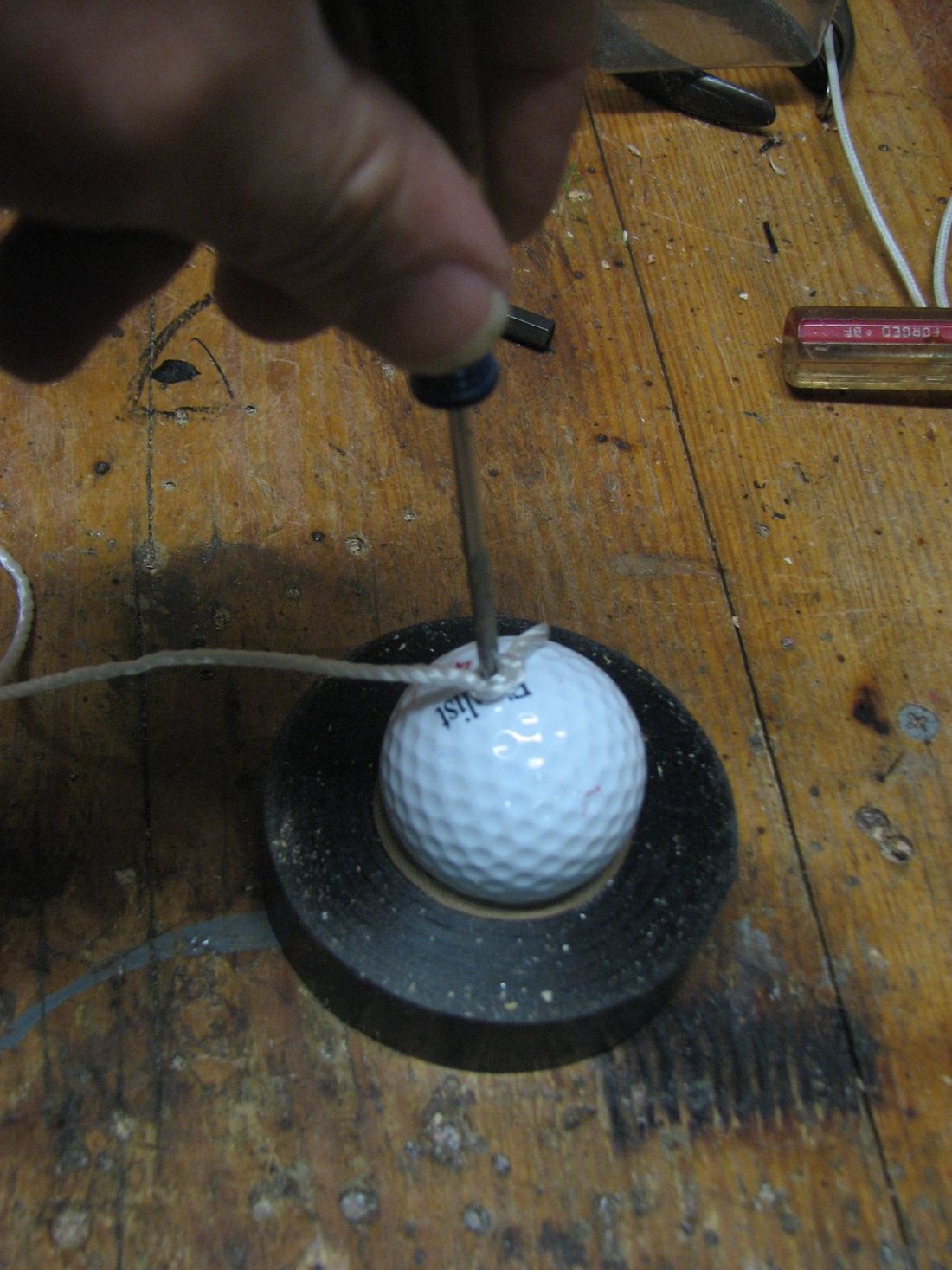
Push the knot in
Push the knot down into the hole with a hole punch, small screwdriver or blunted nail. The rubbery core of the ball grips the knot and holds the string.
Repeat
Prepare all four balls the same way. Make one a different color so the audience has a target.
Hang them at different lengths
Tie the strings along the dowel, spaced so the balls cannot collide. No particular lengths are needed, but make them clearly different from each other so their periods are well separated.
Practice
Hold the dowel level and make tiny back-and-forth movements in time with the colored ball's natural swing. Within a minute you will feel the rhythm that makes only that ball grow.
How it works
Every pendulum has a natural period that depends on its length, not on how heavy it is. Longer pendulums swing more slowly.
When you move the stick very slightly in time with one pendulum's period, each small push arrives at just the right moment and adds a little energy, like pushing a child on a swing. The swing grows larger and larger. That build-up is resonance.
The other pendulums have different periods, so the same pushes arrive at the wrong times for them. Some pushes add energy and others take it away, and the effects cancel out, so those pendulums stay nearly still.
Using it
- Tell the students to concentrate on the colored ball while you make tiny, nearly invisible motions. Then reveal the secret.
- Let students try to make each ball swing in turn and describe what they had to change.
- Ask why all four do not respond to the same rhythm.
- Have students time each pendulum's period and compare it with the hand rhythm that worked.
- Connect to other examples of resonance: swings, tuning forks, a singer and a wine glass, radios tuning to a station.
Variations
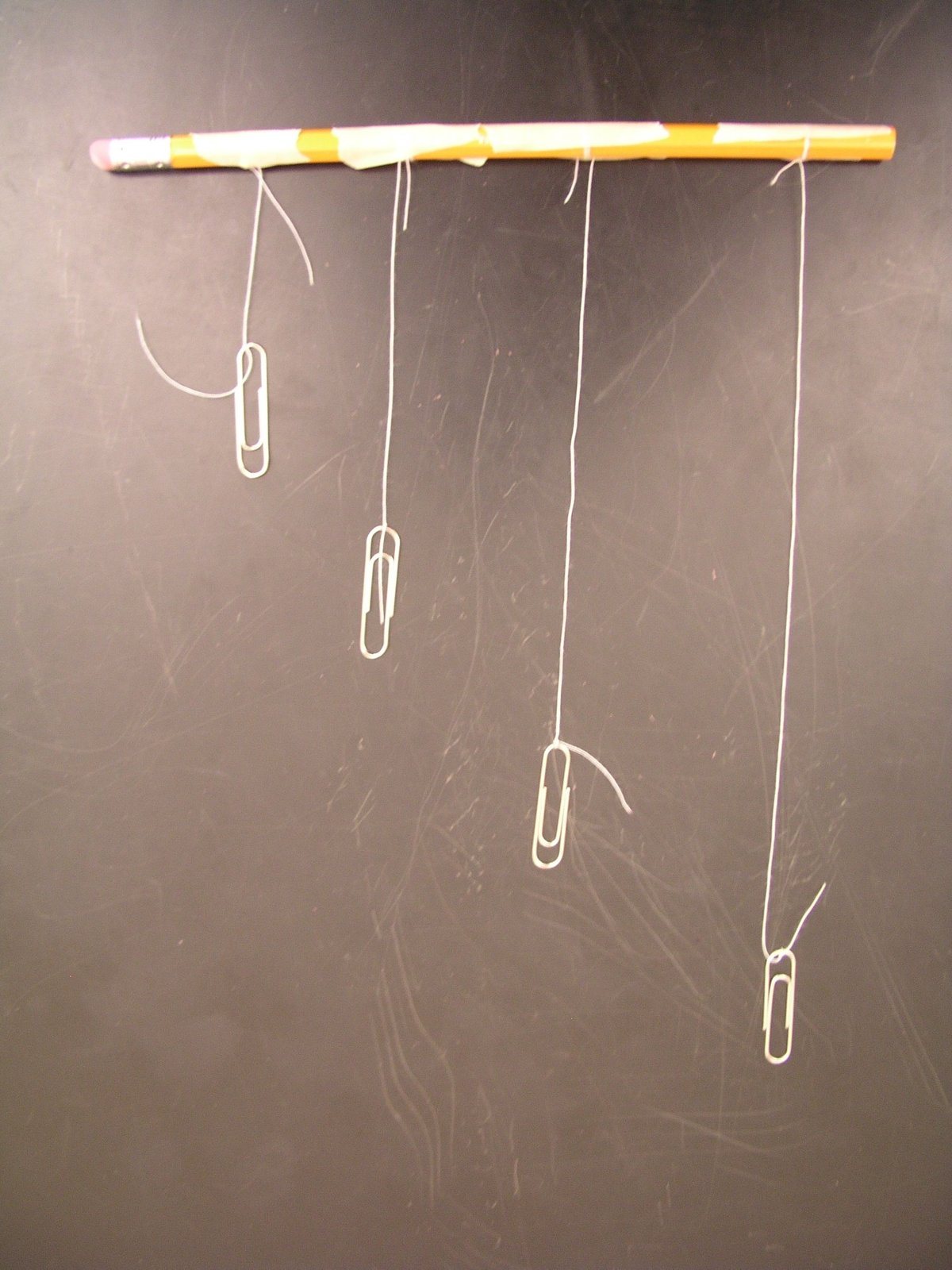
- Quick version: hang paper clips on threads of different lengths from a pencil or straw. It works, but a longer stick with heavier bobs is easier to control and to see.
- Bruce's first set used lead fishing sinkers as bobs; golf balls are easier for a large group to see. If you substitute sinkers, choose lead-free ones.
Troubleshooting
More build plans
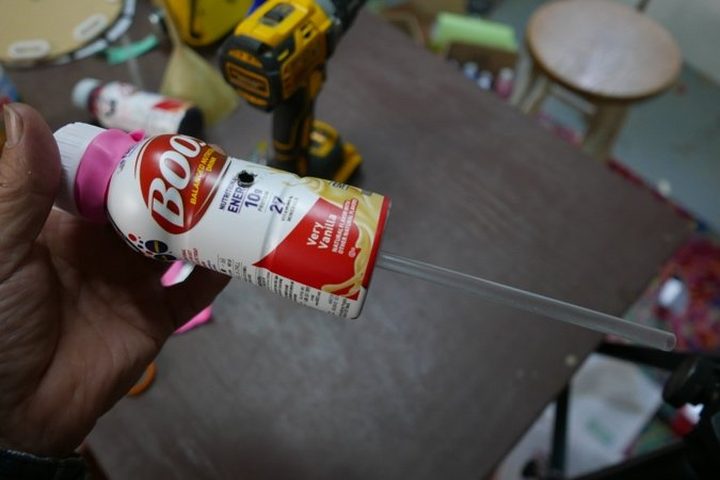
Balloon Fog Horn
Blow into a little plastic bottle and it lets out a deep, buzzing honk like a ship in the fog.
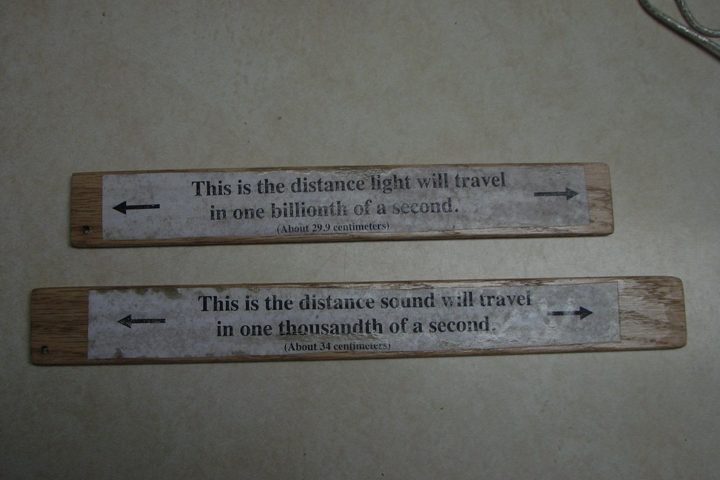
Nanosecond of Light and Millisecond of Sound Sticks
Two sticks of almost the same length: one shows a billionth of a second of light, the other a thousandth of a second of sound.
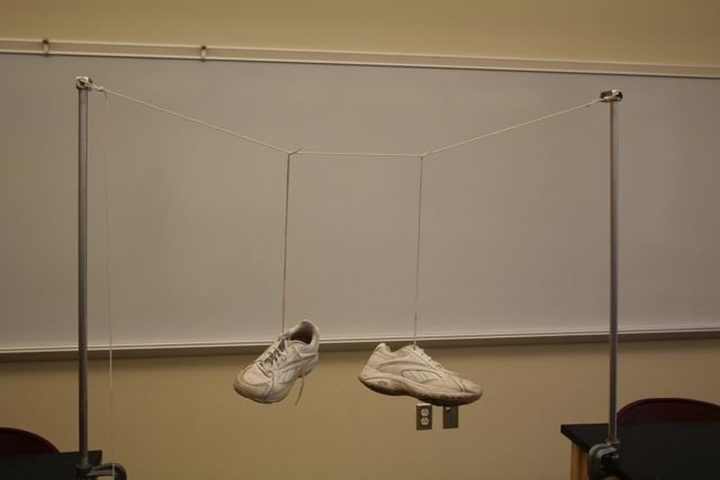
Sneaky Pendulums (Coupled Pendulums)
Tie two sneakers to a string, swing one, and watch the other slowly steal all its motion, then give it back.
© Bruce Yeany · Homemade Science with Bruce Yeany · youtube.com/@YeanyScience
Free for personal and classroom use. Please don't resell or republish. Build and use at your own risk; follow the safety notes and supervise children.