Build plans / Nanosecond of Light and Millisecond of Sound Sticks
Nanosecond of Light and Millisecond of Sound Sticks
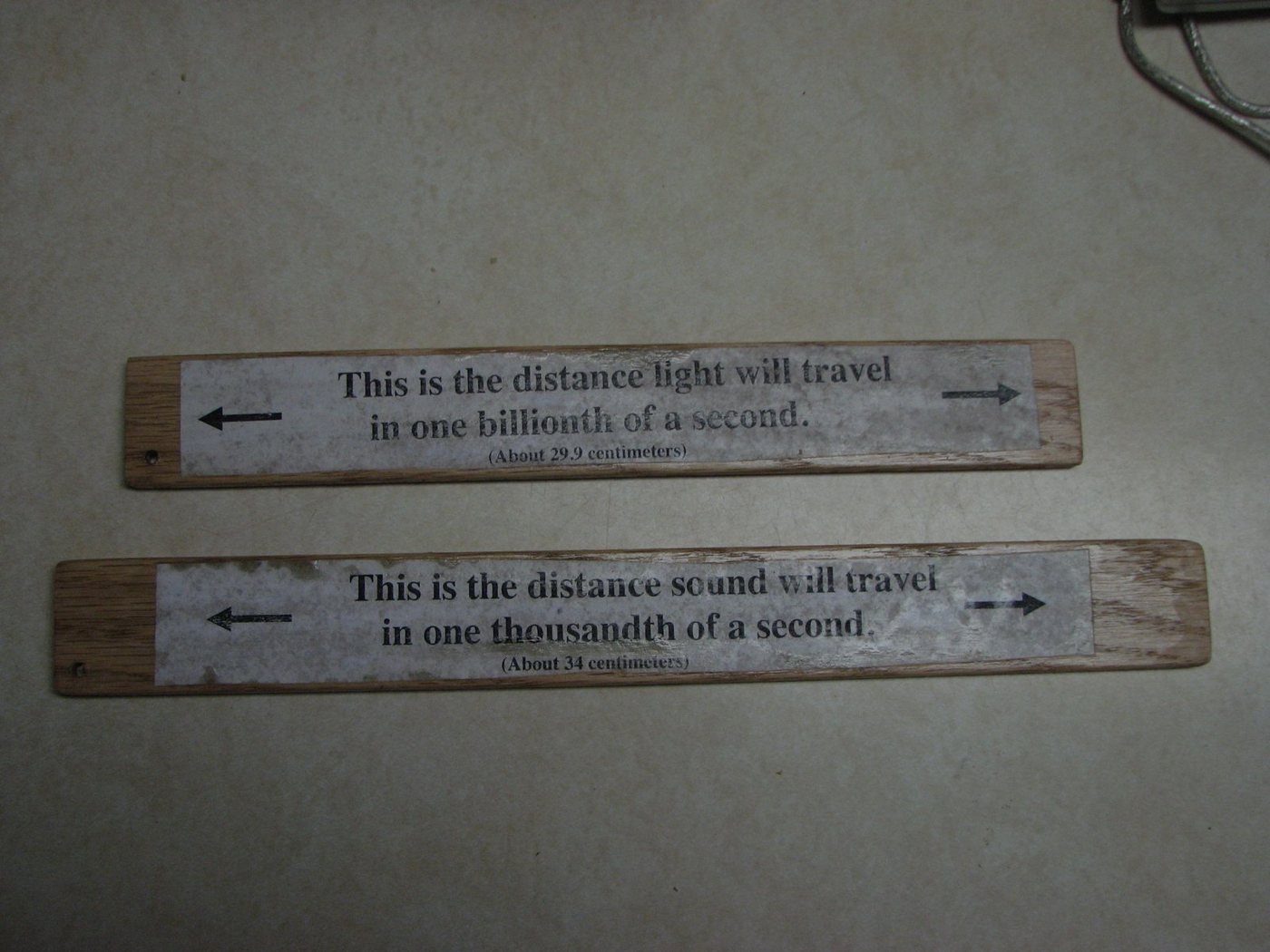
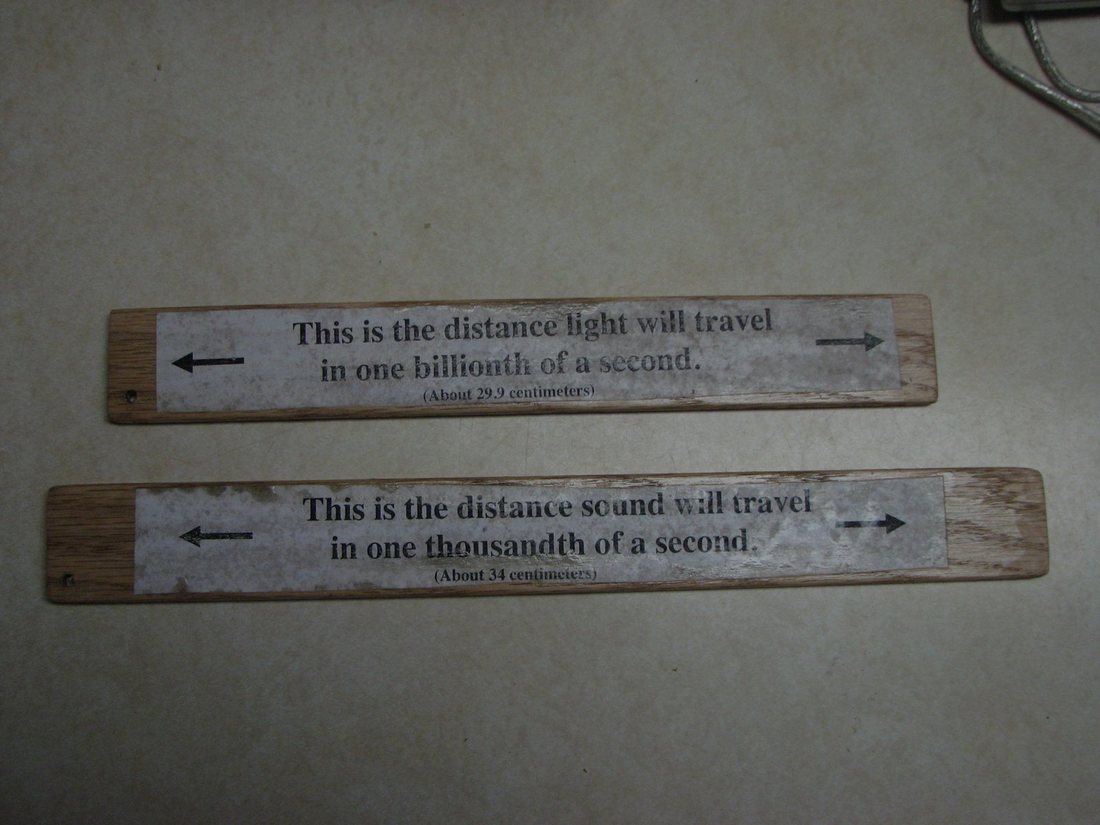
Two labeled wood strips hang in the classroom. One is about 30 cm long, the distance light travels in one nanosecond; the other is about 34 cm, the distance sound travels in one millisecond. Because the sticks look nearly identical, they make the huge difference in speed hard to forget.
Written from Bruce's original workshop handout. Bruce's final review of this plan is in progress.
What it shows
Two sticks of almost the same length: one shows a billionth of a second of light, the other a thousandth of a second of sound.
Key ideas: speed of light, speed of sound, metric prefixes, scientific notation
Build it
Cut the sticks
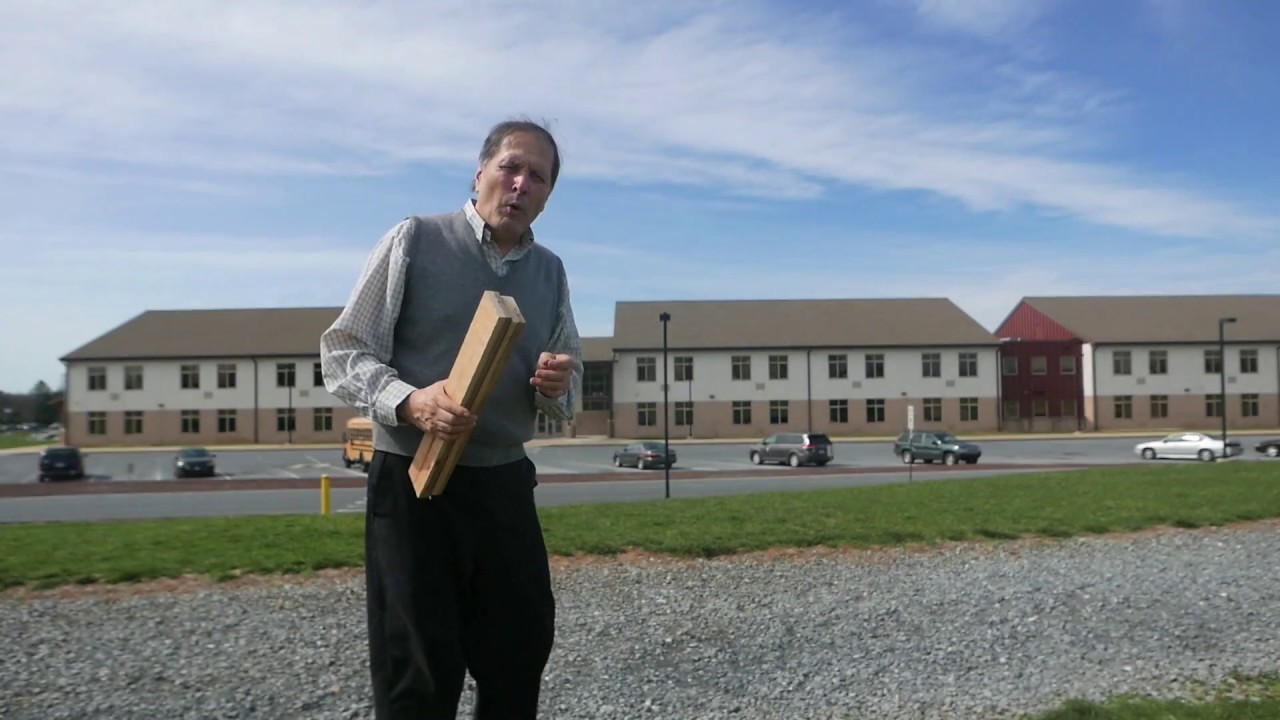
Cut one wood strip about 30 cm long for light and one 34.3 cm long for sound. Measure carefully: the lengths are the point of the project.
Sand the sticks
Sand the faces and ends smooth.
Print the light label
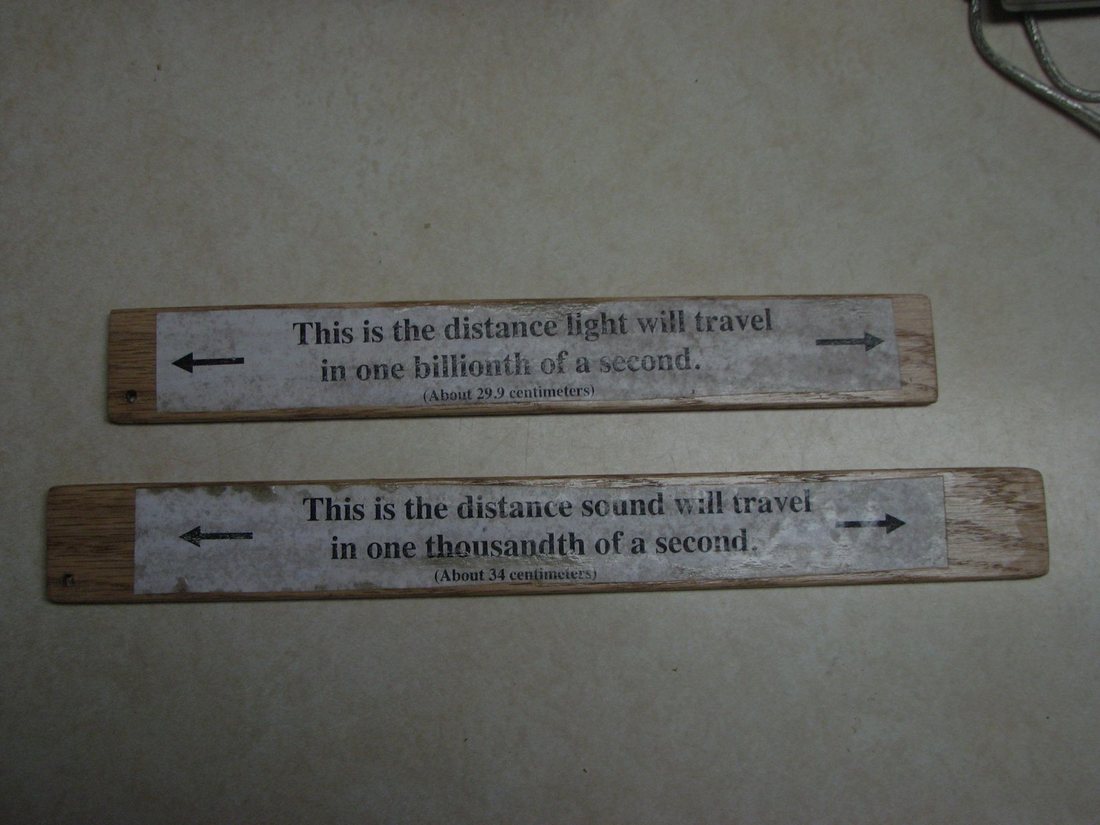
Print a label reading: One nanosecond of light. This is the distance light will travel in one billionth of a second (about 30 centimeters). Add arrows pointing to each end of the stick.
Print the sound label
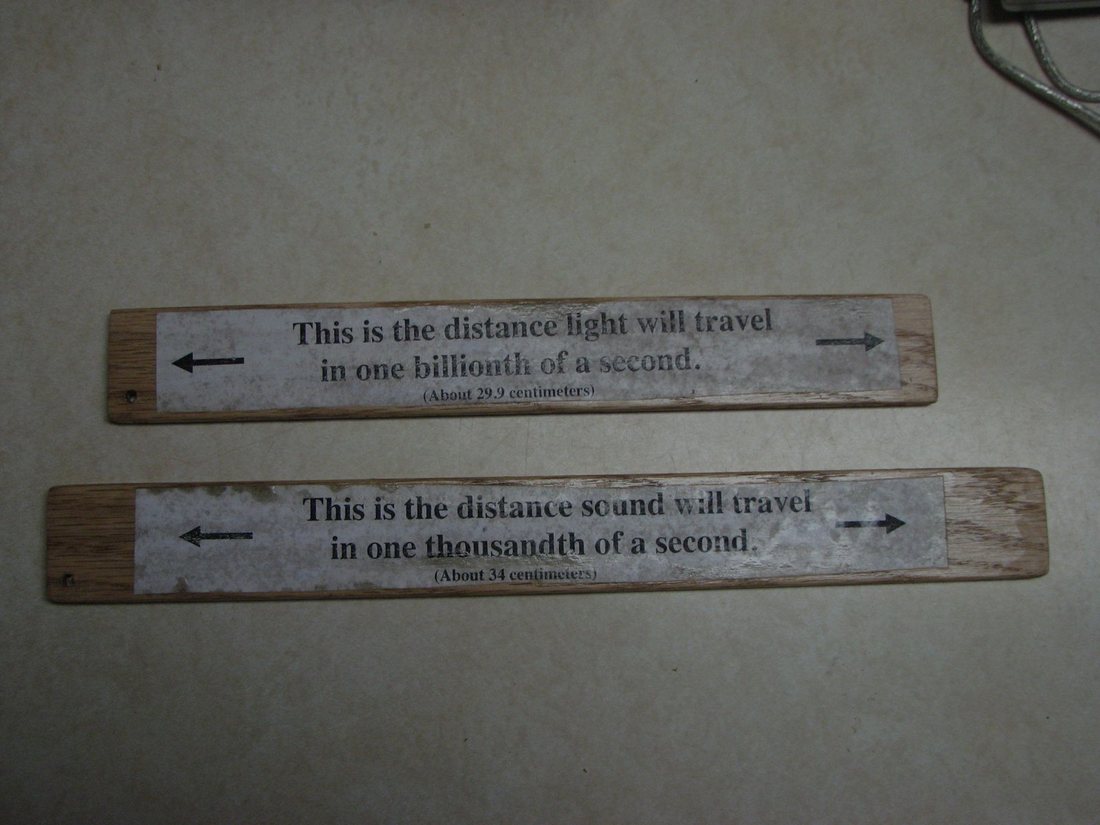
Print a label reading: One millisecond of sound. This is the distance sound will travel in one thousandth of a second (about 34 centimeters). Add arrows pointing to each end.
Varnish on the labels
Brush varnish on the stick, lay the trimmed label onto the wet varnish, and smooth it flat. When dry, brush one or two more coats over the paper to seal it.
Hang them
Drill a small hole near one end of each stick or add a screw eye, and hang the two sticks side by side in the room.
How it works
Light travels about 300,000,000 meters per second. In one billionth of a second (a nanosecond) it covers about 0.30 meters, or roughly 30 centimeters.
Sound in room-temperature air travels about 343 meters per second. In one thousandth of a second (a millisecond) it covers about 0.343 meters, or 34.3 centimeters.
Light covers nearly the same distance in a time one million times shorter, so it is close to a million times faster than sound (more precisely, about 870,000 times).
Using it
- Ask: Which stick represents the faster traveler? Most students guess the longer one. Then look at the time units.
- Have students calculate how many light sticks laid end to end would reach the distance light travels in one second (one billion).
- Connect to thunder and lightning: count seconds between the flash and the thunder and divide by 3 to estimate the distance in kilometers.
- Use the sticks to practice metric prefixes: nano, micro, milli and their powers of ten.
- Discuss why the sound stick would be a little shorter on a cold day, since sound travels more slowly in cold air.
Variations
- Add a third stick showing how far sound travels in one millisecond in water (about 1.5 m).
- Make student-sized cardboard versions for other speeds: a walking person, a car on the highway, or a sprinter in one second.
Troubleshooting
More build plans
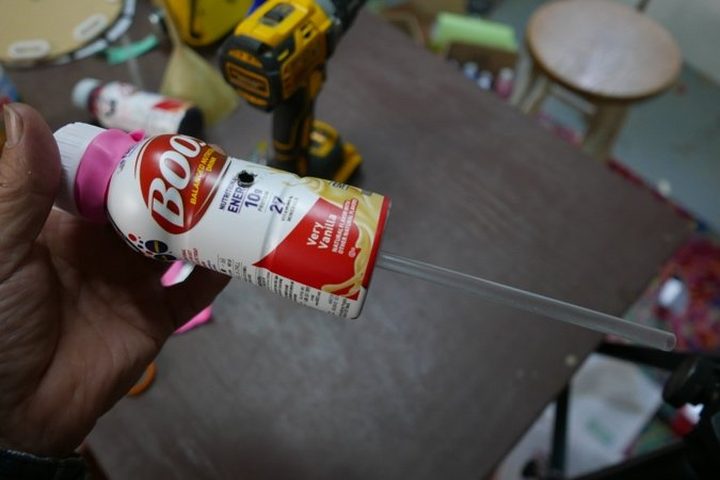
Balloon Fog Horn
Blow into a little plastic bottle and it lets out a deep, buzzing honk like a ship in the fog.
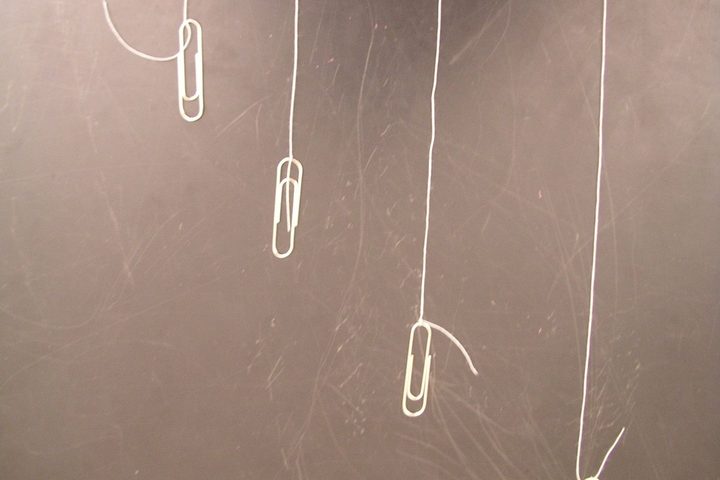
F.A.K.E.D. Resonance Pendulums
Ask the class to move just the orange ball with their minds, and watch it swing while the other three hang nearly still.
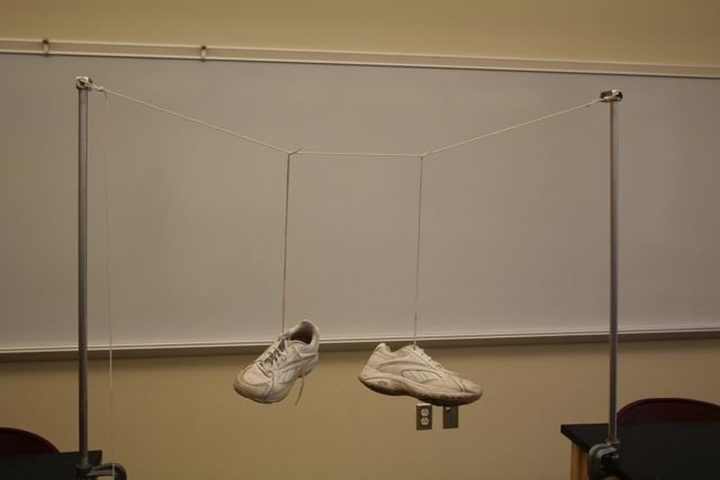
Sneaky Pendulums (Coupled Pendulums)
Tie two sneakers to a string, swing one, and watch the other slowly steal all its motion, then give it back.
© Bruce Yeany · Homemade Science with Bruce Yeany · youtube.com/@YeanyScience
Free for personal and classroom use. Please don't resell or republish. Build and use at your own risk; follow the safety notes and supervise children.