Build plans / Balloon Fog Horn
Balloon Fog Horn
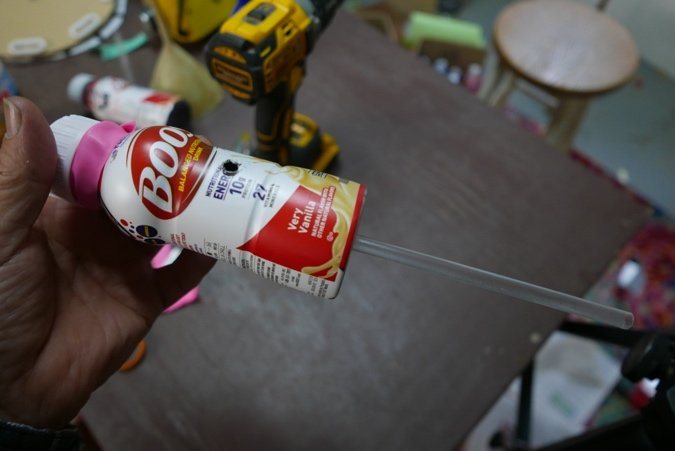
A piece of balloon stretched over the mouth of a small bottle sits just against the end of a tube that runs out through the bottom. Blowing into a hole in the side makes the balloon flutter open and shut against the tube, and the tube turns that buzz into a loud horn note. It takes about fifteen minutes and is a great first look at how reed instruments and the human voice work.
Written from Bruce's original workshop handout. Bruce's final review of this plan is in progress.
What it shows
Blow into a little plastic bottle and it lets out a deep, buzzing honk like a ship in the fog.
Key ideas: vibration, sound, air pressure, resonance, pitch
Build it
Gather the parts
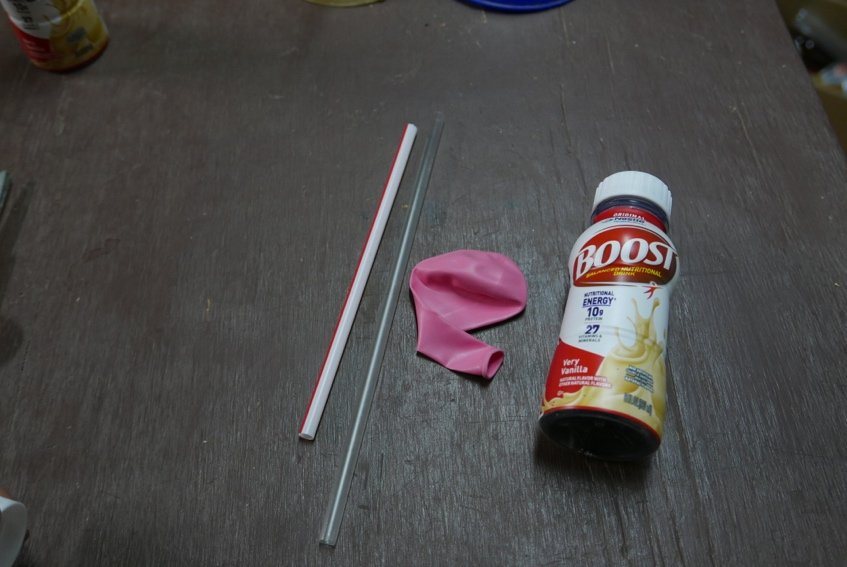
You need a small, fairly rigid plastic bottle with its cap, a balloon and a rigid tube or straw.
Drill the bottom hole
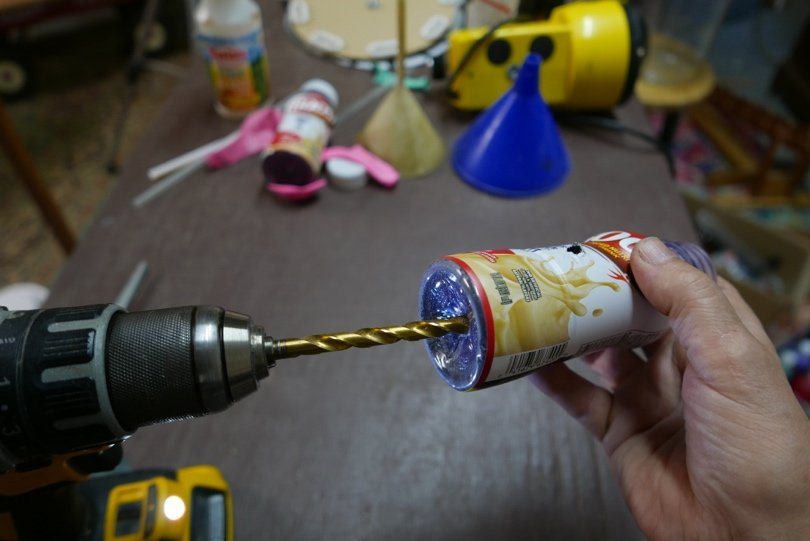
Drill a hole in the center of the bottom of the bottle. It must be a tight fit on the tube so the tube stays where you put it and no air leaks around it.
Drill the side hole
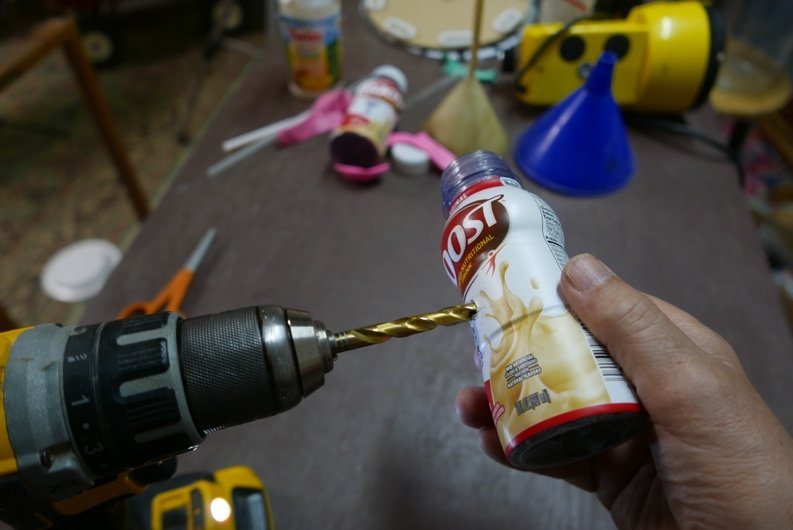
Drill a hole in the side of the bottle. You can blow straight into this hole, or push a short straw into it as a mouthpiece.
Cut the balloon
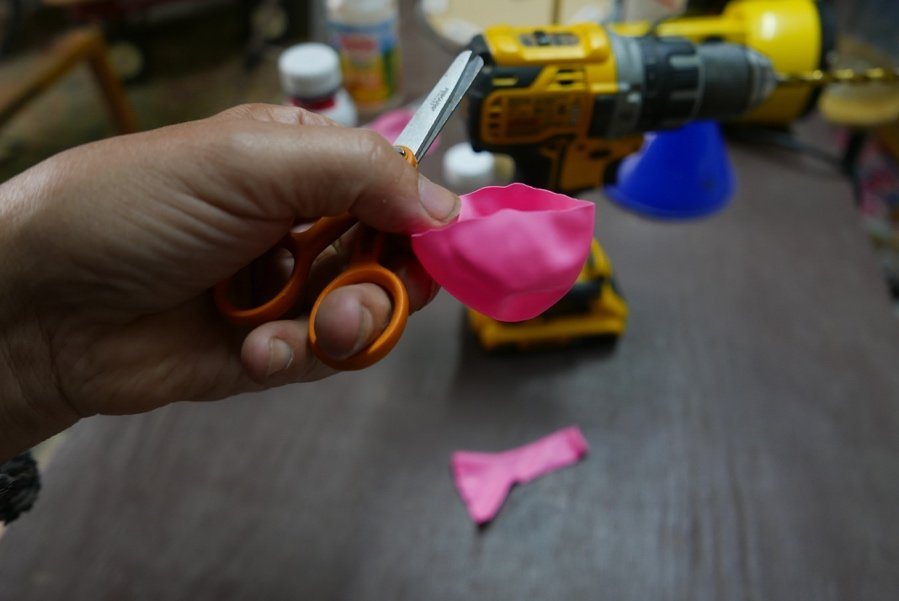
Cut the balloon in half crosswise and keep the closed end.
Stretch on the membrane
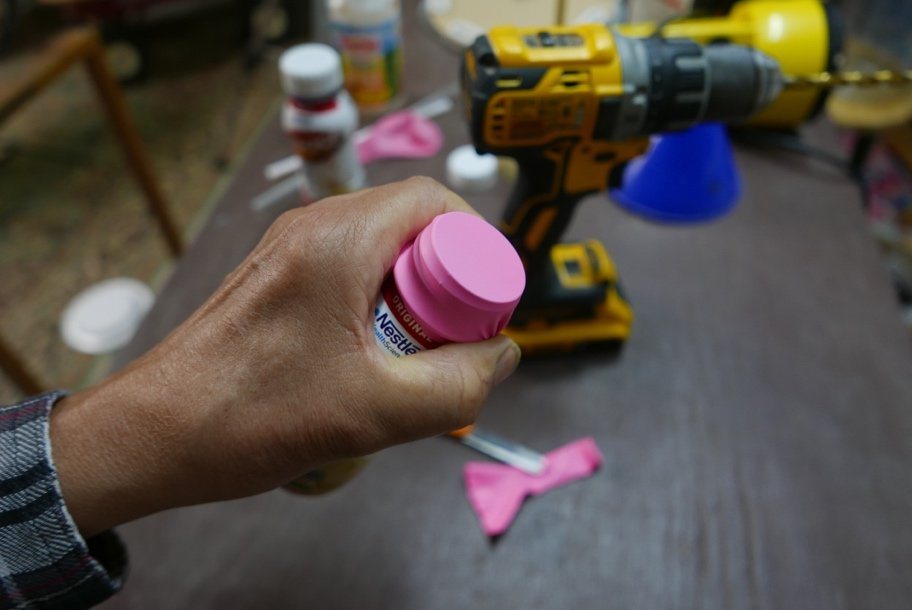
Stretch the balloon piece tightly over the mouth of the bottle so it makes a smooth, flat drum across the opening, then screw the cap on over it.
Insert the tube
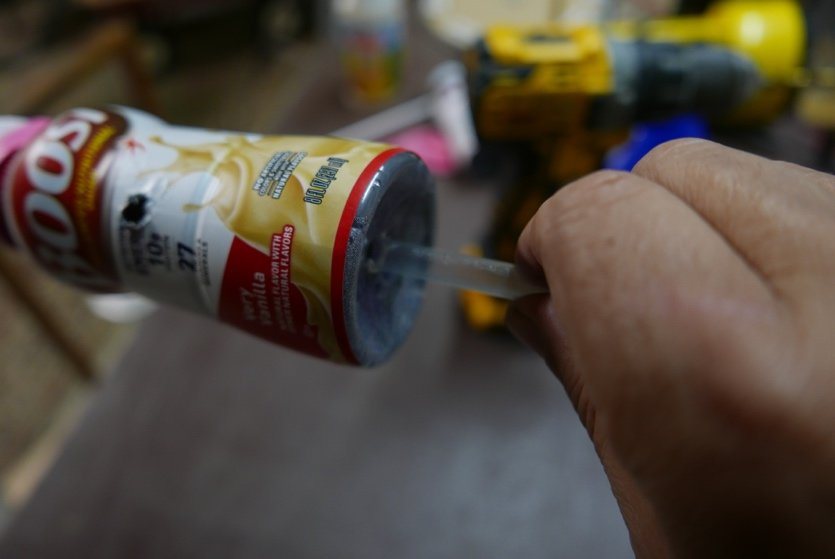
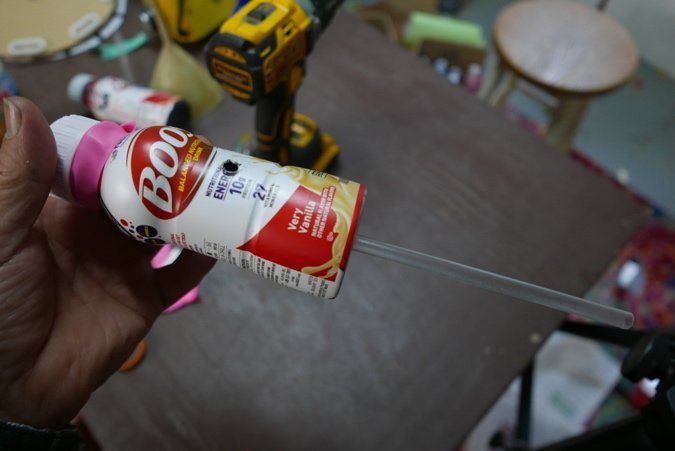
Push the tube in through the bottom hole until its inner end is about level with the edge of the bottle's mouth, just barely touching the balloon membrane.
Tune it
Blow into the side hole. A hiss means the tube is not in far enough; if you cannot blow at all, the tube is pushed too far and is sealing the membrane closed. Slide the tube in or out in tiny steps until it honks. Do not twist the tube while it touches the balloon, or it can cut the membrane.
How it works
When you blow into the side hole, the air pressure inside the bottle rises. The only way out is through the tube, but the stretched balloon is pressed against the tube's end, blocking it.
When the pressure is high enough, it pushes the membrane away from the tube and a puff of air escapes down the tube. The pressure drops, the stretched balloon snaps back and seals the tube again, and the cycle repeats many times a second. That rapid opening and closing is the buzz.
The column of air inside the tube resonates at its own natural frequency and reinforces the buzz, so the length of the tube helps set the pitch. Your vocal cords and the lips of a trumpet player work the same way: a flexible flap chopping a stream of air into pulses.
Using it
- Try tubes of different lengths and listen for the change in pitch. Ask: does a longer tube make a higher or lower note?
- Slide a slightly wider tube over the outside end of the horn's tube, like a trombone slide, and listen to the pitch fall as you lengthen it.
- Compare a stiff tube with a soft straw. Bruce found the soft fast-food straw works but is harder to keep in position.
- Ask students to compare the horn with their own voice: what plays the part of the balloon, and what plays the part of the tube?
- Build a set of horns tuned to different notes and play a simple tune as a group.
Variations
- Use the rigid straws that sometimes come with sports water bottles; Bruce suggests they are a good choice.
- Blow directly on the bottle's side hole without a mouthpiece.
Troubleshooting
More build plans
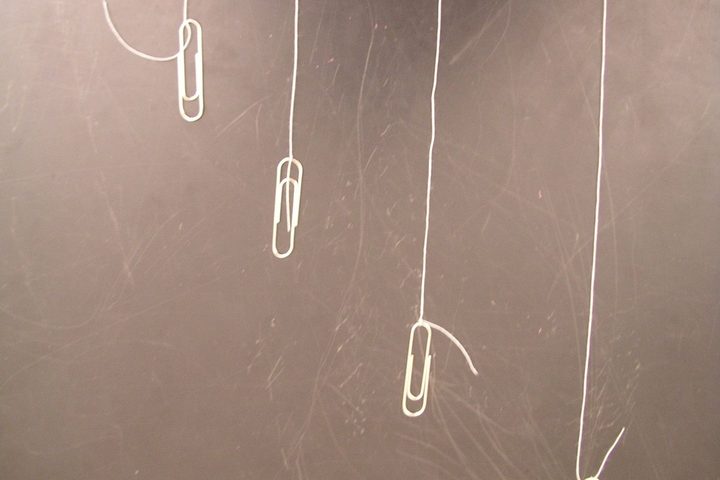
F.A.K.E.D. Resonance Pendulums
Ask the class to move just the orange ball with their minds, and watch it swing while the other three hang nearly still.
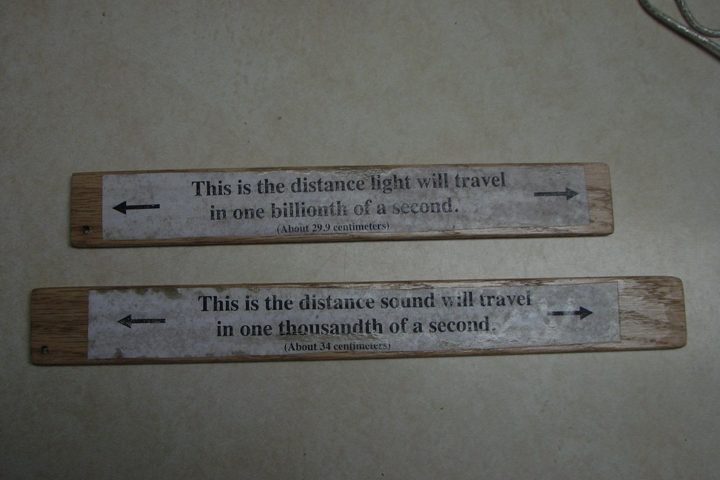
Nanosecond of Light and Millisecond of Sound Sticks
Two sticks of almost the same length: one shows a billionth of a second of light, the other a thousandth of a second of sound.
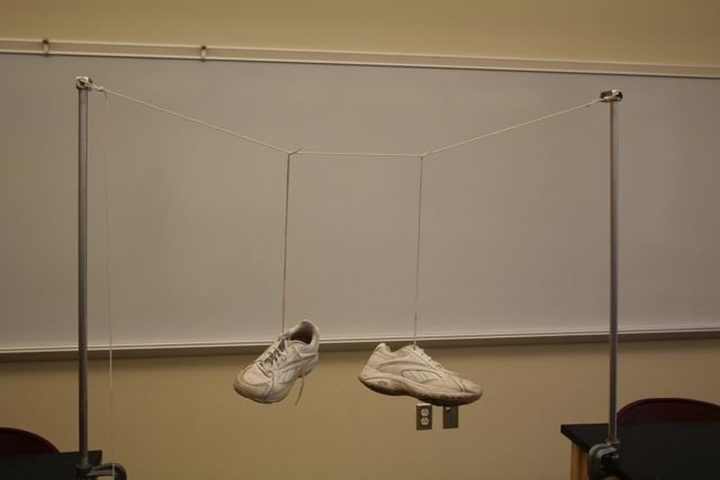
Sneaky Pendulums (Coupled Pendulums)
Tie two sneakers to a string, swing one, and watch the other slowly steal all its motion, then give it back.
© Bruce Yeany · Homemade Science with Bruce Yeany · youtube.com/@YeanyScience
Free for personal and classroom use. Please don't resell or republish. Build and use at your own risk; follow the safety notes and supervise children.