Build plans / Lever Larry
Lever Larry
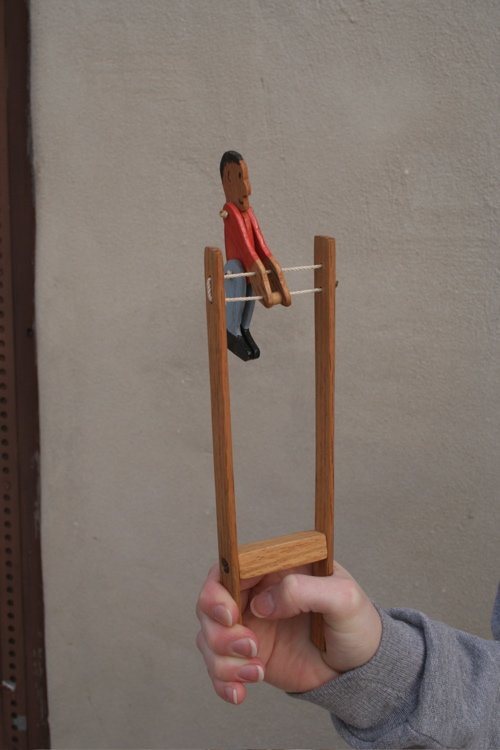
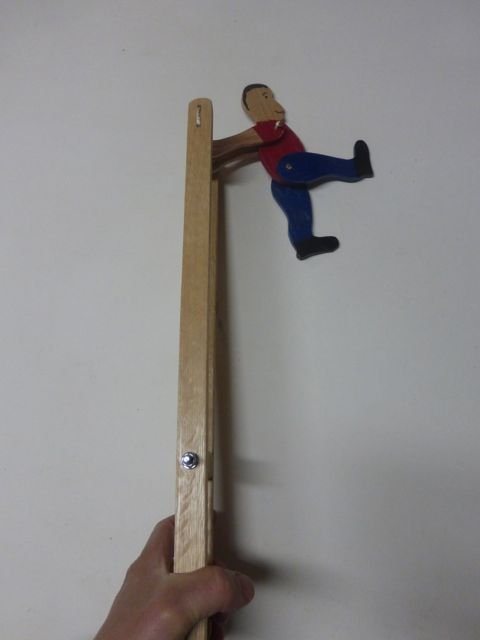
Lever Larry is a classic old-style toy: two long handles pivot on a spacer block, and a twisted string between their tops spins a jointed figure. It shows levers, torque and rotational inertia, and the loose arms and legs add a dose of unpredictable, chaotic motion.
Written from Bruce's original workshop handout. Bruce's final review of this plan is in progress.
What it shows
Squeeze two wooden handles and a jointed wooden acrobat flips, swings and somersaults over the bar like a high-bar gymnast.
Key ideas: levers, torque, rotational inertia, chaotic motion
Build it
Draw a pattern
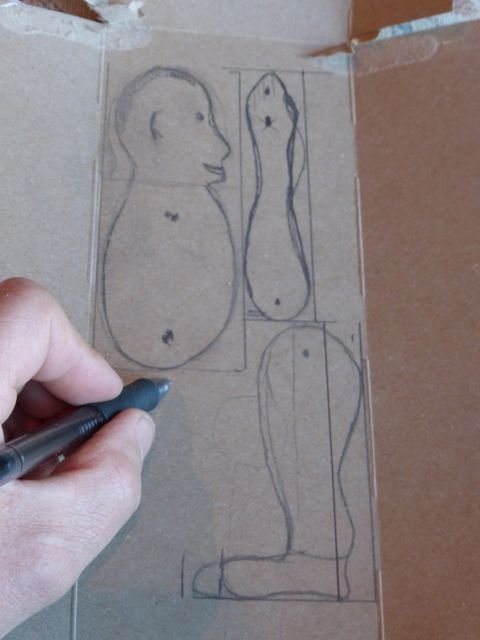
Sketch the body (head and torso as one piece), two arms and two legs on paper or cardboard, or enlarge Bruce's pattern on a copier. Any size works, and you can make the figure male or female or give it an Olympic look.
Cut out the parts
Trace the pattern onto 1/8 in plywood and cut out the body, two arms and two legs. Drill a small hole at each shoulder and hip joint, and one through the hands for the main string.
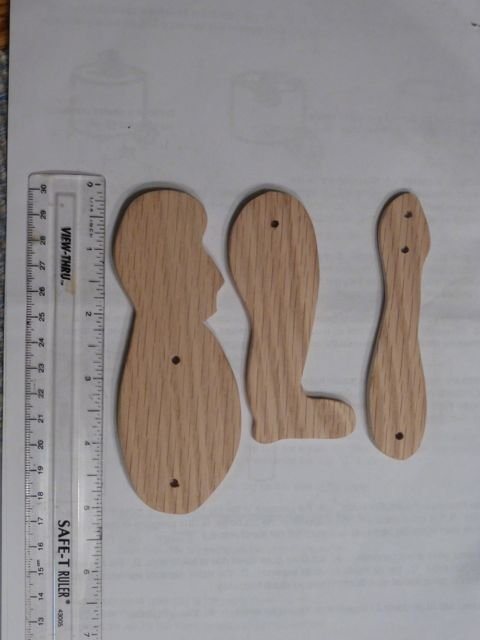
Sand and paint
Sand the edges smooth, then varnish and paint the parts.
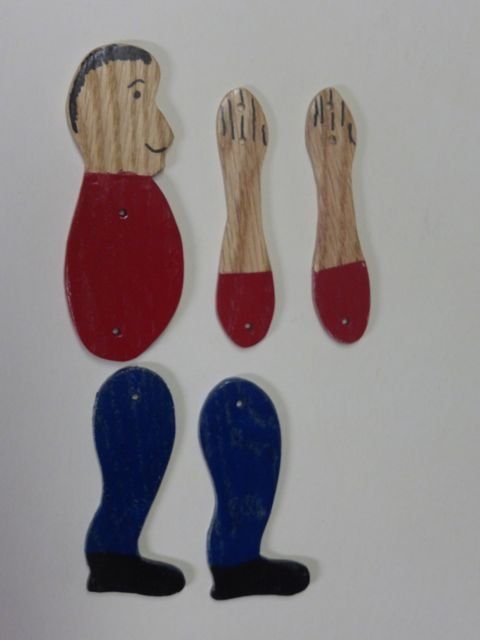
Joint the limbs
Join the arms and legs to the body with short pieces of string threaded loosely through the holes and knotted on both sides. The limbs should swing freely.
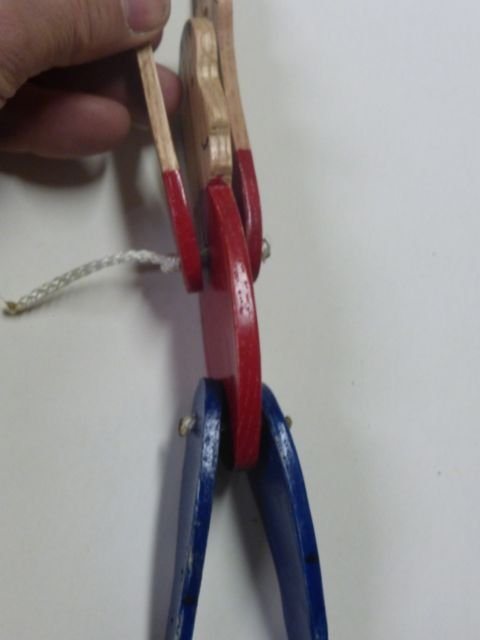
Cut and drill the handles
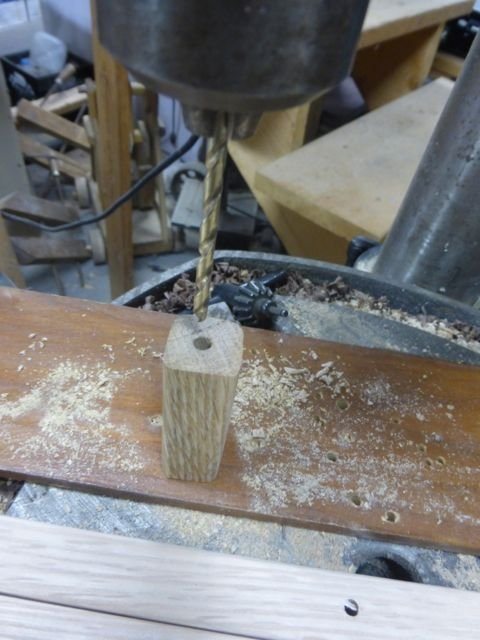
Cut two handles about three times as long as Larry stretched out. Stack them and drill the string holes through both at once near the top so they line up.
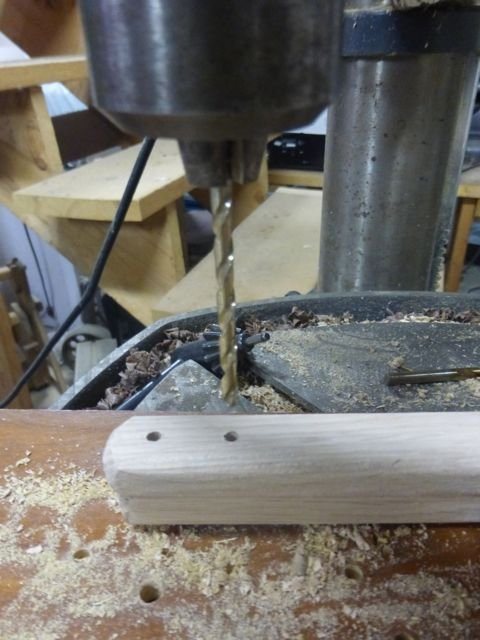
Drill the spacer block
Drill a hole straight through the middle of the spacer block for the bolt, and matching holes through the handles where the block will sit.
Assemble the handles
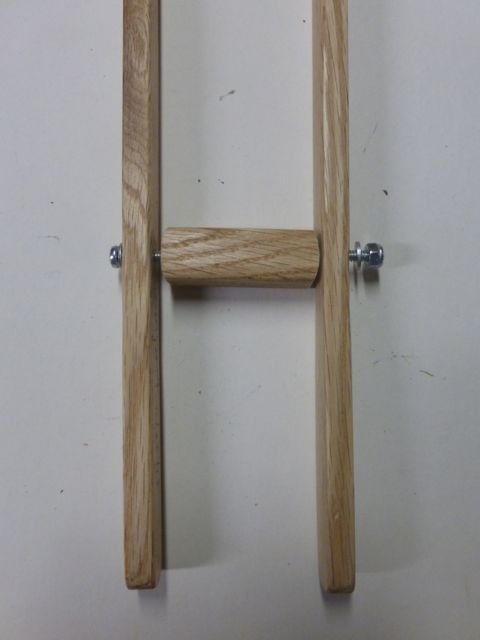
Bolt the handles to either side of the spacer with washers and a lock nut, snug but not tight: the handles must be able to pivot when squeezed. Two wood screws, not fully tightened, also work.
String Larry
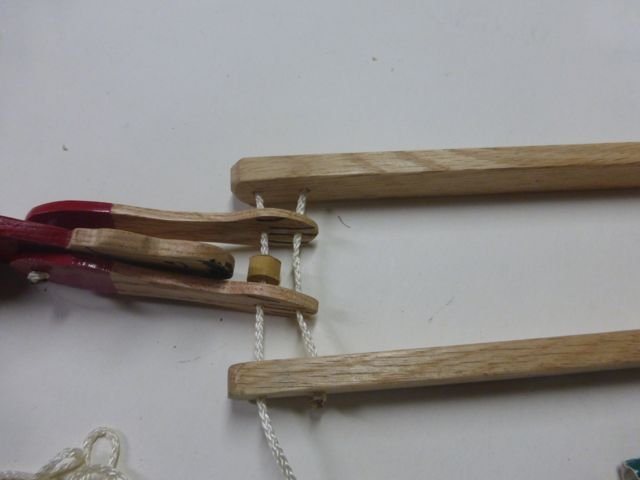
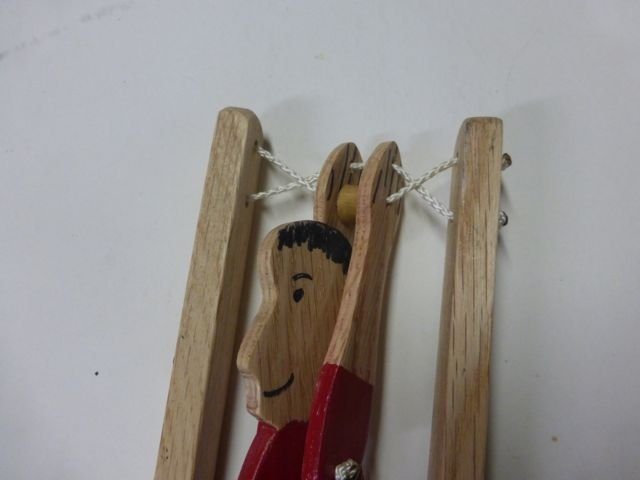
Thread the nylon string through the holes at the tops of the handles and through Larry's hands so the strands cross between each handle and the hands, with the optional bead between the hands. Knot the ends. Larry should sit out from the bars, not between them.
Check the twist
Let Larry hang down: the strings twist around each other. That stored twist is what will spin him.
Make him perform
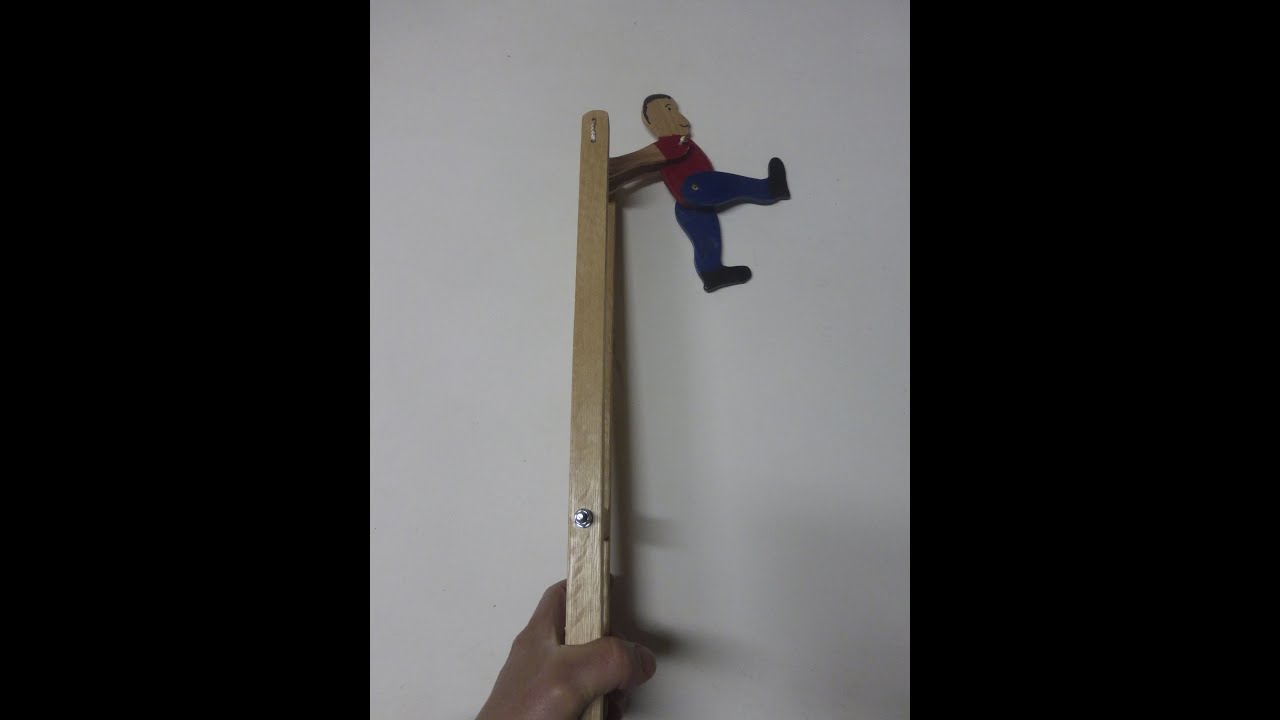
Squeeze the bottoms of the handles slowly and Larry rises. Squeeze quickly and he swings right over the top, twisting the string the other way, ready to come back.
How it works
Each handle is a lever with the spacer block as its fulcrum. Squeezing the bottom ends together pushes the top ends apart, pulling the string taut.
The tightened string untwists, and as it does it applies a torque that rotates Larry's hands around the string, lifting him.
If he is moving fast enough, his rotational inertia carries him past the top and all the way around, twisting the string the opposite way. The next squeeze untwists it in the other direction, so the routine can repeat.
The loosely jointed arms and legs swing on their own, so tiny differences in each squeeze lead to very different moves: a simple, hands-on taste of chaotic motion.
Using it
- Have students identify the levers, the fulcrum, the effort and the load.
- Compare slow and fast squeezes. What decides whether Larry makes it over the top?
- Give the moves gymnastics names and 'scores'; Bruce rates moves like the vertical split and giant circles.
- Build Larrys of different sizes and compare how hard they are to flip, connecting size to rotational inertia.
- Try fixing the legs in place and see whether the motion becomes more predictable.
Variations
- Bruce has built them from about 1 ft to 3 ft long; the largest needs two hands to operate.
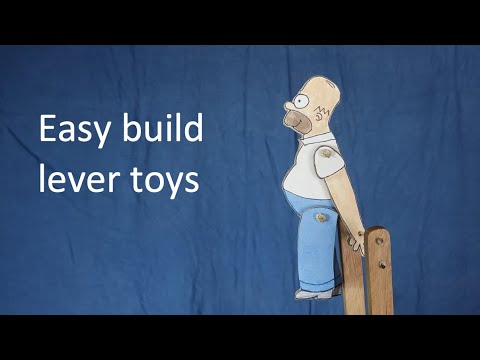
- Change the character: a gymnast, an animal or a robot.
Troubleshooting
More build plans
Cardboard Rubber Band Car
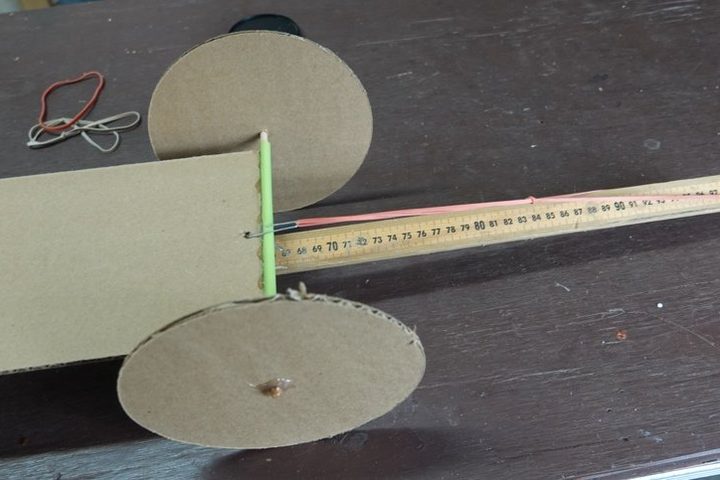
A shipping box, a few straws and a rubber band become a car that can roll more than 20 feet, and with giant wheels, more than 100.

Classroom Pulley System (Small-Load Version)
Lift the same bucket of sand with one pulley, then two, three and four, and feel the pull get easier while you measure exactly what it costs you in rope.
Toy Dissection Lab and Display
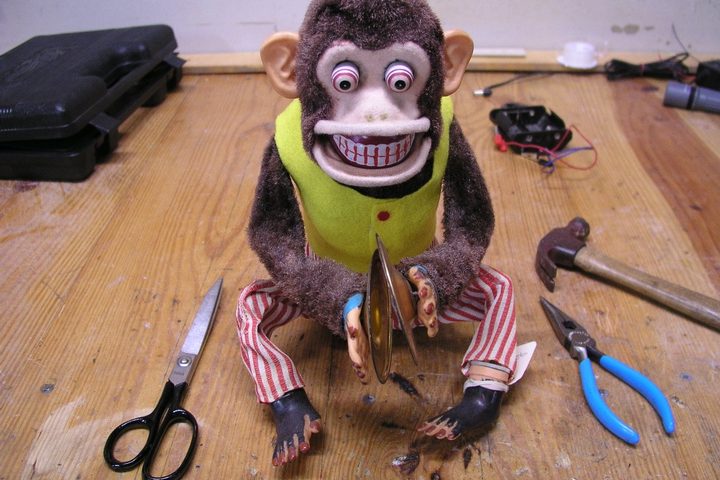
Take apart a broken toy to find the gears, levers and cams hiding inside, then put it back together as a see-through display.
© Bruce Yeany · Homemade Science with Bruce Yeany · youtube.com/@YeanyScience
Free for personal and classroom use. Please don't resell or republish. Build and use at your own risk; follow the safety notes and supervise children.