Build plans / Open-Works Wall Clock
Open-Works Wall Clock
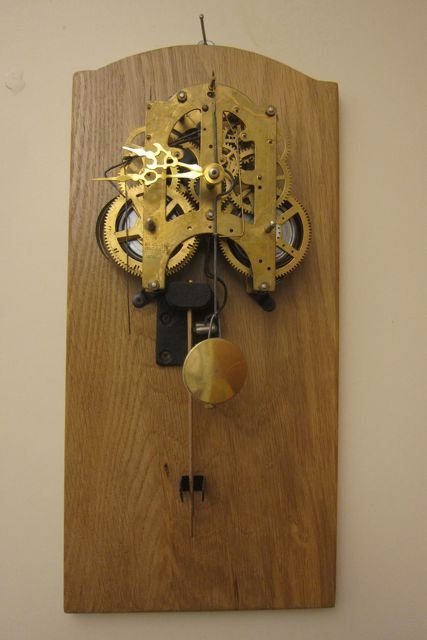
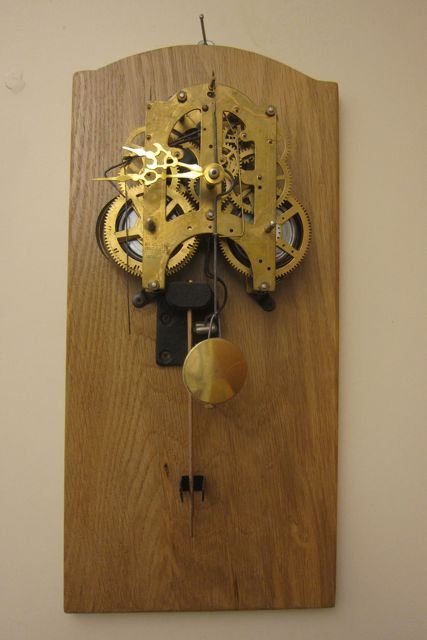
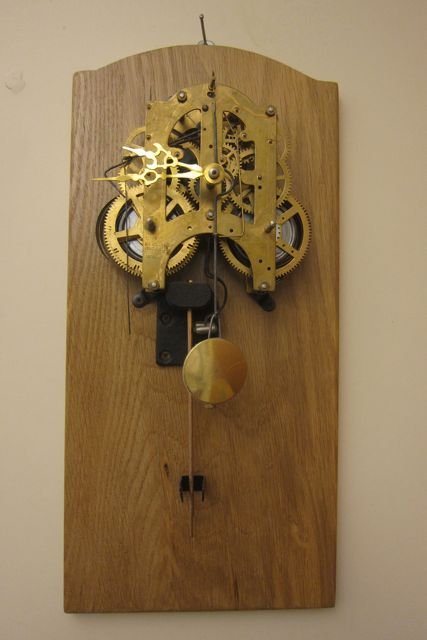
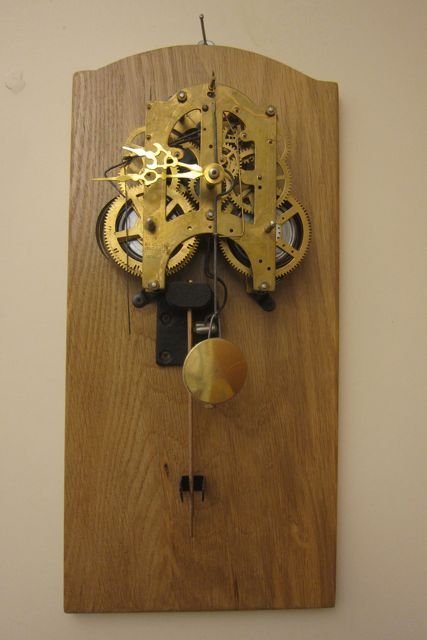
Bruce took a spring-wound pendulum clock from a yard sale out of its case and mounted the exposed movement on an oak board, with an explanation posted beside it. Students can watch stored spring energy turn the gears and keep the pendulum swinging, and hear the chime bar vibrate.
Written from Bruce's original workshop handout. Bruce's final review of this plan is in progress.
What it shows
Take the case off a yard-sale clock and its spring, gears and pendulum become a working lesson on energy.
Key ideas: elastic potential energy, kinetic energy, periodic motion, harmonic motion, gears
Build it
Choose the clock
Look for a working spring-driven pendulum clock with a chime. Wind it and make sure it runs before you begin.
Let down the spring
With the clock key on the arbor, hold the key firmly, release the click, and let the spring unwind slowly under control. An adult should do this step.
Remove the movement
Take out the screws holding the movement in the case and lift out the works with its hands, pendulum and chime.
Prepare the board
Cut and sand a board tall enough for the movement and the full swing of the pendulum, then finish it if you like.
Mount the movement
Fasten the movement to the board using its original mounting points, with spacers if needed so the gears and pendulum clear the wood. Hang the pendulum and check that it swings freely.
Level and set the beat
Hang the board on the wall, wind the clock, and adjust the board's tilt until the tick and tock sound evenly spaced.
Post the explanation
Mount a sign beside the clock explaining the energy changes, and ask visitors not to turn the hands.
How it works
Winding the clock stores elastic potential energy in the coiled spring. As the spring slowly unwinds, that energy becomes the kinetic energy of the turning gears.
The escapement lets the gears advance one tooth at a time and gives the pendulum a small push on each swing. The pendulum's steady back-and-forth swing is periodic motion, and it sets the clock's rate.
When the hammer strikes the chime bar, the bar vibrates back and forth with decreasing amplitude until it comes to rest. That is harmonic motion, and the vibration makes the sound.
Using it
- Trace the path of energy: your hand winding the key, the spring, the gears, the pendulum, and finally heat and sound.
- Count the pendulum's swings for 30 seconds and calculate its period.
- Count teeth on two meshing gears and work out how many times faster the smaller one turns.
- Ask: Why does the clock eventually stop? Where did the energy go?
Variations
- Mount a clear cover over the movement if students will be close to it.
- Pair it with a simple homemade pendulum so students can see how length changes the period.
Troubleshooting
More build plans
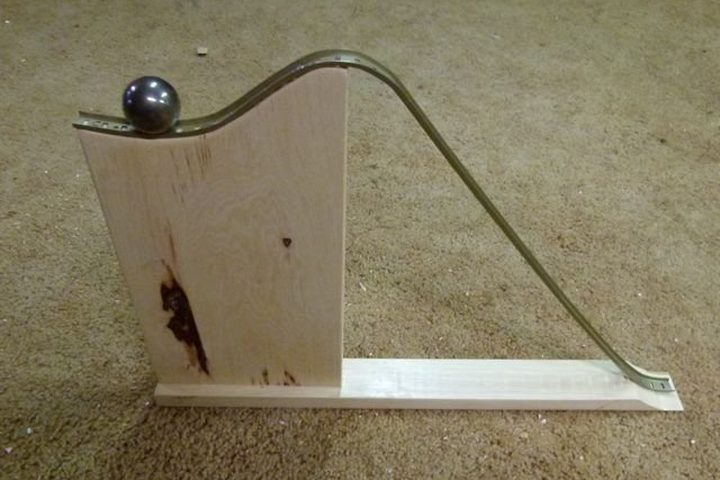
Activation Energy Track
The ball sits up high, full of potential energy, yet it can't go anywhere until you lift it a little higher.

Fruit Racers
Pick a fruit, add wheels, and race it down a tilted table in a family-night challenge built on potential energy.
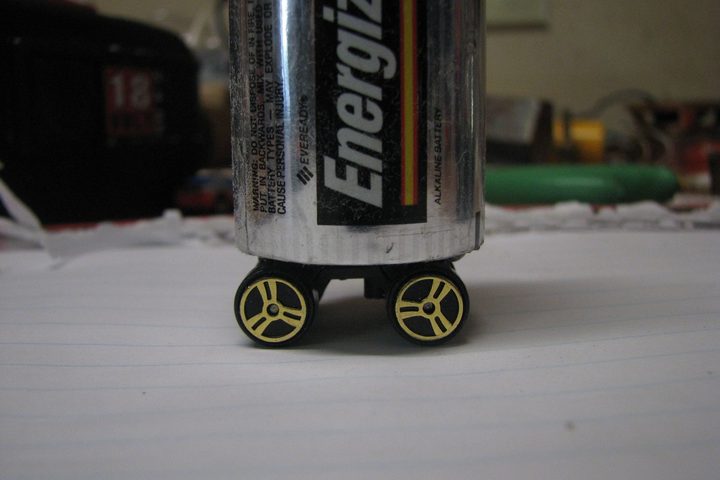
Rolling vs. Sliding Batteries
Two identical batteries race down a gentle slope: one rolls, one rides on tiny toy-car wheels. Most people bet on the wrong one.
© Bruce Yeany · Homemade Science with Bruce Yeany · youtube.com/@YeanyScience
Free for personal and classroom use. Please don't resell or republish. Build and use at your own risk; follow the safety notes and supervise children.