Build plans / Poke a Polymer
Poke a Polymer
With a sharp, smooth point and a little dish soap, you can push a skewer through a balloon or pencils through a bag of water, and the plastic seals itself around them. Paper bags, foil chip bags and milk jugs fail the same test. Bruce scaled it from a party trick up to a 20-gallon bag, and the contrast between materials opens a discussion of how polymer molecules are arranged.
Written from Bruce's original workshop handout. Bruce's final review of this plan is in progress.
What it shows
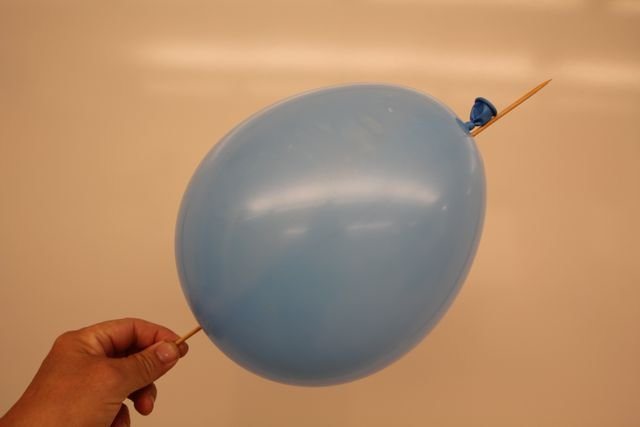
Slide a sharp stick right through a balloon, or a dozen pencils through a bag of water, and nothing pops or leaks.
Key ideas: polymers, elasticity, molecular structure, properties of materials
Build it
Sharpen and smooth the points
Make the skewer or pencil points as sharp as possible, then sand away any rough spots. A smooth point slides between the polymer chains; a rough one tears.
Soap the skewer
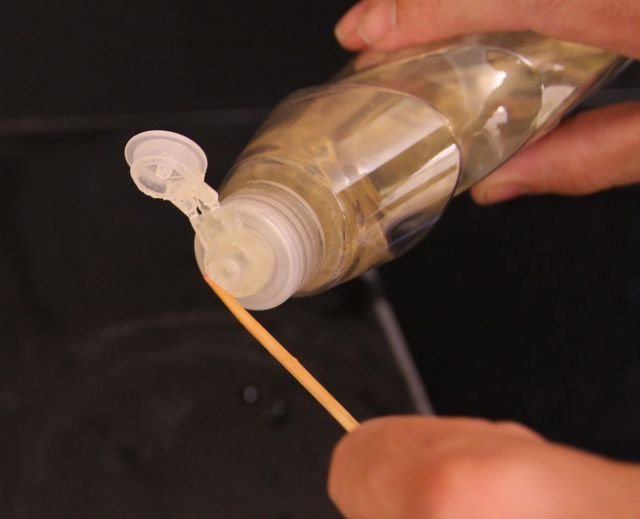
Wet the skewer and rub a little dish soap on it so it slides easily.
Enter at the thick end
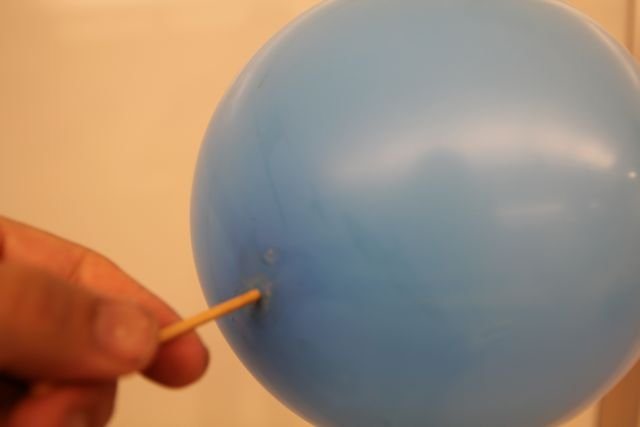
Inflate a balloon. Holding it gently, twist and push the skewer very slowly into the darker, thicker spot opposite the knot.
Exit by the knot
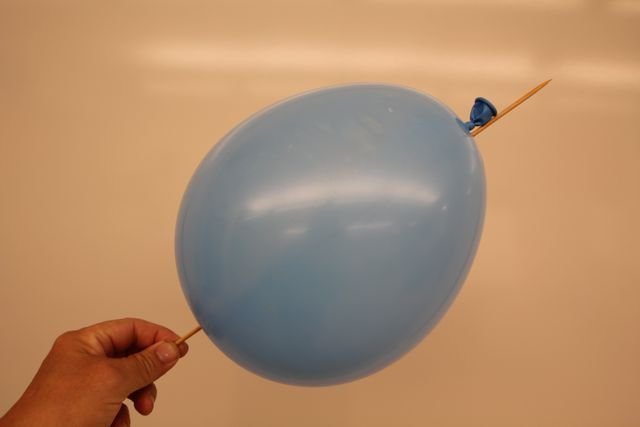
Keep twisting gently and bring the point out through the thick area right beside the knot. The balloon stays inflated.
Try a water balloon
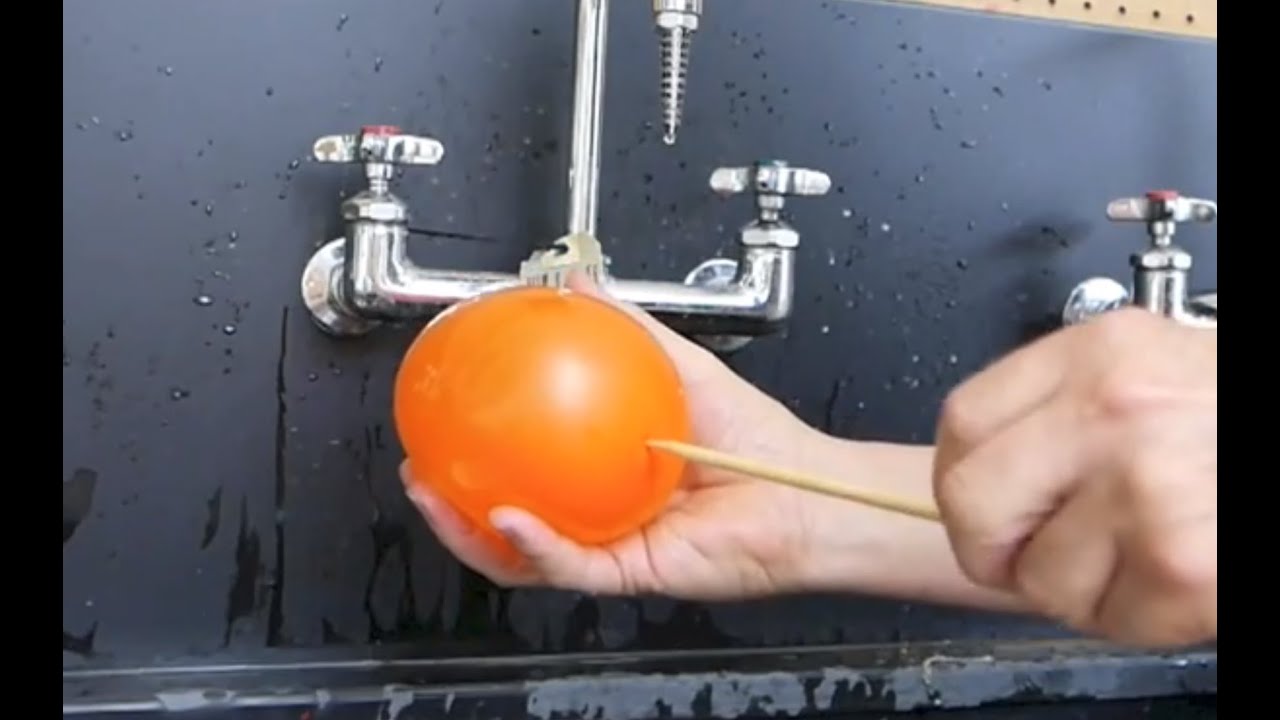
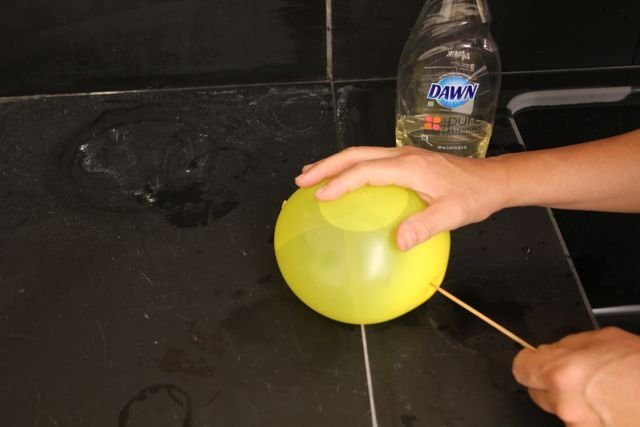
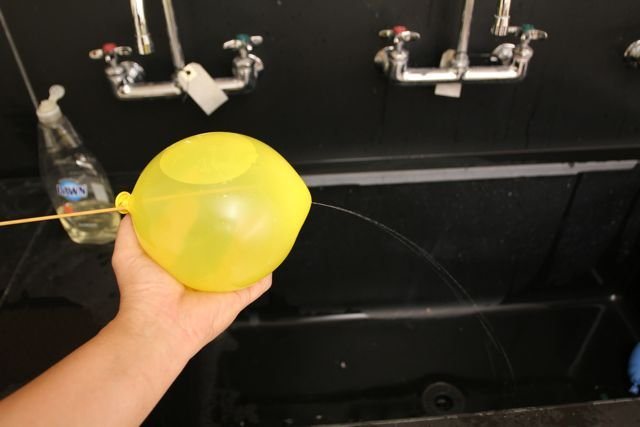
Fill a water balloon about half full and, over a sink, push a very sharp soapy skewer in. It goes halfway in with no leak.
Go all the way through
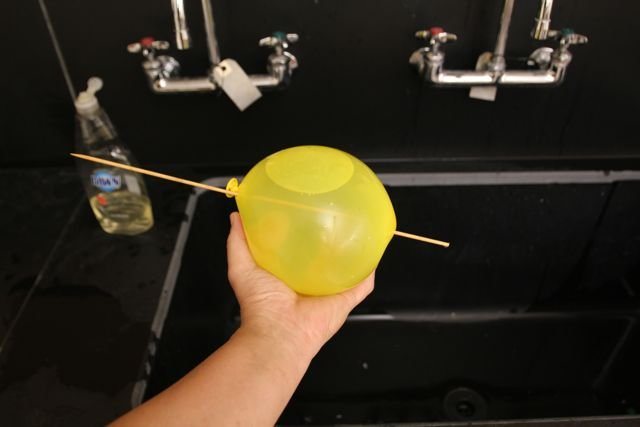
Push the skewer out the other side. Still no leaks.
Pull it out
Withdraw the skewer halfway and a stream spurts out; pull it all the way out and you get two streams.
Pencils through a bag of water
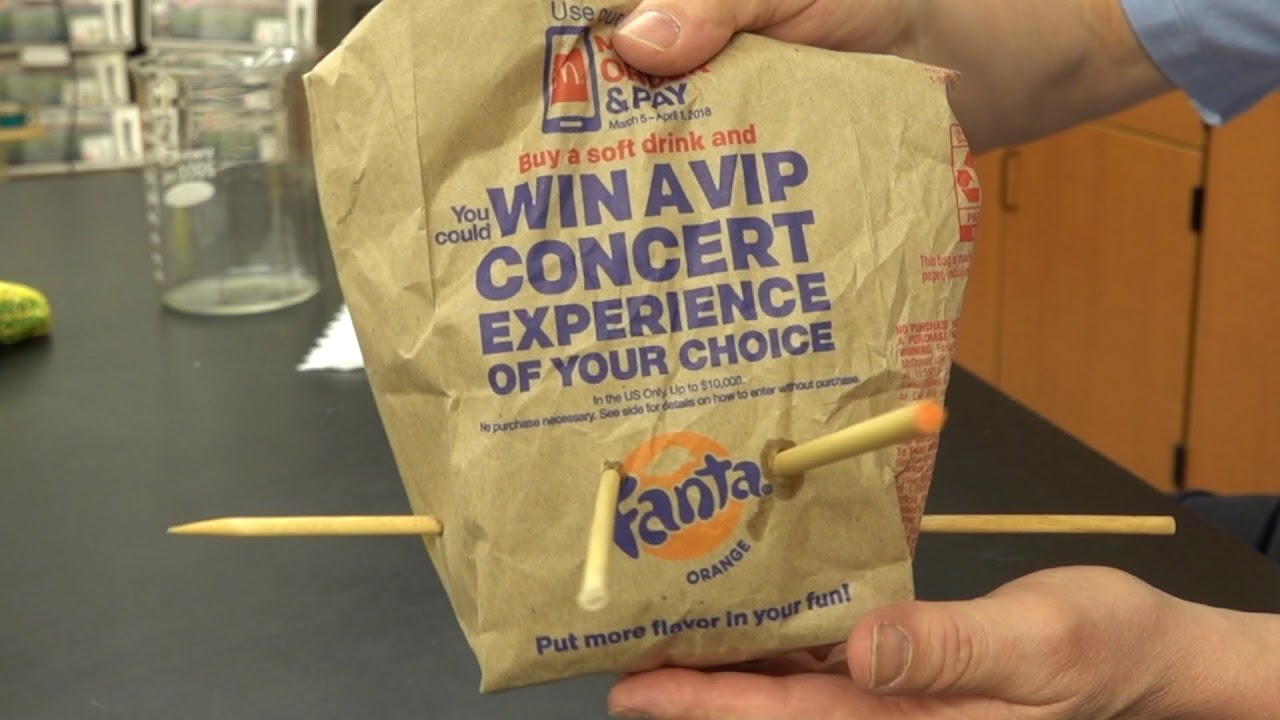
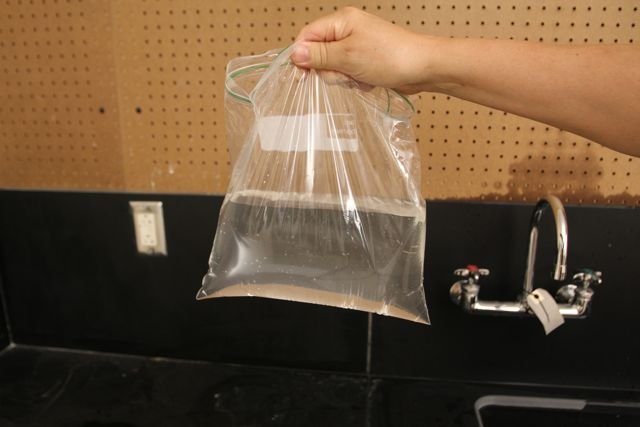
Fill a gallon freezer bag with water and hold it up. Push soapy round pencils through it one at a time, five or six in all.
Watch for leaks
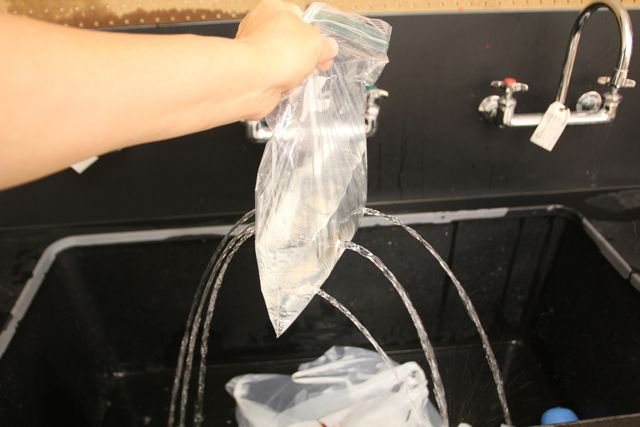
The bag does not leak while the pencils are in place. It only leaks when they are pulled out.
Test materials that fail
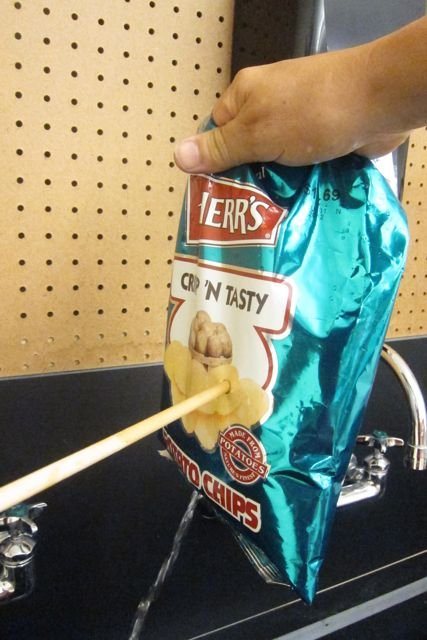
Try the same thing with a paper bag, a microwave popcorn bag or a foil chip bag. They leak around the stick right away.
Skewer a cereal box
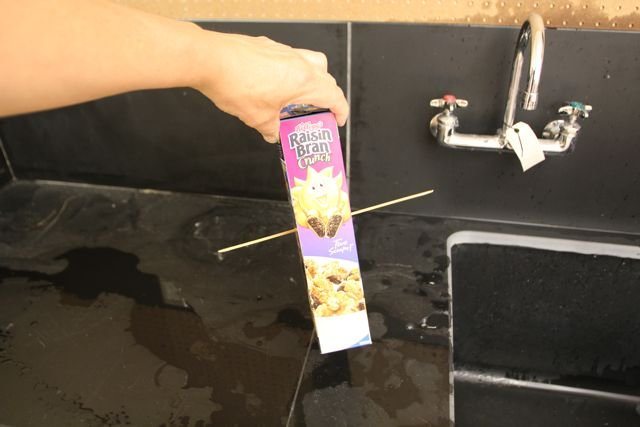
Cardboard boxes will not hold water, so push a skewer through a full box of flake cereal instead. Nothing spills out around the skewer.
Go bigger
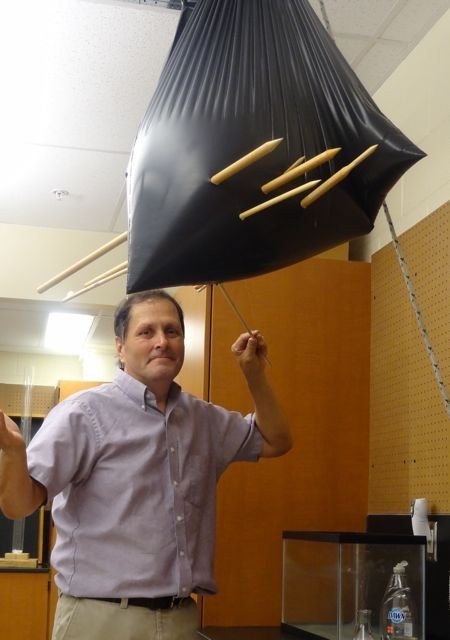
Fill a heavy-duty trash bag with water, hang it from a solid support near a sink, and push in sharpened, sanded, soaped dowels. Thicker bags work better.
How it works
Plastic bags and balloons are made of polymers: giant molecules built from thousands of small repeating units (monomers) linked into long chains. Polyethylene, the plastic in most bags, is made from ethylene units, and its long chains are tangled together like a ball of yarn.
When a smooth, sharp point pushes into polyethylene, the tangled chains slide apart and stretch around it instead of breaking. They stay entangled and pull back tightly against the pencil, sealing the hole. When you pull the pencil out, the stretched hole is left slightly smaller than the pencil, but not closed, so water streams out.
Paper is made of cellulose, another polymer built from glucose units, but its chains are straighter and bundled into fibers that do not stretch. The point tears the fibers and leaves a hole as big as the skewer, so water leaks right away. Foil chip bags behave more like paper: the hole tears instead of stretching.
In a balloon, the rubber near the knot and at the opposite end is stretched the least. Those thicker areas can stretch further around the skewer without tearing, which is why you enter and exit there.
Using it
- Hold the bag of water over a volunteer's head while you add the pencils (with their permission).
- Have students predict which bags will leak before testing paper, plastic and foil, then explain the results.
- Compare the holes left in a paper bag and a plastic bag after the skewer is removed.
- Ask why the cereal stays in the box even though the cardboard tore.
- Save the skewered balloons for an experiment on patching balloons.
Variations
- Super-size it: Bruce folded a heavy plastic mattress bag (folded to avoid leaky seams) between two 2x4s clamped together, filled it with about 20 gallons of cold water (about 160 pounds), hung it outdoors from a solid support, and skewered it with dowels, tiki torch poles and a broom handle. Heavier sticks can cause leaks, so go carefully.
- Try knitting needles, dowels and pencils of different diameters.
- Try different brands of trash bags; tear-resistant bags may work best.
Troubleshooting
More build plans
Chemical Dice
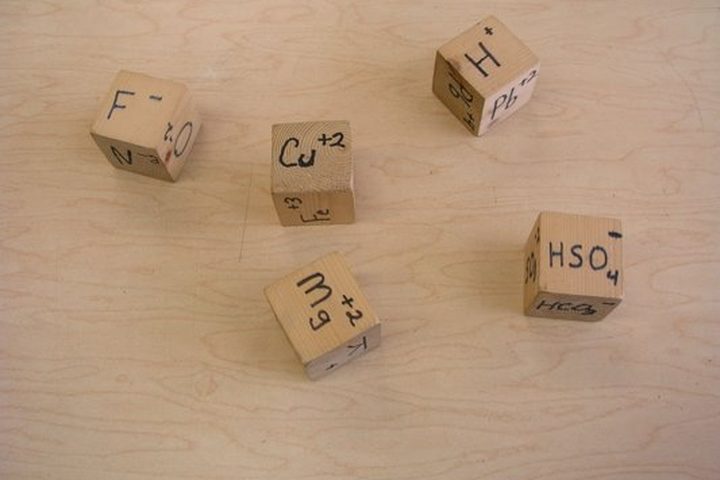
Roll a positive die and a negative die, and whatever comes up, write the compound's formula and name.
Rainbow Density Column
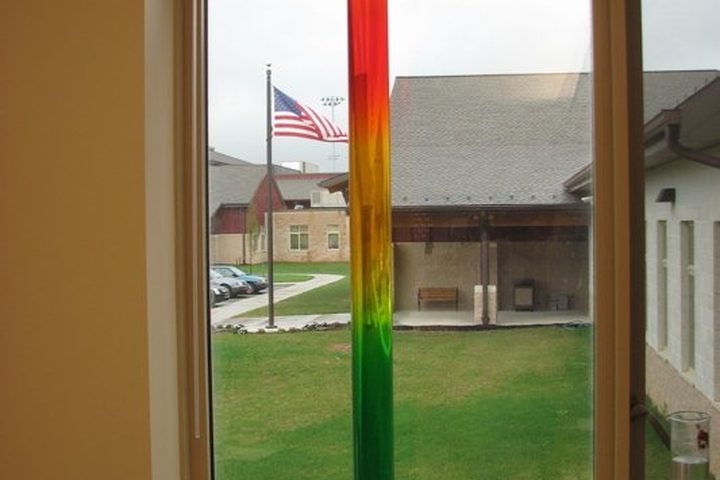
Six cups of colored salt water, poured carefully, stack themselves into a rainbow that holds its stripes.
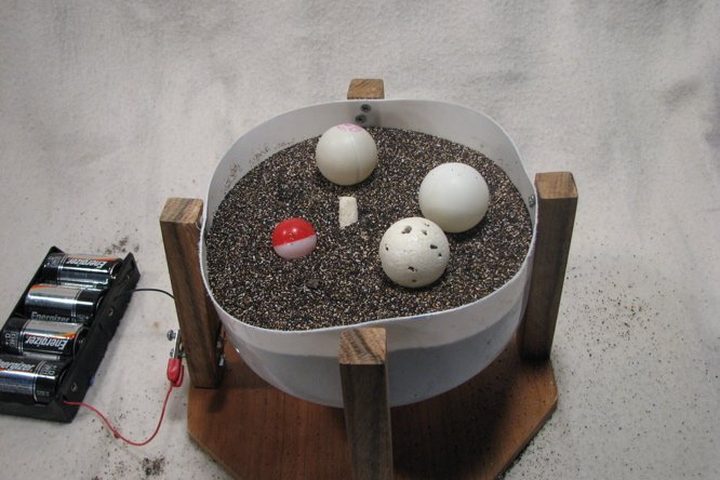
Buoyancy of Sand Vibrating Tub
Switch on the motor and buried ping-pong balls pop up through solid sand while steel balls on top sink out of sight.
© Bruce Yeany · Homemade Science with Bruce Yeany · youtube.com/@YeanyScience
Free for personal and classroom use. Please don't resell or republish. Build and use at your own risk; follow the safety notes and supervise children.