Build plans / Buoyancy of Sand Vibrating Tub
Buoyancy of Sand Vibrating Tub
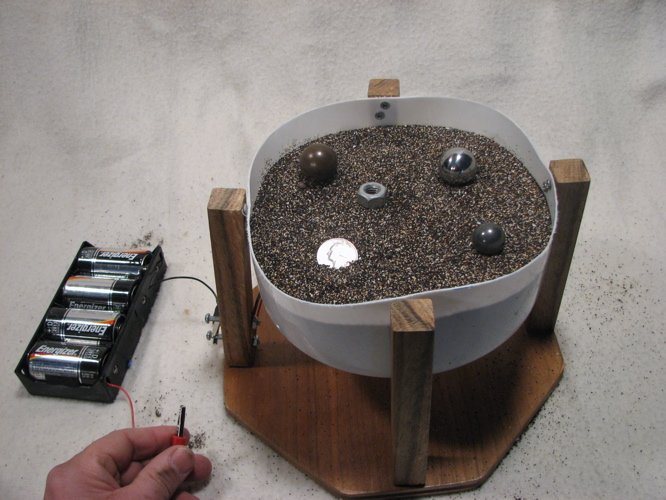
A small battery motor with a lopsided wooden arm shakes a plastic tub of sand. The vibration lets the sand grains flow like a fluid, so low-density objects buried in it rise to the surface and dense objects sink, exactly as Archimedes' principle predicts. A shaken jar version takes five minutes; the motorized tub makes the effect smooth and repeatable.
Written from Bruce's original workshop handout. Bruce's final review of this plan is in progress.
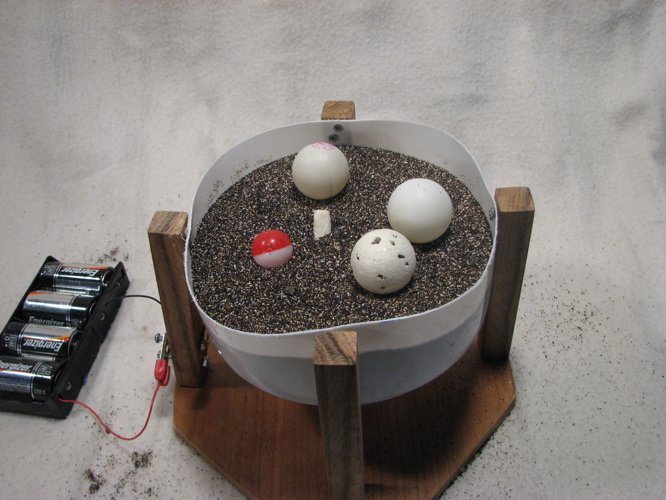
What it shows
Switch on the motor and buried ping-pong balls pop up through solid sand while steel balls on top sink out of sight.
Key ideas: buoyancy, density, Archimedes' principle, friction, granular materials
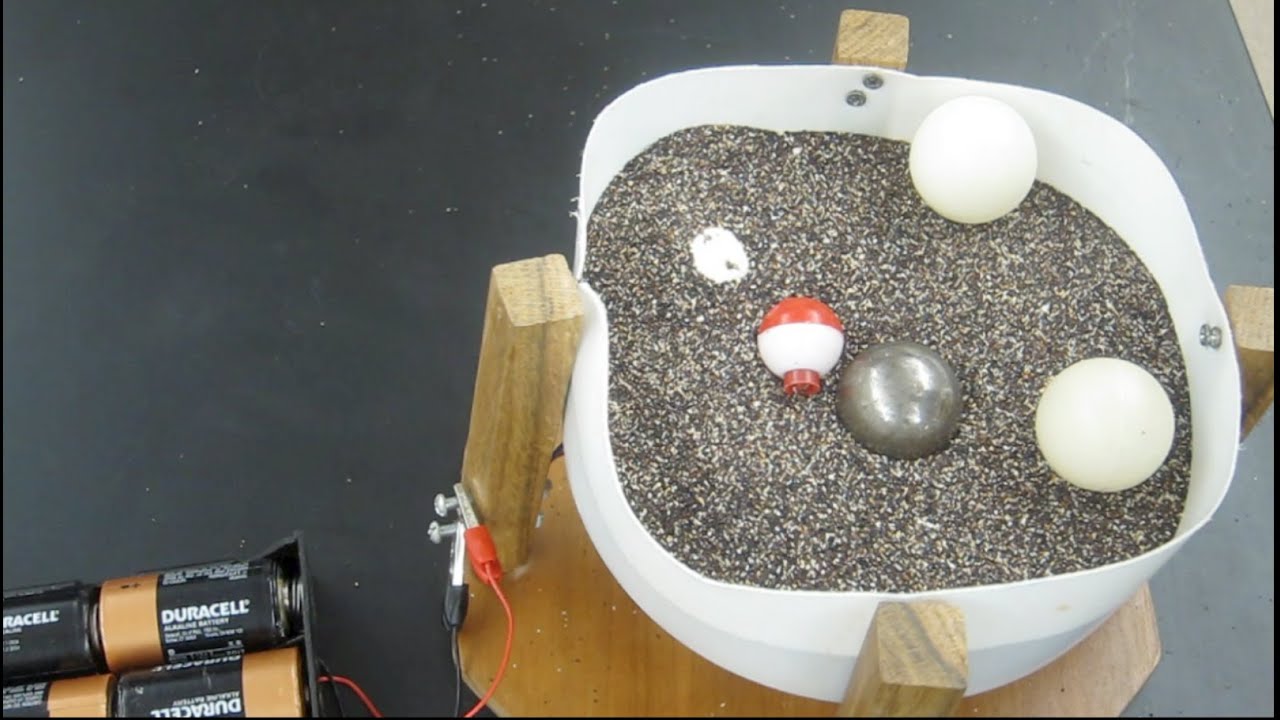
Build it
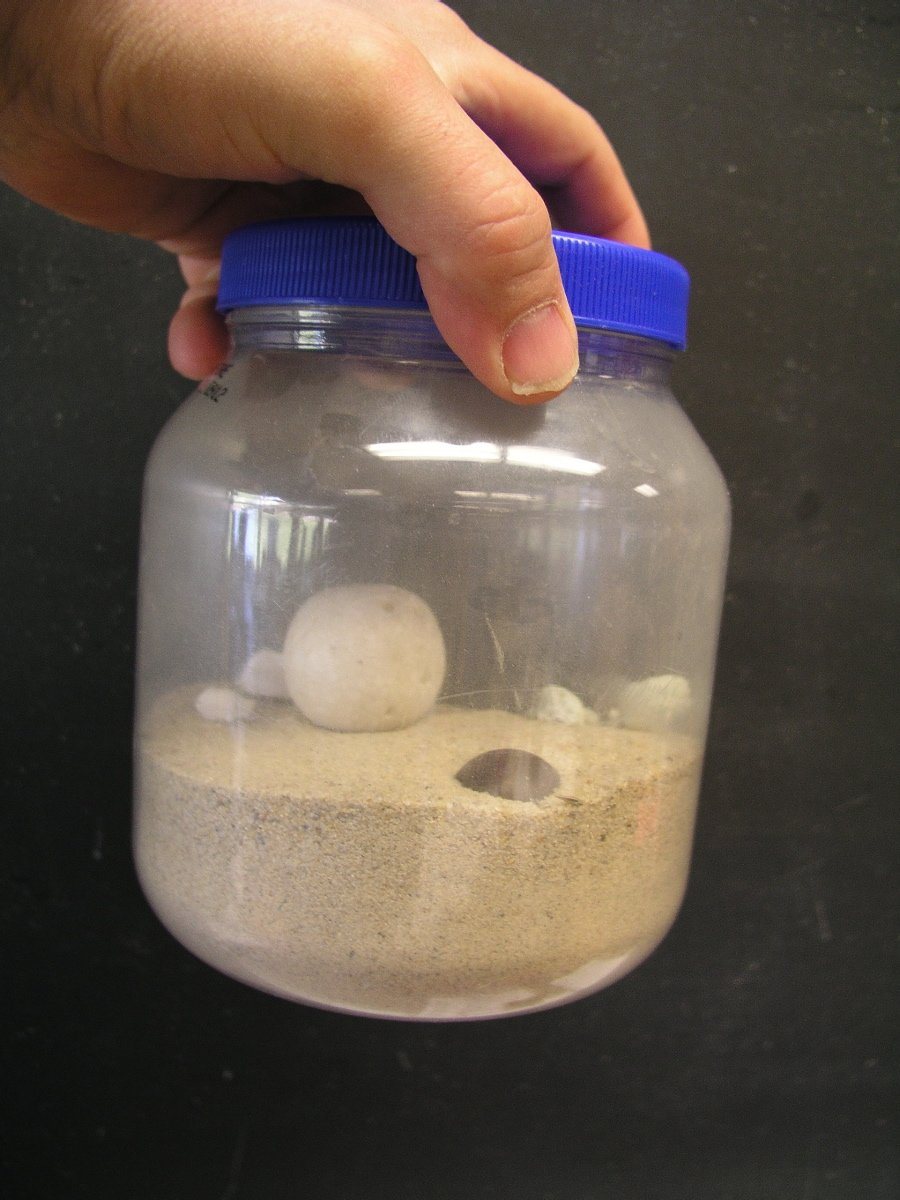
Try the jar version first
Put about 3 inches of sand in a large plastic jar. Bury a ping-pong ball and some foam bits, set a steel ball or nut on top, cap the jar and shake it. With a little practice you will find the right direction and force.
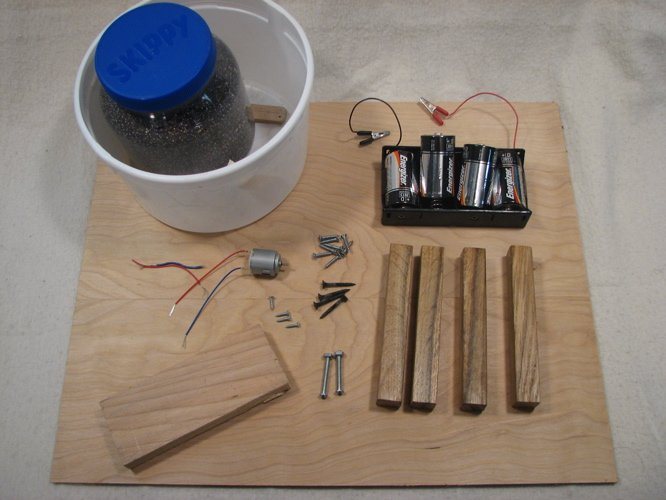
Gather the materials
Collect the container, motor, wood, screws, battery holder and clips.
Drill the motor block
Drill a 15/16 in hole (1 in also works) into a scrap of wood, then cut the wood to a 2-3 in square around the hole. Sand it smooth.
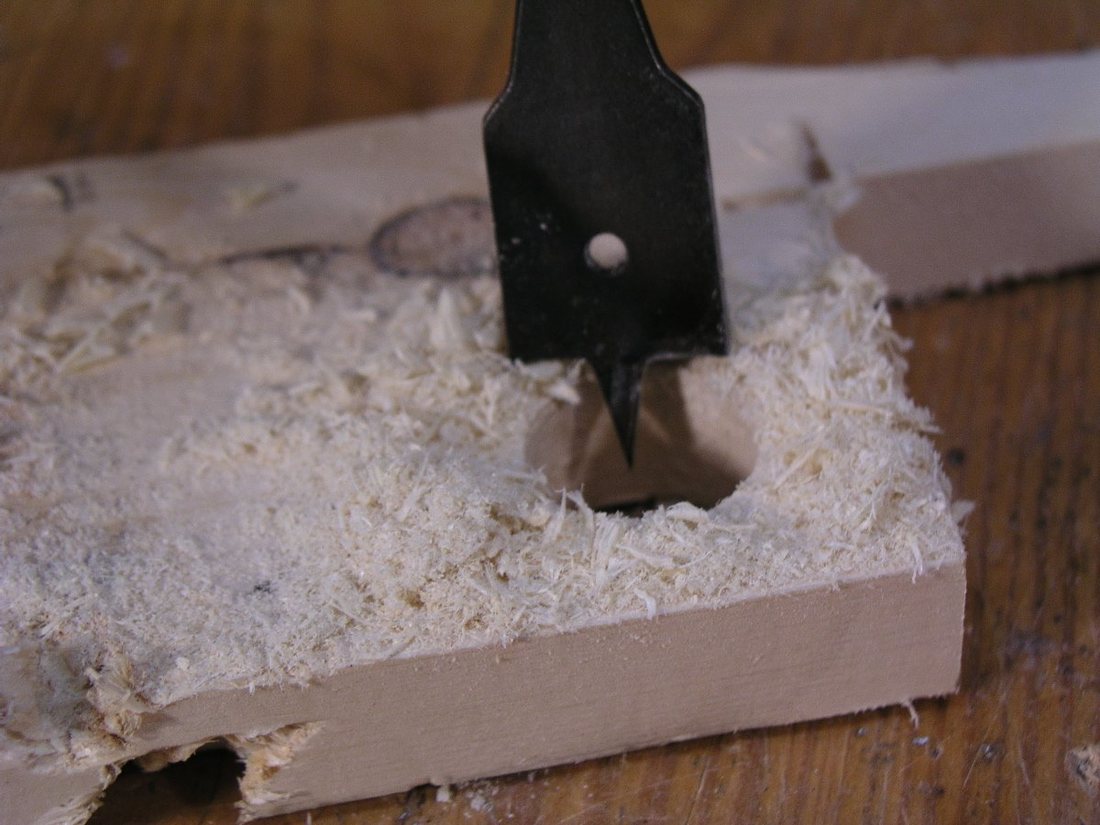
Fit the motor
Press the motor into the hole so its bottom is flush with the block. It must fit very snugly; if it is loose, wrap a turn of tape around the motor first.
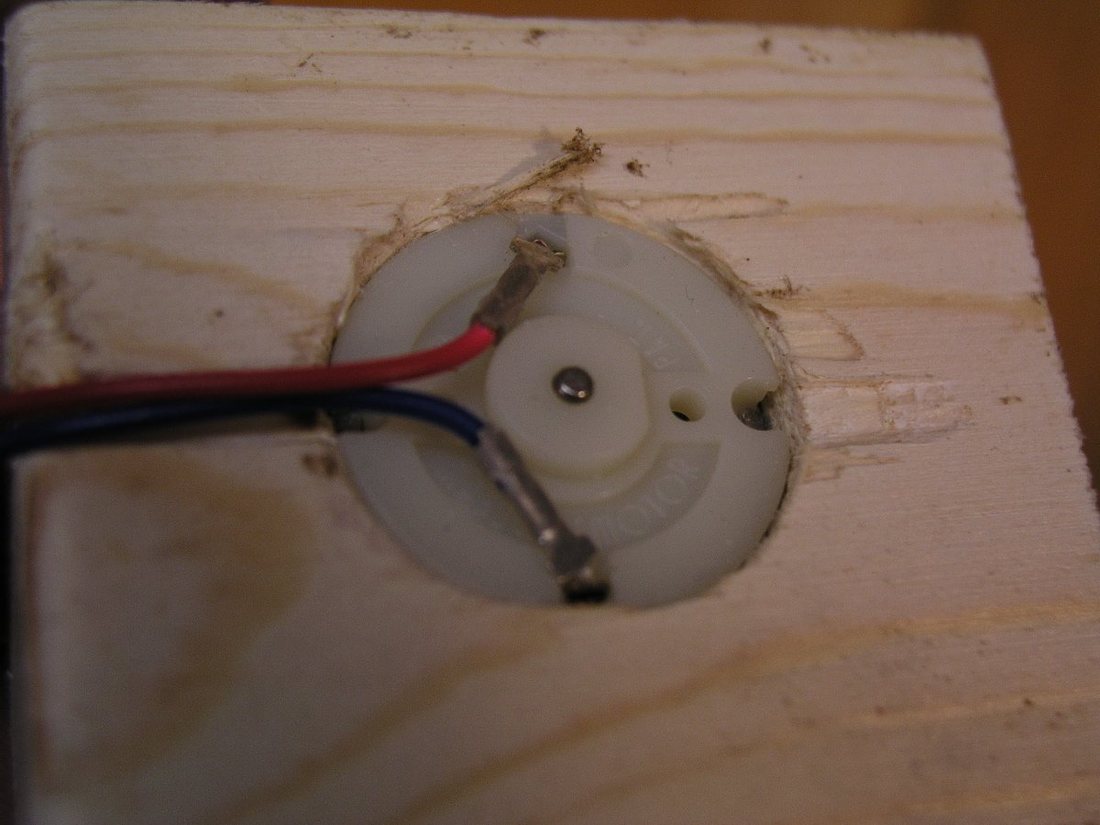
Cut the tub
Cut the top off the plastic container with scissors, leaving a bottom section about 3 inches high. Sand the cut edge smooth.
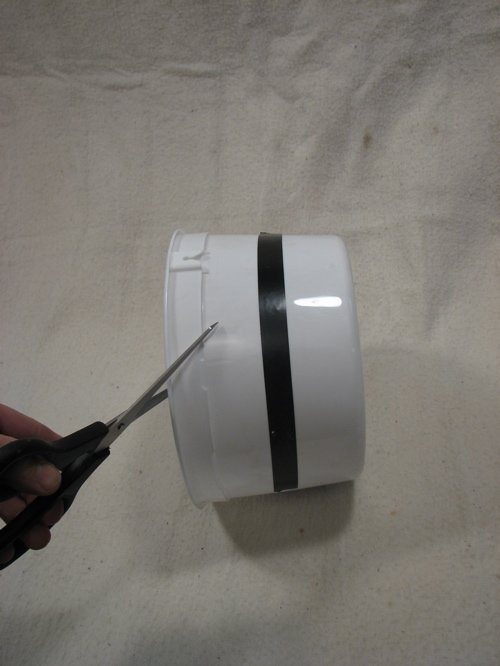
Attach the motor block
Center the block on the outside bottom of the tub, motor shaft pointing away from the tub, and tape it in place. Then fasten it with four short screws driven from inside the tub.
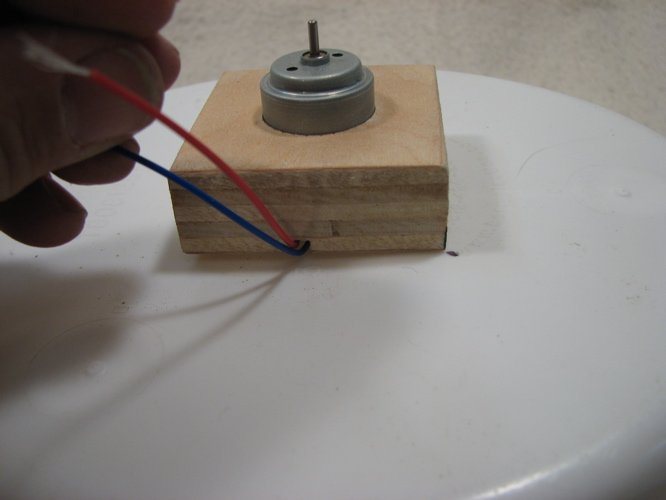
Make the vibrator arms
Drill a 1/16 in hole near one end of several small wood strips, giving each a different size or hole position. Each must press tightly onto the motor shaft; if one is loose, drill a new hole one size smaller.
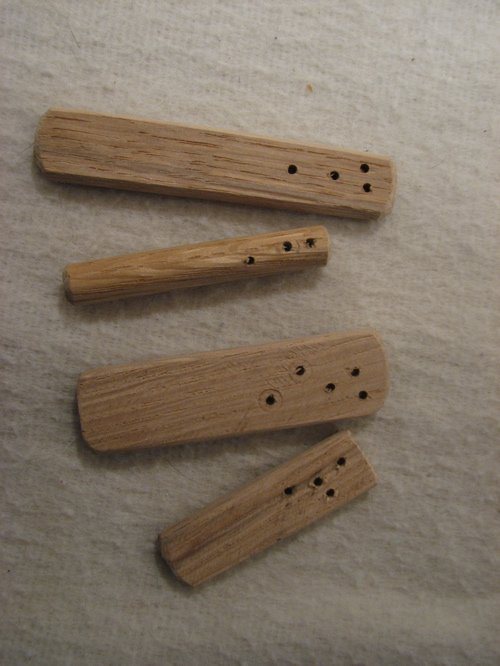
Mount an arm
Press one arm onto the motor shaft. Because it is off-center, it shakes the whole tub as it spins.
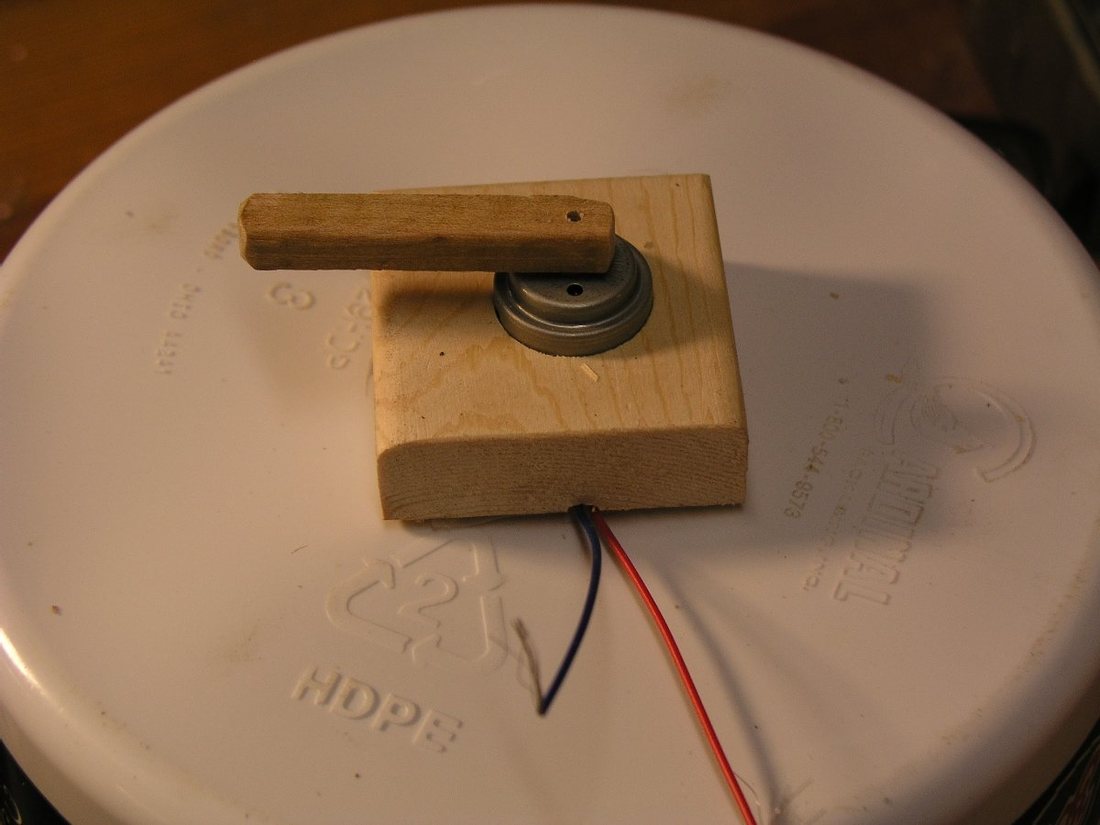
Build the stand
Cut a base from 1/4 in plywood. Drill a hole for each leg, sized so the screw passes through easily, and countersink it. Screw the four 5 in legs to the base loosely.
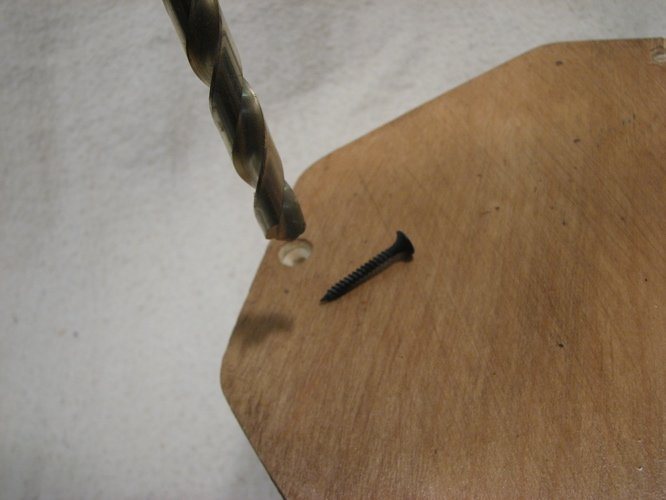
Attach the tub to the legs
Set the tub between the legs, high enough that the motor arm will not hit the table. Drill two holes through the tub wall at each leg and fasten the tub to each leg with two screws.
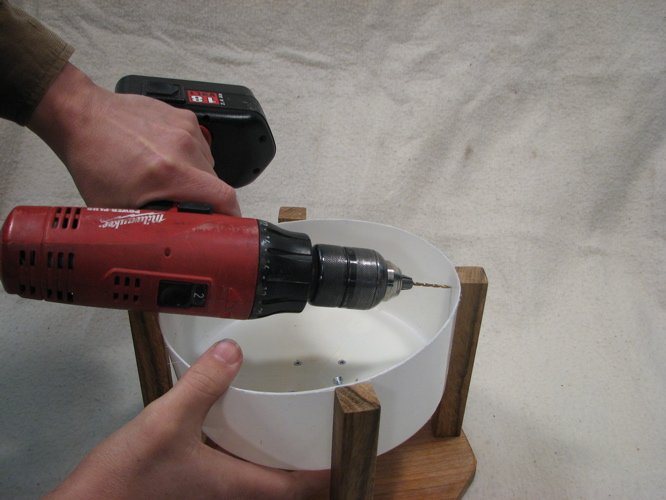
Extend the motor leads
Remove the plywood base to make wiring easier. Solder extension wires to the motor leads if they will not reach the nearest leg.
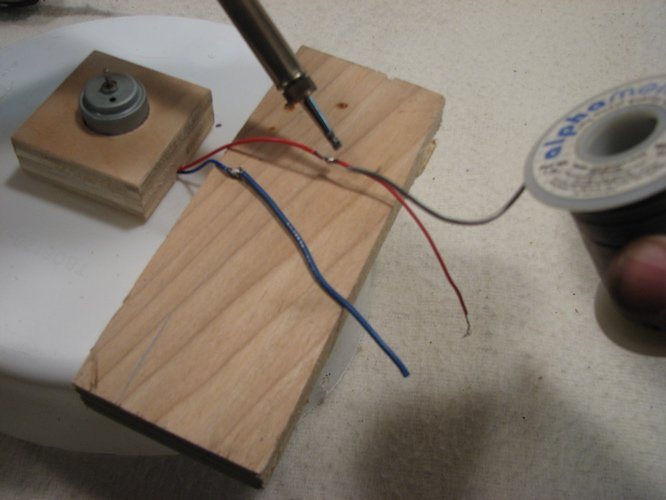
Add the terminal bolts
Drill two holes, slightly smaller than the bolts, in the leg nearest the motor wires. Thread in two 1 1/2 in bolts and attach one motor wire to each with a nut. Tape the wires to the tub so they stay clear of the spinning arm.
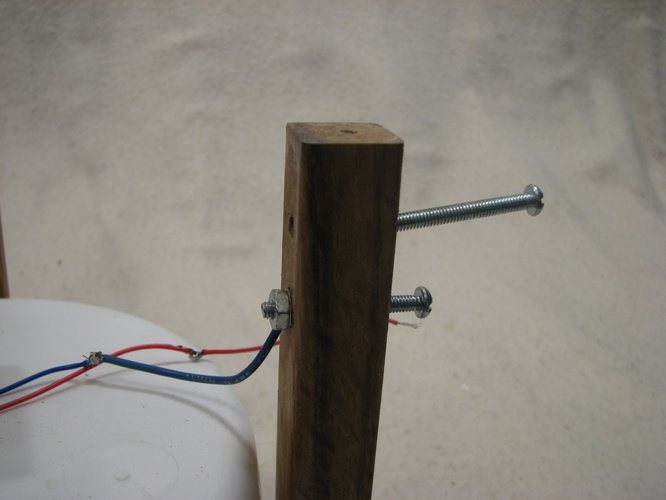
Prepare the power leads
Attach an alligator clip to each wire of the battery holder, by screw terminal or solder.
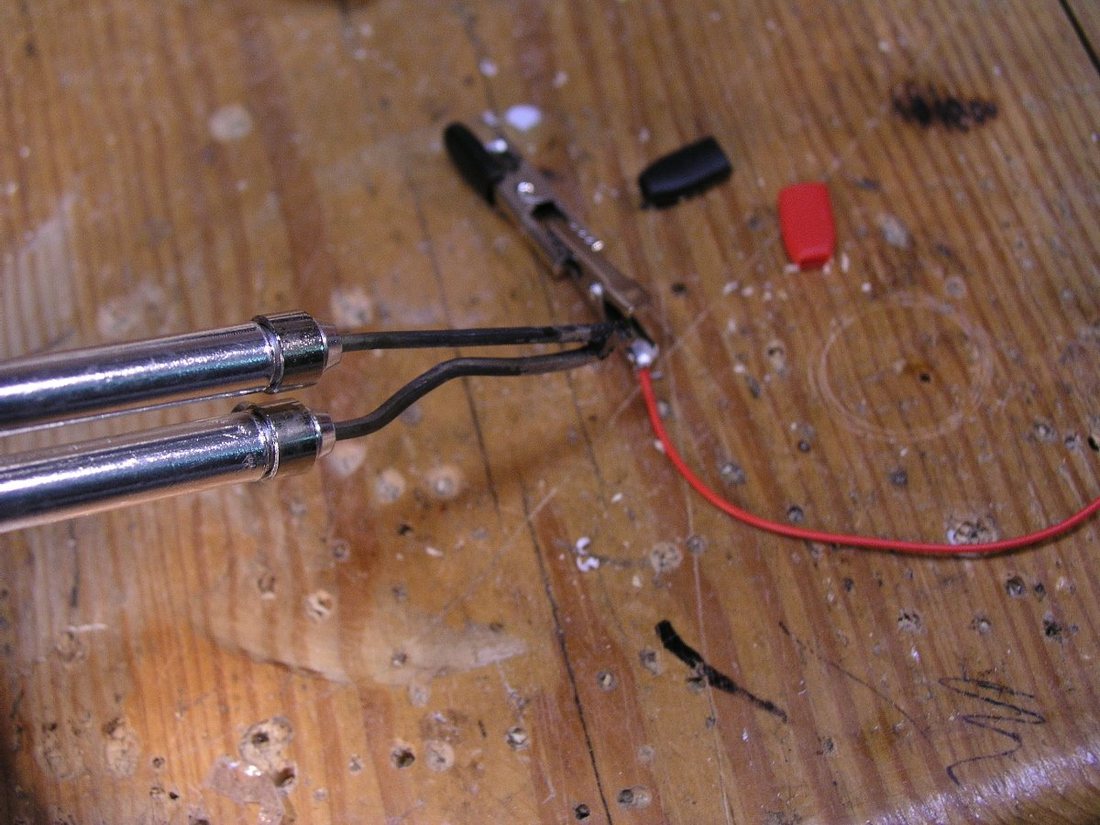
Reassemble loosely
Screw the base back on but do not tighten the screws: the legs must be free to wiggle so the tub can vibrate.
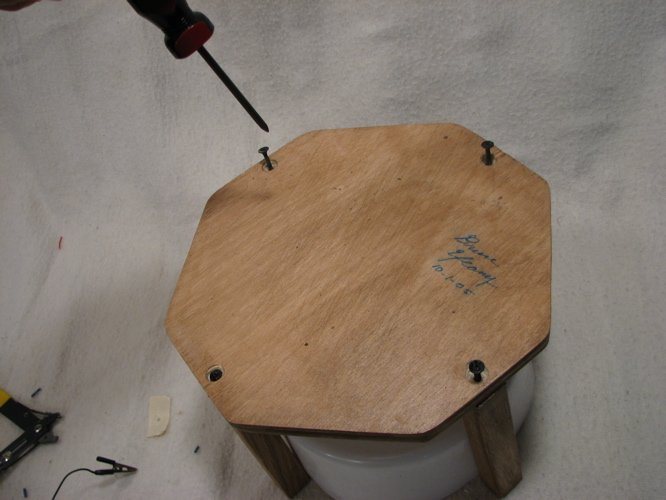
Add sand and test
Pour in the sand, bury light objects, and set dense ones on top. Clip the battery leads to the bolts to start the motor, and try each wooden arm to see which gives the best motion.
How it works
Whether an object sinks or floats depends on its density compared with the fluid around it. Archimedes' principle says the fluid pushes up on an object with a force equal to the weight of the fluid it displaces.
Dry sand is made of solid grains, but a container of sand also has an overall density, about 1.5 to 1.6 grams per cubic centimeter. A ping-pong ball or foam peanut is far less dense; a steel ball is far more dense.
When sand sits still, friction between the grains locks them in place, so nothing moves. Vibration keeps the grains slightly separated and moving, which cuts that friction and lets the sand flow like a liquid. Now buoyancy wins: light objects are pushed up and dense objects sink.
The same process happens slowly in nature. Light litter buried at the beach can work its way back to the surface over weeks or months as waves, wind and footsteps jostle the sand.
Using it
- Show the tub with the steel balls on top and ask what will happen when it starts shaking. Then run it and let the ping-pong balls surprise everyone.
- Have students predict sink or rise for a mix of objects, such as a golf ball, a cork, a marble, a plastic bottle cap, then test.
- Compare the vibrating sand with a tub of water: which objects behave the same way in both?
- Try the different wooden arms and observe: small arms vibrate faster with smaller motion; larger arms vibrate slower with larger motion. Which works best, and why?
- Discuss real examples: why buried trash returns to the beach surface, and why loose soil shaken in an earthquake can let buildings sink (liquefaction).
Variations
- The simple version is just a large plastic jar of sand shaken by hand.
- Bruce also built a larger version from a 5 gallon bucket driven by a plug-in motor. That version is not covered here because it runs on household current; the battery tub shows the same effect.
Troubleshooting
More build plans
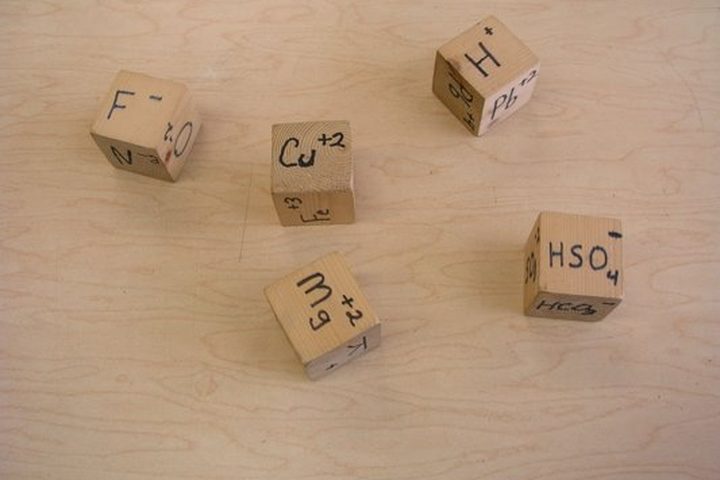
Chemical Dice
Roll a positive die and a negative die, and whatever comes up, write the compound's formula and name.
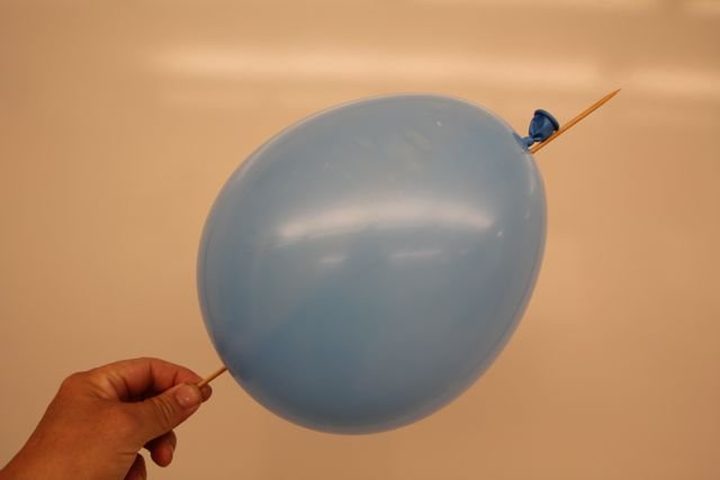
Poke a Polymer
Slide a sharp stick right through a balloon, or a dozen pencils through a bag of water, and nothing pops or leaks.
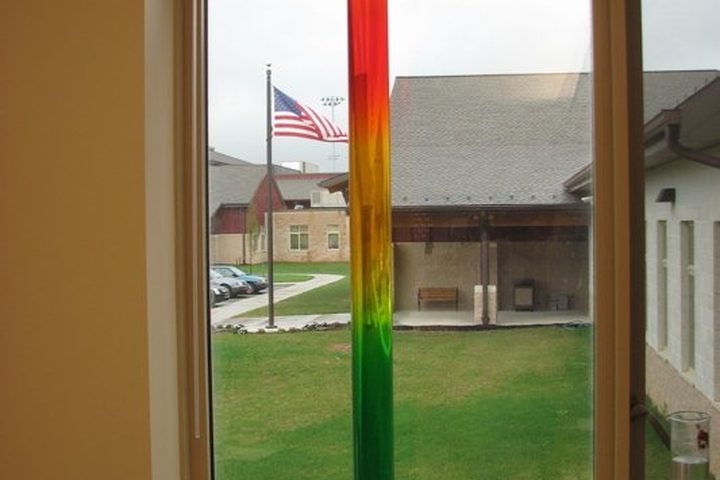
Rainbow Density Column
Six cups of colored salt water, poured carefully, stack themselves into a rainbow that holds its stripes.
© Bruce Yeany · Homemade Science with Bruce Yeany · youtube.com/@YeanyScience
Free for personal and classroom use. Please don't resell or republish. Build and use at your own risk; follow the safety notes and supervise children.