Build plans / Stringless Pendulum Tracks
Stringless Pendulum Tracks
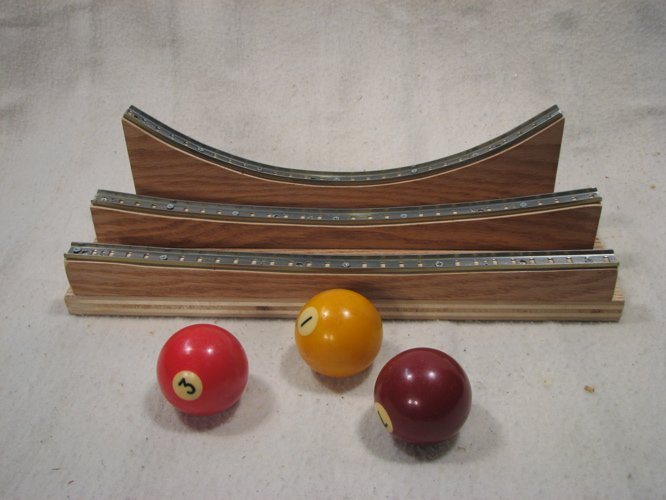
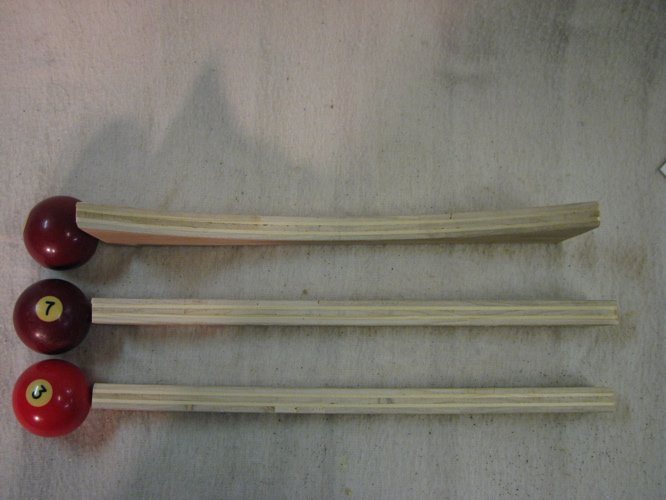
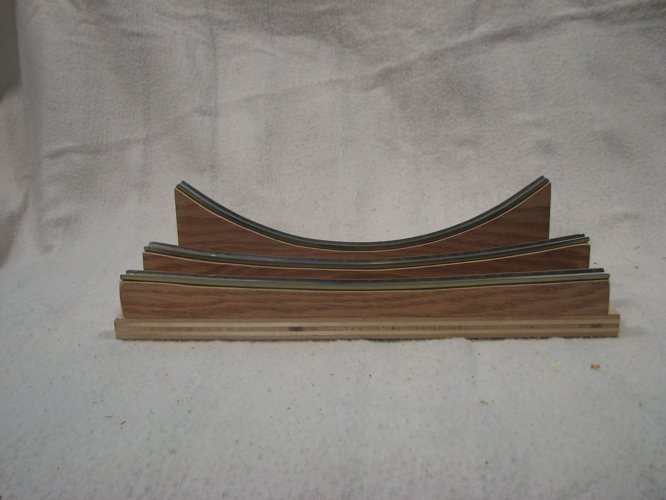
Each of three short curved tracks follows the exact arc swept by a pendulum with a period of 1, 2 or 3 seconds. A ball rolling in each track rocks back and forth like a pendulum bob. Side by side, they show students why longer pendulums swing more slowly: the longer the pendulum, the flatter its path.
Written from Bruce's original workshop handout. Bruce's final review of this plan is in progress.
What it shows
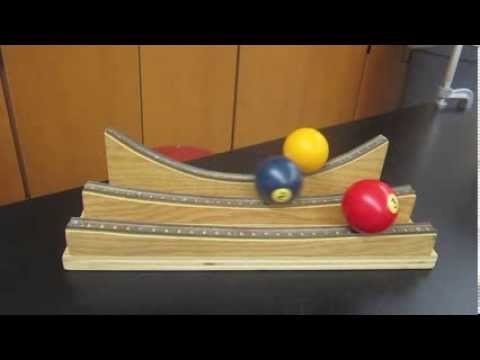
Three balls roll back and forth on three curved tracks, and you can see the 1, 2 and 3 second pendulums keeping their beat without a single string.
Key ideas: pendulum period, pendulum length, acceleration on a slope, simple harmonic motion
Build it
Know the three lengths
A pendulum with a 1 second period is 24.9 cm long, a 2 second pendulum is 99 cm (four times longer), and a 3 second pendulum is 224 cm (nine times longer). Add 0.5 cm to each to allow for the thickness of the metal track: 25.4 cm, 99.5 cm and 224.5 cm.
Set up the drawing pendulum
Anchor a long string under a heavy weight on the floor. Tape a sheet of paper to the floor and draw a horizontal and a vertical line on it. Position the paper so the point where the lines cross is 25.4 cm from the edge of the weight.
Draw the first arc
Wrap the string a few times around a pencil tip and adjust it so the pencil passes through the crossing point. Swing the pencil to draw the arc on the paper.
Draw the other two arcs
Repeat on new sheets with the string set to 99.5 cm and 224.5 cm.
Lay out the blocks
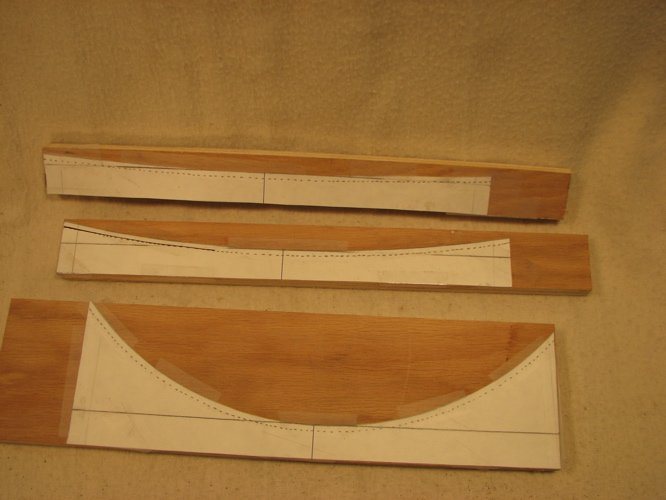
Bruce makes every track 8 in long. Center an 8 in strip of paper on each arc, 4 in to each side of the low point, and mark the ends. Draw the block sides down from those marks, then draw the bottom edge 1 in below the low point of the arc.
Cut the blocks
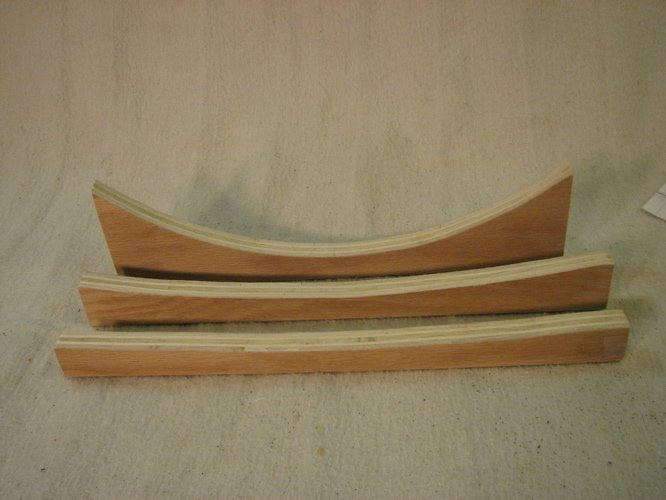
Tape each template to the wood and cut out the three curved blocks.
Space them on the base
Set the blocks on the base with a ball on each and move them apart until the balls cannot touch. Trim the base to size.
Fasten the blocks
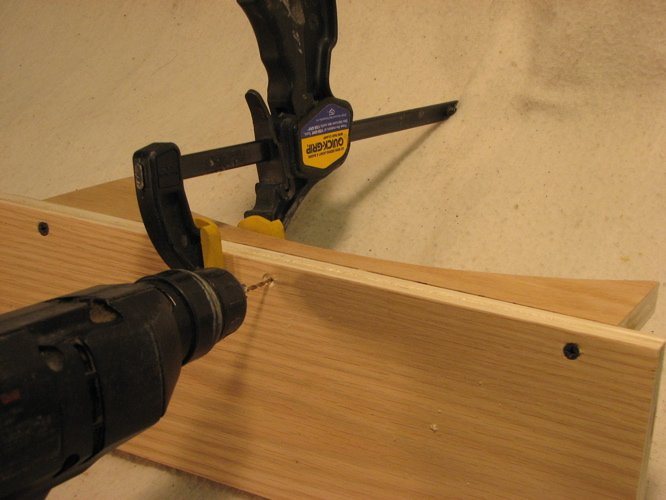
Clamp each block in place, drill pilot holes up through the base, and drive countersunk wood screws into the blocks.
Cut and bend the tracks
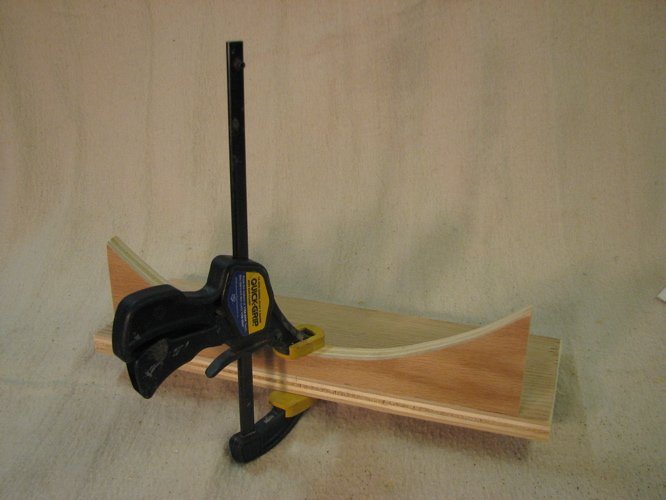
Cut three 8 in pieces of shelving track. The metal bends easily: shape each roughly to its block and clamp it tight against the curve.
Screw down the tracks
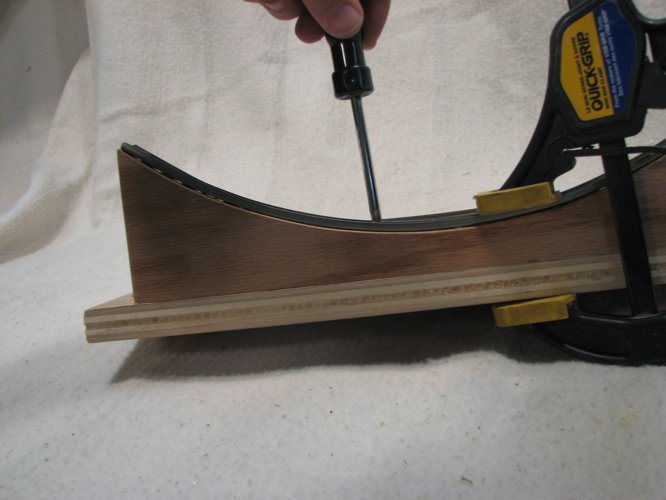
Fasten each track with small screws every 2 in. Tightening the screws pulls the track to the shape of the curve.
Smooth and test
Smooth the track edges with fine sandpaper. Release a ball near the end of each track and watch the rhythm.
How it works
A pendulum bob moves along an arc of a circle whose radius is the pendulum's length. A ball rolling in a track with that same curve follows the same path and rocks back and forth the same way, with no string needed.
A longer pendulum traces a flatter arc. On a flatter path the slope is gentler, so the ball accelerates less and takes longer to get back and forth. That is why the period gets longer as the pendulum gets longer.
The period is proportional to the square root of the length. To double the period you need four times the length; to triple it, nine times. That is why the tracks are 24.9, 99 and 224 cm pendulums.
The rolling balls are a bit slower than true pendulums, because some energy goes into spinning the ball and some is lost to friction. All three are slowed in about the same proportion, so the 1 : 2 : 3 rhythm is still easy to see.
Using it
- Release balls on the steepest and middle tracks together: the steep-track ball goes back and forth twice for every once on the middle track.
- Compare the steepest and flattest tracks: three swings to one.
- Compare the middle and flattest tracks: three swings on the middle track for every two on the flattest.
- Hang real string pendulums of the same three lengths next to the tracks and compare.
- Ask students to predict how long a pendulum with a 4 second period would need to be (16 times the 1 second length).
Variations
- Make the tracks longer than 8 in for larger swings, keeping the same curves.
- Add a fourth track for a 4 second pendulum (about 397 cm plus 0.5 cm).
Troubleshooting
More build plans
Balancing Nails Challenge
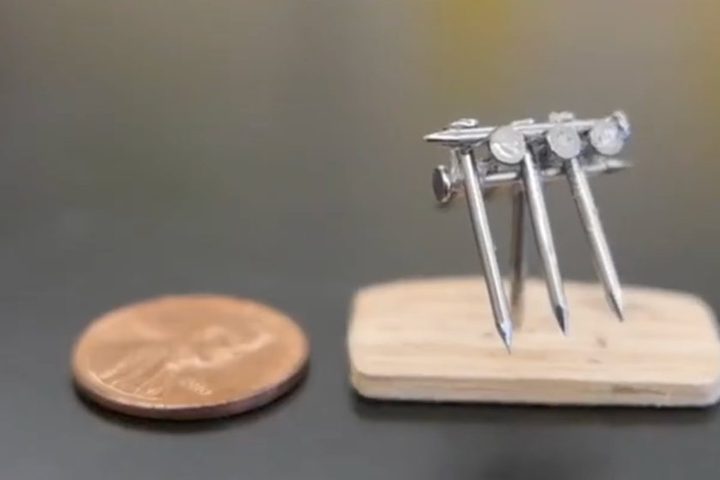
Twelve big nails balanced on one nail head looks impossible. Then Bruce doubles it.
Bar Pendulum vs. Simple Pendulum
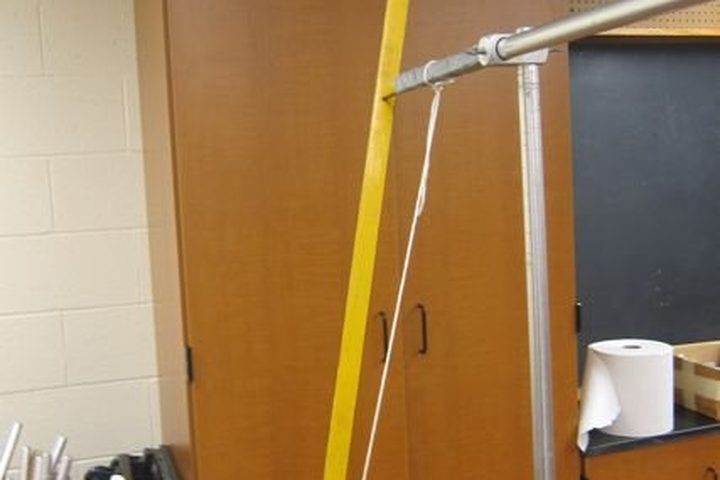
A swinging meterstick keeps the same beat whether it hangs from its end or from a point a third of the way down. Why?
Block Stacking Challenges
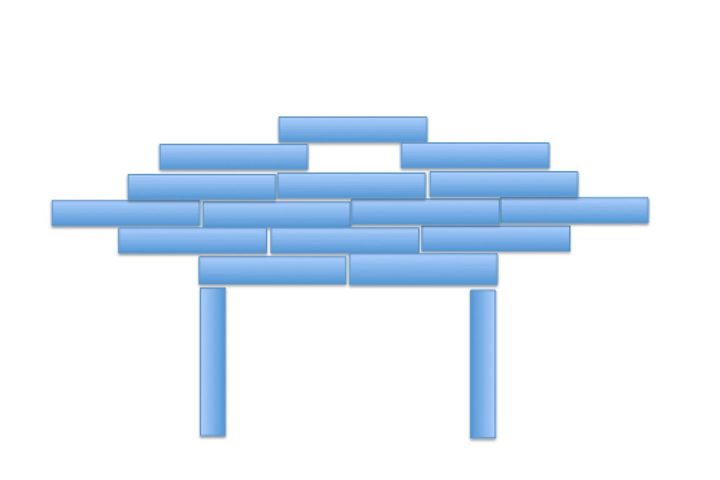
How few blocks does it take to make the top block hang completely past the edge of the bottom one?
© Bruce Yeany · Homemade Science with Bruce Yeany · youtube.com/@YeanyScience
Free for personal and classroom use. Please don't resell or republish. Build and use at your own risk; follow the safety notes and supervise children.