Build plans / Straw Flutes and Slide Trombones
Straw Flutes and Slide Trombones
A fat drinking straw with a pointed, flattened end makes a simple double-reed instrument. Cutting it shorter raises the pitch, adding straws lowers it, finger holes turn it into a playable flute, and a sliding inner straw makes a trombone. It is a quick, nearly free way to show how the length of a vibrating air column sets pitch.
Written from Bruce's original workshop handout. Bruce's final review of this plan is in progress.
What it shows
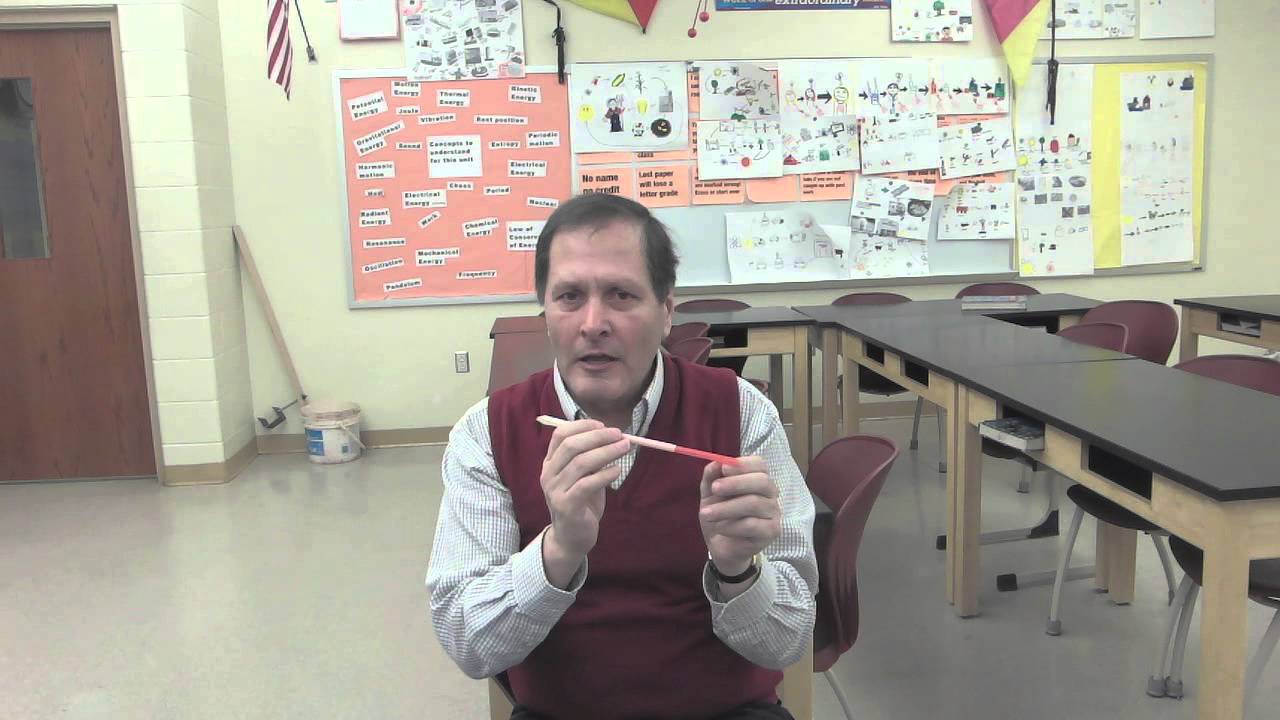
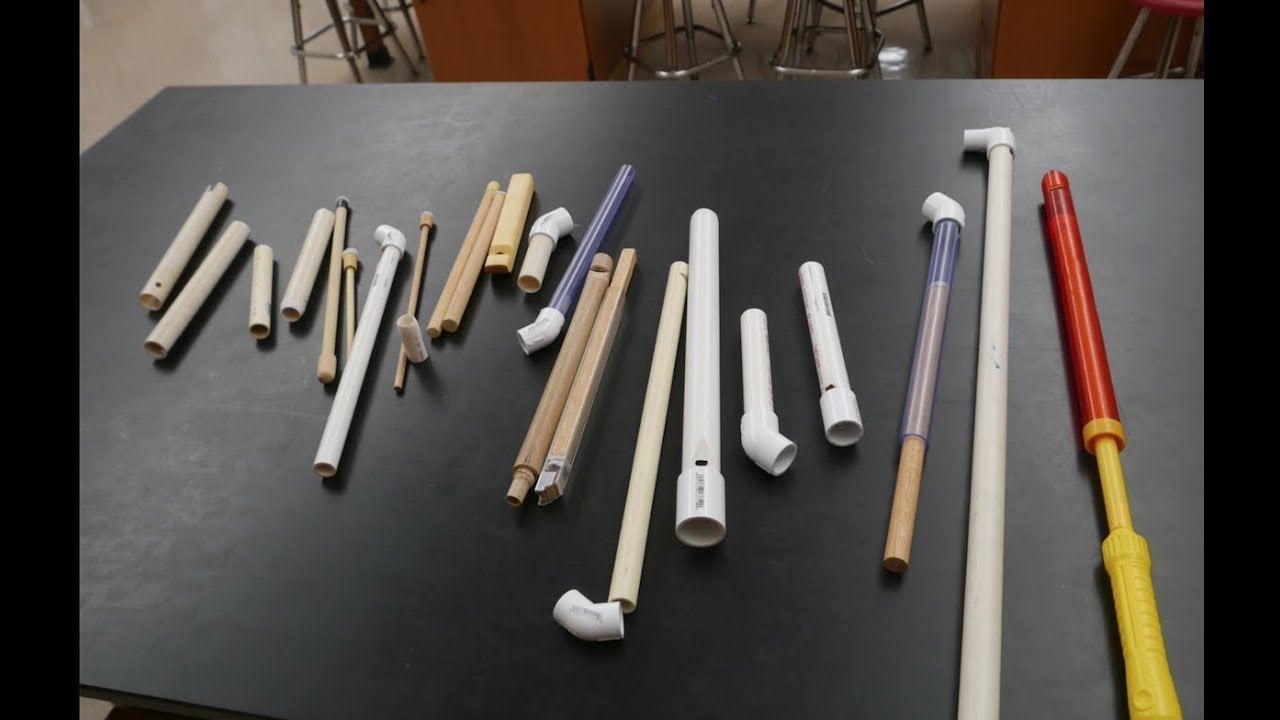
Snip a drinking straw into a reed and it honks; snip it shorter and the note climbs; slide a second straw inside and it becomes a trombone.
Key ideas: vibration, pitch and frequency, resonance in an air column, wavelength and length
Build it
Flatten the end
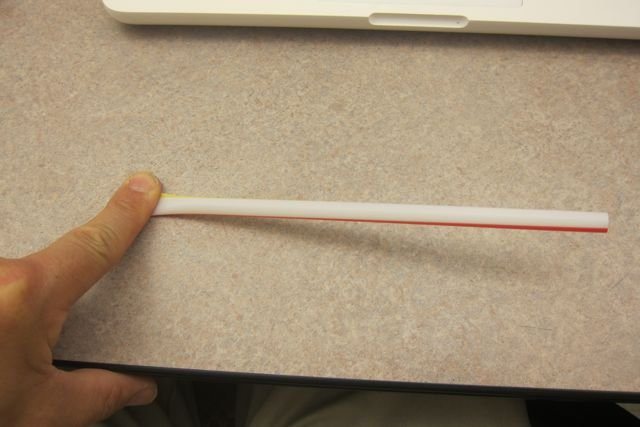
Press one end of a fat straw flat for about an inch, using your fingernail or the edge of a table.
Cut the reed
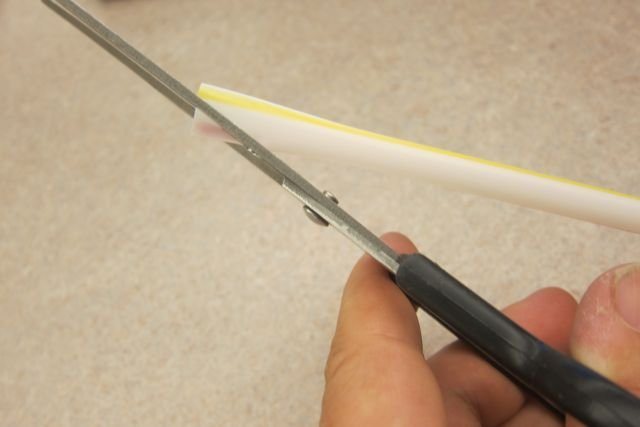
Cut the flattened end into a point by snipping off each corner. These two flaps are the reed.
Close the reed
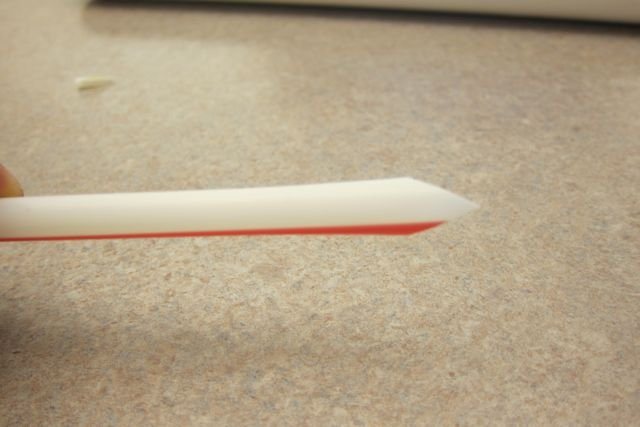
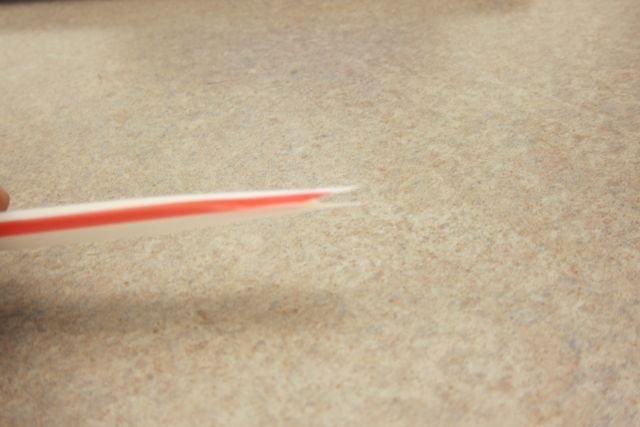
The points are usually too far apart. Bite gently on the flattened end with your back teeth to bend the flaps closer together, about 1/8 in apart.
Blow
Put the reed end in your mouth past the cut, close your lips around it and blow firmly. A full-length fat straw usually sounds around middle C to D.
Raise the pitch
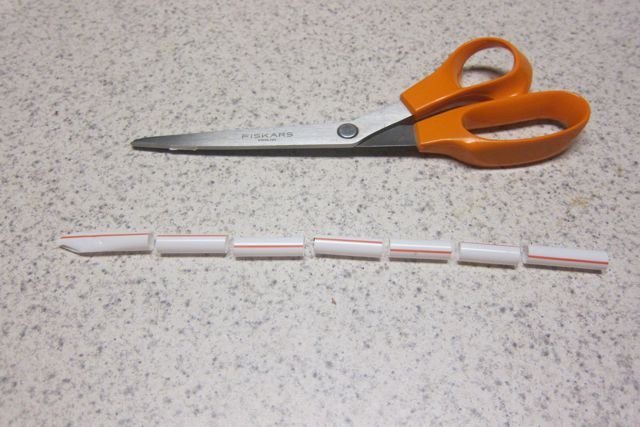
While someone plays, cut an inch off the far end. The note goes up. Keep cutting an inch at a time and the note keeps rising.
Lower the pitch
Cut a 1 in slit in the end of a second straw, squeeze it and slide it over the end of the first. The longer the instrument, the deeper the note. A third straw gives a low bass tone.
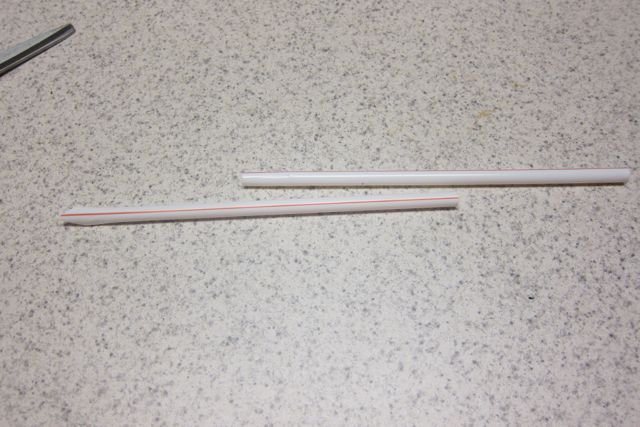
Make finger holes
To make a flute, pinch the straw slightly flat and snip a small V notch. When you pull out the plastic, it leaves a diamond-shaped hole. Experiment on one straw to find where holes give real notes, then copy the spacing onto a fresh straw. Cover a misplaced hole with tape.
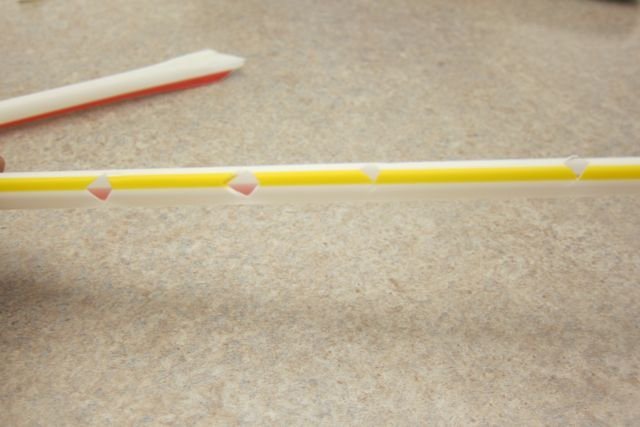
Make a slide trombone
Make the reed on the fat straw, then slide the narrower straw into its open end. Pull the inner straw in and out while blowing to slide the pitch up and down. A tab of tape on the end makes a handle.
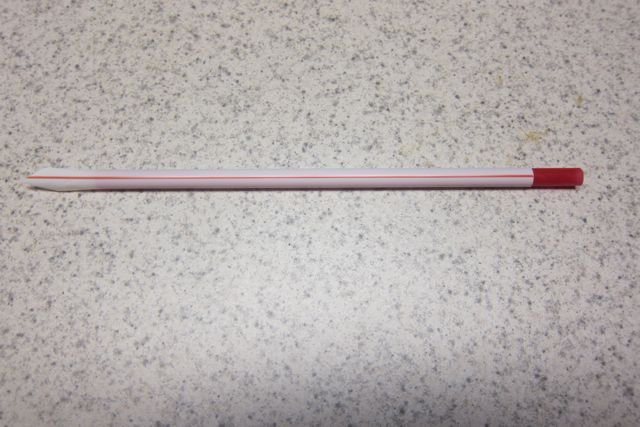
Add a bell
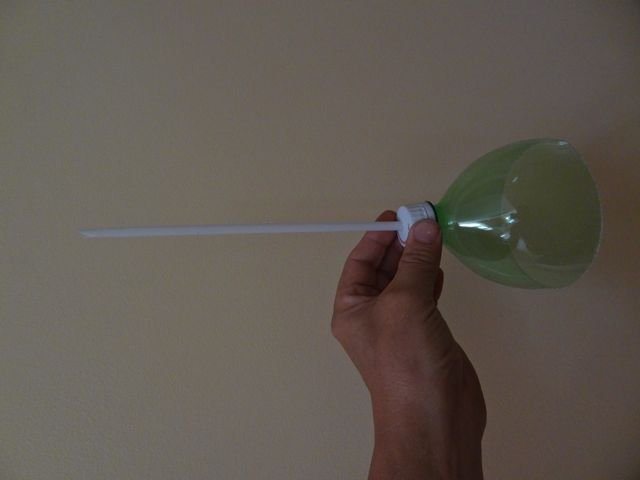
Fit the end of the straw into the neck of a cut-off 2 liter bottle top, a milk jug or a paper cone. The larger the bell, the louder the sound.
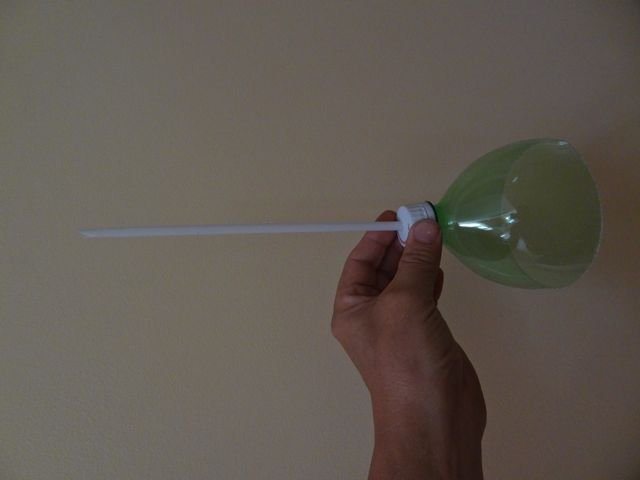
How it works
Blowing through the flattened end makes the two plastic flaps vibrate, rapidly opening and closing like the double reed of an oboe or bassoon. Each opening lets in a puff of air.
The air inside the straw has a natural frequency at which it vibrates most easily, and that frequency controls the reed. The column of air resonates and sets the pitch you hear.
A longer column of air vibrates more slowly, giving a lower note; a shorter column vibrates faster, giving a higher note. Cutting the straw raises the pitch, and adding straws or pulling out the trombone slide lowers it.
An open finger hole lets the sound escape partway along the straw, so the air column acts as if it were shorter, and the pitch goes up. Uncovering more holes gives higher notes, just as on a real flute or clarinet.
Using it
- Cut the straw an inch at a time while a student plays, and have the class describe how the pitch changes.
- Measure straw lengths that give a scale, using a tuner app or a piano, and tune a set of straws.
- Challenge students to tune a three-hole straw flute and play a simple song.
- Compare the sound with and without a bell and discuss why the bell is louder.
- Bring in real instruments (oboe, clarinet, trombone) and compare how they change pitch.
Variations
- Panpipe-style set: a row of reed straws cut to different lengths, each giving one note.
- Bass straw: join three straws end to end for a very low tone.
- Bigger bells: a gallon milk jug or a large paper cone for more volume.
Troubleshooting
More build plans
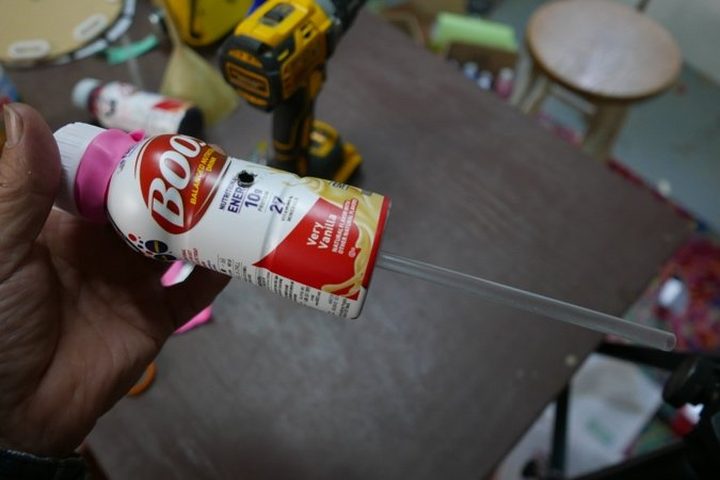
Balloon Fog Horn
Blow into a little plastic bottle and it lets out a deep, buzzing honk like a ship in the fog.
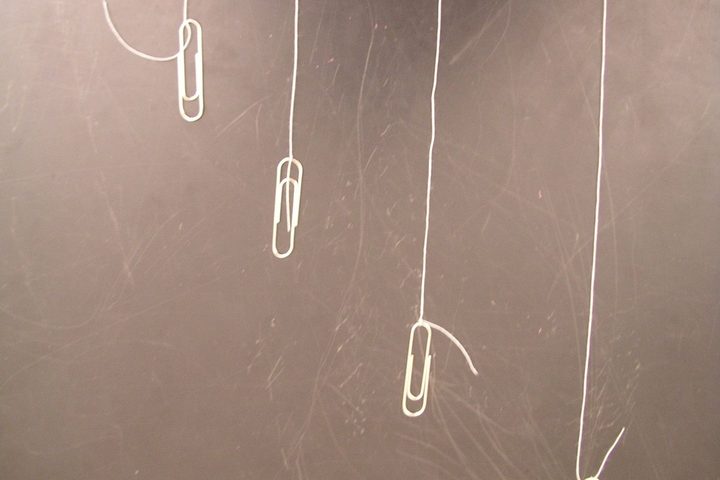
F.A.K.E.D. Resonance Pendulums
Ask the class to move just the orange ball with their minds, and watch it swing while the other three hang nearly still.
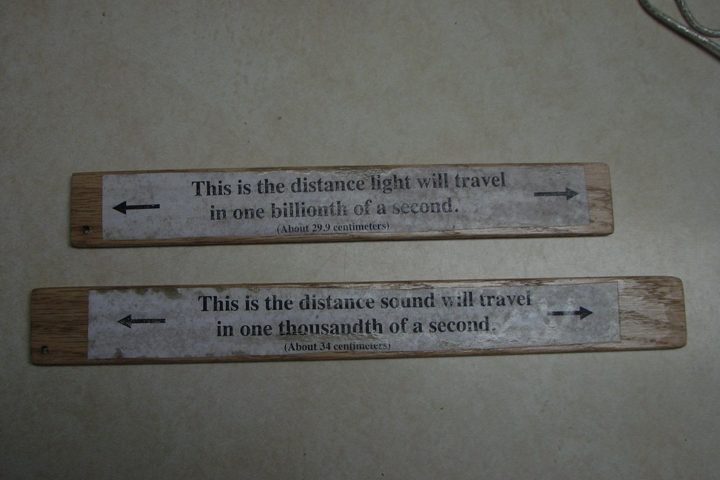
Nanosecond of Light and Millisecond of Sound Sticks
Two sticks of almost the same length: one shows a billionth of a second of light, the other a thousandth of a second of sound.
© Bruce Yeany · Homemade Science with Bruce Yeany · youtube.com/@YeanyScience
Free for personal and classroom use. Please don't resell or republish. Build and use at your own risk; follow the safety notes and supervise children.