Build plans / Venturi Vacuum Pump
Venturi Vacuum Pump
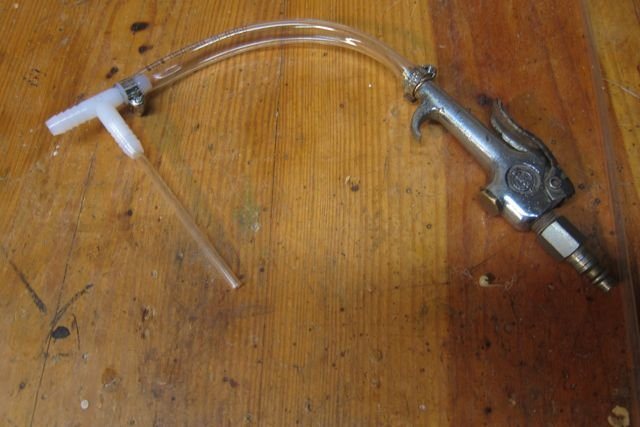
A short piece of tubing pushed up into the airflow of a plastic hose T turns a stream of compressed air into a surprisingly strong vacuum pump. It demonstrates Bernoulli's principle and the push of atmospheric pressure, and Bruce built his for about two dollars.
Written from Bruce's original workshop handout. Bruce's final review of this plan is in progress.
What it shows
Blow air through a plastic T fitting and it sprays water, crushes bottles and cans, and holds Magdeburg hemispheres together, with no moving parts.
Key ideas: Bernoulli's principle, venturi effect, atmospheric pressure, vacuum

Build it
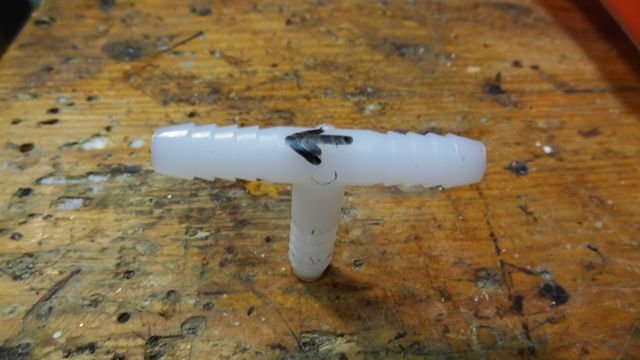
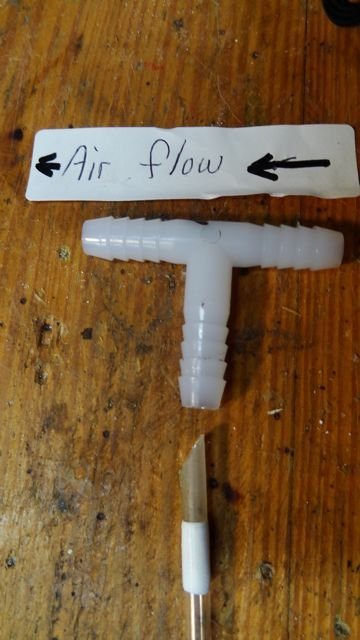
Mark the airflow direction
Write an arrow on the T showing which way the air will travel. It is easy to lose track when you take it apart, and the feed tube only works facing one way.
Cut the feed tube at an angle
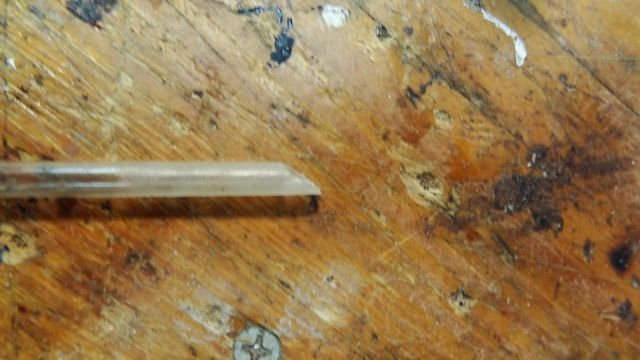
Cut one end of the tubing at about 45 degrees.
Sharpen the point
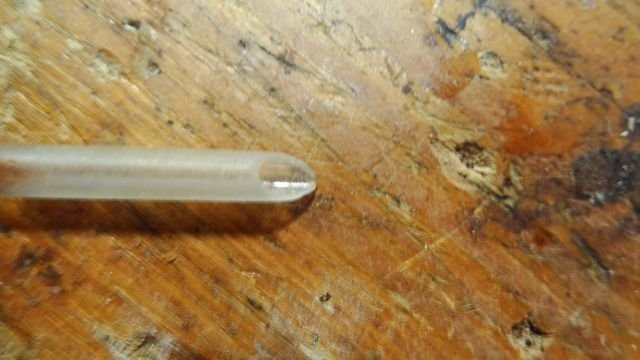
Sand the two sides of the angled cut so the tip becomes narrower and more pointed. This shape gave Bruce the best results so far.
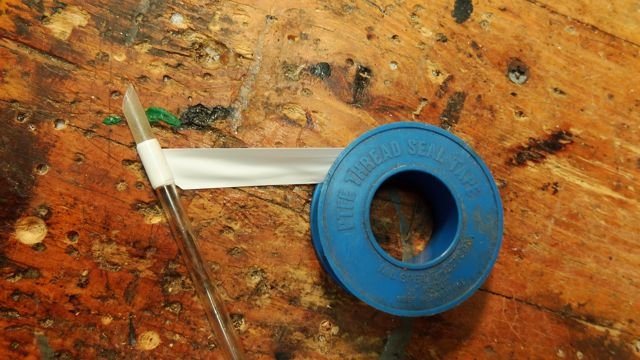
Wrap with Teflon tape
Wind a few turns of Teflon tape around the tube just below the angled end so it seals tightly inside the T.
Insert the feed tube
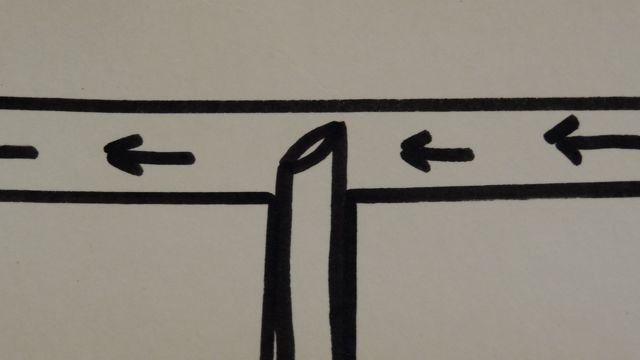
Push the feed tube up through the stem of the T most of the way into the main passage, with the long (high) side of the angled cut facing the incoming air, so the opening faces downstream. Bruce's tip almost touches the far wall of the passage. If you put it in backward, it blows air out the feed tube instead of drawing in.
Check the arrangement
The tube now forms a constriction inside the T: the air must squeeze past it, speeding up right where the opening sits.
Connect the air supply
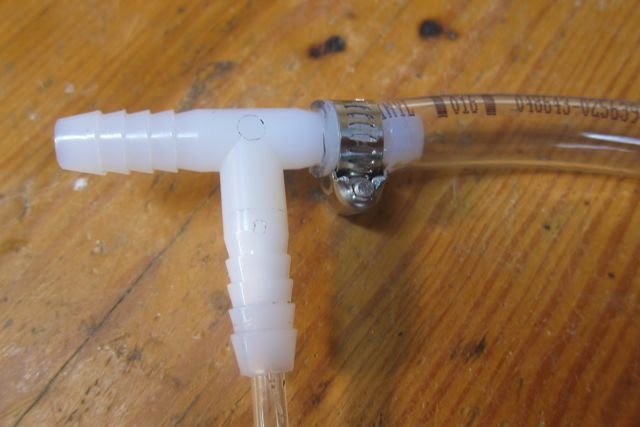
Push a short piece of hose over the upstream end of the T and onto the compressor's air gun, and clamp both ends.
Test it on water
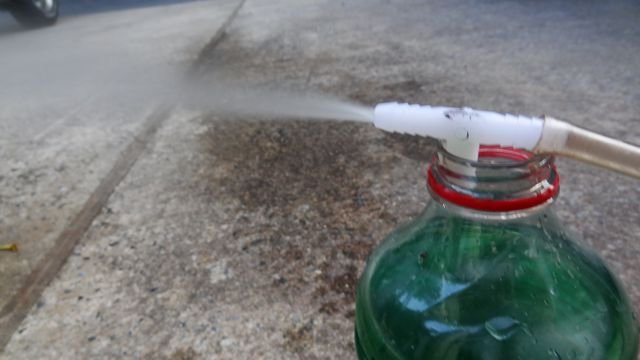
Put the free end of the feed tube in a bottle of colored water and give a burst of air: the water should rise up the tube and spray out in a fine mist. You can even get a spray by blowing through the T by mouth.
Crush a plastic bottle
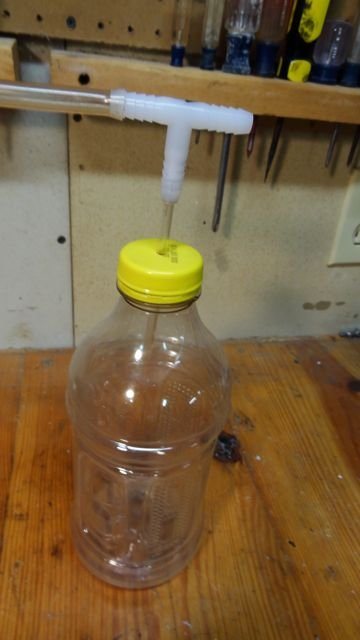
Drill a hole in a bottle cap that grips the feed tube tightly, push the tube through, cap an empty plastic bottle and run the air. The bottle collapses. Put a finger over the exhaust end and it pops back out; lift your finger and it collapses again.
Crush a can
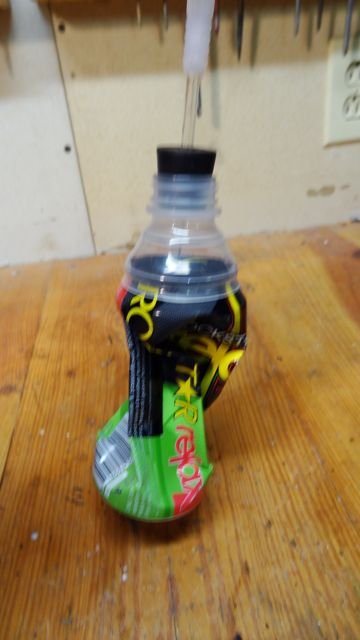
For aluminum cans, fit a soda can cap, push a rubber stopper into its opening and the feed tube into the stopper. Cans usually crush partway and then spring a leak, which is still impressive. Bruce has also collapsed 1-2 gallon metal cans.
How it works
Air rushing through the T has to squeeze past the feed tube that pokes into its path. Where the passage narrows, the air speeds up, and faster-moving air has lower pressure (Bernoulli's principle).
The opening of the feed tube faces downstream, sheltered behind its own tip, so the air flowing past drags air out of the tube and the pressure inside the feed tube drops well below the pressure of the room.
There is really no such thing as suction. When the pressure in the tube drops, the ordinary pressure of the atmosphere, about 14.7 pounds on every square inch at sea level, pushes water up the tube or squeezes a sealed bottle flat. The material that comes up the tube is caught by the fast air and blown out as a spray.
With a vacuum gauge, Bruce measured about 19-20 inches of mercury, roughly two-thirds of the way to a complete vacuum. That is enough that one person cannot pull a pair of Magdeburg hemispheres apart.
Using it
- Spray demo: let the class predict what will happen when air blows across the water tube, then explain why the water rises.
- Crush a sturdy plastic juice bottle, then cover and uncover the exhaust to make it inflate and deflate on command.
- Connect the feed tube to a set of Magdeburg hemispheres in place of a vacuum pump and challenge students to pull them apart.
- Discuss real devices that use the same idea: paint sprayers, garden fertilizer sprayers, pressure-washer soap injectors, carburetors and sandblasters.
- Use a cheap vacuum gauge to compare different tip shapes or insertion depths.
Variations
- Run it on water instead of air by connecting it to a faucet; the same T works as a water-powered vacuum pump.
- Put the feed tube in fine, dry sand to make a small sandblaster (eye protection and an outdoor space are essential).
- Experiment with different tip angles and shapes; Bruce plans to keep improving his.
Troubleshooting
More build plans
Air-Powered String Shooter
A loop of yarn shoots out of a PVC pipe and snakes through the air in a self-supporting arc, driven by nothing but a shop vac's exhaust.
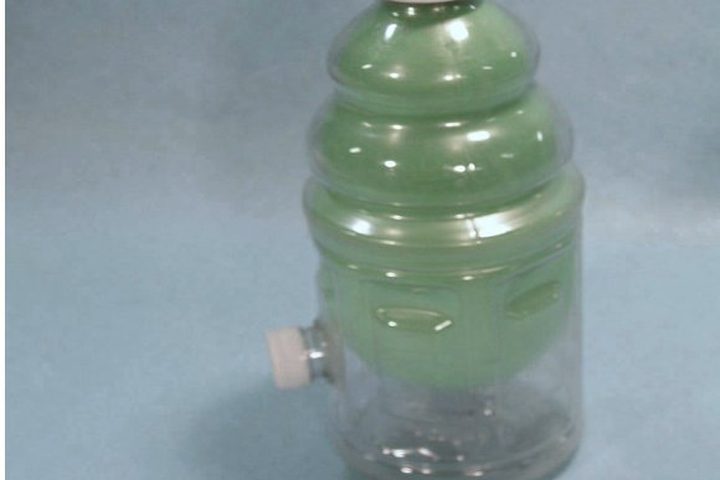
Balloon in a Bottle
Blow up a balloon inside a bottle and it stays inflated with its mouth wide open.
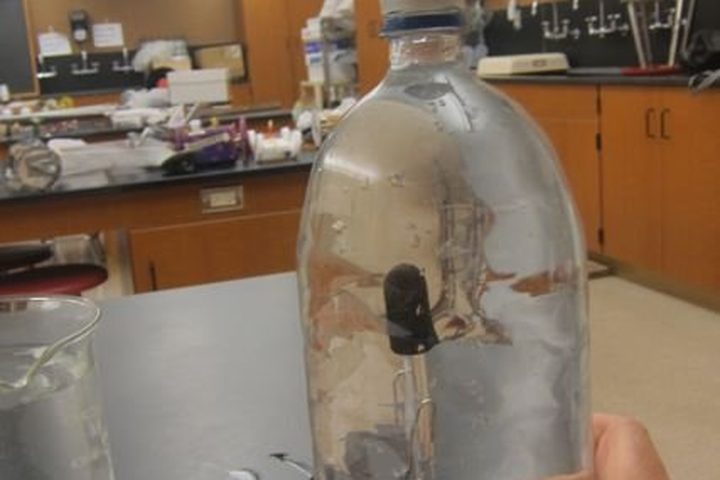
Cartesian Diver Collection
Squeeze a sealed bottle and a little diver sinks on command; let go and it floats back up.
© Bruce Yeany · Homemade Science with Bruce Yeany · youtube.com/@YeanyScience
Free for personal and classroom use. Please don't resell or republish. Build and use at your own risk; follow the safety notes and supervise children.