Experiments / Upside-Down Water Glass
Upside-Down Water Glass
How can a paper card hold up a cup of water?
Flip a full cup of water upside down, let go of the card, and the water stays put.
Based on Bruce's demonstration in the video below.
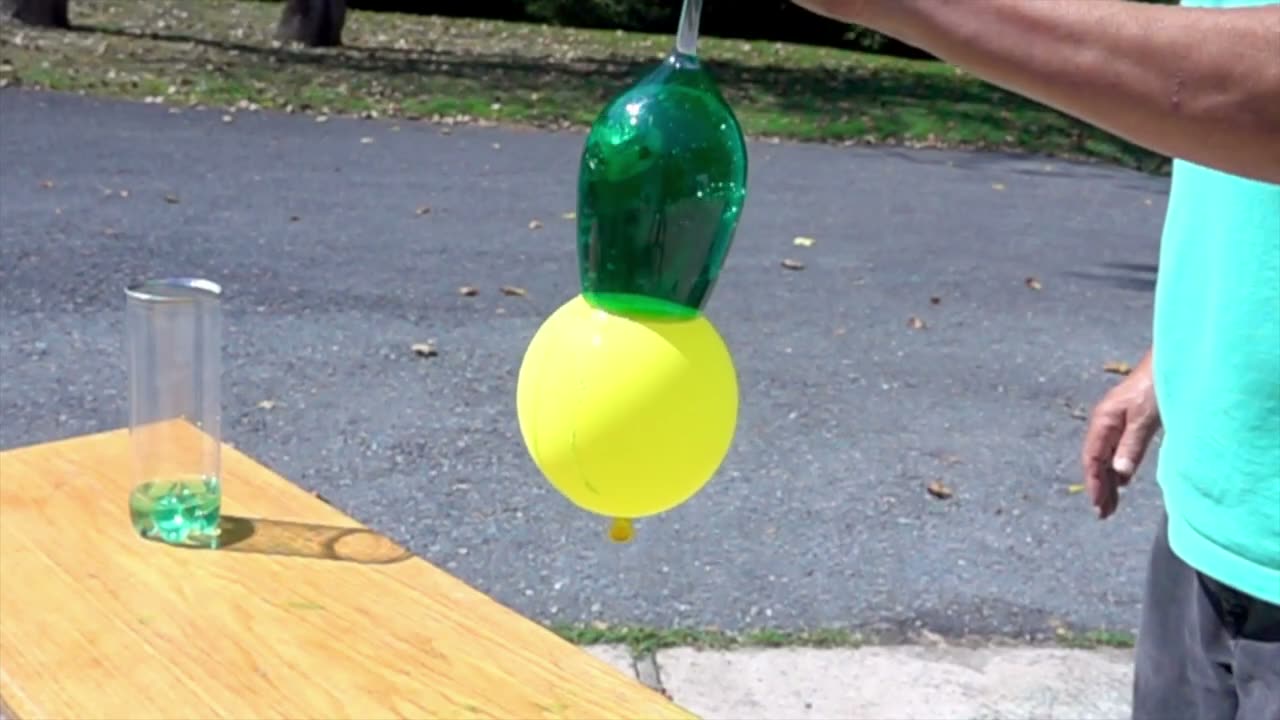
You'll fill a cup with water, cover it with a card, and turn it upside down. When you let go of the card, the water doesn't pour out. The air all around you is pushing on that card, and the water can't fall unless air gets inside to take its place.
“If there's a lesson here, it's always check your sources and test things for yourself.”
Build it
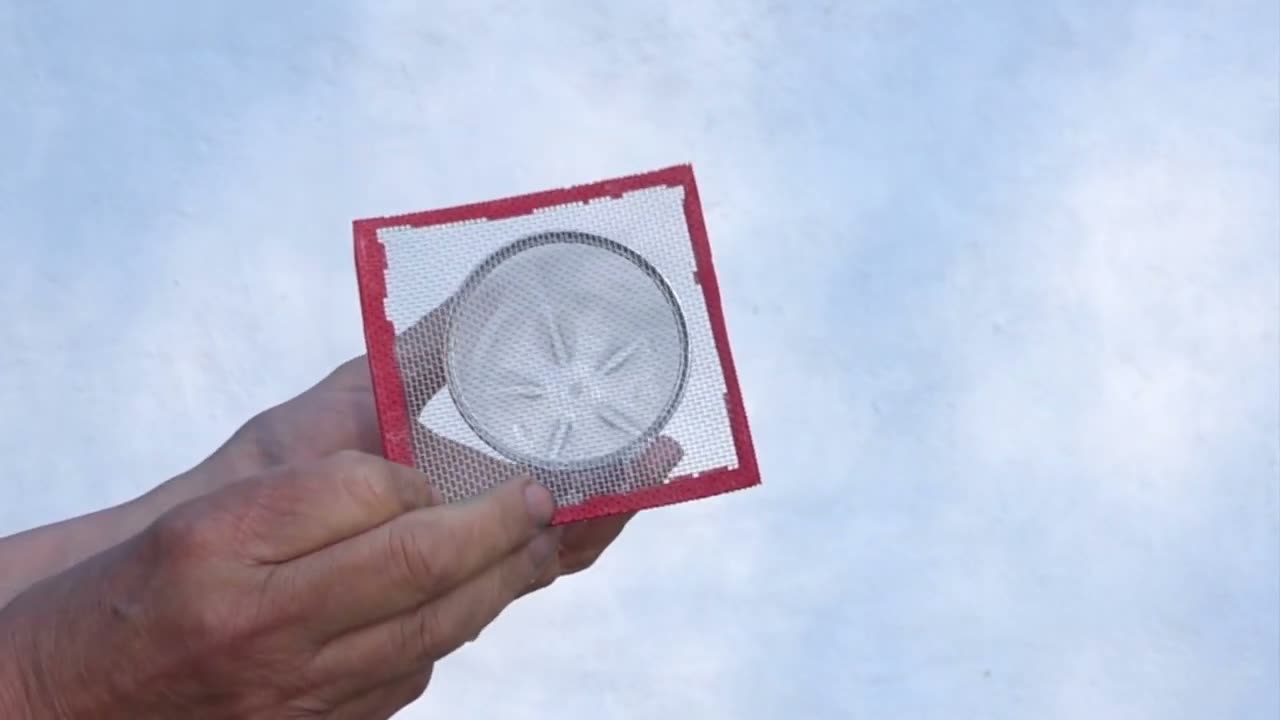
Set up over a sink, bathtub or plastic tub, with a towel nearby.
Fill the cup with water right to the brim.
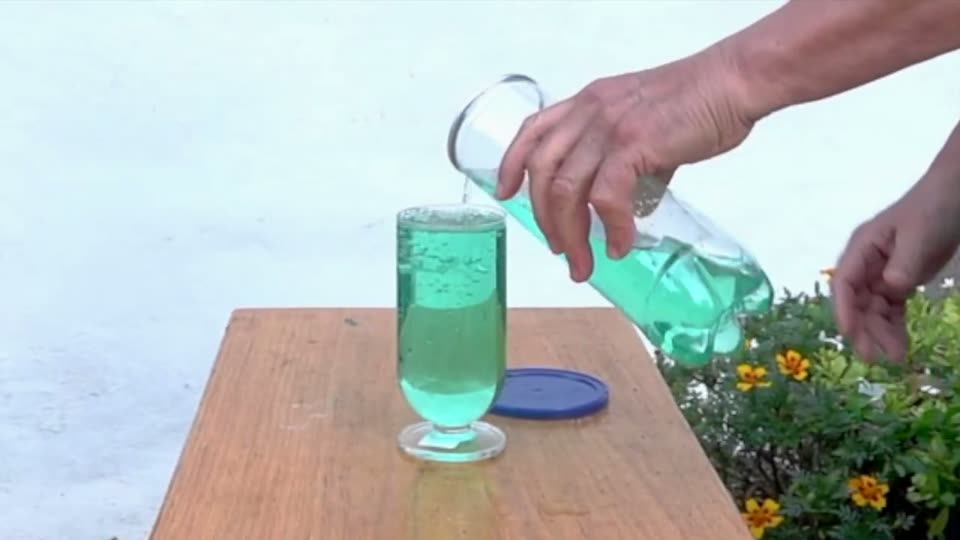
Lay the card on top so it covers the whole rim.
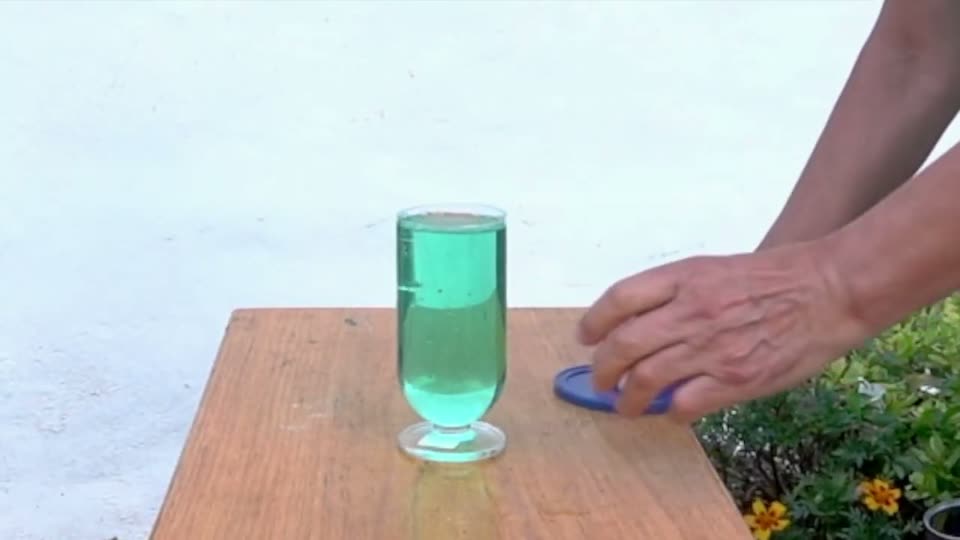
Press the card down gently all the way around, so it touches the wet rim everywhere.
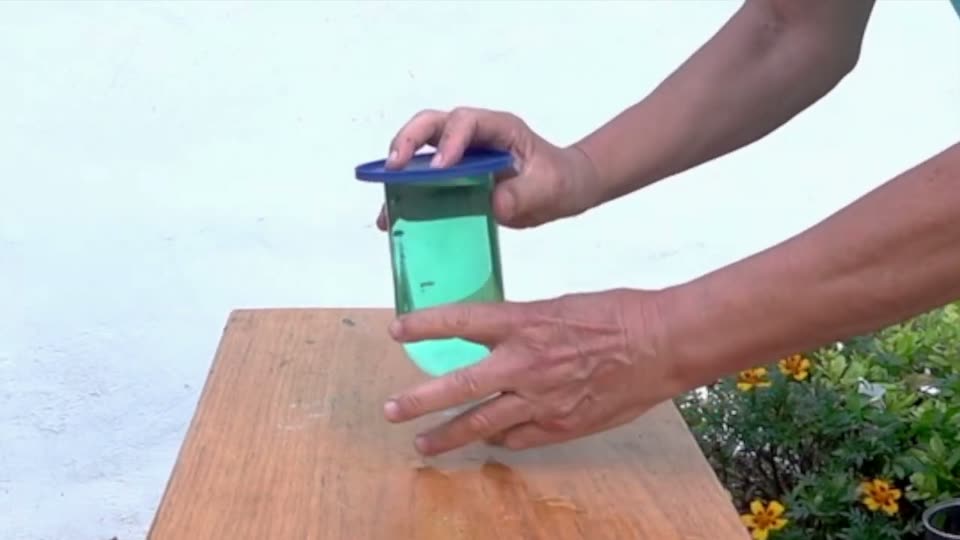
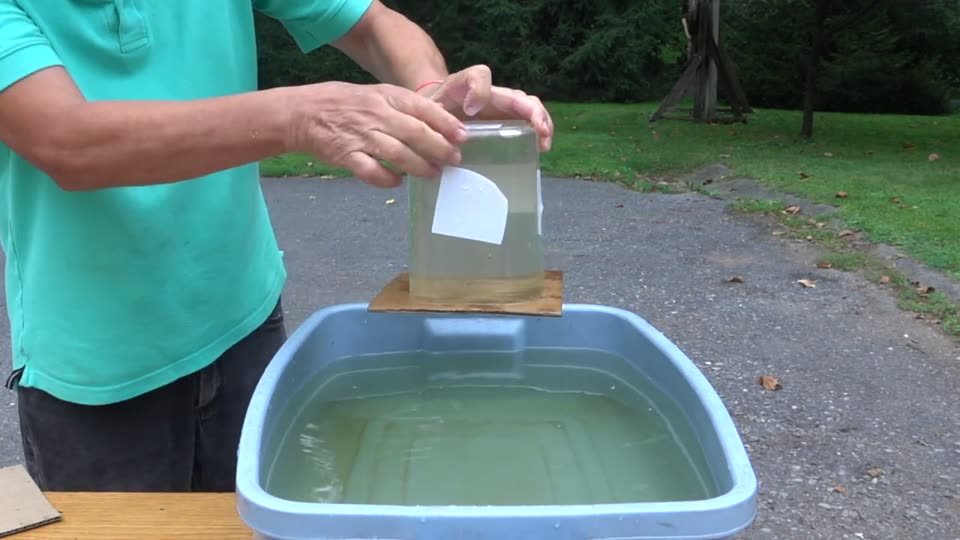
Hold the card flat with the palm of one hand, grip the cup with the other, and turn it upside down in one smooth move.
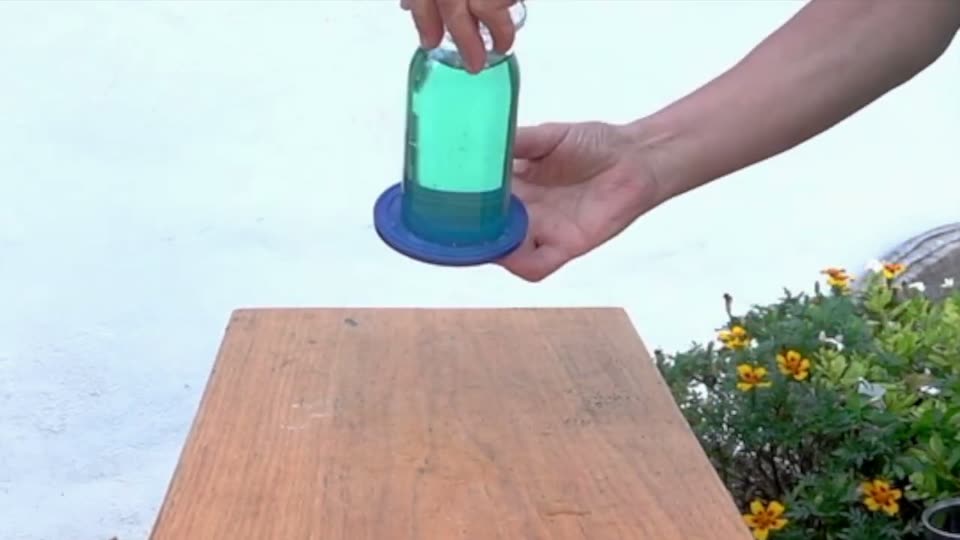
Keep the cup level and slowly take your hand away from the card.
Watch the card for a few seconds. It stays in place, and only a drip or two escapes.
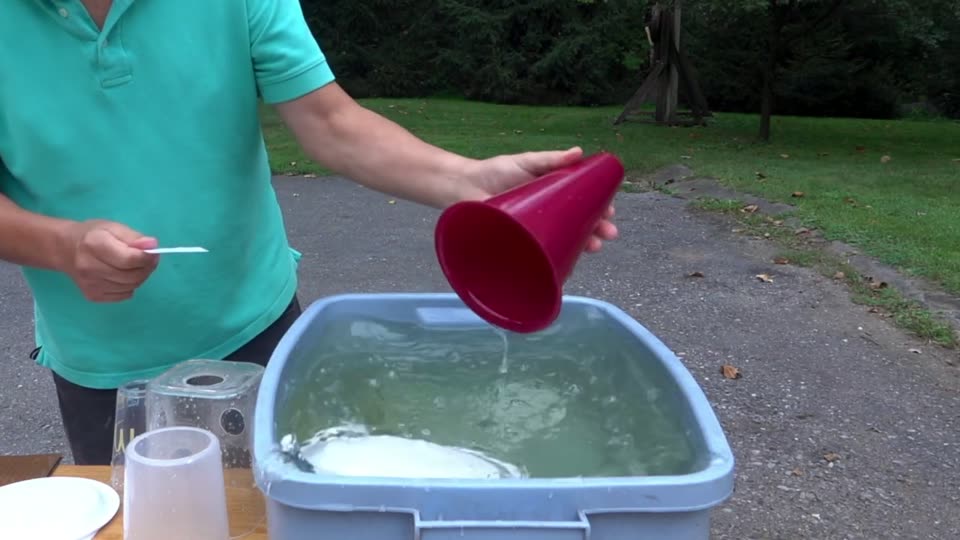
Tip the cup sideways over the tub to finish. Air rushes in and the water falls out.
Try it & notice
What's going on?
For young scientists
Air is heavy stuff piled up miles high, and it pushes on everything it touches, from every direction. That push is called air pressure. It pushes up on the bottom of the card just as hard as it pushes down on the top of your head.
Water can't simply fall out of the cup. For water to leave, something has to fill the empty space it leaves behind, and the only thing around is air. With the card in the way, air can't get in, so the water stays. Water also sticks to itself (scientists call this cohesion), so it acts like one solid plug instead of lots of loose bits. Dry sand doesn't stick together, and air slips easily between the grains, so sand just falls out.
When you tip the cup and a bubble of air gets in, the air inside helps push the water down. Now the push from inside is as strong as the push from outside, and the water's weight wins. Splash.
For grown-ups & teachers
The usual one-line answer is "air pressure pushes up on the card," which is true but incomplete. When the cup is inverted, the water sags a tiny amount (a drop leaks out, the card bows slightly). Water is nearly incompressible and the cup is rigid, so that tiny sag drops the pressure at the top of the water below atmospheric. Bruce measured this with a homemade gauge: the pressure drop at the top grows with the height of the water column (about 0.43 psi per foot), not with the amount of water. A narrow tube and a wide one of the same height gave nearly identical readings.
A common misconception, which Bruce himself corrected in his follow-up video, is that the water's weight presses down on the card. His gauge and a balloon used as a bottom cover showed no push on the bottom until he let air in at the top. The pressure at the card is only slightly below atmospheric, just enough to hold the card's own weight. The water column is held up because the pressure under it (about atmospheric) is greater than the reduced pressure above it, and that difference times the area equals the water's weight. In principle this works up to about 33 feet (10 m) of water, where the pressure at the top would reach zero.
Why does an open, inverted cup empty even though air pressure is the same? A wide open water surface is unstable: any ripple lets air bubble up one side while water runs down the other (the Rayleigh-Taylor instability). The card, a balloon or a fine screen keeps the surface flat. With a screen, surface tension spans each tiny hole and stops air bubbles from entering; with a straw, your finger seals the top and surface tension at the narrow bottom does the rest. Anything that lets air in (tilting, a bumped screen, a big hole) equalizes the pressure and the water falls.
Extensions: compare covers as a fair test, measure how far you can tilt before failure, try different heights of tube and stretch a balloon over the top end to see it pull inward (more with taller columns), or show that the effect works with holes on the sides and top when the holes are small enough.
NGSS performance expectations
- 5-PS1-1 Develop a model to describe that matter is made of particles too small to be seen.
- 3-PS2-1 Plan and conduct an investigation to provide evidence of the effects of balanced and unbalanced forces on the motion of an object.
- MS-ETS1-1 Define the criteria and constraints of a design problem with sufficient precision to ensure a successful solution.
Science words
Tips from 41 years of teaching it
Bruce taught air pressure to his 9th graders with a handout titled 'Science never sucks'. His notes add a few twists to the upside-down cup.
- Bruce never lets 'suction' stand as an explanation: nothing pulls the water or the card. Air pressure pushes fluids into any space where the pressure is lower.
- A quick way to feel it: push a syringe's plunger all the way in, cover the tip with your finger, pull the plunger out partway and let go. It snaps back. Ask 'Is something sucking it back in?' (No: the outside air pushes it.)
- You don't need a card at all if the opening is small. Bruce fills a soda bottle with water, plugs it with a stopper that has a small hole, and turns it upside down: the water stays in, and a toothpick pushed into the hole floats up into the bottle without any water leaking out.
- A handy number from Bruce's notes: every 2.3 feet (70 cm) of water changes the pressure by 1 pound per square inch, so about 34 feet (10 m) of water balances the whole weight of the air.
- Do not try to blow water up a long tube. Bruce tried it with a few students and some felt light-headed, so he doesn't recommend it.
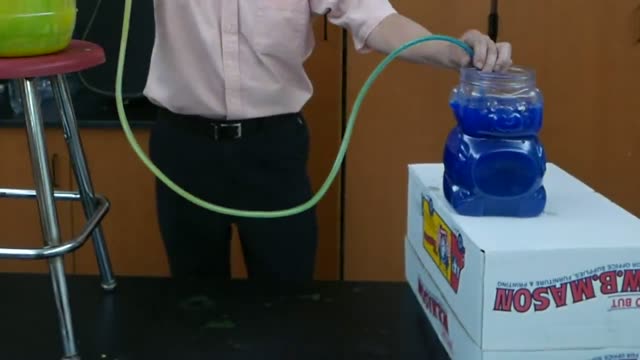
Bruce marked a long hose with tape every 2.3 feet and asked students how high they could suck colored water up it. Most expected to get it to the second floor easily, but most middle schoolers couldn't reach the 10-foot mark; a few seniors got it between 11 and 16 feet, and one student made it all the way up a 19-foot hose. (Each student used a short, washable rigid straw as a mouthpiece.)
More to try
- Grown-up demo, plastic bottles only: fill a plastic bottle with water, plug it with a stopper with a tube running down about 3 feet (1 m), and keep the bottom of the tube in a bucket of water. As the water runs down the tube, the air outside crushes the bottle. Never use ordinary glass.
- With the sealed syringe, does holding it upright, sideways or upside down change how hard it pulls back? What does that say about which direction air pushes?
Make it a challenge
Best cover contest
Test stiff plastic, a foam plate, cardboard, a flexible lid and a balloon stretched over the mouth. Bruce found flexible lids and balloons sealed so well he could shake the container and wave it around.
Water behind a screen
Fasten a square of window screen over a plastic cup with a rubber band, fill it through the screen, cover with a card, flip, then slide the card away. Hold it very still: Bruce warns the slightest touch can break it.
Finger on the straw
Dip a straw in water, put your finger over the top, and lift it out. Lift your finger and watch the water drop. It's the same trick in a tiny tube.
Holes everywhere
Bruce makes it work with a funnel capped at both ends and a container with holes in the top, bottom and all four sides. With a grown-up, poke a few pinholes in a plastic container, fill it under water in a tub, cap it and lift it out.
Swing it (outside)
Bruce ties a string handle to a plastic bottle, fills it, covers it with a balloon and swings it upside down. Do this outdoors in an open space, with plastic only.