Experiments / Falling Cones
Falling Cones
Which falls faster: a big cone or a small one?
Turn a paper circle into a cone, then become the scientist who figures out what makes it fall faster.
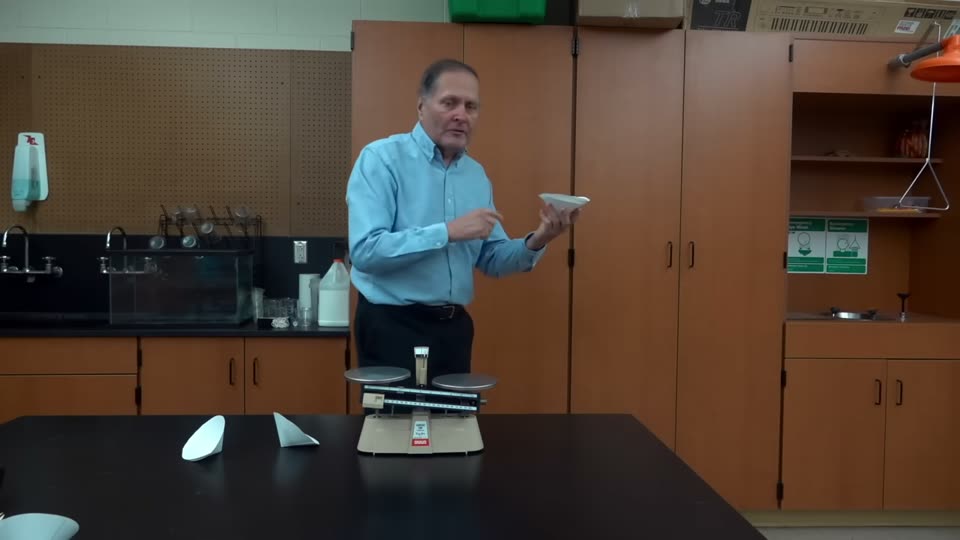
Based on Bruce's demonstration in the video below.
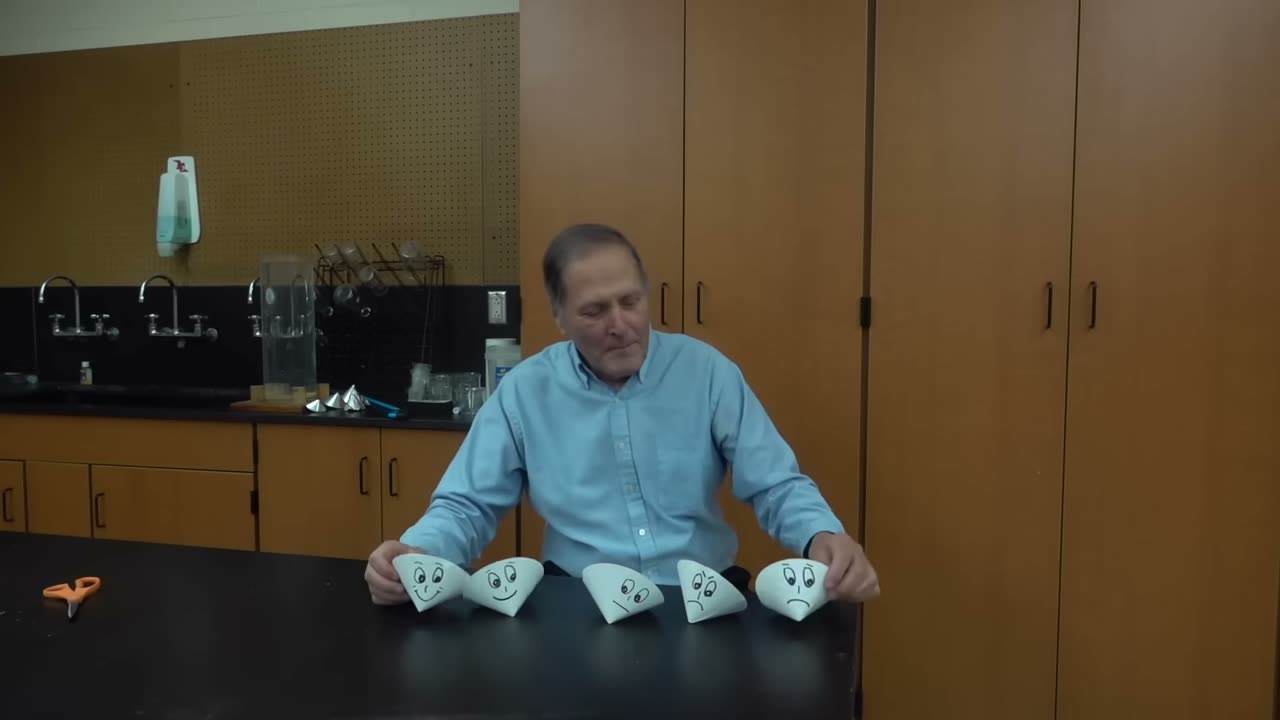
A flat paper circle flutters all over the place when you drop it. Cut one slit, tape it into a cone, and it suddenly falls straight and steady, the same way every time. That makes it the perfect thing for a real experiment: change one thing about the cone, and find out if it falls faster or slower.
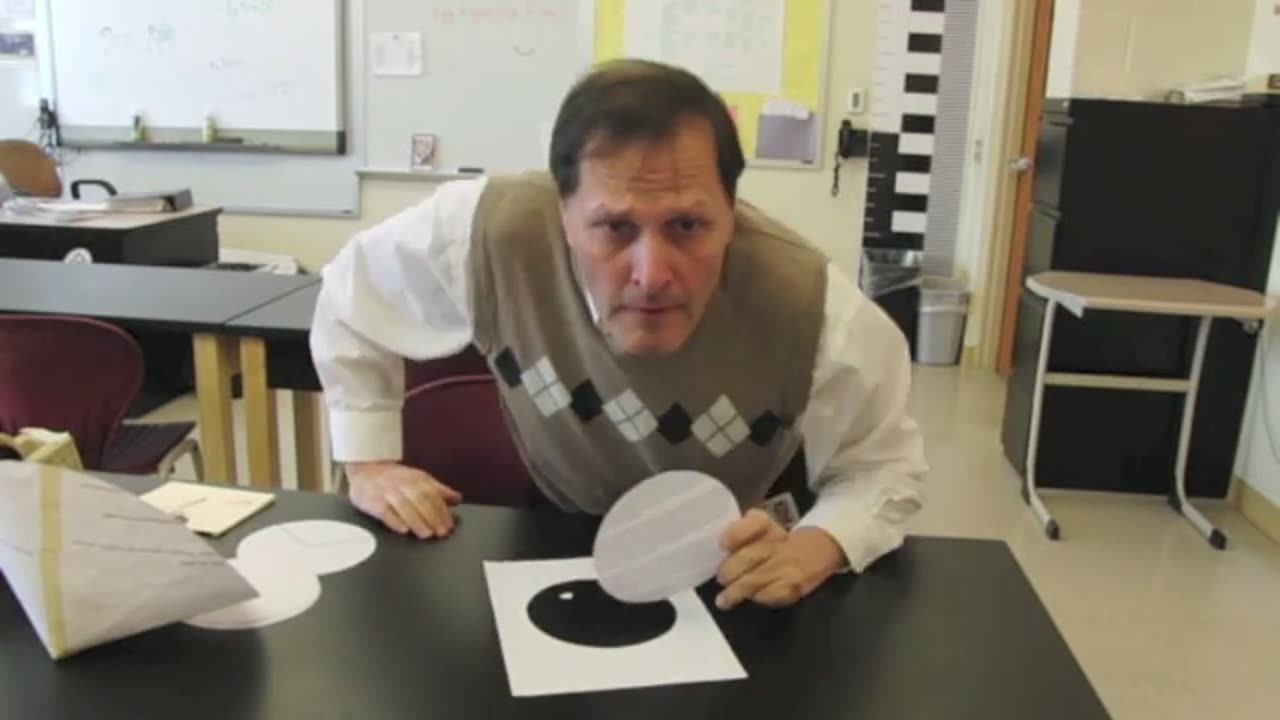
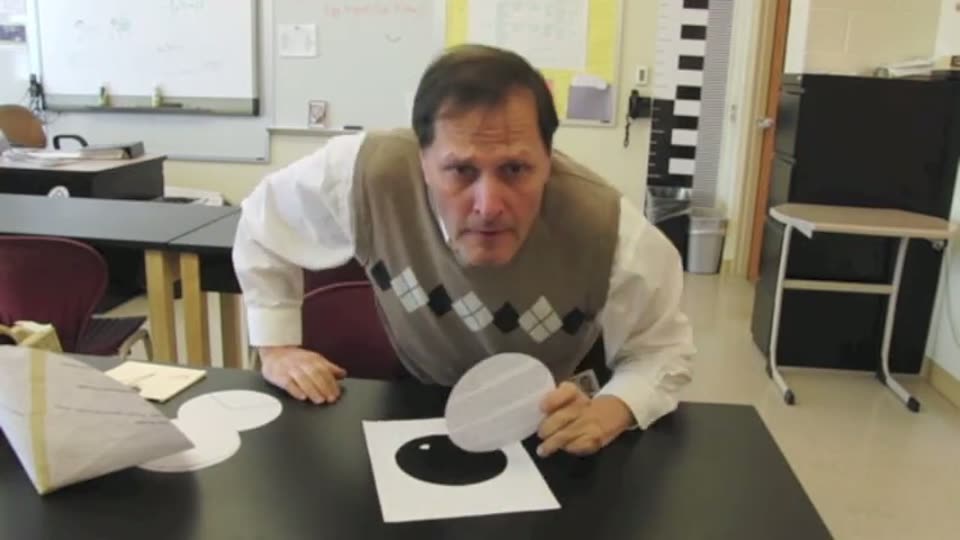
“Well, it looks like I may have been wrong, but the whole idea of this is to test out your ideas, look at the results, and then draw up your own conclusions.”
Build it
Trace a circle about 7 inches (18 cm) across onto your paper, using a lid, a small plate or a compass.
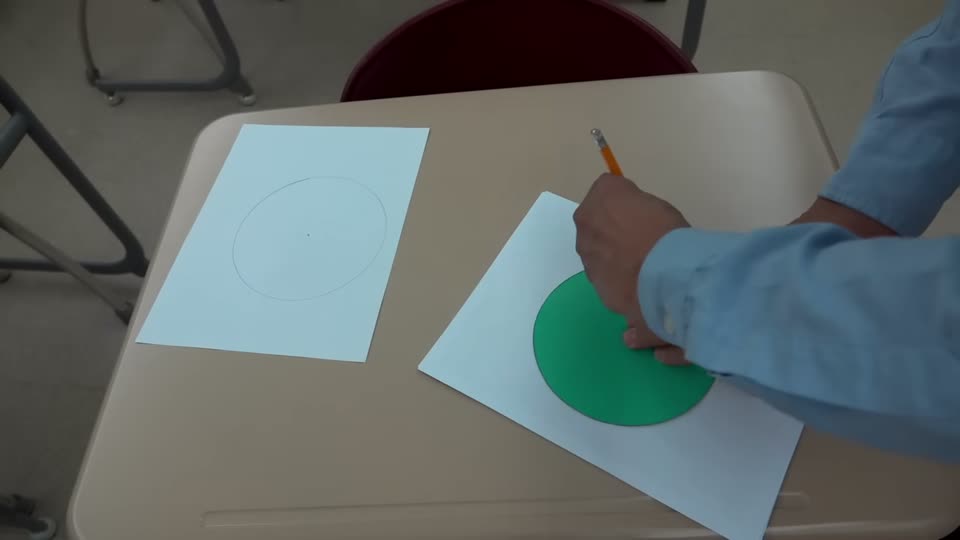
Cut out the circle.
Hold the flat circle up high and drop it a few times. Watch it flutter: does it take the same path each time?
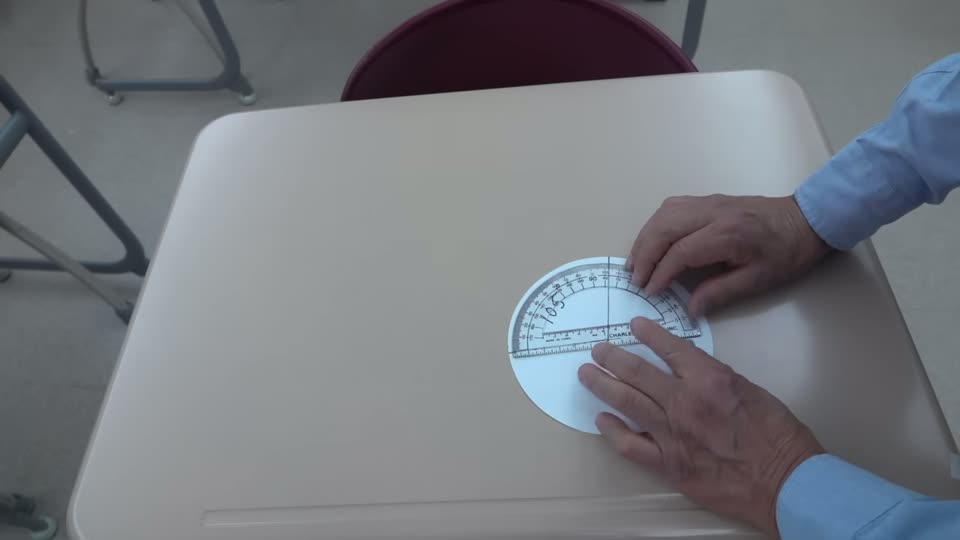
Draw two straight lines from the center of the circle to the edge, 105 degrees apart. Use a ruler for the first line and a protractor to measure the angle for the second.
Cut along one of the two lines, stopping at the center.
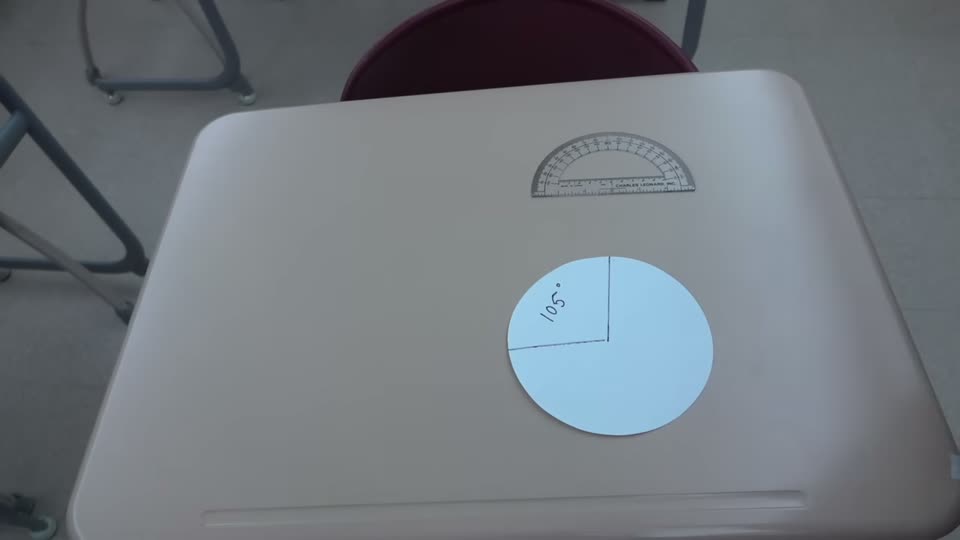
Slide the cut edge around until it lines up with the other line. The paper curls up into a cone.
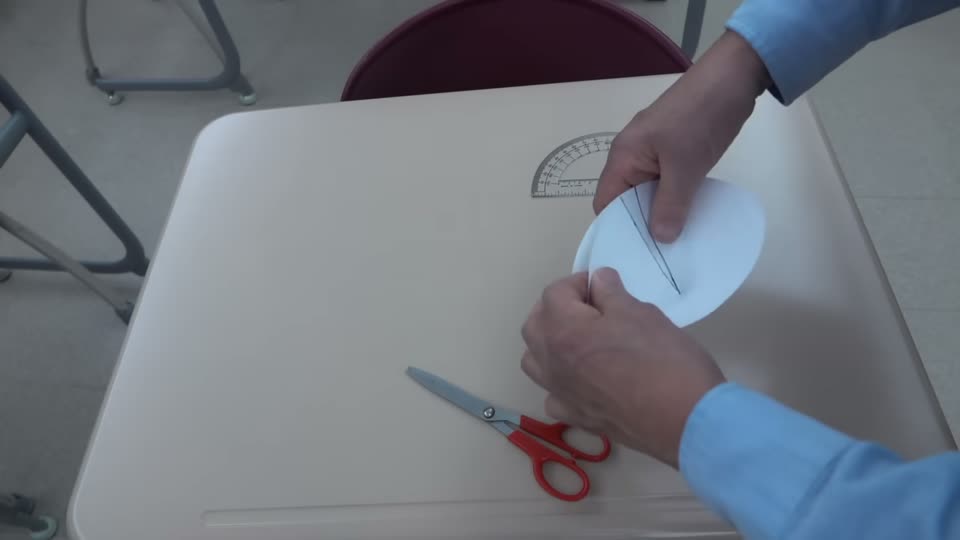
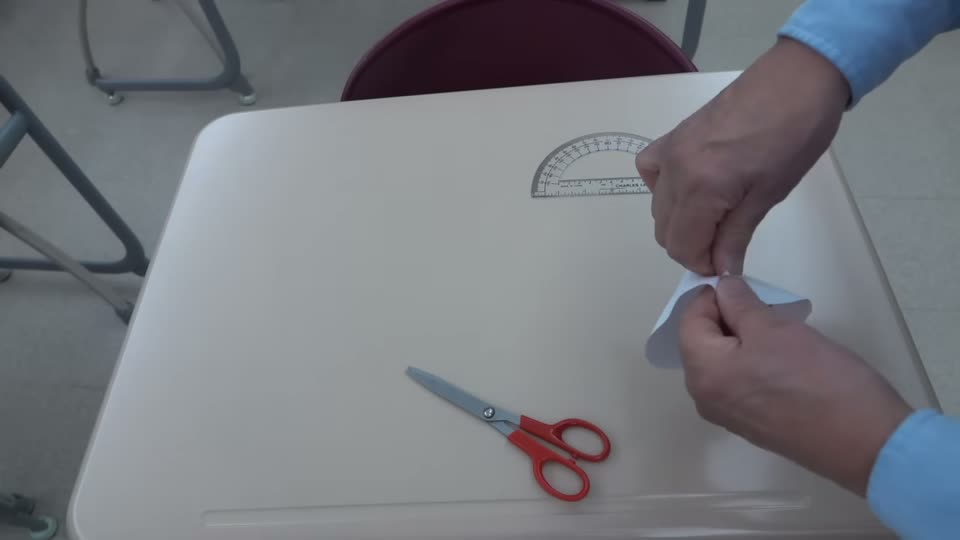
Tape the edge down so the cone keeps its shape. This is your basic cone. Its point makes a square corner (90 degrees).
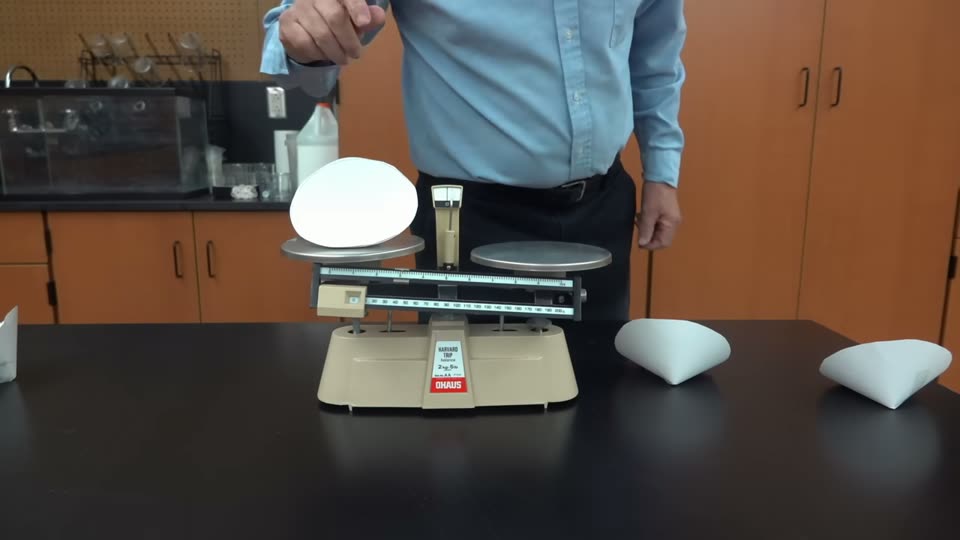
Make two more cones exactly the same way, so you have three matching cones for testing.
Draw a data table with one row for each test (1 cone, 2 cones stacked, 3 cones stacked) and spaces for three drop times and an average.
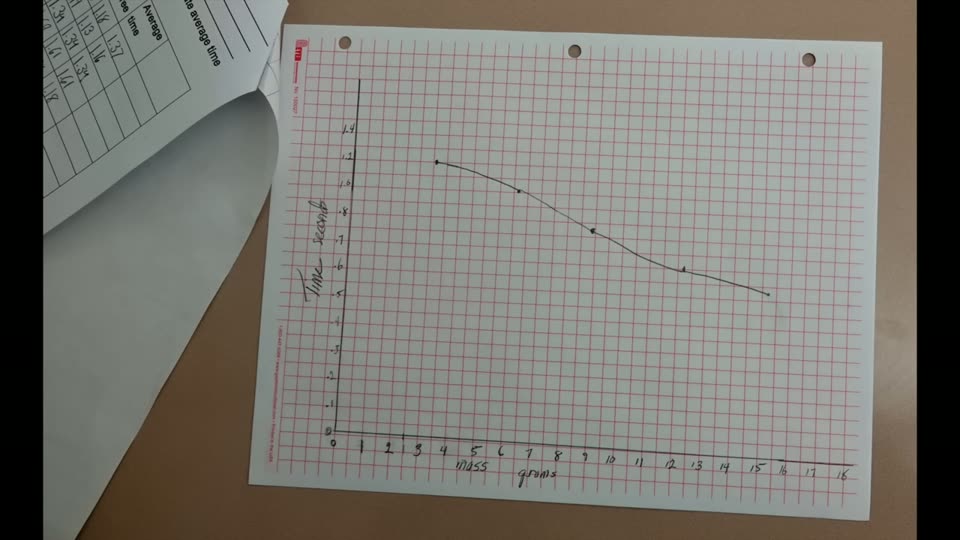
Hold one cone point-down as high as you can reach while standing on the floor, let go, and time how long it takes to land. Do it three times and write the times in your table.
Try it & notice
What's going on?
For young scientists
Gravity pulls the cone down, and air pushes back up on it. As the cone speeds up, the air pushes back harder and harder, until the push of the air matches the pull of gravity. Then the cone stops speeding up and falls at a steady speed. Scientists call that top speed terminal velocity.
A heavier cone needs a faster speed before the air can hold it back, so a stack of cones falls faster. But not three times faster, because the air pushes harder the faster something goes. A wider cone catches more air, so it falls slower. A big cone made of the same paper is heavier, but it also catches more air, so big and small cones fall at almost the same speed.
Color can't change gravity or the air, so if a red cone seems faster, the difference probably came from how it was built or how it was timed. Finding those mistakes is a big part of doing real science.
For grown-ups & teachers
This is a clean lab for air resistance (drag) and terminal velocity. A falling cone accelerates until the drag force, which grows roughly with the square of speed (F = ½ρC_dAv²), equals its weight mg. Then it falls at a constant terminal velocity v_t = √(2mg / ρC_dA). Light paper cones reach terminal velocity within a short distance, which is why drops from head height give consistent times once the circle is made into a stable cone. Bruce's basic cone weighs about 3 g.
The formula predicts the results kids find. Stacking cones keeps the shape and area the same but doubles or triples the mass, so terminal velocity rises by about √2 or √3, not 2 or 3. That's a nice surprise for anyone who expects 'twice as heavy, twice as fast'. A bigger cone from the same paper has mass and frontal area that both scale with the square of the radius, so the mass-to-area ratio stays the same and the speed stays about the same. A narrower cone (smaller point angle) from the same circle has the same mass but less frontal area and a more streamlined shape, so it falls faster. Bruce's chart for the wedge to overlap: cone angle 30° = 267°, 45° = 218°, 60° = 180°, 75° = 140°, 90° = 105°, 105° = 79°, 120° = 48°, 135° = 21°. He notes cones wider than about 135° become unstable again.
Common misconception: 'heavier things fall faster' (Aristotle's idea). In a vacuum all objects fall together (Galileo). In air, heavier objects of the same shape do reach a higher terminal velocity, which is exactly what makes this investigation useful for sorting out the two ideas. Color and the happy/sad faces are deliberate 'no effect' variables. They teach kids to separate a real effect from building and reaction-time errors, which are often a tenth of a second or more on hand-timed drops.
Extensions from Bruce's videos: cut slits and bend flaps so the cone spins; try copy paper, magazine paper, newspaper or wax paper (adjusted to equal mass); punch holes; drop foil or pie-pan aluminum cones in a tall clear tube of water to see the same ideas in a thicker fluid; and test for terminal velocity by dropping from several heights, calculating average speed (distance ÷ time) and graphing it to see where it levels off. The structure (problem, hypothesis, procedure, several trials, graph, conclusion) fits a full student lab report.
NGSS performance expectations
- 3-PS2-1 Plan and conduct an investigation to provide evidence of the effects of balanced and unbalanced forces on the motion of an object.
- 5-PS2-1 Support an argument that the gravitational force exerted by Earth on objects is directed down.
- MS-PS2-2 Plan an investigation to provide evidence that the change in an object's motion depends on the sum of the forces on the object and the mass of the object.
Science words
Tips from 41 years of teaching it
Bruce ran the cone lab with his 7th graders for decades, from a 1994 write-up to a 2025 lab form. Here's what he learned.
- Bruce kept one circle size, 9 cm radius (18 cm across), for every cone in an angle test so the mass never changed, and he advised against circles smaller than 5 cm across.
- Fall times from 1 to 3 meters are short, so Bruce had students time each cone about five times and use the average, and he looked for a stairwell or balcony when he wanted longer drops.
- He had pairs each take one variable and test at least five changes of it (six to ten is better), not just two cones against each other, so they had enough points to draw a line graph.
- For the spinning cone, Bruce cut four slits about 3 cm long and bent them like propeller blades; bending them more makes the cone spin faster, so students can compare no spin, slow spin and fast spin.
- Use a line graph when the variable is a number (angle, size, number of stacked cones) and a bar graph when it is a category, like paper type or color.
- Bruce had each pair write a rough draft of the procedure and get his approval before dropping anything, then write a final lab report a week later and present the results to the class.
Bruce called cone week 'Chicken Little week' ('The cones are falling!'). In his note home to parents he offered his own hypothesis that red things move faster than other colors, citing the urban legend that red cars get more speeding tickets, and challenged his students to refute it with their data.
More to try
- Punch 1-inch holes in the center of a cone, one at a time. How many holes does it take before the fall time changes, and does it get faster or slower?
- Try other surfaces at the same size, shape and mass: wax paper, manila paper, smooth book-cover paper or a clear plastic sheet.
- Count how many turns a spinning cone makes on the way down and graph the number of turns against the fall time.
Make it a challenge
Happy vs. sad race
Draw happy faces on some cones and sad faces on others, predict which falls faster, then race them in pairs. Bruce predicted the happy ones would win; test it and decide for yourself.
Angle cards
Make cones with different point angles (use the chart in the grown-ups section) and time each one. Does a pointy cone or a wide cone win?
Big and small
Make the biggest and the smallest cones you can from the same kind of paper. Predict the winner, then race them.
Spinning cone
Cut two short slits into the side of a cone and bend the flaps out a little so the air makes it spin as it falls. Does spinning change the time?
Cones in water
With a grown-up, shape small cones from aluminum foil and drop them point-down into a tall clear jar or vase of water. Do the same rules work in water as in air?