Experiments / Crushing Cans with Water
Crushing Cans with Water
Can a tube of water crush a bottle?
Hang a tube of water below a full bottle, pull out a pencil, and the air around you squeezes the bottle flat. No pump needed.
Based on Bruce's demonstration in the video below.
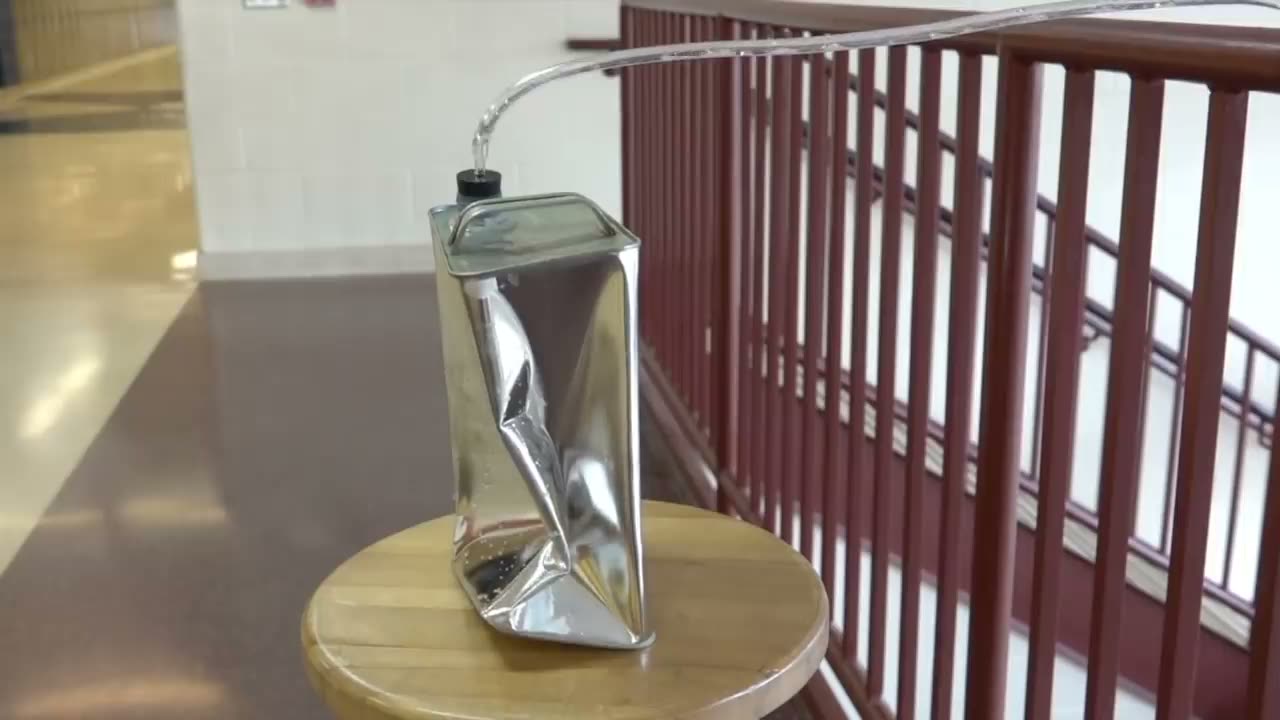
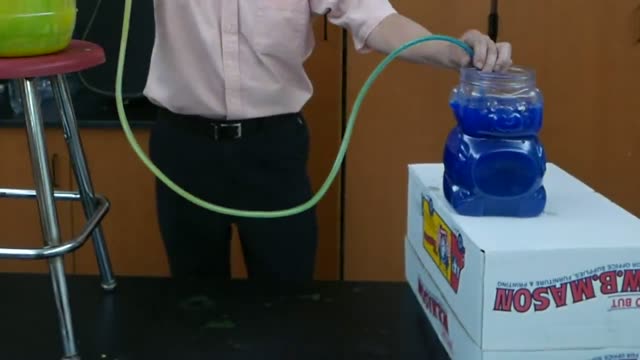
You'll fill a plastic bottle and a long tube with water, hang the tube down into a bucket, and watch the bottle crumple as the water runs out. Nothing is sucking on it: the air outside does all the squeezing. Bruce uses the same trick from a staircase to crush metal cans and hold Magdeburg hemispheres shut, and his detailed workshop plans for those (and for a two-dollar venturi vacuum pump) are linked below.
“It is the weight of the water inside the tube and how high it's lifted that decreases the pressure. The size of the filled container doesn't make a difference.”
Build it
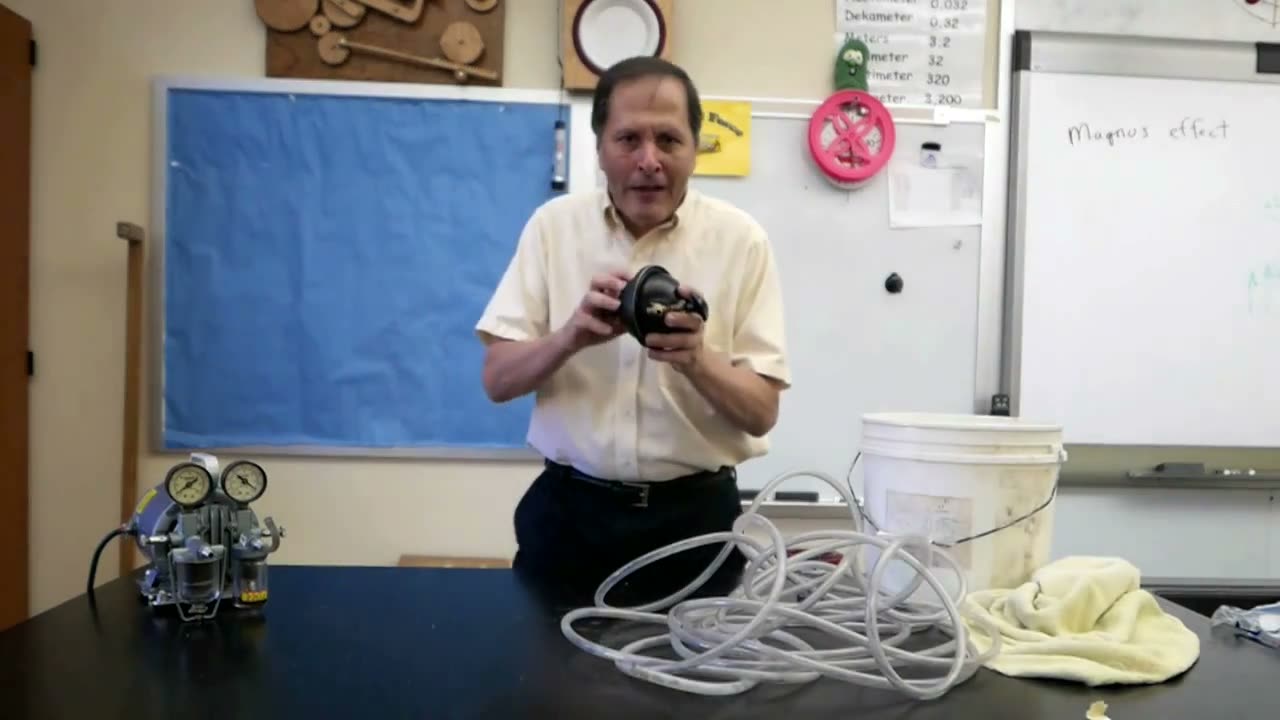
Grown-up: Make a hole in the middle of the bottle cap with a drill or a nail, a little smaller than the outside of the tubing.
Push one end of the tubing through the hole, about 1 inch (2-3 cm), so it fits tightly with no gaps around it.
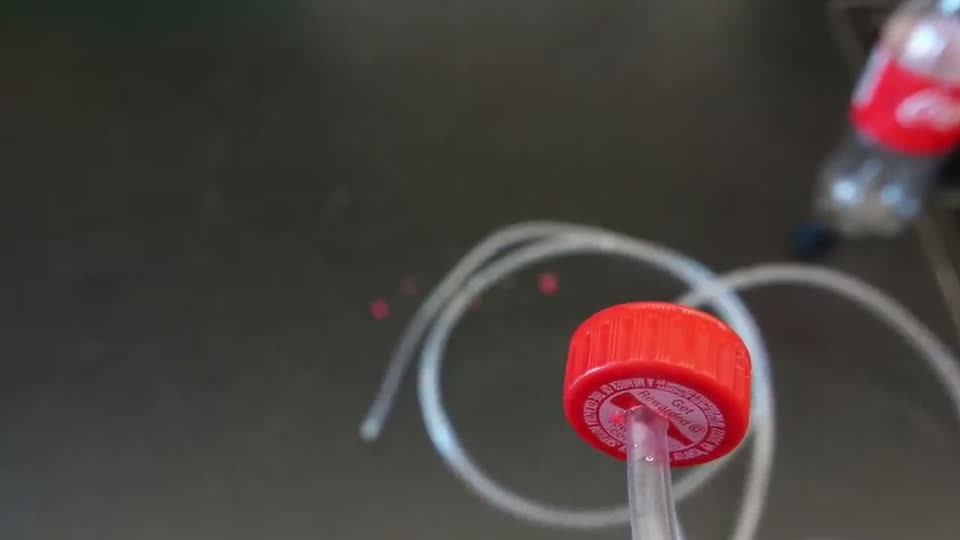
Hold the cap end under a running faucet until the whole tube is full of water and no air bubbles are left.
Push the pencil into the far end of the tube to plug it, so the water stays inside.
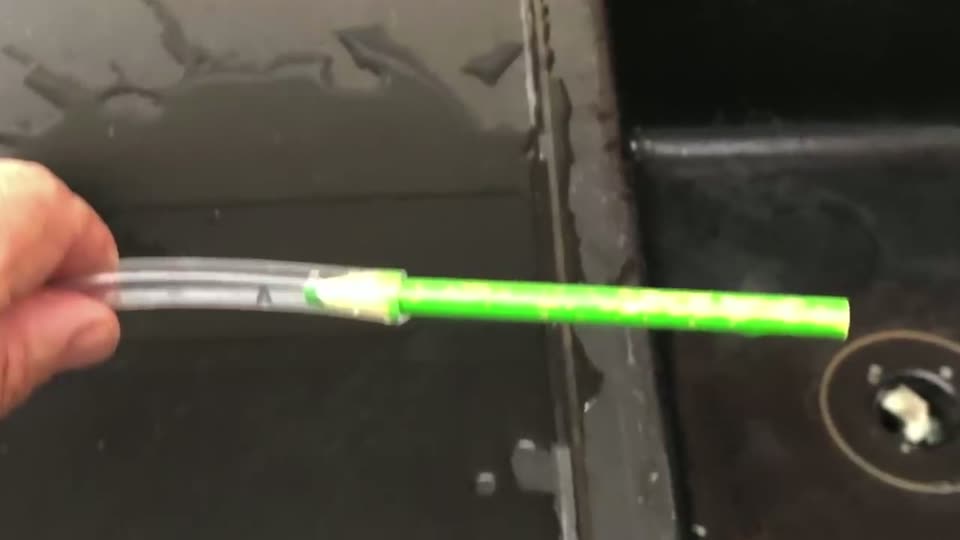
Fill the bottle with water right to the brim.
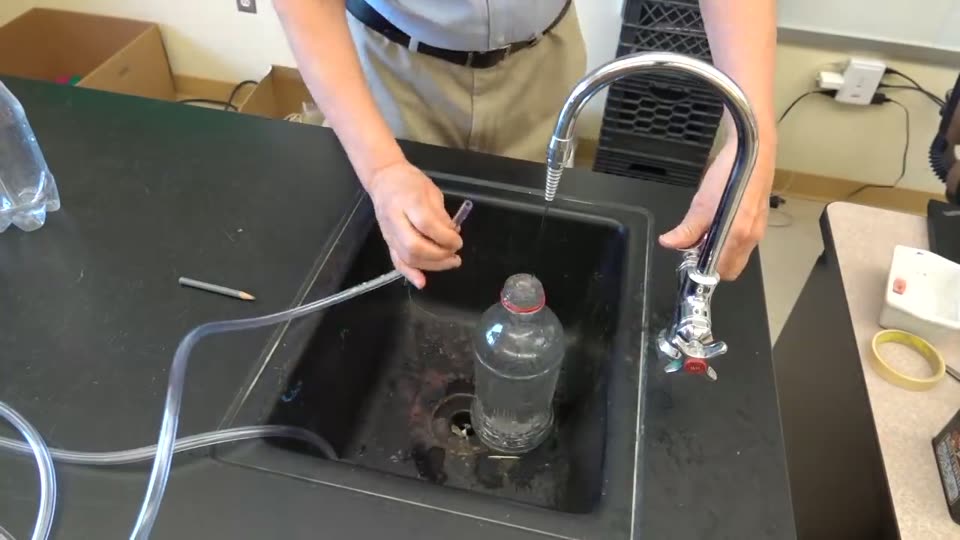
Screw the cap on tightly. If a big air bubble is trapped inside the bottle, take the cap off, top it up and try again.
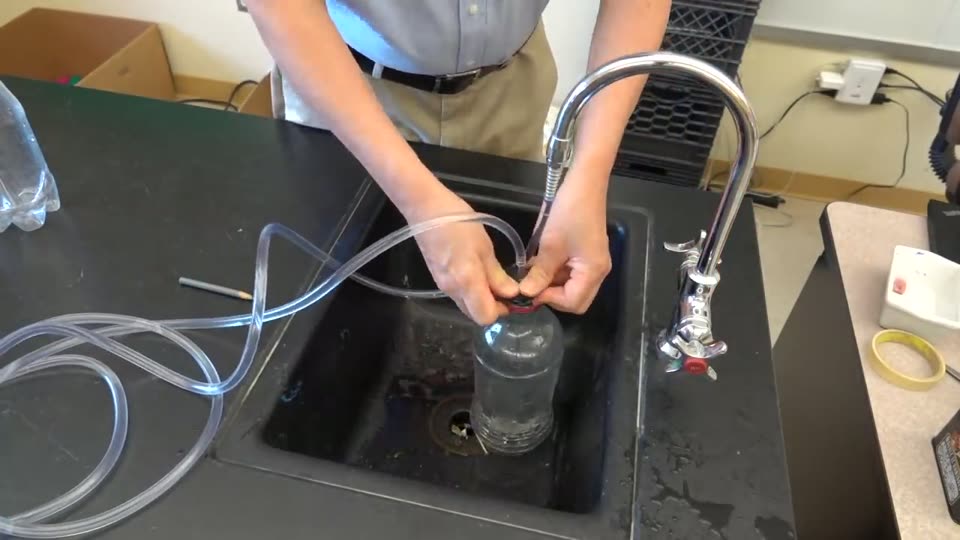
Set the bucket on the floor next to the table and push the pencil end of the tube deep under the water.
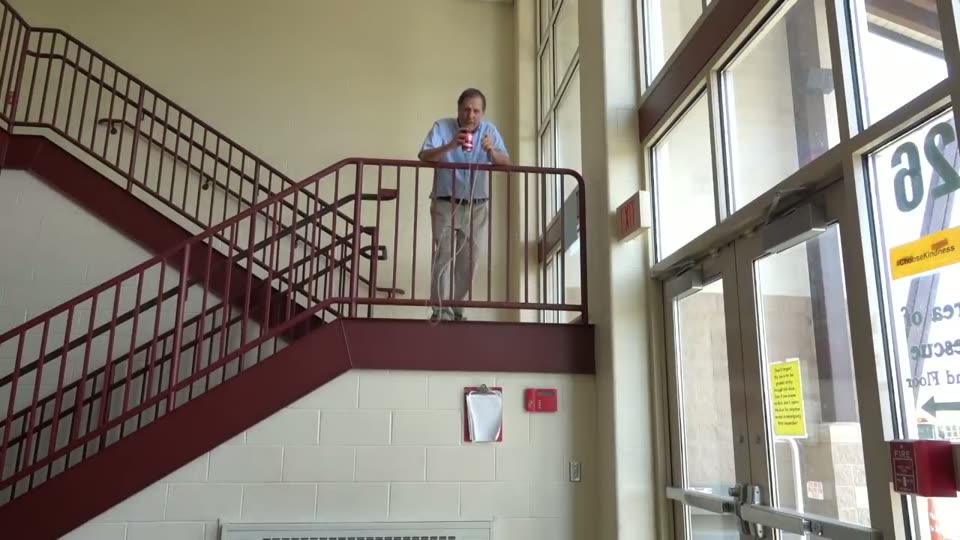
Hold the bottle upside down (cap at the bottom) at the edge of the table, with the tube hanging down into the bucket.
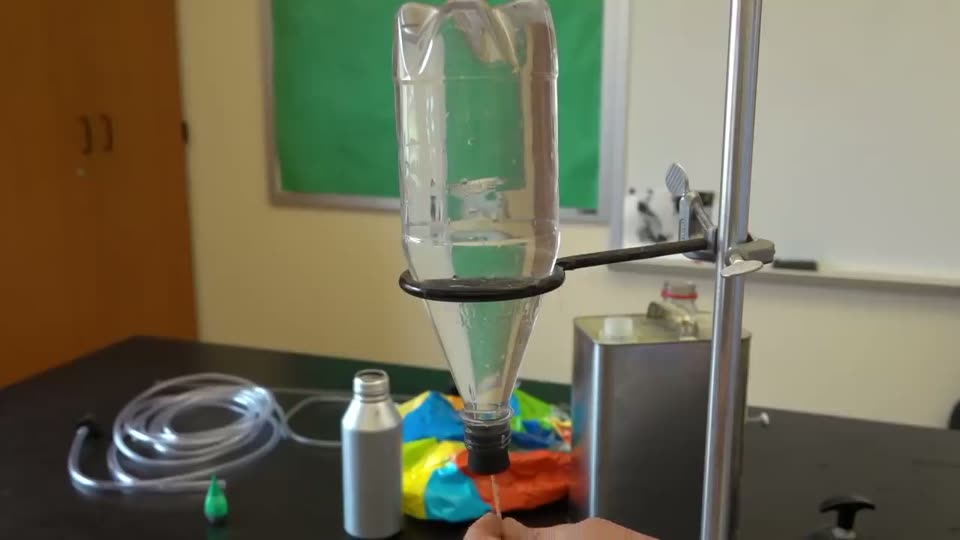
Have a helper reach into the bucket and pull out the pencil, keeping the end of the tube under the water.
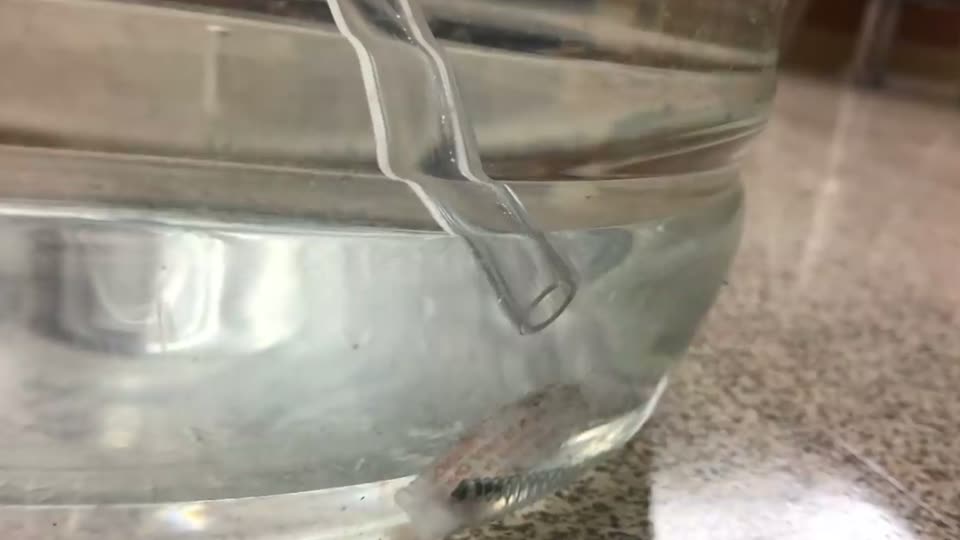
Watch the bottle as the water runs down the tube into the bucket.
Try it & notice
What's going on?
For young scientists
Air is heavy. The whole sky full of it presses on everything, from every direction, about 14.7 pounds on every square inch. That push is called air pressure. Your bottle doesn't usually crush because the air or water inside pushes back out just as hard.
When the pencil comes out, gravity pulls the water down the tube. For water to leave the bottle, something has to fill the space it leaves, but the cap is sealed and the tube end is under water, so no air can get in. The push from inside gets weaker, the push from the air outside stays the same, and the outside air wins. The bottle crumples.
The taller the hanging column of water, the weaker the push inside. Every 2.3 feet (70 cm) of drop takes away about 1 pound per square inch. That's why Bruce goes up a staircase to crush metal cans: it's the height of the water that matters, not how big the bottle is.
For grown-ups & teachers
This is hydrostatic pressure at work, and the setup is really an upside-down water barometer. The pressure at the top of a column of water hanging below a sealed container is lower than atmospheric by the weight of the column: about 0.433 psi per foot, or 1 psi per 2.3 feet. A 33.9-foot column of water weighs as much as a column of the whole atmosphere (14.7 psi), so at that height the pressure inside would reach essentially zero. Bruce's calculation for the 17-foot staircase: 17 x 0.433 = 7.4 psi lost, leaving about 7.3 psi inside while the outside stays at 14.7.
A small difference goes a long way because it acts on every square inch. A soda bottle has very roughly 90 square inches of surface, so even the 1-2 psi from a table-to-floor drop adds up to around 100 pounds of squeeze, plenty for thin plastic. Thick juice bottles and metal cans need the taller column from the stairs.
Common misconceptions: there is no 'suction' pulling the walls in; the atmosphere pushes them in once the inside pressure drops. The amount of water in the container doesn't matter, only the vertical height of the water column (Bruce found it made no difference whether the can was upright or upside down). A wider tube doesn't lower the pressure more; it only drains the container faster, which is why a big hose crushes a can more quickly. With a wide tube the bottom end must stay under water, because air can slip up past the water; a narrow tube is partly protected by surface tension.
Near the limit, the water in the container starts to bubble: dissolved air comes out and water boils at room temperature at very low pressure, which Bruce mentions you can hear inside the aluminum can. For a vacuum-pump comparison, a venturi T on an air compressor (see the build plan) reaches about two-thirds of a full vacuum, and the same water column can hold Magdeburg hemispheres together: Bruce's 4-inch sphere needs about 185 pounds of pull with a full vacuum and a little over 100 pounds when lifted about 17-18 feet.
NGSS performance expectations
- 5-PS1-1 Develop a model to describe that matter is made of particles too small to be seen.
- 3-PS2-1 Plan and conduct an investigation to provide evidence of the effects of balanced and unbalanced forces on the motion of an object.
- 5-PS2-1 Support an argument that the gravitational force exerted by Earth on objects is directed down.
Science words
Tips from 41 years of teaching it
Bruce wrote up this demo for teachers as one of three hydrostatic pressure activities. His notes add a few practical tricks.
- A short tube is enough to get started: about 3 feet of tubing below a soda bottle lowers the pressure inside by more than 1 psi, which is plenty to start crushing it.
- For aluminum cans, Bruce found a flexible tube about 6 feet long did the job, and tall 20 oz energy-drink cans were more fun than regular soda cans. A fizz-keeper soda cap with a stopper seals a standard can; wide-mouth cans take a rubber stopper.
- With stronger containers he saw a cycle of water dropping out of the tube and then air rushing back up it. Keeping the lower end of the tube in a bucket of water fixed it.
- A 3/8-inch inside-diameter hose drained a one-gallon can in about a minute, and the student carrying it upstairs could feel the water leaving as he climbed. At about 16 feet the gallon can crushed easily.
- Bruce checked his numbers with a pressure gauge and a vacuum gauge that cost him less than $15 together. At 17 feet he expected 7.3 psi: the pressure gauge read slightly less than 7 and the vacuum gauge almost 8, closer than he expected for cheap gauges.
Each success made Bruce want a bigger container: a soda bottle, then a thick juice bottle, then a one-gallon can. Next on his list was a 55-gallon drum on a garden hose, until he worked out that the drum and its water would weigh about 500 pounds.
More to try
- Gauge it: fill a long tube with water, put a funnel on top as a reservoir and a pressure gauge at the bottom, then raise the funnel. The pressure should go up about 1 psi for every 2.3 feet.
Make it a challenge
Floating toothpick
Fill a bottle, put on the cap with a small hole, and turn it upside down over a sink. The water stays in. Push a toothpick into the hole and watch it float up into the bottle without the water leaking out.
Up the stairs (grown-up)
With 20-25 feet of tubing, a grown-up carries the filled bottle up a staircase while a helper at the bottom keeps the tube end under water in the bucket. Bruce crushed a thick plastic juice bottle this way from about 17 feet. Never lean over the railing, and keep the area below clear.
Crush a soda can (grown-up)
Bruce cuts a hole in a scrap of rubber mat with scissors, pushes the tube through for a tight fit, fills a soda can with water and presses the mat on top. From about 10 feet up, the can folds in his hands. Grown-ups only: crushed cans can have sharp edges.
Bigger cans, bigger hose (grown-up)
Bruce also crushed aluminum bottles and a one-gallon metal can using rubber stoppers. With a wider hose the can crushed faster but not harder: the hose size only changes how quickly the water drains.
No-pump Magdeburg hemispheres
The same water column can hold two metal half-spheres together so tightly that strong people can't pull them apart. See Bruce's build plan for the full setup.