Experiments / Balloon in a Bottle
Balloon in a Bottle
Can you blow up a balloon inside a bottle?
Blow up a balloon inside a bottle, then make it blow itself up while you blow into a different straw.
Based on Bruce's demonstration in the video below.
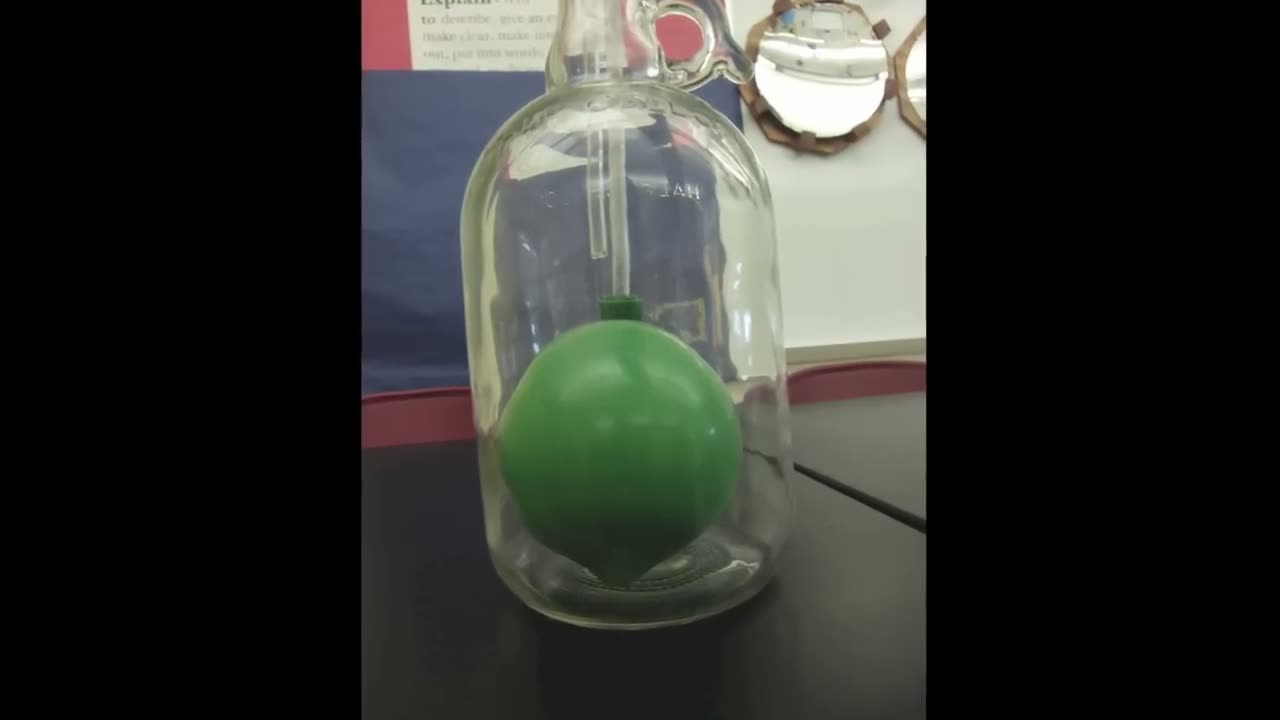
You'll seal a balloon inside a plastic bottle with two straws poking out of the top: one straw goes into the balloon, the other is just an open tube. The "empty" bottle turns out to be full of something that fights back, and once you know that, you can make the balloon blow up without blowing into it at all. Bruce's detailed workshop plans show more bottle tricks and the skewer-through-a-balloon demos.
“So my question is, how did I manage to blow the balloon up both times when it was inside the bottle?”
Build it
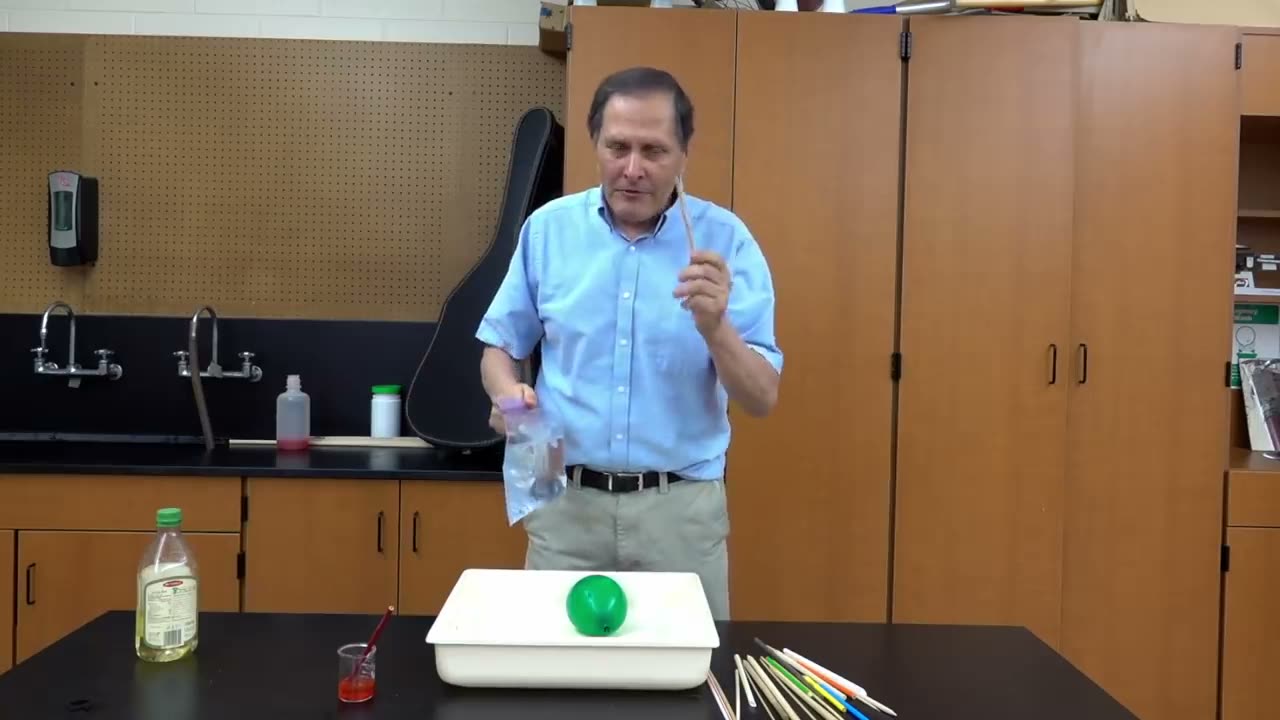
Stretch the mouth of a balloon over the short end of a bendable straw.
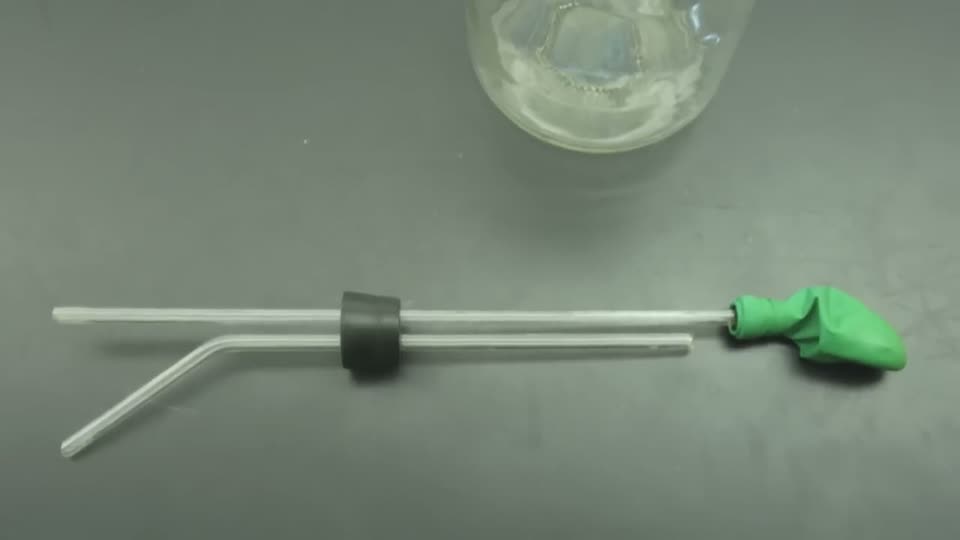
Wrap a rubber band tightly around the balloon's neck so it grips the straw with no air leaks.
Blow into the straw to check that the balloon fills up, then let the air back out.
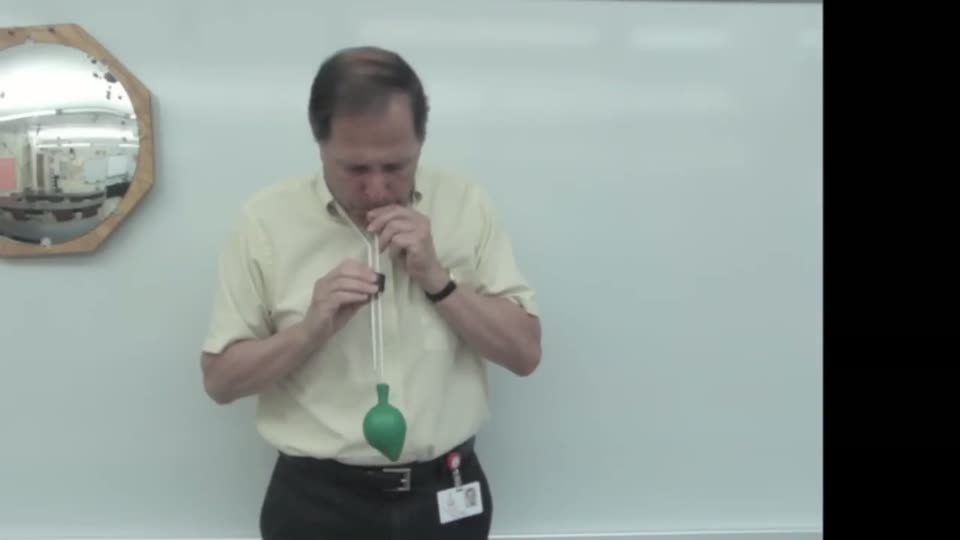
Push the balloon end of the straw down into the empty bottle, leaving the bendy end sticking out of the top.
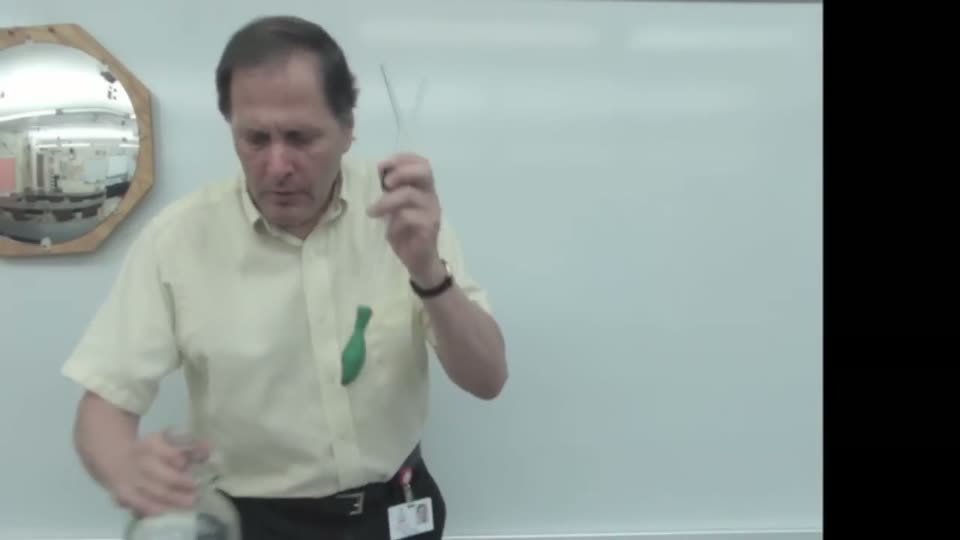
Slide the second straw into the bottle next to the first one, so it reaches a few inches inside. This straw stays open: nothing is attached to it.
Press the clay gently into the bottle's mouth all around both straws, so no air can sneak in or out. Don't squash the straws flat.
Blow into the balloon straw and watch the balloon grow inside the bottle.
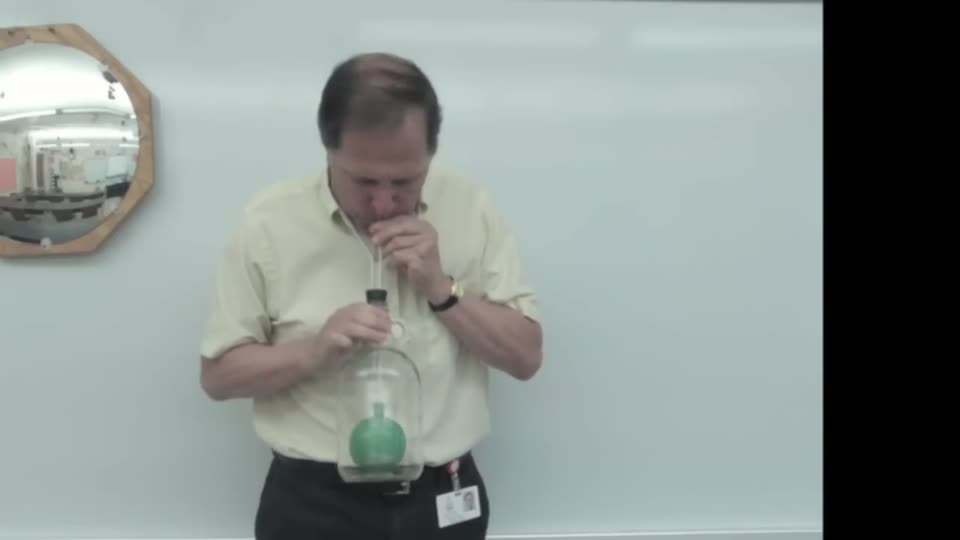
Try it & notice
What's going on?
For young scientists
The bottle looks empty, but it's full of air. Air is real stuff that takes up space. For the balloon to grow inside the bottle, it has to push that air out of the way.
The open straw is an escape door. When you blow up the balloon, the bottle's air rushes out through it. Cover the door with your finger and the trapped air gets squeezed and pushes back on the balloon, so it can hardly grow.
When you suck on the open straw, you pull air out of the bottle and leave less air pushing on the balloon. The air all around you is always pushing on everything, so it pushes in through the balloon straw and blows the balloon up for you.
For grown-ups & teachers
This is Boyle's law: for a trapped gas at constant temperature, pressure times volume stays constant. To inflate a balloon to half the volume of a sealed bottle, you would have to squeeze the bottle's air into half the space, which doubles its pressure (about 15 psi above normal). Strong human lungs manage only around 1 to 2 psi, and the balloon's own rubber needs some of that, so in a sealed bottle the balloon barely grows. The open straw lets the displaced air escape, so the balloon only has to beat the rubber's stretch.
When you cover the vent and stop blowing, the stretched rubber tries to shrink. To shrink, it would have to enlarge the sealed air space around it, which lowers that air's pressure. The balloon settles where the full atmospheric pressure pushing in through its open straw balances the rubber's pull plus the slightly lowered pressure around it. That is why it stays inflated with its mouth open.
Sucking on the vent is the answer to Bruce's puzzle. You lower the pressure in the bottle, and atmospheric pressure (about 14.7 psi at sea level) pushes outside air into the balloon. A common misconception is that suction "pulls": nothing pulls the air in. Removing air lowers the pressure on one side, and the higher outside pressure does the pushing. A thin water bottle may dent as you suck, which is the same push acting on the bottle walls.
The bonus video adds a second idea. Balloons and plastic bags are polymers: long, tangled chain molecules that slide aside and grip a smooth, soapy skewer instead of tearing, so there is no leak while the skewer is in place. When the skewer comes out, Bruce plugs the holes with ground oatmeal soaked in water. Its soluble fiber forms a sticky gel and the insoluble fibers bind it together, much like tire sealant or the fibrin net in a blood clot. In his test, dry oatmeal did not seal and the balloon went flat in about three minutes, while the wet-oatmeal balloon held for days.
NGSS performance expectations
- 5-PS1-1 Develop a model to describe that matter is made of particles too small to be seen.
- 3-PS2-1 Plan and conduct an investigation to provide evidence of the effects of balanced and unbalanced forces on the motion of an object.
- 3-5-ETS1-2 Generate and compare multiple possible solutions to a problem based on how well each is likely to meet the criteria and constraints of the problem.
Science words
Tips from 41 years of teaching it
Bruce turned the balloon in a bottle into a classroom puzzle for years. Here's what his handouts say works.
- Bruce's favorite trick bottle has one small hidden hole near the mouth, where a finger can cover it unnoticed. Hand a student a plain bottle, inflate the trick one yourself, then cover the hole so the balloon stays up.
- In the no-holes challenge, aim for a half-full bottle. Bruce found the lower part of the balloon reaches its stretching limit about half to three-quarters of the way down and usually breaks after that.
- The one method that let Bruce fill the whole bottle was the straw-and-rubber-band method, because the balloon goes all the way in and stretches evenly.
- A bypass straw slides out much more easily if it's wet with soapy water. To finish, keep the balloon's neck pressed against the inside of the bottle with a finger while you fold its lip back over the mouth. It takes a few tries.
- For skewering, Bruce makes the point as sharp as possible and sands any rough spots smooth, then pushes gently in at the balloon's "belly button" and out right beside the knot.
- Don't throw out skewered balloons. Bruce saves them for balloon-patching experiments.
Bruce noticed that solutions students couldn't actually test, such as flying the bottle into space or carrying it 34 feet under the sea, often sparked livelier debates than the ones they could. Arguing over why an idea would or wouldn't work pushed students deeper into the air-pressure ideas than a quick test did.
More to try
- Test which materials grip a skewer: Bruce's foil chip bag and fast-food paper bags leaked, while a plastic zip-top bag of water held five or six soapy round pencils with no leaks.
- Push a skewer into a full box of flake cereal. The box tears, but no cereal falls out because the flakes are too big to fit through the small gaps.
Make it a challenge
The no-holes challenge
Get a balloon at least half inflated inside a plain 2-liter bottle, with its mouth open over the bottle's mouth and no holes in the bottle. Bruce's working solutions: blow through a straw rubber-banded into the balloon, slip a soapy straw beside the balloon to let air out, or step on the bottle to flatten it first. His build plan explains each one.
Self-sealing balloon (grown-up)
A grown-up rubs dish soap on a sharp wooden skewer and slowly twists it into the thick spot at the bottom of a blown-up balloon and out right beside the knot. Then try the seal: funnel a spoonful of ground oatmeal stirred into water into a new balloon, blow it up and tie it, have a grown-up poke a skewer hole near the bottom, and turn the balloon so the oatmeal sits over the hole.
Wet oatmeal vs dry oatmeal
Try the self-sealing balloon with dry ground oatmeal instead of the wet mix. Bruce's dry-oatmeal balloon went flat in about three minutes, but his wet-oatmeal balloon held its air for days.
The leak-proof jug
For a version with no popping balloons, stir 1 to 2 tablespoons of ground oatmeal into a plastic milk jug of water, shake it, take the cap off and set it on a tray. A grown-up pokes a few pinholes near the bottom. Watch the streams slow and stop.
Hunt for other sealers
Bruce suggests testing other foods with lots of fiber to see which ones plug a hole best. Keep everything else the same so the test is fair.