Experiments / Echo Speed of Sound
Echo Speed of Sound
How fast does sound travel?
With two blocks of wood, a big wall and a stopwatch, you can clock sound at about 770 miles per hour.
Based on Bruce's demonstration in the video below.
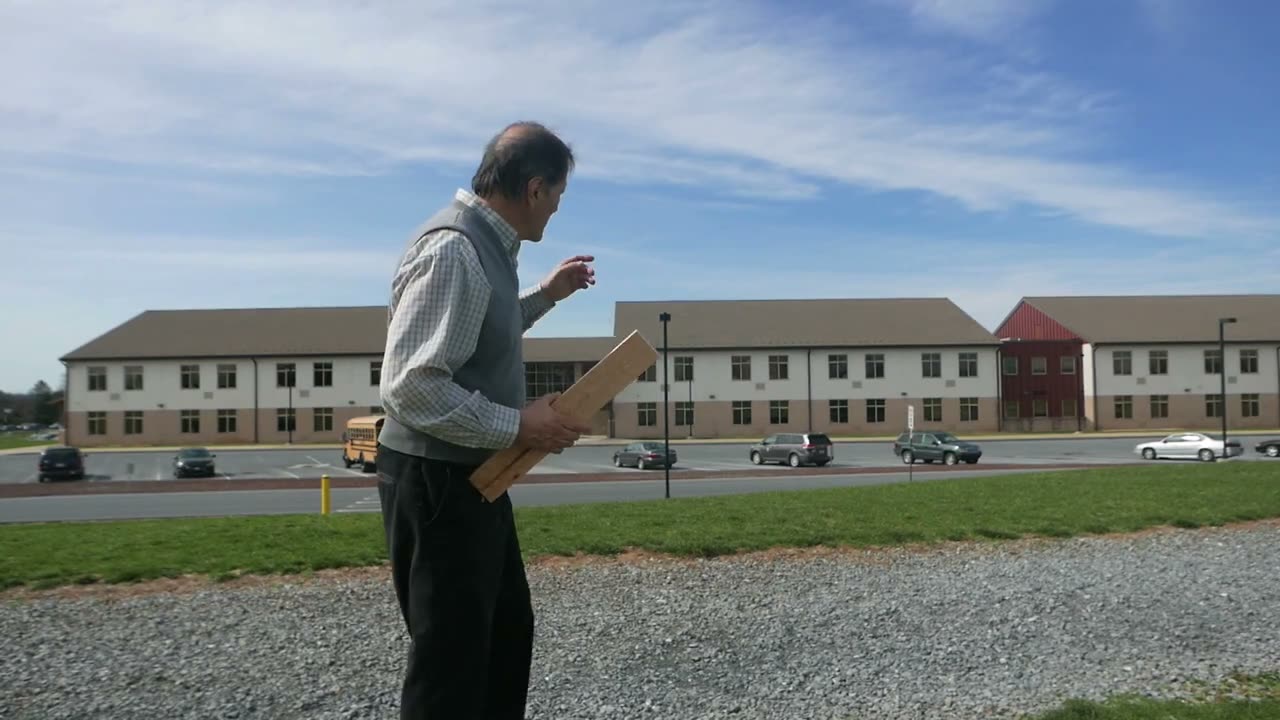
This is an outdoor activity for a family or a class. You slap two blocks of wood together in front of a big flat wall, listen for the echo, and use the time it takes to work out how fast sound travels. One echo comes back in about a third of a second, far too quick to time, so you'll use Bruce's trick: clap in rhythm with the echo and time ten claps instead of one.
“Rather than just trying to time one, what I want to try and do is get a rhythm going, and then we time a series of 10 clicks rather than just one.”
Build it
Find a big flat wall with open, quiet ground in front of it. Stand facing the wall, about 200-400 feet (60-120 m) away.
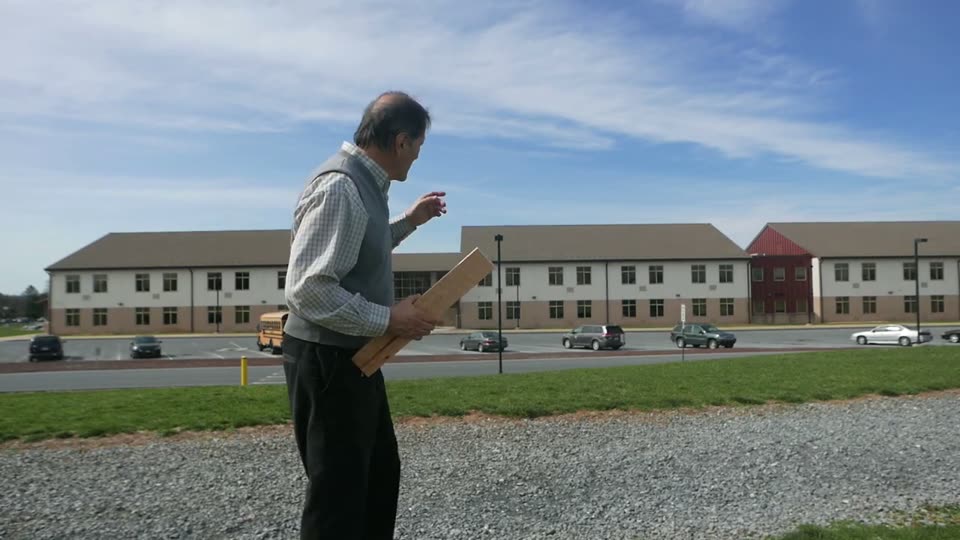
Measure the distance from where you stand to the wall with the tape measure. No long tape? Count your paces to the wall, then measure one pace and multiply.
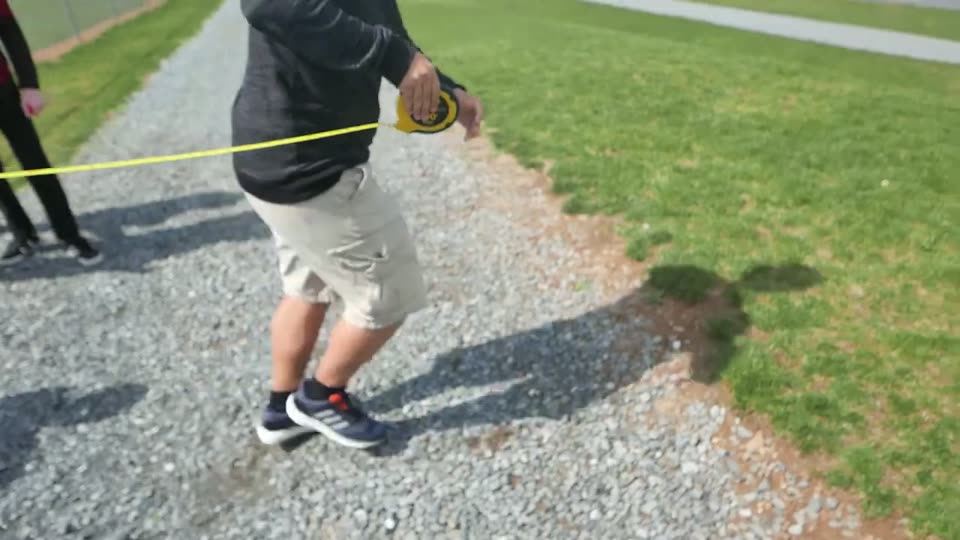
Slap the two blocks together once, sharply, and listen. The crack you hear a moment later is the echo bouncing back off the wall.
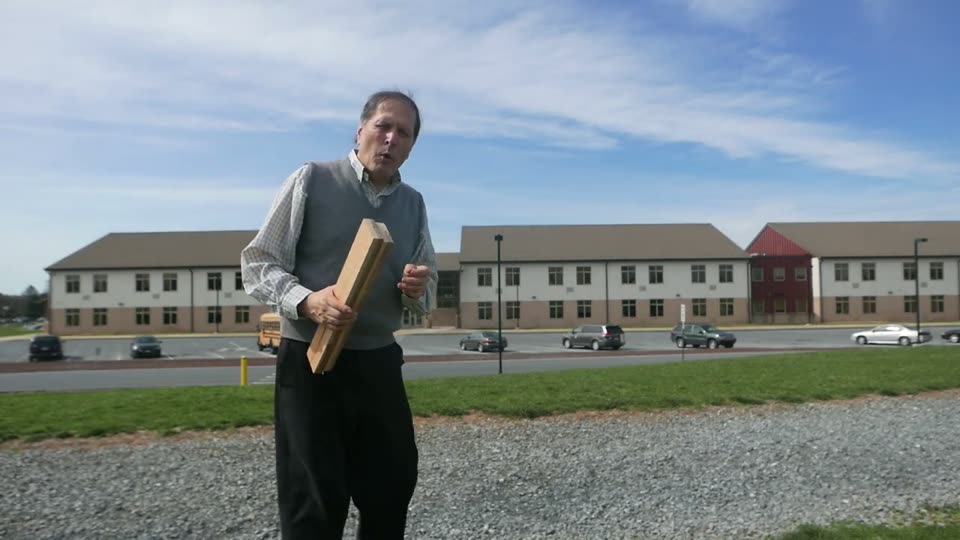
Slap the blocks again at the exact moment you hear the echo, and keep going. Practice until every clap lands right on top of the last echo, in a steady rhythm.
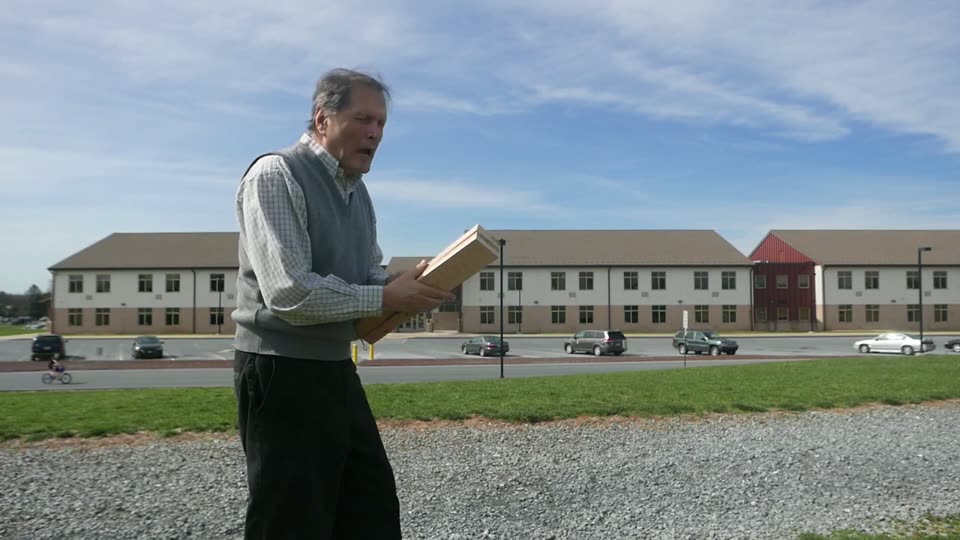
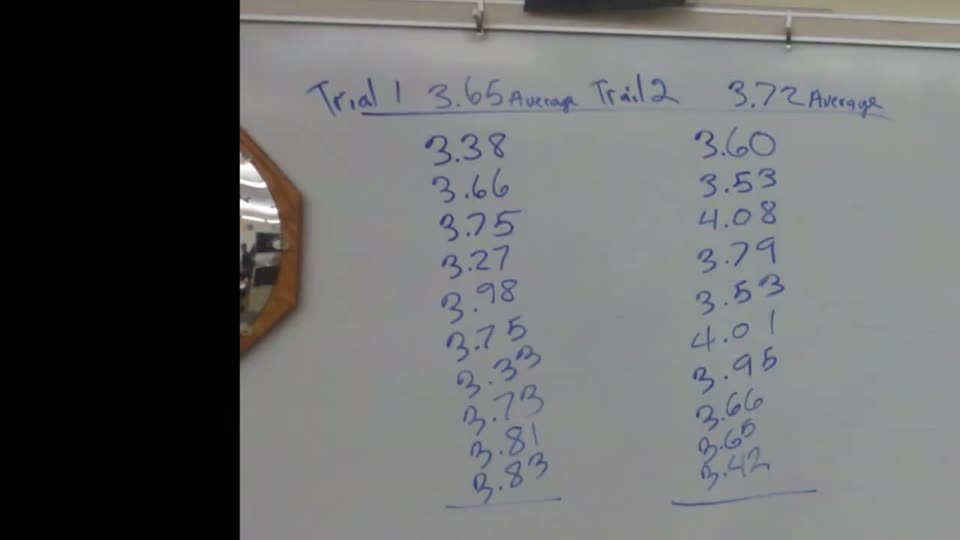
Time ten claps. When the rhythm is steady, a helper says "go" on one clap and everyone starts their stopwatch. Count the next 10 claps out loud and stop on the tenth.
Write down every timer's result, then repeat two or three more times.
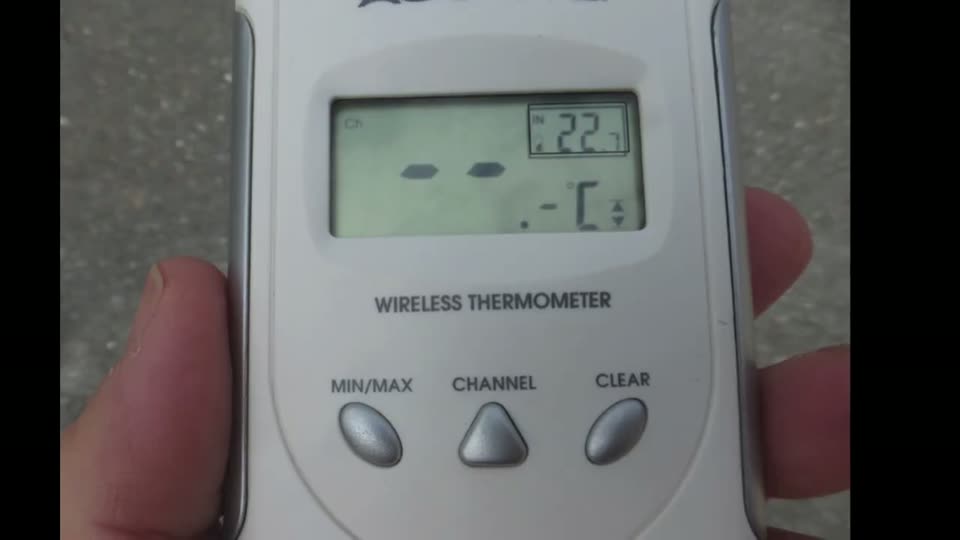
Optional: read the air temperature with the thermometer and write it down.
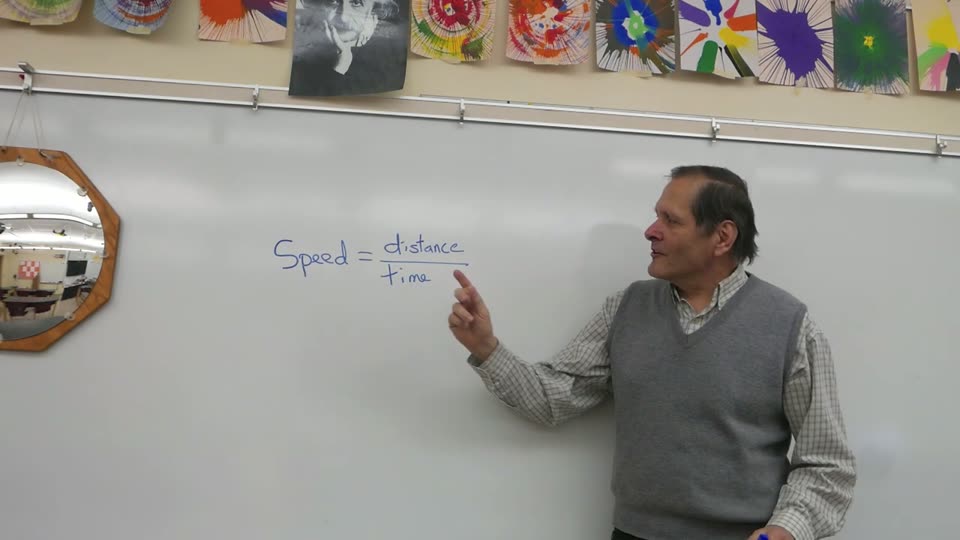
Do the math. Average your times and divide by 10 to get the time for one echo. Double your distance, because the sound went to the wall and back. Then speed = distance divided by time.
To change feet per second into miles per hour, divide by 1.47. Compare your answer with the real speed of sound, about 770 mph on a warm day.
Try it & notice
What's going on?
For young scientists
Sound is a vibration passing through the air. When the blocks crack together, they shove the air next to them, that air bumps the air next to it, and the push spreads outward like a ripple. When the ripple hits a big wall, it bounces back to you. That bounced sound is an echo.
Sound is fast: about 1,100 feet every second, or roughly 770 miles per hour. That's why a trip of a few hundred feet to the wall and back takes only about a third of a second. Your reaction with a stopwatch is about that slow, so timing a single echo gives messy answers.
Clapping on the echo fixes that. When each clap lands on the last echo, the time between claps is exactly the echo's round trip. Timing ten of them makes the time ten times longer, so a small slip of your thumb matters ten times less.
For grown-ups & teachers
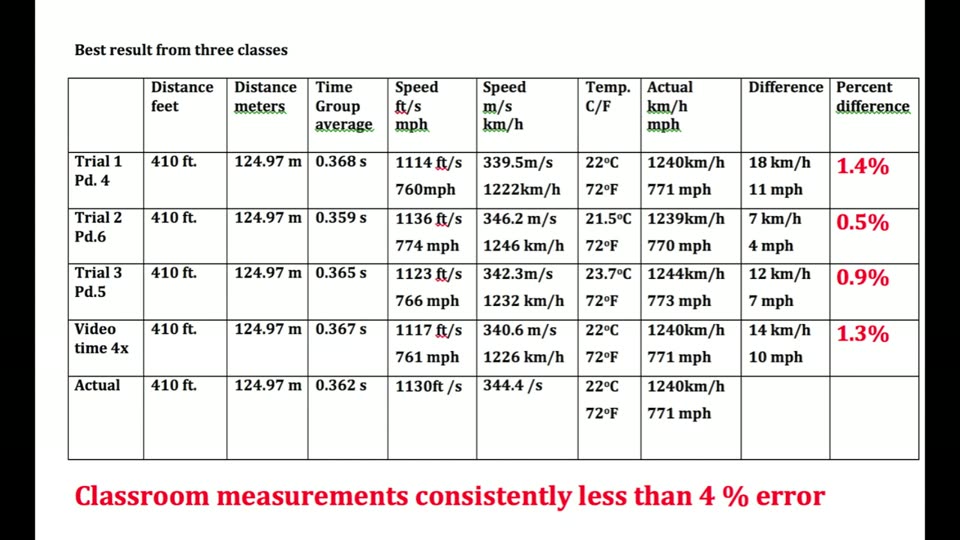
The activity uses speed = distance / time, where the distance is the round trip (twice the distance to the wall). Bruce's class stood 410 feet away, so the sound traveled 820 feet; ten-clap times of about 3.6-3.7 seconds gave about 0.36 seconds per echo and speeds of 1,114-1,136 ft/s, within 2% of the true value on their best trials and consistently within 4%.
The speed of sound in air depends mainly on temperature, not on loudness or pitch. A handy rule: about 1,087 ft/s at 32 degrees F, plus about 1.1 ft/s for every degree warmer (in metric, about 331 m/s plus 0.6 m/s per degree C). At 68 degrees F that is about 1,127 ft/s, or 768 mph; at 72 degrees F, about 771 mph. That is why Bruce's class took the air temperature when they went outside.
The rhythm method is a clever way around reaction time, which is typically 0.15-0.25 s, almost as long as the echo itself. Matching claps to echoes turns the echo time into a steady beat, and timing ten beats divides each timer's start and stop errors by ten. Averaging many timers (Bruce used about ten per trial) shrinks the error further. Another option Bruce shows is to record the claps on video and play them back 4 or 10 times slower, then divide the measured time by the slow-down factor.
Bruce's list of possible errors makes a good discussion: human timing error, clapping slightly off the echo, air temperature that may not be the same all the way to the wall, and an imperfect distance measurement (his class stood on a hill). Wind along the path and echoes from other buildings can also throw results off. A common misconception is that louder sounds travel faster; the echo comes back in the same time whether the clap is loud or soft.
NGSS performance expectations
- 4-PS4-1 Develop a model of waves to describe patterns in terms of amplitude and wavelength and that waves can cause objects to move.
- MS-PS4-1 Use mathematical representations to describe a simple model for waves that includes how the amplitude of a wave is related to the energy in a wave.
Science words
Tips from 41 years of teaching it
Bruce gave this to his 8th graders as an inquiry problem: here's a building, here's an echo, now figure out how fast sound travels.
- Bruce had students plan their own method first, then collect data, calculate, compare with the actual value, and suggest possible errors; he gave only a bit of help.
- He found the best echo comes from a short, sharp crack of two blocks slapped together; shouting didn't work as well.
- His write-up includes one class's best result: a 200-foot distance (400 feet there and back) and 3.5 seconds for 10 claps, giving about 1,142 feet per second.
- To get miles per hour, his students worked out the conversion themselves: 5,280 feet divided by 3,600 seconds means 1 mph is about 1.46 feet per second, so divide the speed in feet per second by 1.46.
- Bruce also used a quieter test first: make one loud noise and one softer one, and compare the echo times, to show that loudness doesn't change the speed of sound.
The clapping-in-rhythm method came from the students. Bruce notes that when his class found a single echo too fast to time with a stopwatch, they discovered they could clap at a rhythm that matched the echo and time ten claps instead. Their best measurement that day was 782 miles per hour, against an actual value of 768 mph.
More to try
- Find the echo's vanishing point. Most people can't hear two sounds as separate if they're less than about 0.1 seconds apart, so as you walk toward the wall while clapping, the echo seems to disappear. Bruce suggests this as another way to time it: at that spot the round trip takes about 0.1 seconds, which works out to roughly 55 feet from the wall.
Make it a challenge
Slow-motion check
Film the clapping with a phone, then play it back slowed down (Bruce used 4 and 10 times slower) and time the claps on screen. Divide by the slow-down factor and compare with your stopwatch result.
Loud versus soft
Time ten claps with very loud slaps, then ten with gentle ones. Does the loudness change the speed?
Hot day, cold day
Repeat the measurement on a much colder or hotter day, at the same spot. Sound should be a little faster when it's warm.
In metric
Convert your distance to meters (multiply feet by 0.3048) and work out the speed in meters per second. The real answer is about 343 m/s at room temperature.