Experiments / Sound You Can See
Sound You Can See
What does your voice look like?
Sprinkle sand on a homemade drum, sing a note, and watch the sand jump into a pattern.
Based on Bruce's demonstration in the video below.
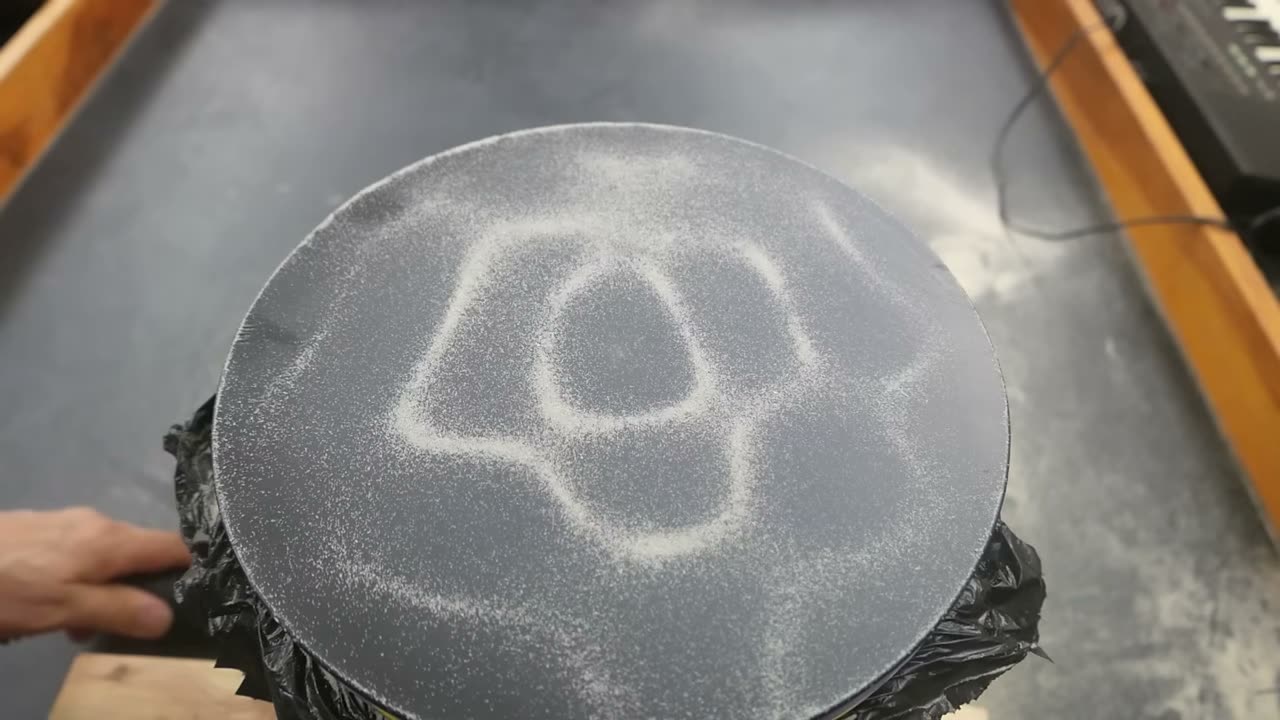
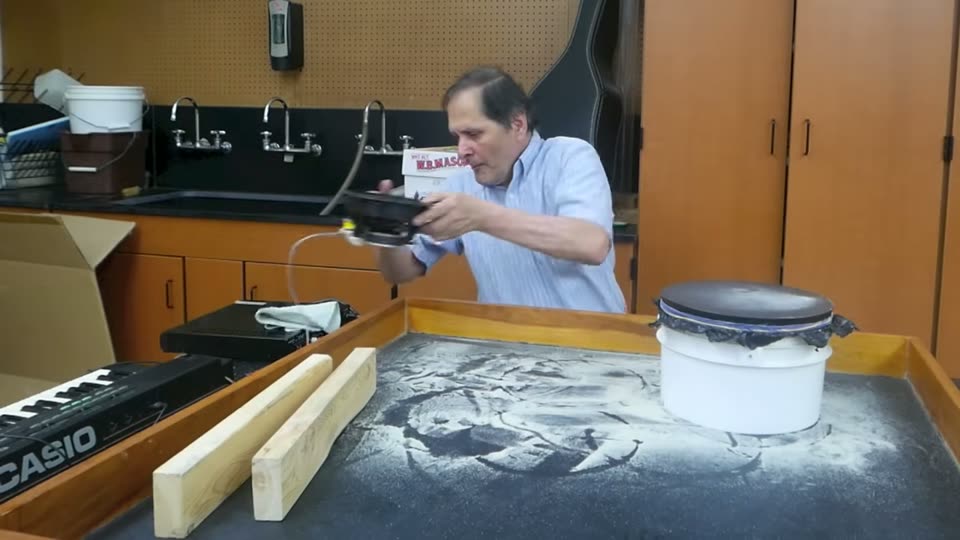
You'll turn half a plastic bucket and a trash bag into a big drum, then sprinkle sand on top. When you shout, whistle or play a tone, the sand slides into shapes like flowers, rings and honeycombs. Change the note and the whole pattern changes.
“Notice that we get simpler patterns with the lower frequencies, and as the frequency increases the pattern becomes more complex.”
Build it
Grown-up: Cut the bucket in half around its middle, then cover the sharp cut edge with tape. You will use the top half, which is open at both ends.
Cut the trash bag open along its sides to make one flat sheet. Stretch one layer tight across the wide end of the bucket, like the skin of a drum.
Pull the plastic down around the sides and hold it with tape or a big rubber band. Tighter is better: it should be smooth with no wrinkles.
Test your drum. Talk or shout into the open bottom while you touch the plastic. You should feel it buzz (vibrate, or shake very fast).
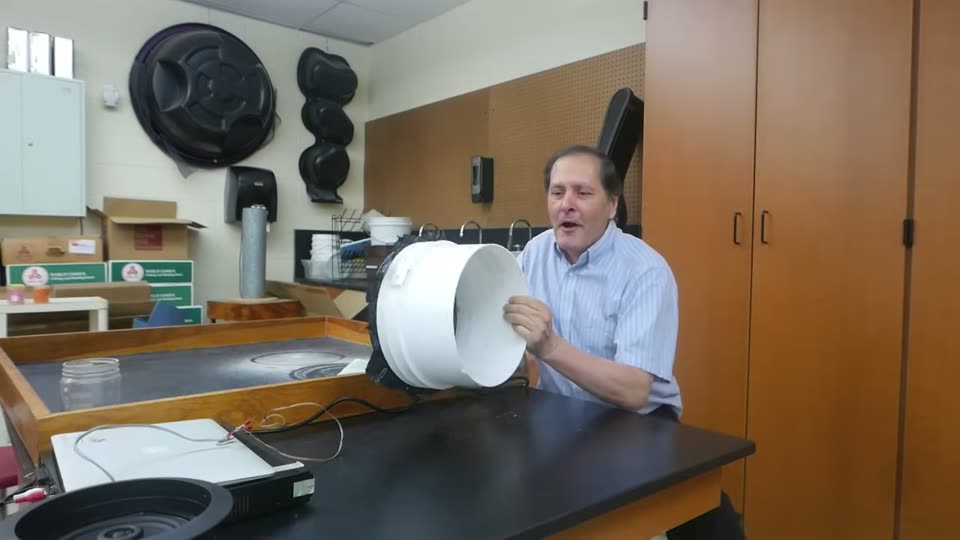
Set the drum in your tray, plastic side up, resting on two blocks so there is a gap underneath for sound to get in.
Sprinkle a thin, even layer of sand over the plastic. You should still see black between the grains.
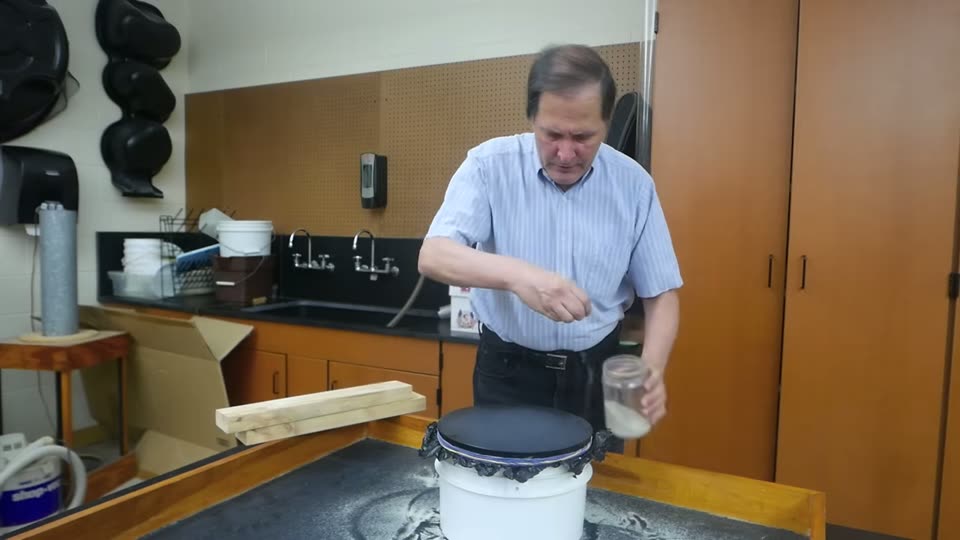
Lean close and say a loud, low "hello" or hum. Then try whistling. Watch the sand.
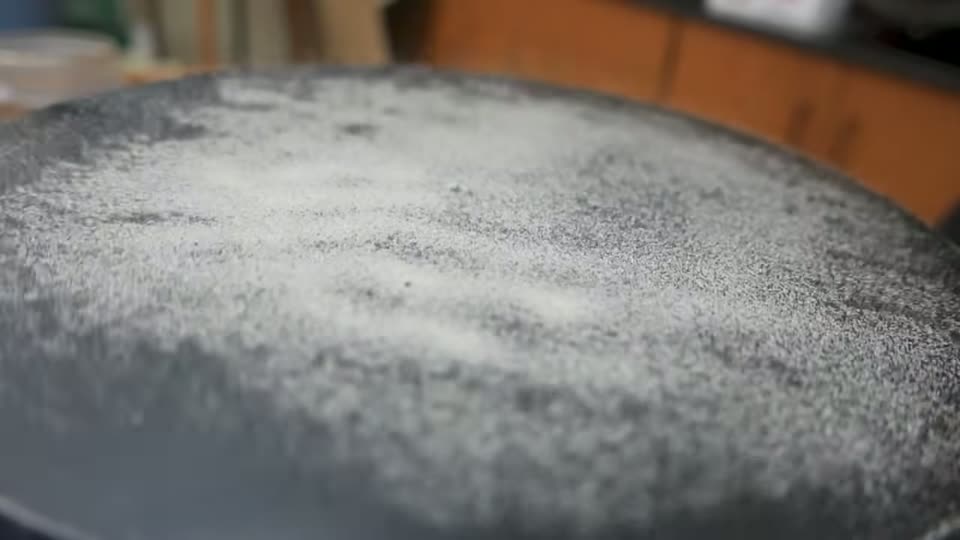
Hold the short tube under the edge of the drum, pointing up at the plastic.
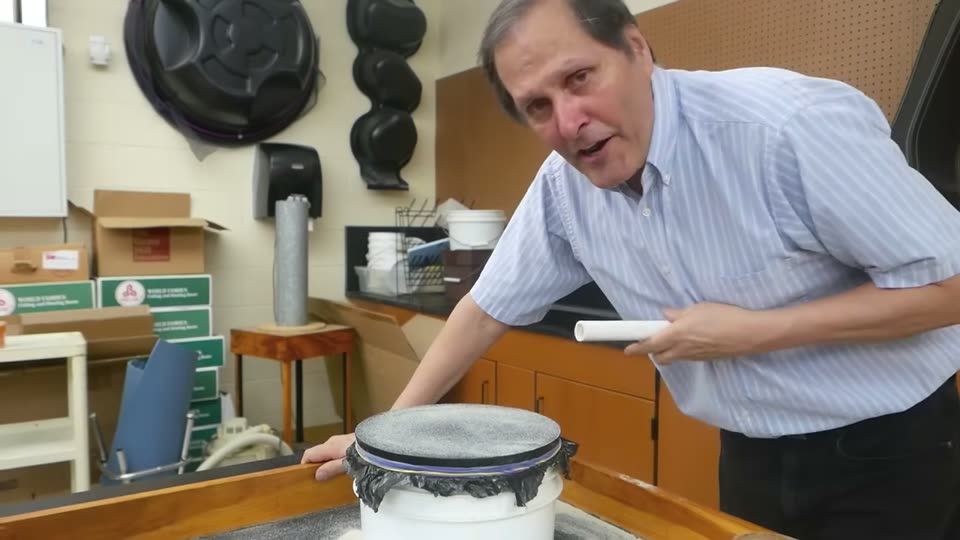
Hum or shout through the tube and watch the sand slide into a pattern.
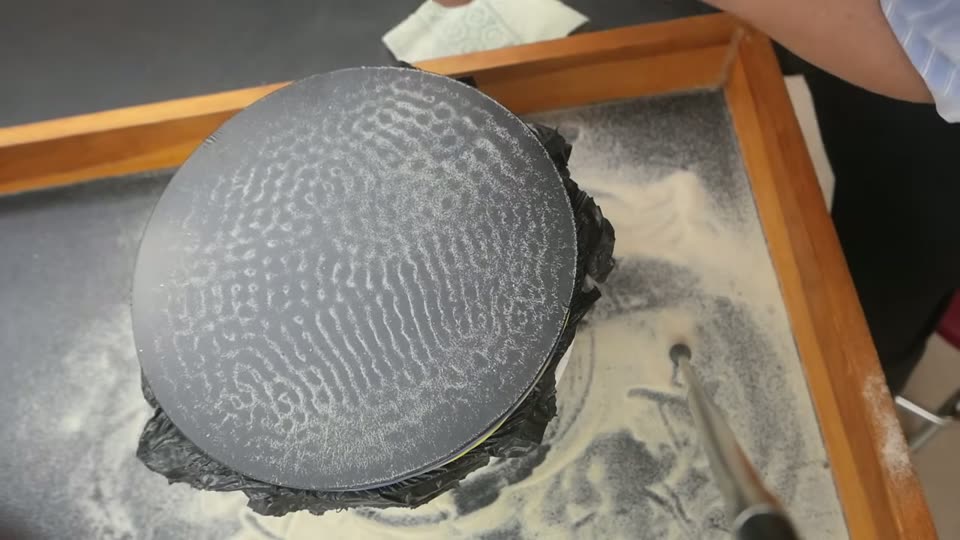
Optional, for the best patterns: Set a speaker under the drum, facing up, and play one steady note from a tone app or keyboard. Slowly change the note.
Try it & notice
What's going on?
For young scientists
Every sound is made by something vibrating, which means shaking back and forth very fast. When sound hits the plastic on your drum, it makes the plastic vibrate too.
But the plastic doesn't shake the same everywhere. Some parts bounce a lot, and some lines and spots hardly move at all. The bouncing parts toss the sand away, and it lands in the still places. So the sand draws you a map of where the drum is NOT moving.
Low notes make big, simple shapes. Higher notes shake faster and split the drum into more, smaller sections, so the pattern gets busier.
For grown-ups & teachers
These are Chladni figures, named after Ernst Chladni, who drew a violin bow along sand-covered metal plates in the 1780s. Sound is a compression (pressure) wave: alternating zones of slightly higher and lower air pressure. When those pressure changes reach the membrane at a frequency that matches one of its natural modes of vibration, the membrane resonates and sets up standing waves.
In a standing wave, some regions (antinodes) move with large amplitude while others (nodal lines) stay nearly still. Sand is bounced off the antinodes and collects along the nodal lines, so the pattern you see is the set of places that are not moving. A common misconception is that the sand marks where the sound is strongest; it is the opposite.
Higher frequency means shorter wavelengths on the membrane, so more nodal lines fit across it and the pattern gets more complex. Patterns appear most clearly at resonant frequencies; between them the sand just jitters. A pure tone from a generator gives cleaner figures than a voice, which contains many frequencies at once. A trash-bag membrane is not perfectly even in tension, so patterns are less symmetric than on a metal plate, which is a good discussion point.
Extensions: record the frequencies that give clean patterns and look for a sequence; compare a tighter versus looser membrane; compare a smaller drum (a can with a balloon) to see the same behavior on a smaller scale.
NGSS performance expectations
- 1-PS4-1 Plan and conduct investigations to provide evidence that vibrating materials can make sound and that sound can make materials vibrate.
- 4-PS4-1 Develop a model of waves to describe patterns in terms of amplitude and wavelength and that waves can cause objects to move.
- MS-PS4-1 Use mathematical representations to describe a simple model for waves that includes how the amplitude of a wave is related to the energy in a wave.
Science words
Tips from 41 years of teaching it
Bruce built his own low-cost Chladni plate driver and used vibrating bars and sand patterns in his 8th-grade sound unit. Here's what he learned.
- When you drive the pattern with a speaker, start low, around 50 hertz, and raise the tone 1 to 10 hertz at a time; the patterns change as the frequency climbs.
- Keep the vibrating surface level, or the sand drifts to one side instead of forming a pattern. Bruce sets his speaker in the cut-off bottom of a milk jug so he can tilt it until the plate sits level.
- A phone or computer headphone jack doesn't have enough power to drive a big speaker. Bruce runs the tone through a stereo amplifier or a small powered speaker.
- Salt works as well as sand. On his plastic plates, Bruce painted the underside red so the white grains stand out, and polished the top with car wax so the grains slide easily to the quiet spots.
- Expect it to be loud: anything driven by a speaker still acts like a speaker, and Bruce calls the steady tone 'fairly loud and annoying'. Turn the volume only as high as you need.
For workshops, Bruce wanted a small amplifier he could carry around. He found a cheap set of portable speakers at a yard sale; they sounded fuzzy, so he took out the amplifier, mounted it on a wood base, and now uses it to power his homemade speakers and his Chladni plates.
More to try
- Build Bruce's plate driver without taking a speaker apart: hot-glue half a foam ball onto the speaker cone, set a bolt upright in hot glue in the top of the foam (add the glue a little at a time so it doesn't melt the foam), and clamp a plate between a washer and a wing nut. A 10 by 10 inch (25 cm) piece of thin plastic is a good first plate.
- Try other plates on the driver: thin wood, an old record with its grooves painted over and sanded smooth, 24-gauge sheet metal (about 1/64 inch thick, cut carefully so it stays flat), or a plate cut in the shape of a guitar or violin top.
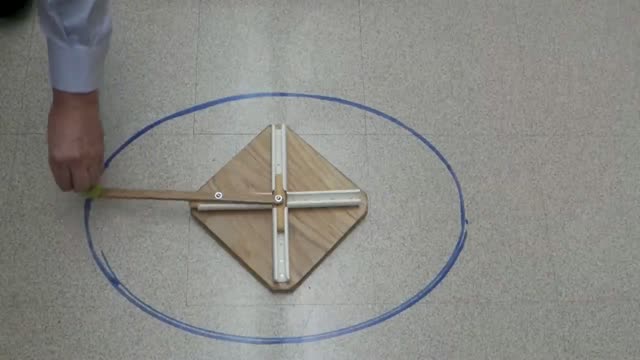
- Find the quiet spots on a metal bar: Bruce's students learned that a freely vibrating bar has nodes about 0.224 of its length in from each end. Mark those points, hold the bar there, tap it, and compare the ring with holding it in the middle.
Make it a challenge
Mini drum
Stretch half a balloon over a can with both ends removed, hold it with a rubber band, and add a pinch of sand. You get the same patterns on a smaller scale; does a smaller drum need higher notes?
Laser sound drawings
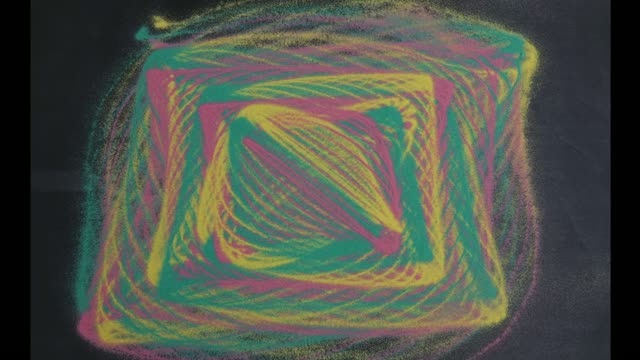
Tape a small plastic mirror onto the balloon of your can drum. A grown-up tapes a laser pointer to a board so it shines on the mirror and bounces onto a wall, then you hum into the open end and watch the dot draw loops and swirls in a dark room. Safety: never shine a laser pointer into anyone's eyes (or at shiny surfaces near faces); the grown-up handles and aims the laser.
Low voice vs. high voice
With the laser or sand, compare a deep "la la la" with a high squeak. Low, steady voices tend to make bigger, clearer shapes.