Experiments / String Shooter
String Shooter
How can you make a loop of string fly?
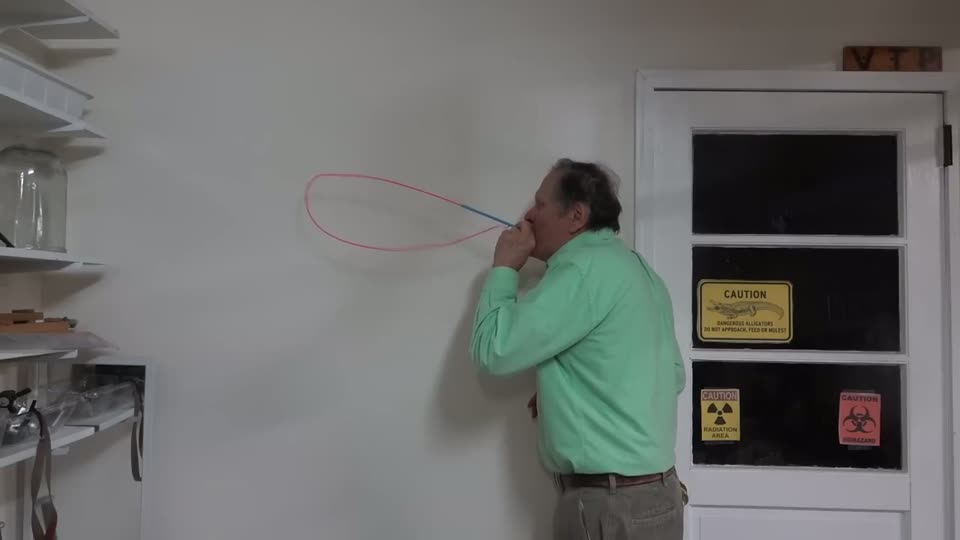
Blow into a straw and a loop of yarn shoots out, flies through the air and feeds itself back in, over and over.
Based on Bruce's demonstration in the video below.
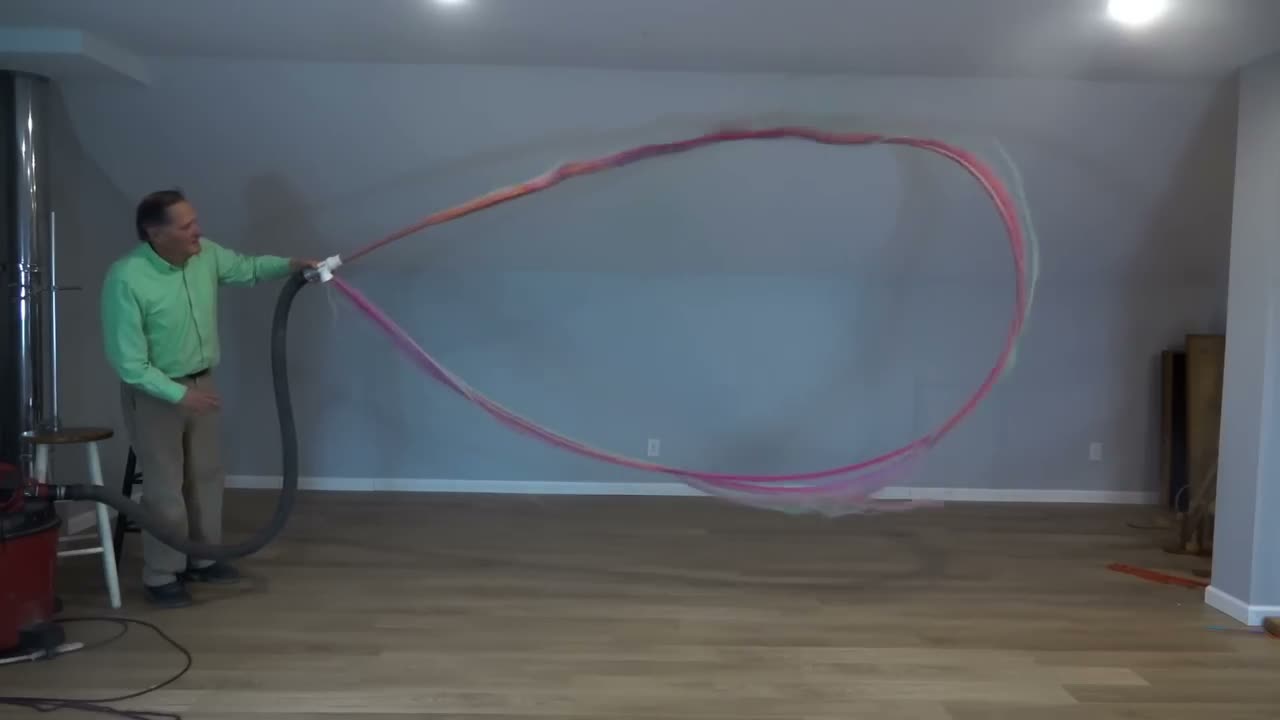
You'll turn a drinking straw and a loop of yarn into a string shooter that runs on your own breath. String is usually limp and floppy, but once it is moving fast it holds its shape in the air like a springy wire. The secret is a tiny dent at the edge of one hole. For a giant version that runs on a shop vacuum's exhaust, see the detailed build plan.
“There's an old saying that you can't push string, but in this case, that's exactly what we're doing.”
Build it
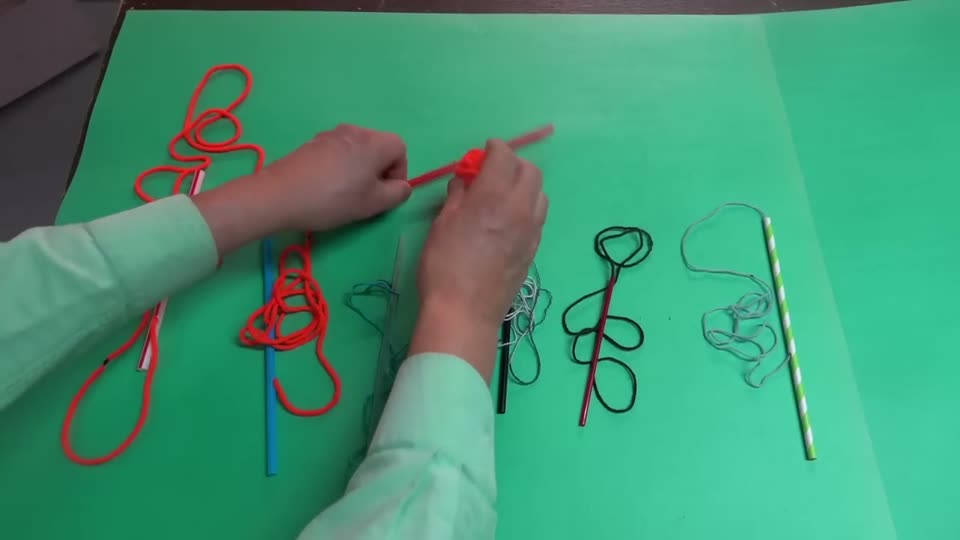
Cut about 6 ft (2 m) of soft, fuzzy yarn. Check that it slides easily through your straw.
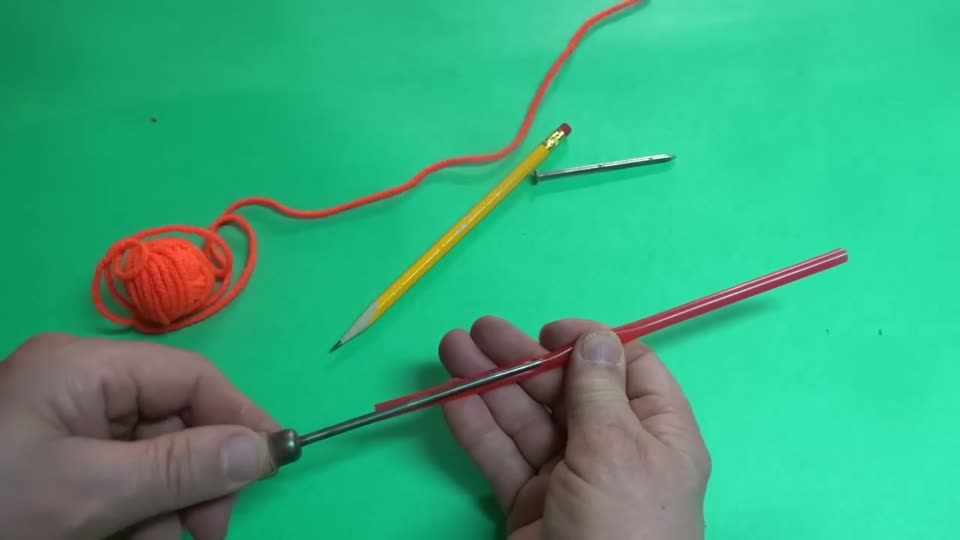
Poke a pencil point into the side of the straw about 1 inch (2-3 cm) from one end, slanting the point toward the far end. The short end is the end you will blow into.
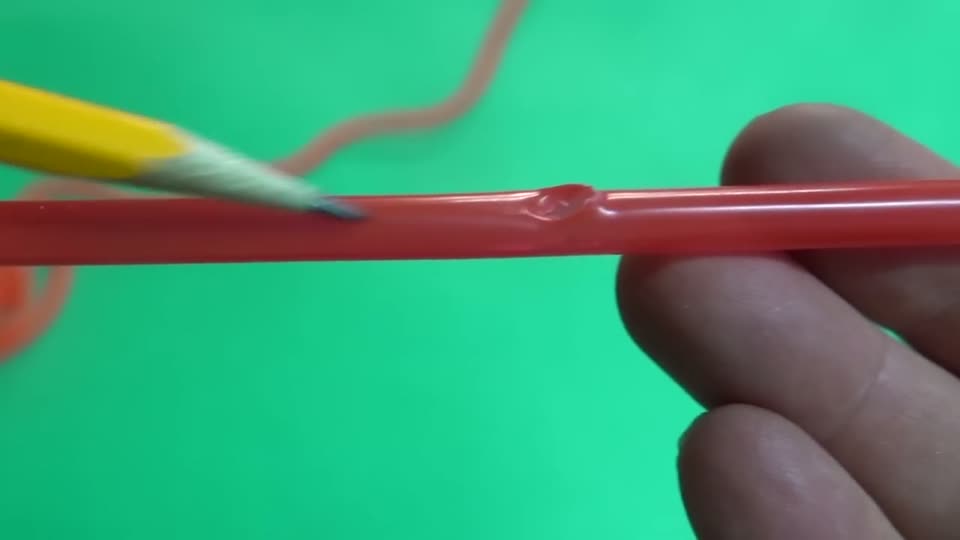
Look closely at the hole. Press the edge nearest the short end inward with the pencil tip, so it makes a little dent inside the straw. This dent is the most important part.
Thread one end of the yarn in through the hole and out the far end of the straw. A thin wire folded in half can help pull it through.
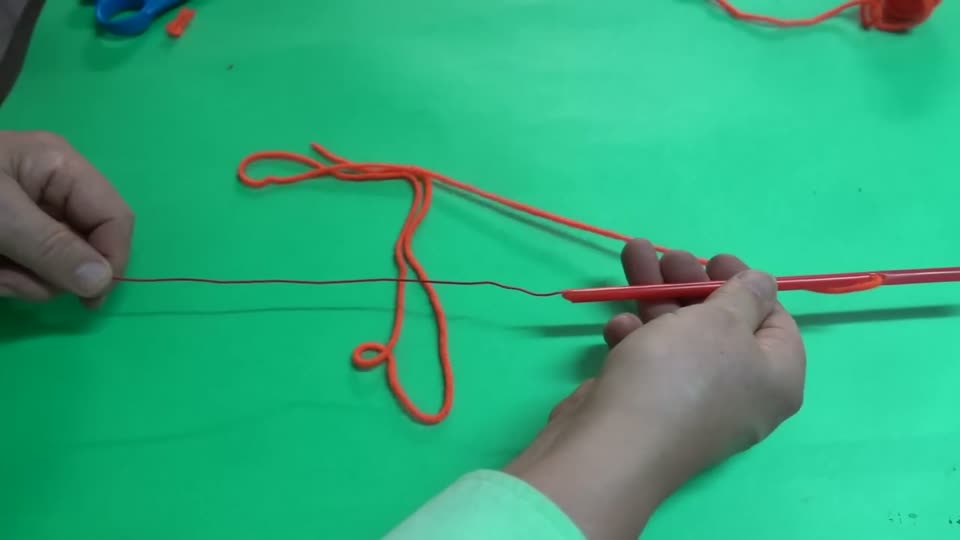
Grown-up: Wrap masking tape around your thumb and finger to protect them from the hot glue.
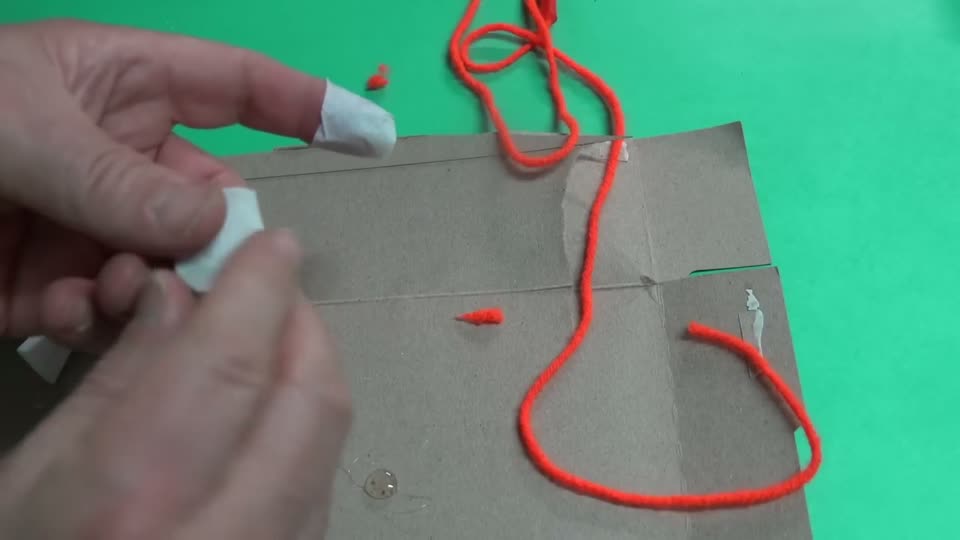
Grown-up: Put a dab of hot glue on the cardboard, dip both yarn ends in it, and press the ends together end to end, with no knot. (Or melt the ends of synthetic yarn in a candle flame and press them together.)
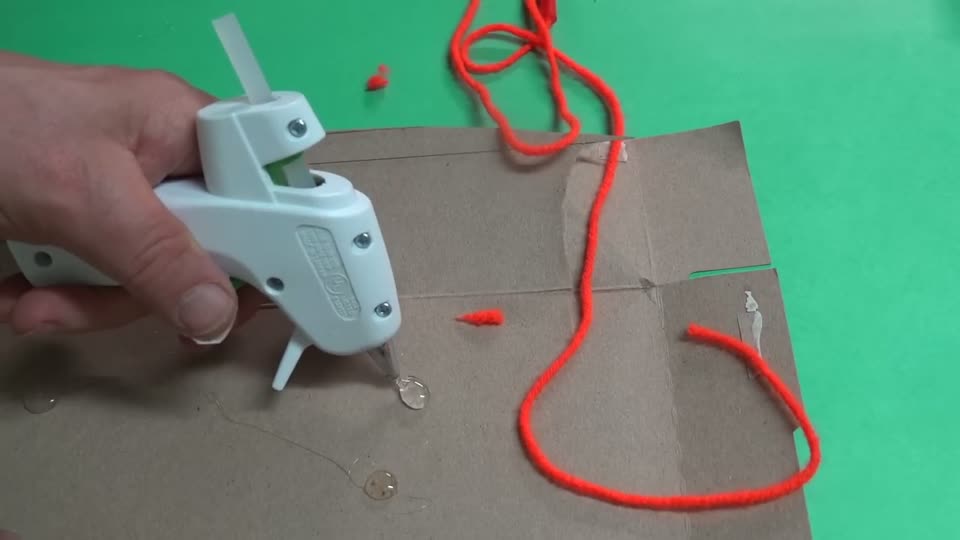
Grown-up: While the glue is still soft, roll the joint between your taped thumb and finger to make it as small and smooth as possible. Let it cool.
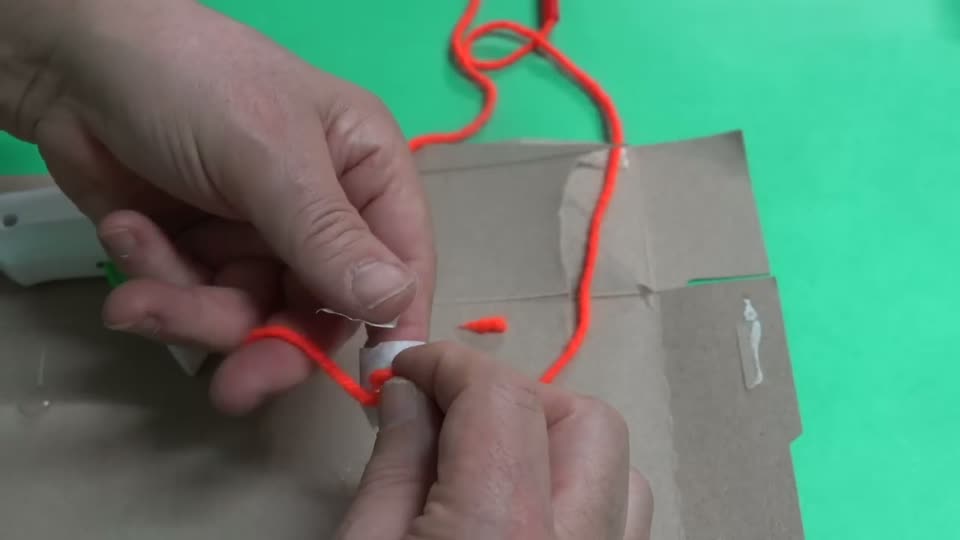
Hold the yarn loop loosely in one hand so it can feed into the hole without tangling. Put the short end of the straw in your mouth.
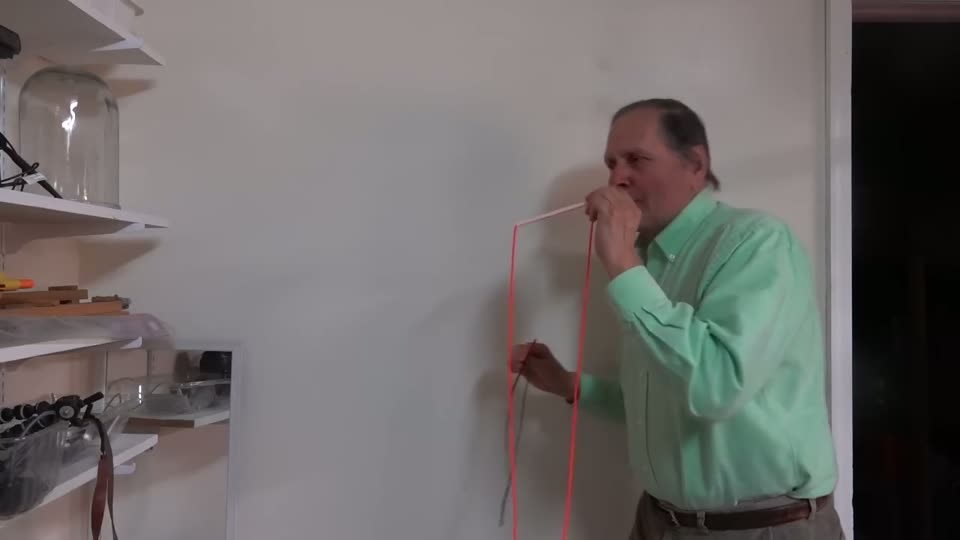
Blow hard and steady. Watch the loop shoot out of the far end and feed itself back in through the hole.
Try it & notice
What's going on?
For young scientists
When you blow, air rushes through the straw. The fast air rubs against the yarn inside and drags it along, then throws it out of the end. Because the yarn is one closed loop, the part flying out pulls the rest of the loop back in through the hole.
Why doesn't your breath just puff out of the hole? The little dent squeezes the air, so it speeds up as it goes past the hole. Fast-moving air has lower pressure (it pushes less), so the air outside the straw pushes in at the hole instead, helping carry the yarn inside.
Out in the air, the yarn keeps going because moving things like to keep moving (that's inertia). As the loop sweeps back through the air, the air pushes on it a little like a kite, which helps hold it up. Light, fuzzy yarn catches more air, so it flies best.
For grown-ups & teachers
The feed hole works because of a constriction. In a straight pipe or straw the air flows at a fairly uniform speed, and a plain side hole leaks: some air escapes, and the yarn just sits there. Pushing the back (upstream) edge of the hole inward narrows the passage, so the air speeds up past the hole and the static pressure there drops (Bernoulli's principle, the same idea as a venturi). Outside air at higher pressure is pushed in through the hole. Bruce shows this with a falling stream of sugar: it is blown away from a plain hole but drawn into the pipe once the constriction is added. He notes the airflow gives just enough push to help the string overcome friction at the hole. A common misconception is that the fast air 'sucks' the yarn in; it is the higher outside pressure doing the pushing.
The 'lift' that holds the loop up comes from drag. In the shop-vac pipe the air moves at about 80 mph, roughly five times faster than the string, so inside the pipe the drag on the string points along the airflow and drives it forward. Bruce found that even a large amount of drag on a stationary string held in the airstream could only hold it up for a short distance. The moving loop flies because the string is itself moving through still air; on the slightly tilted return side, the air force on the moving string has an upward component, much like a kite. Light, fuzzy yarn has more surface area and more drag per unit weight: roughing a smooth string with sandpaper visibly improves its flight, and heavy string or rope will not fly.
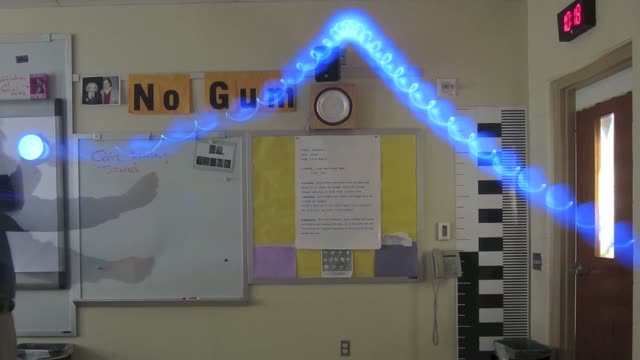
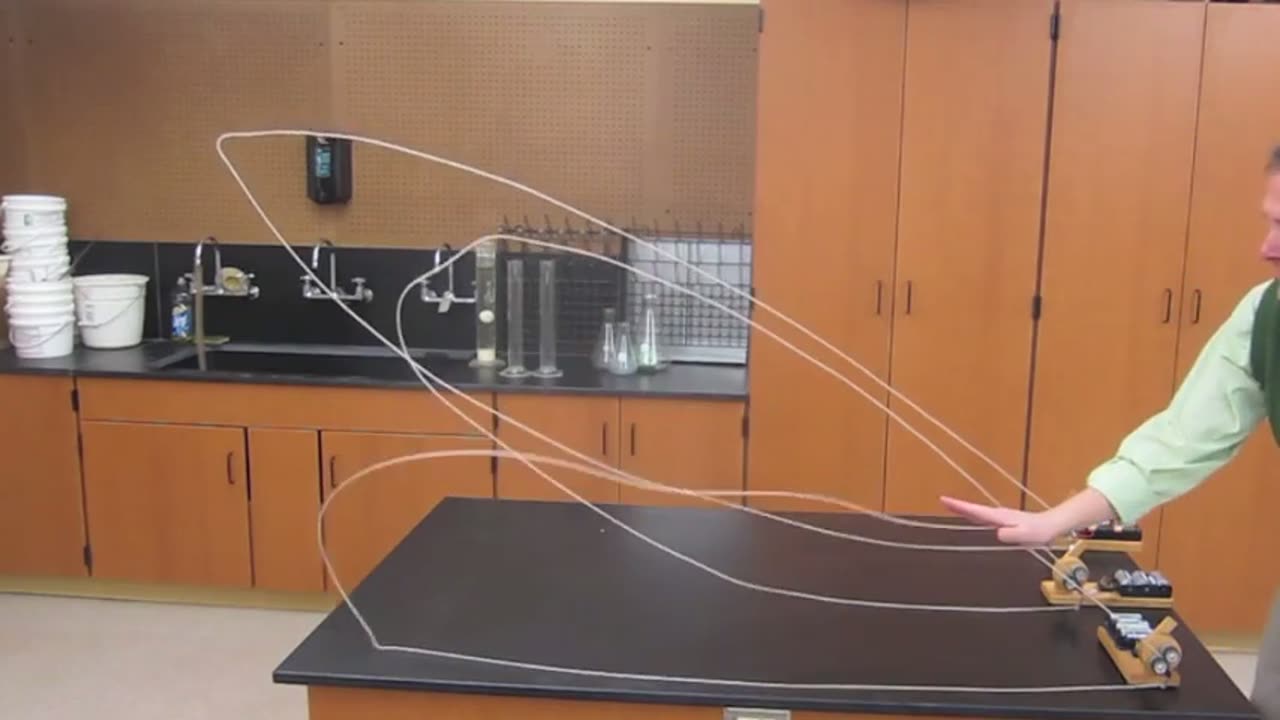
Bruce's wheel-driven string launcher, inspired by a baseball pitching machine, does the same job with two spinning wheels instead of air. It shows that, contrary to the old saying, you can push string: the wheels push it forward, inertia carries it out, and tension pulls the loop back to be pushed again. His string moves at about 25 mph and a vertical loop stands about 8 ft tall. In motion the string behaves like a stiff, springy wire that returns to shape when disturbed, and a tap sends waves traveling along both the upper and lower sides of the loop; in his test they moved at the same speed whether he shook it up and down or side to side.
To extend it: compare yarns, loop lengths and air speeds; pinch a clear tube behind the hole to show the flow start and stop with the constriction; or move to a grown-up-built PVC pipe on a shop vacuum's exhaust (see the build plan), where Bruce runs loops 30 to 40 feet long.
NGSS performance expectations
- 3-PS2-1 Plan and conduct an investigation to provide evidence of the effects of balanced and unbalanced forces on the motion of an object.
- 5-PS1-1 Develop a model to describe that matter is made of particles too small to be seen.
- MS-PS2-2 Plan an investigation to provide evidence that the change in an object's motion depends on the sum of the forces on the object and the mass of the object.
Science words
Tips from 41 years of teaching it
Bruce wrote workbench notes while building his first PVC string shooter. Here's what they add.
- Knots don't work: they catch in the tube. Bruce joins the ends with glue or by melting them, and says the joint does not need to be strong, just smooth.
- Yarn with some synthetic fiber in it is easier to join, because the ends melt together. Heated yarn can catch fire, so keep it to quick touches in the flame and protect fingertips with tape.
- Look for yarn that is large in diameter but lightweight. Bruce found rope does not work.
- A hole drilled straight into a PVC pipe works poorly because the yarn catches on the sharp inner edge. Tilting the drill bit toward the direction the yarn travels stretches the hole into a beveled oval so the yarn slides in smoothly; sand off any burrs.
- For the PVC version Bruce used 1/2 inch pipe, a 1/4 inch starter hole and about 10 feet of yarn about 5/16 inch thick; 3/4 inch pipe also works.
More to try
- Make two shooters, one with only an angled hole and one with the back edge dented in, and compare how well each feeds the yarn.
Make it a challenge
Fuzz it up
Rub a smooth string over sandpaper a few times so little fibers stick out, then shoot it again. Bruce found the fuzzier the string, the better it flies.
Go tiny
Bruce's smallest shooter is a coffee stirrer with a loop of thread. Can you make one that works, and how does it compare with your straw?
Longer loops
Make a second loop twice as long. Can you keep it flying, or do you run out of breath?
Shop-vac shooter (grown-up build)
A grown-up can make the same hole and dent in a cardboard tube or PVC pipe and run it on the exhaust (blower) end of a shop vacuum with thicker yarn. Bruce shoots loops 10, 20 and even 40 feet long this way; follow the build plan.