Experiments / Tumbling Toy
Tumbling Toy
How can a marble make a tube flip end over end?
Hide a marble inside a paper tube and watch it somersault all the way down a ramp by itself.
Based on Bruce's demonstration in the video below.
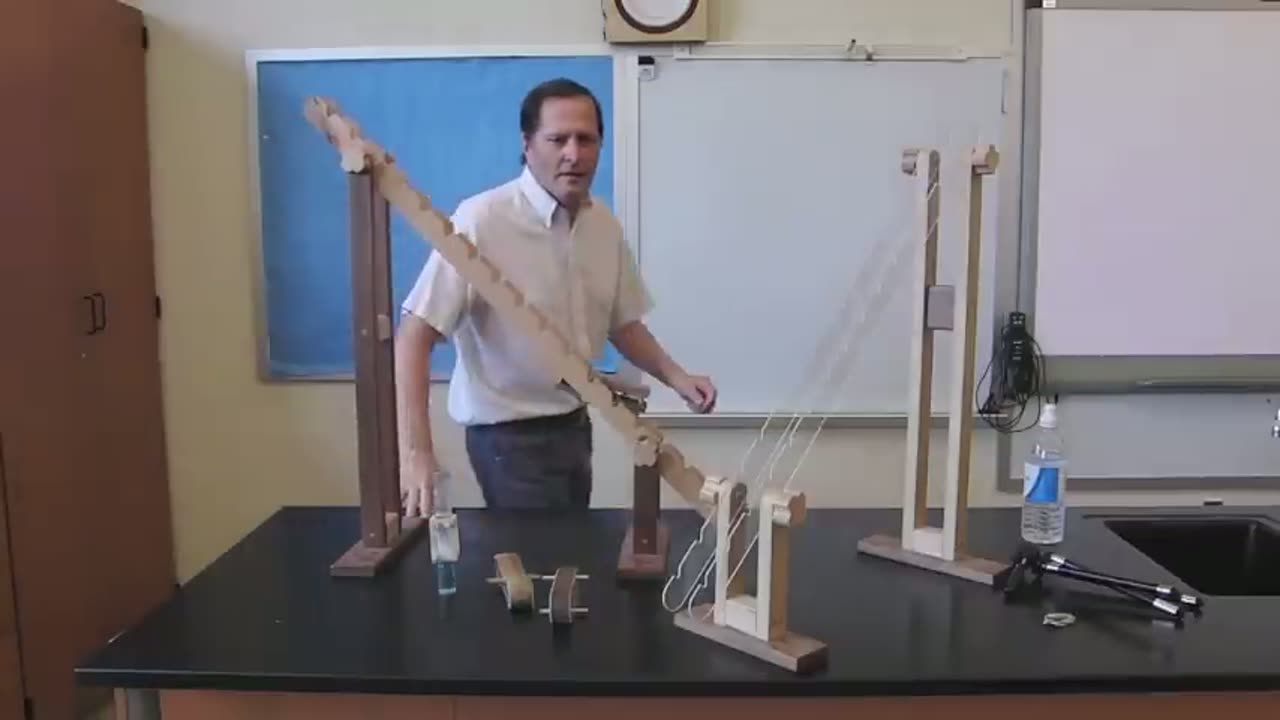
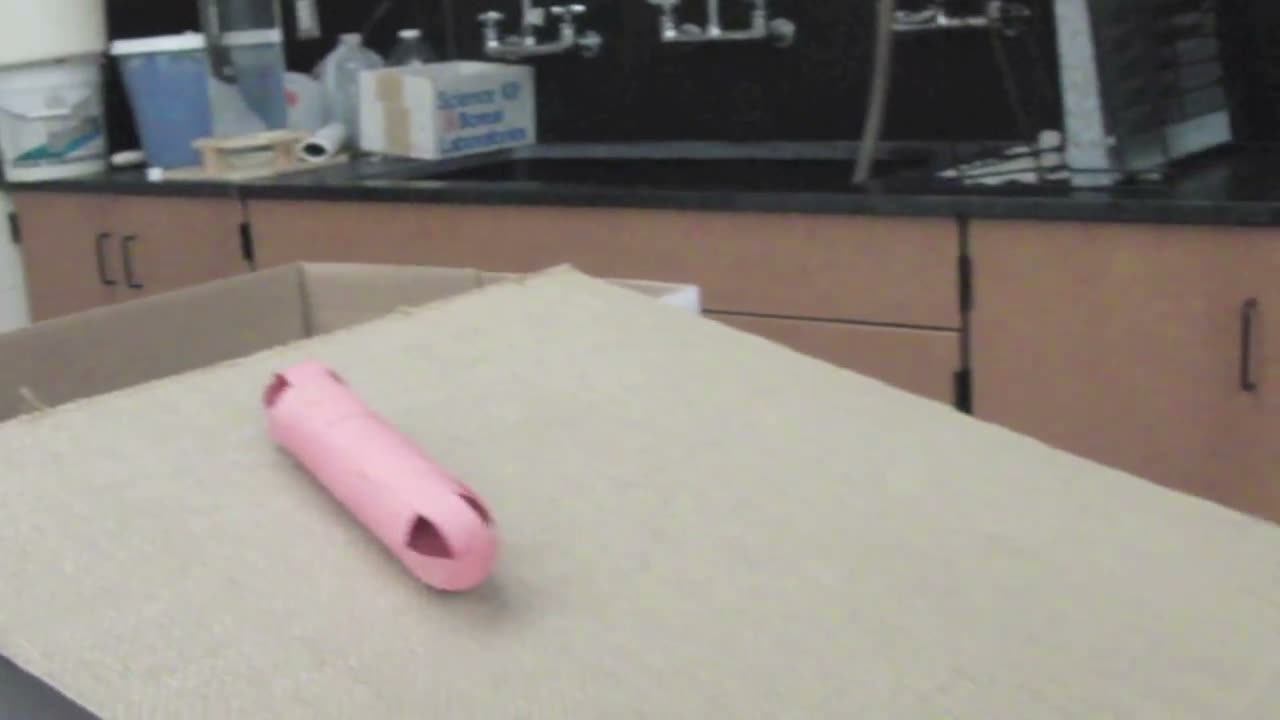
You'll roll a paper tube, seal a marble inside, and set it on a ramp. Nothing pushes it, yet it flips end over end, over and over, all the way to the bottom. The secret is the marble sliding from one end to the other.
“When the ball gets to the lower end of the body, the weight of the ball actually causes the tumbling toy to rotate around that lower peg. It rotates half a turn, the lower peg then becomes the upper peg, and the process repeats itself.”
Build it
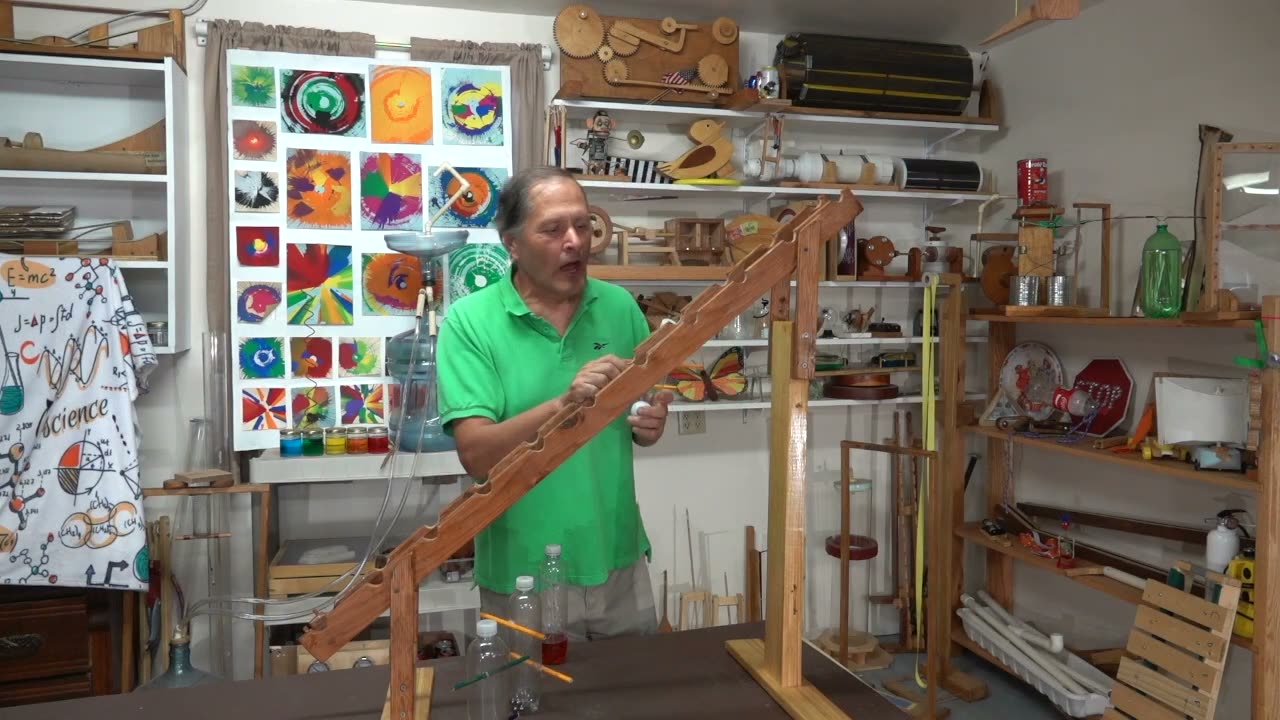
Roll the card stock into a tube just a little wider than your marble, so the marble rolls freely inside. Glue the seam and hold it until it sticks.
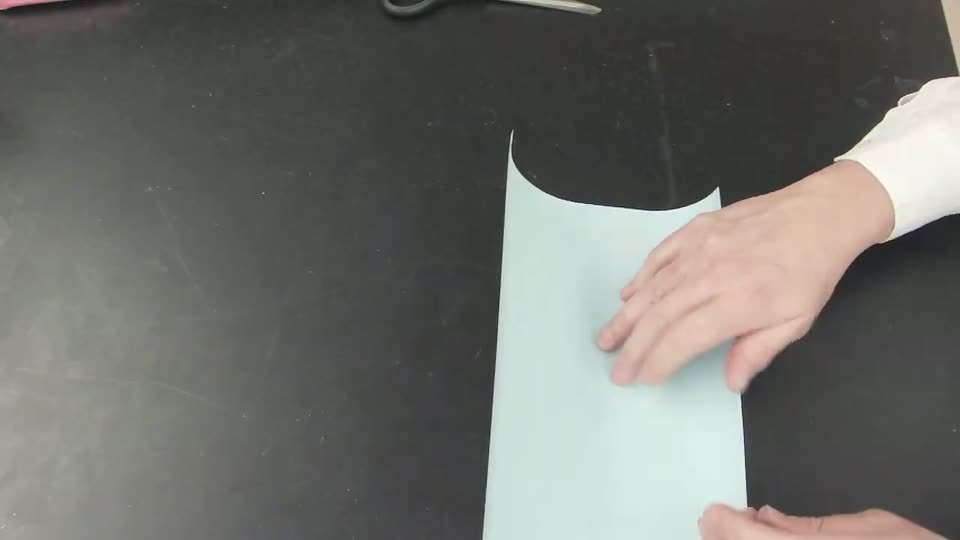
Measure and cut the tube to about 7 inches (18 cm) long.
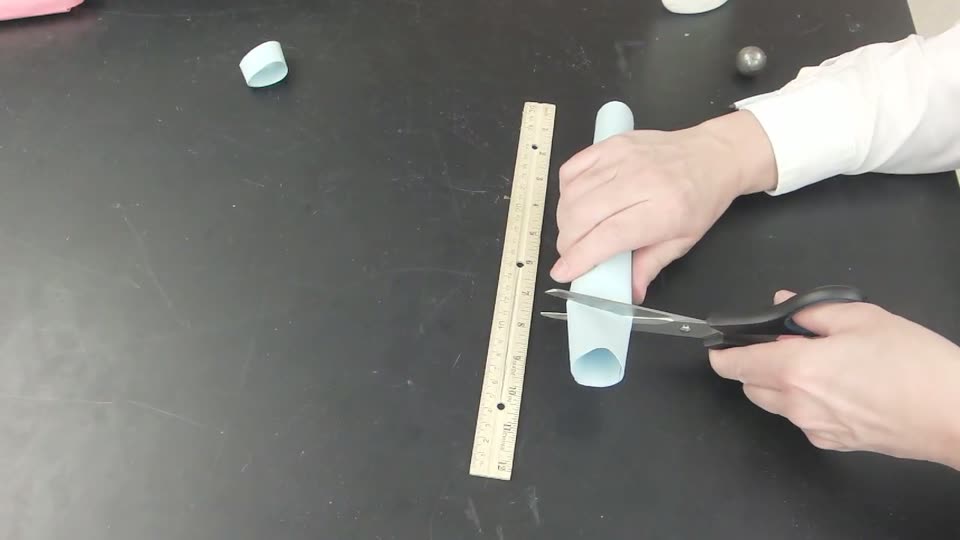
With a pencil, mark two thin strips at one end of the tube, on opposite sides. Make each strip about 1/4 inch (6 mm) wide and 2 1/2 inches (6 cm) long. Mark the other end the same way.
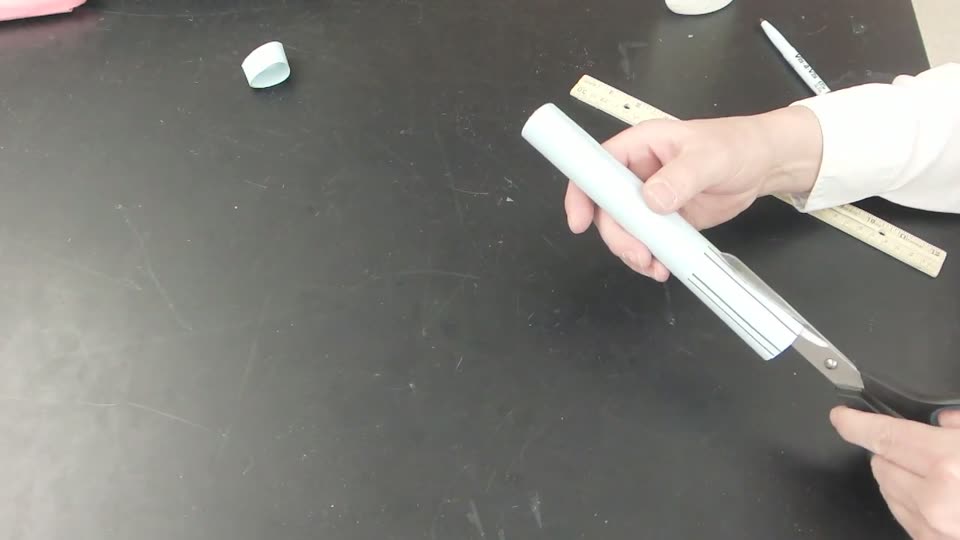
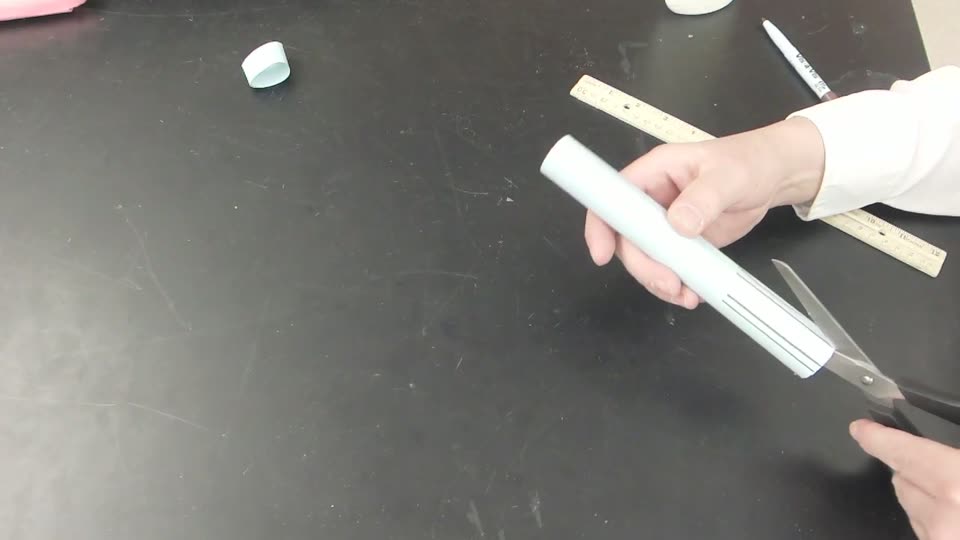
Grown-up: At each end, cut along the strip lines. Then cut away all the paper between the two strips, so only the two strips stick out from the tube.
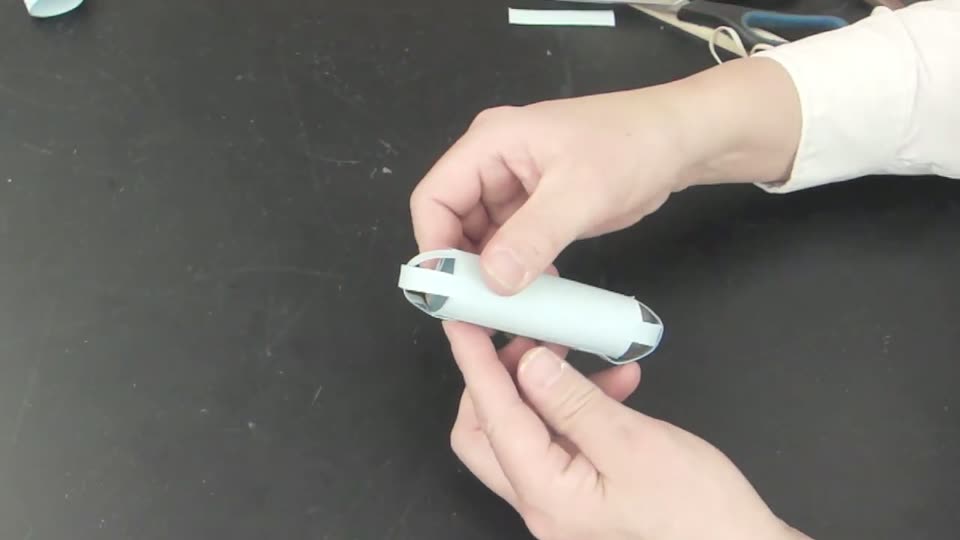
At one end, fold the two strips across the opening so they overlap and curve like the marble. Glue them down.
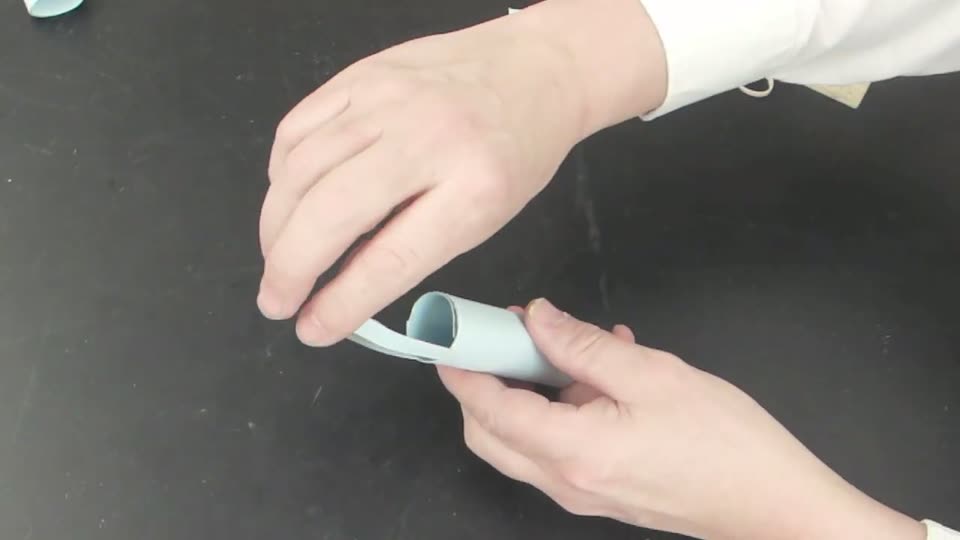
Drop the marble into the open end. Fold and glue the strips at that end the same way, so the marble is closed inside.
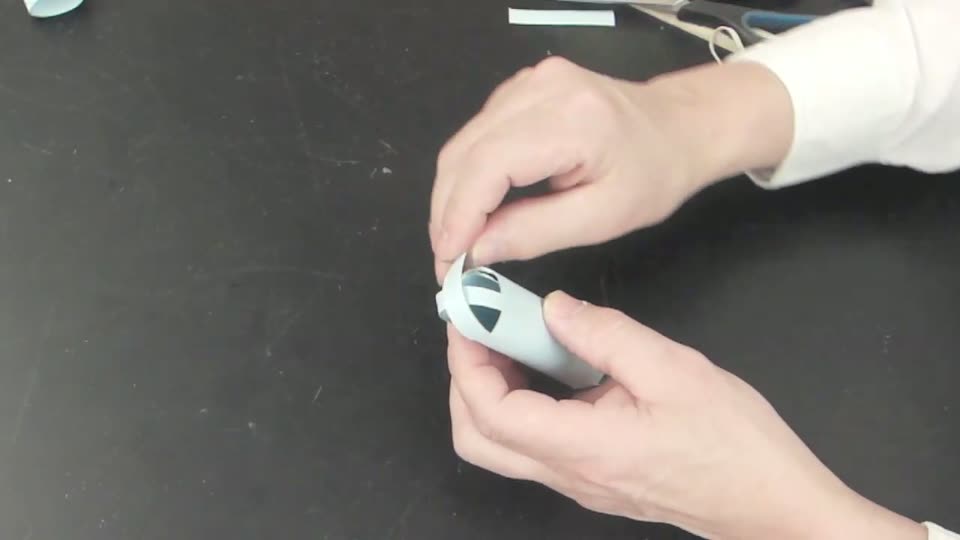
Stretch the rubber band over the folded ends to hold the strips while the glue dries. Take it off when the glue is completely dry.
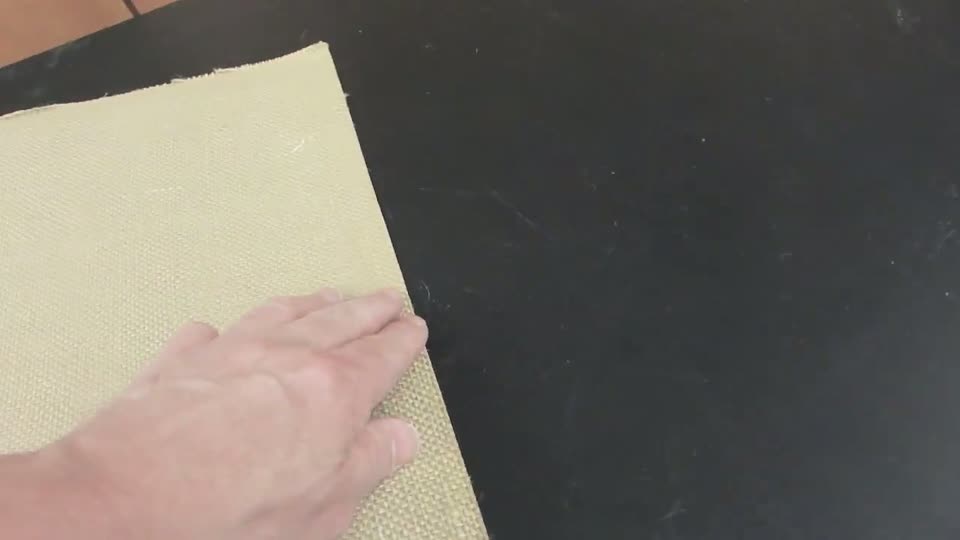
Lean the cardboard on a box to make a ramp. If your toy slides later instead of flipping, glue a cloth or felt onto the ramp so it has a rough surface.
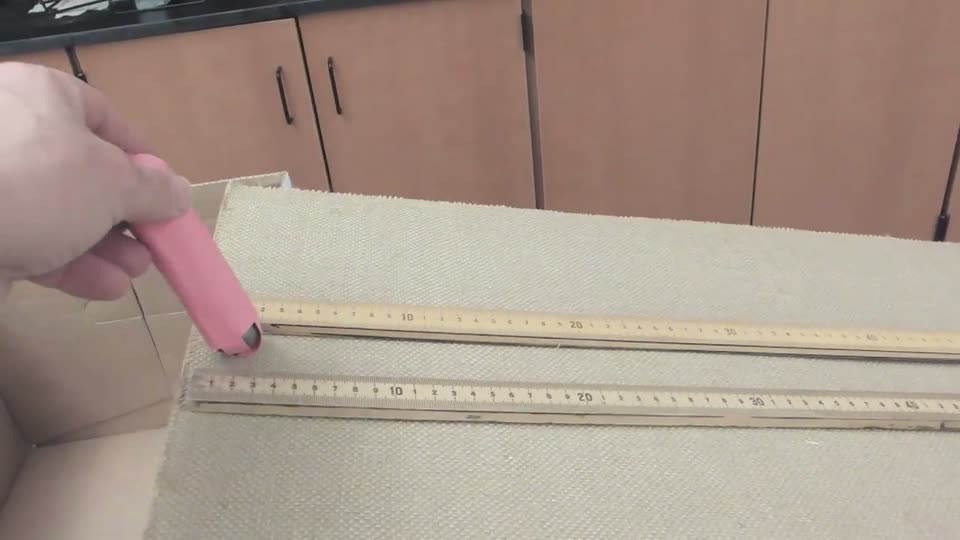
Stand the tumbler near the top of the ramp, tip it downhill, and let go. If it wanders off the side, lay two rulers on the ramp as guide rails.
Try it & notice
What's going on?
For young scientists
Gravity pulls everything down, including the marble inside your tube. Because the tube is tilted on the ramp, the marble rolls down to the lower end.
Now most of the weight is past the bottom corner of the tube, the spot touching the ramp. That weight pulls the tube over, and it flips around that corner like a gymnast doing a handspring. After half a turn, the end that was on top is now on the bottom, so the marble rolls down again and the whole thing repeats.
Each flip moves the toy a little lower on the ramp. The energy comes from height: starting higher gives the toy energy to spend, and the ramp lets it spend that energy one flip at a time.
For grown-ups & teachers
The key idea is center of mass and torque. When the marble rolls to the lower end, the toy's center of mass moves past the pivot (the lower end's contact point with the ramp). Gravity acting at the center of mass then makes a torque, or turning force, about that pivot, and the toy rotates half a turn. The old upper end becomes the new pivot and the cycle repeats. The toy is converting gravitational potential energy into motion, losing some to impacts, sound and friction at each step.
A common explanation says the impact of the ball hitting the end is what flips the toy. Bruce shows that impacts can help (a bounce of the body or a hard hit of a heavy ball can start the rotation sooner), but they are not required: his bottle tumblers filled with water, and even dish soap, still tumble, just slowly. With soap, each half turn waits minutes for enough liquid to flow down and shift the center of mass past the pivot; a full run took about 15-20 minutes. That is a nice demonstration of viscosity.
The design has limits. The ramp must be steep enough for the marble to roll downhill inside the tube, but there must be enough friction that the tube pivots instead of sliding (which is why Bruce glued material to his ramp and sand to one paper version). If the balls move too slowly, the torque can act at the upper end and briefly lift the lower end, which slows the toy. Longer tubes wander more and need a wider track or guide rails.
To extend it, treat it as an engineering problem: measure the minimum ramp angle for different tube lengths, time runs with one big ball versus many small BBs, or compare liquids of different thickness.
NGSS performance expectations
- 3-PS2-1 Plan and conduct an investigation to provide evidence of the effects of balanced and unbalanced forces on the motion of an object.
- 5-PS2-1 Support an argument that the gravitational force exerted by Earth on objects is directed down.
- 3-PS2-2 Make observations and/or measurements of an object's motion to provide evidence that a pattern can be used to predict future motion.
Science words
Tips from 41 years of teaching it
Bruce wanted his students to see what happens inside a tumbling toy, so he built a giant one with clear sides. Here's what he learned.
- Size the chamber to the ball: Bruce makes the inside just slightly wider than the ball, and for a 1-inch ball his chamber is about 5 1/4 inches long inside a 6-inch body.
- Swapping one steel ball for a handful of BBs gives a cascading flow that Bruce finds more interesting to watch. Small bits of wood mixed in slow it down even more, but sometimes they jam enough BBs that the toy stops tumbling.
- A tube of dish soap in place of the ball still works on his wooden tumbler, taking about 20 seconds per step.
- Tune the slope by testing: Bruce tries the toy at different angles until it tumbles steadily but not too quickly. His stand has two sets of holes for the top of the rails: the higher set makes the toy go a bit faster, the lower set slower.
- If the toy flips by pivoting on side pegs, place the pegs by trial: tape them on, hold the body and check how it hangs, and test the spot a few times before drilling.
The classic wooden tumbling toy stands less than a foot high, and its ball is hidden inside the body, so you can't see why it flips. Bruce built a 30-inch version with clear plastic sides so a whole class could watch the ball roll from end to end, then made an hourglass-shaped one filled with BBs.
More to try
- Build an hourglass tumbler: shape the inside chamber narrow in the middle, fill it with BBs instead of one ball, and watch them pour through the neck before each flip.
- Make a rail tumbler: put a short dowel peg on each side of the body and let it tumble down two rails cut with evenly spaced notches (Bruce uses a nail jig to space them the same). Change how steep the rails are and time the run.
Make it a challenge
Ping-pong ball tumbler
Cut a ping-pong ball in half, roll heavy paper into a tube, put a ball inside, and tape a half ping-pong ball on each end for round caps.
Folded paper tumbler
Fold card stock into a small closed box shape with a steel ball inside. Brush on a thin coat of glue and sprinkle sand on it so it grips the ramp instead of sliding.
Clear bottle tumbler
Put a golf ball in a clear juice bottle and glue two pencils across it as axles, then run it down notched rails. A grown-up should do the knife, drill and hot-glue steps.
Liquid tumbler
In a sealed clear bottle tumbler, swap the balls for a little colored water, then try dish soap. Time each run. Bruce's dish-soap tumbler took 15-20 minutes to reach the bottom.
One ball or many?
Fill one tumbler with a single marble and another with lots of tiny beads or BBs. Race them and figure out why one is slower.
More from Bruce