Experiments / Slow-Wave Loops
Slow-Wave Loops
Why do waves crawl on a spinning rope?
Flick a spinning loop of ribbon and the wave creeps down it in slow motion, almost hanging in midair.
Based on Bruce's demonstration in the video below.
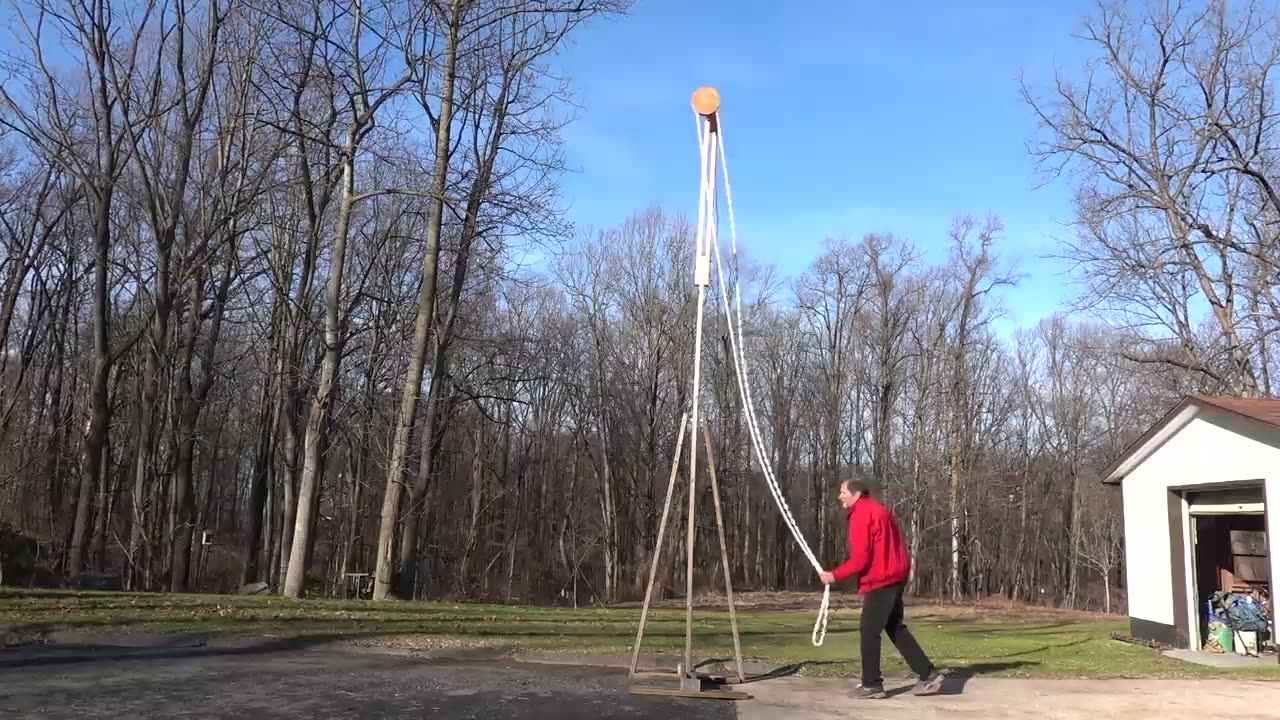
You'll build a small hand-held spinner from a toy motor, a battery holder and a toy car wheel, then hang a long loop of ribbon, rope or bead chain from it. When the loop is still, a flick sends a wave zipping down it. When the loop is moving, the same flick makes a wave that crawls along so slowly you can watch every wiggle. A detailed workshop plan for a sturdier spinner is also on the site.
“So the faster I have this side moving, the slower the wave is going to travel through it.”
Build it
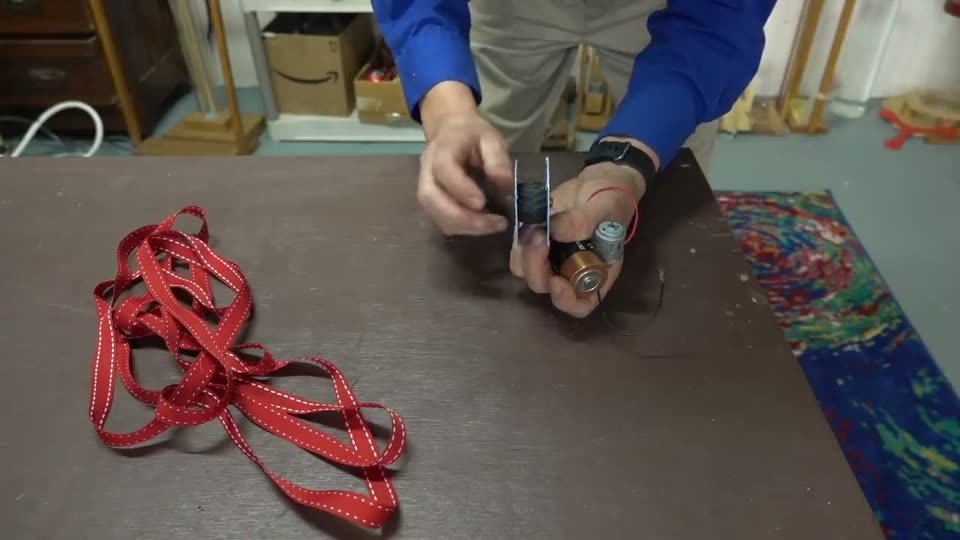
Trace two circles about 2 inches (5 cm) across on the cardboard, cut them out, and poke a small hole in the center of each.
Grown-up: Hot-glue one cardboard circle to each side of the toy wheel, lining up the holes. Now you have a spool with walls that keep the loop from sliding off.
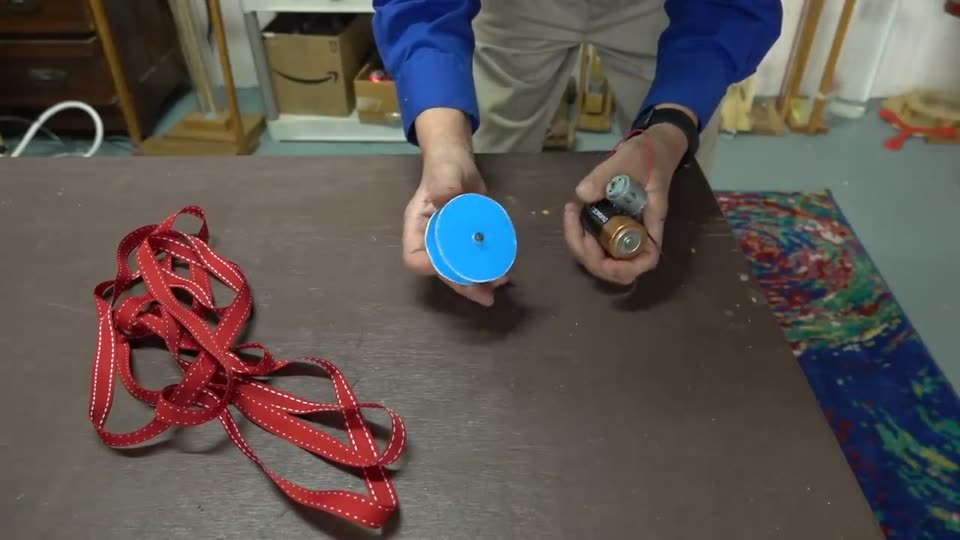
Grown-up: Twist each battery-holder wire around one of the two metal tabs on the motor, then wrap each joint in tape.
Grown-up: Hot-glue the motor to the side of the battery holder, with the shaft sticking out past one end, so you can hold both in one hand.
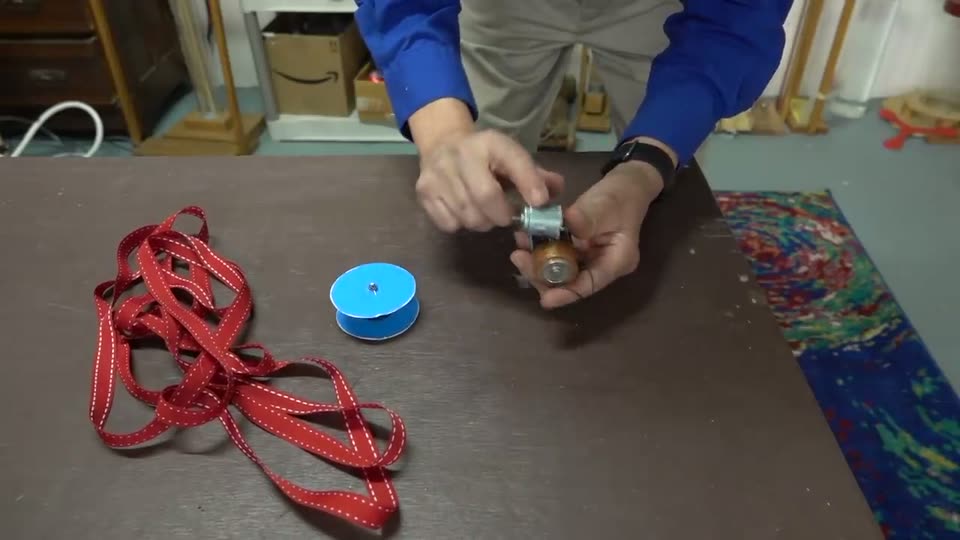
Push the spool firmly onto the motor shaft. Switch it on and check that it spins smoothly without wobbling, then switch it off.
Join the two ends of the ribbon or rope with fabric glue or a few stitches to make one long loop, and let the glue dry. For a bead chain, just snap the ends into the connector.
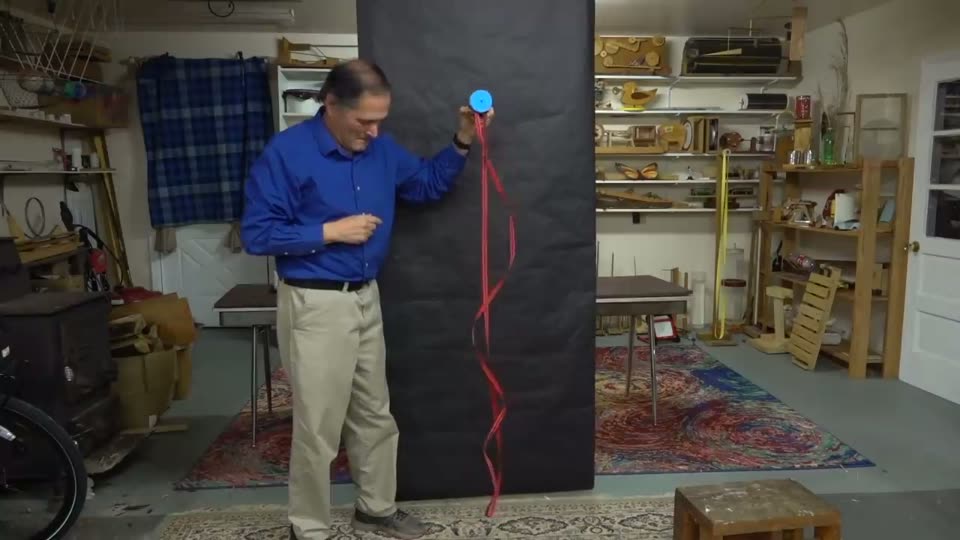
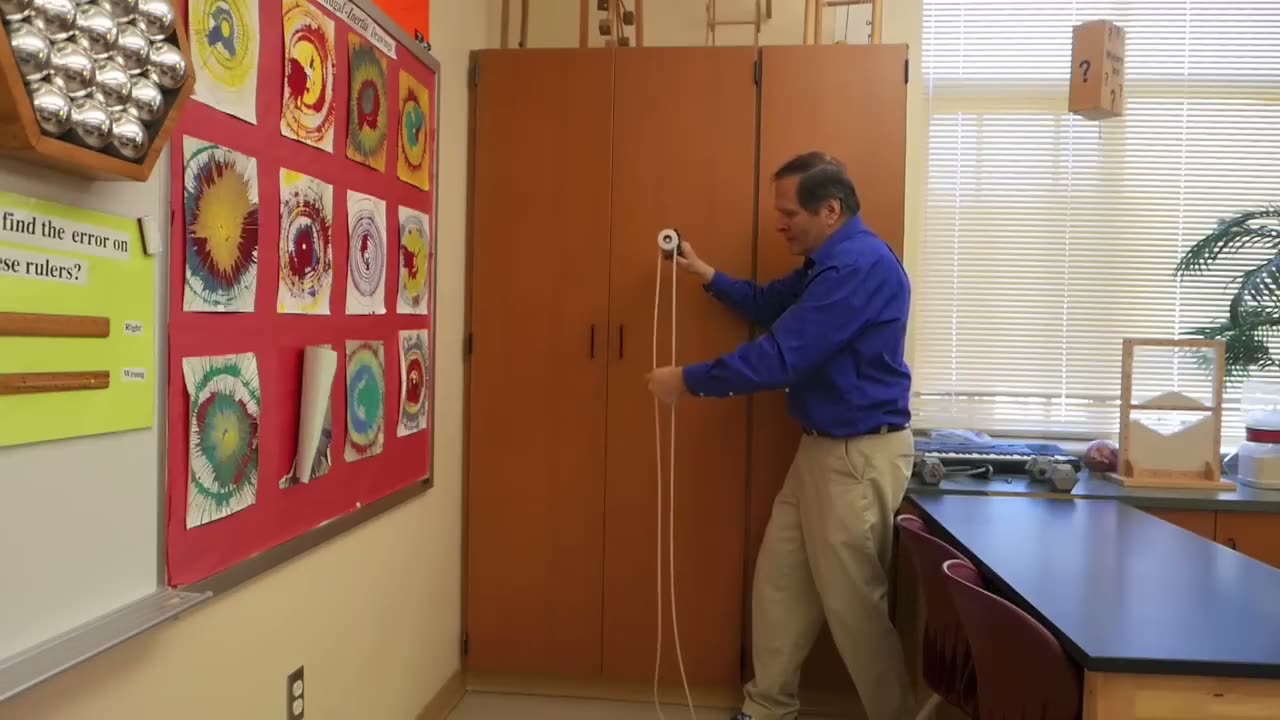
Hang the loop over the spool and hold the spinner up high, so the loop hangs down to just above the floor. With the motor off, flick one side and watch how fast the wave runs down.
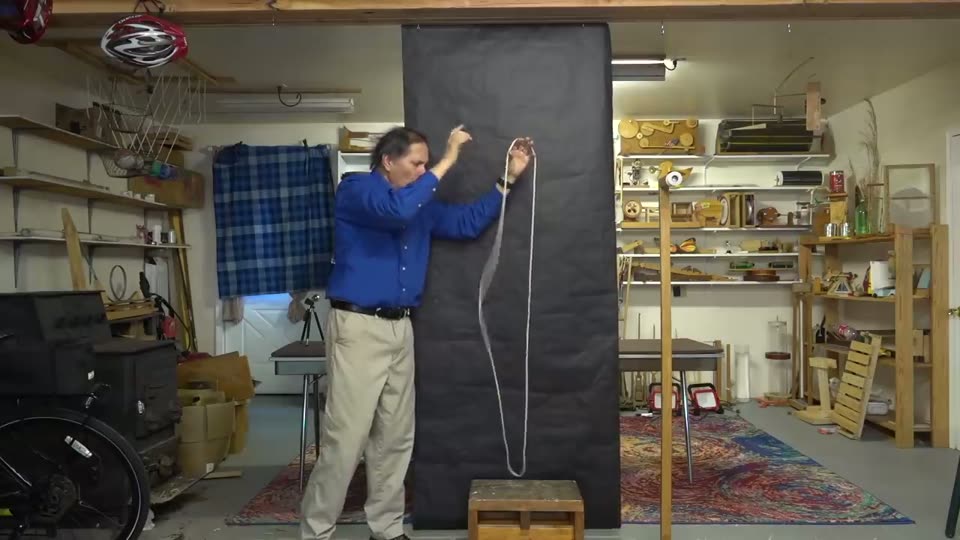
Switch the motor on. Watch the loop and find the side that is moving up.
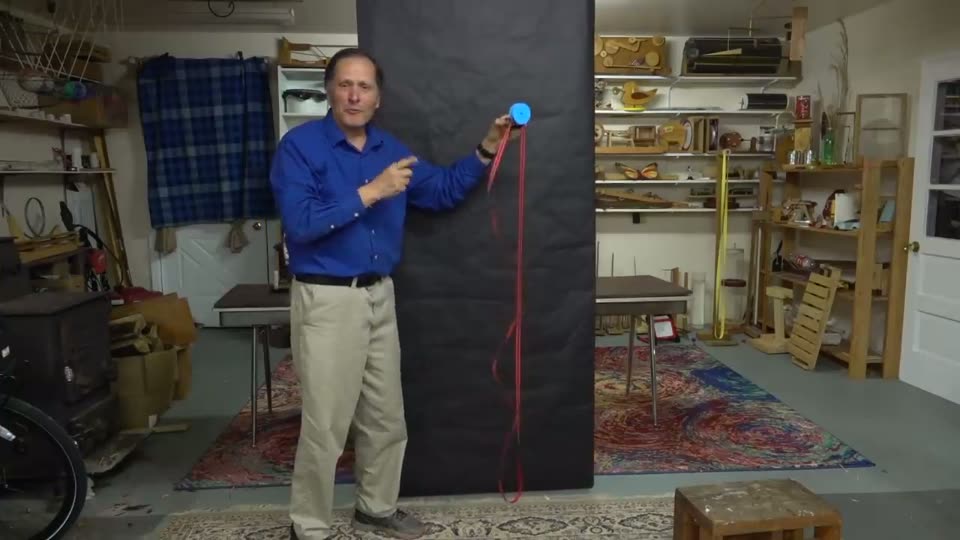
Flick the moving-up side near the top and watch the wave crawl slowly down the loop.
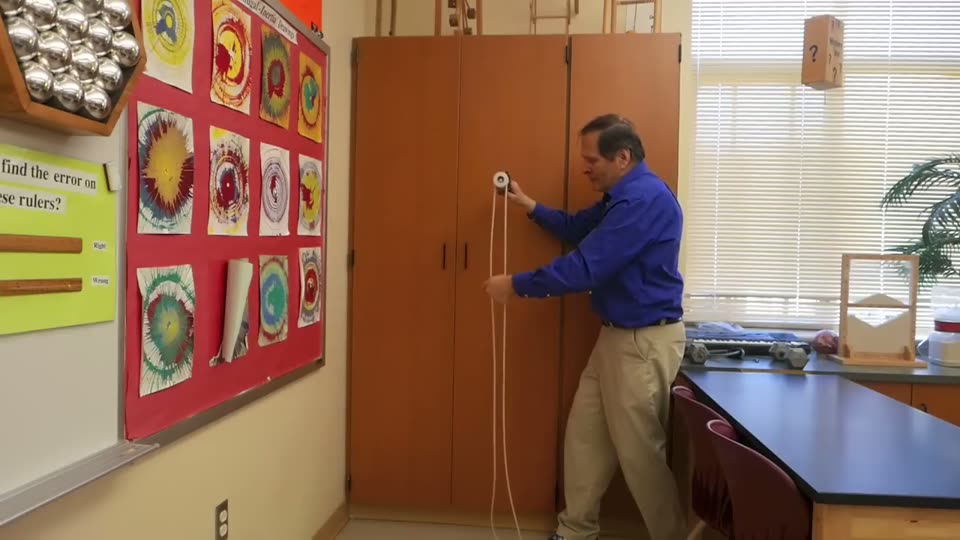
Try it & notice
What's going on?
For young scientists
A wave is a shape that travels along the ribbon. The bits of ribbon only move side to side, but the bump moves along. On a still loop, that bump zips along at its own speed, too fast to watch closely.
When the motor runs, the ribbon itself is moving, like a moving walkway at an airport. A wave heading down the side that is moving up is like you walking the wrong way on that walkway: you take steps, but you barely get anywhere. So the wave crawls.
On the side moving down, the wave rides along with the ribbon, so its speed adds to the ribbon's speed. It rushes away so fast that the ribbon looks stiff. Bruce compares it to dropping a stone into a river: ripples going with the current race away, and ripples going against it move slowly.
For grown-ups & teachers
A wave on a rope is a transverse wave: each bit of rope moves sideways while the disturbance travels along the rope. Its speed relative to the rope depends on the tension and the mass per length (v = square root of tension divided by mass per unit length), not on how hard you flick it.
When the rope itself is moving, the speeds combine. Measured by someone standing still, a wave moving against the rope's motion travels at (wave speed minus rope speed), and a wave moving with it travels at (wave speed plus rope speed). This is a lesson in frames of reference: the wave behaves normally from the rope's point of view, but we watch from the floor. Bruce's own rule of thumb in his notes is exactly this difference of speeds, and it explains his quote: speed up the loop and the slow wave gets slower.
The hanging loop adds a twist. Tension in a hanging rope is greatest near the top, where it supports the most rope, and smallest near the bottom, so the wave speed relative to the rope also changes with height. A fuller analysis of a moving loop suggests the wave's speed through the rope only slightly exceeds the rope speed near the bottom, which is why waves there can seem to stall almost in place. On the downward side the fast wave carries a push away almost instantly, so the whole section moves together and the rope looks rigid.
A common misconception is that the motor somehow 'slows down' the wave or makes the rope stiffer. The wave travels through the rope just as before; only our viewpoint changes. To extend it, measure the rope speed (loop length divided by the time for one trip around; time ten trips and divide) and compare it with the speed of a wave on the still loop.
NGSS performance expectations
- 4-PS4-1 Develop a model of waves to describe patterns in terms of amplitude and wavelength and that waves can cause objects to move.
- MS-PS4-1 Use mathematical representations to describe a simple model for waves that includes how the amplitude of a wave is related to the energy in a wave.
- 3-PS2-2 Make observations and/or measurements of an object's motion to provide evidence that a pattern can be used to predict future motion.
Science words
Tips from 41 years of teaching it
Bruce first wrote up these endless loops on his workbench back in 1994. Here's what his notes add.
- Bruce's notes say a flick actually starts a pulse traveling both up and down the loop; the one you notice is the slow one moving against the rope, while the other is so quick it's barely visible.
- When the loop is nudged on the other side, Bruce saw mainly the fast wave going with the rope, which bounces off the spool at the top and comes back the other way very quickly.
- You can hear the loop's speed: the joined spot makes a click each time it passes over the spool, which makes timing ten trips easy.
- Bruce found rope, light-switch pull chain from the hardware store and ribbon all work; his favorite is nylon rope, with the ends melted together over a small flame by a grown-up.
- His first stand hid the batteries in the base and the motor at the top of a tall post, which meant sawing the post in half to run the wires. He recommends keeping the motor and batteries side by side in something you can hold in your hand.
When Bruce wrote up this demonstration, he admitted he wasn't sure what was going on. He offered his best guess, that the slow wave's speed is the difference between the rope's speed and a normal wave's speed, and asked anyone with a better explanation to let him know.
More to try
- While the loop is running, lift it off the spool with a pencil. It holds its loop shape for a few moments before it touches the floor and collapses.
Make it a challenge
Ribbon, rope or chain?
Bruce uses ribbons, rope and chain and says they all show the same thing. Try two kinds of loop and compare how slow the waves get.
How fast is the loop?
Measure the loop's length, then time ten trips around (listen or watch for the joint passing the spool). Divide the length by the time for one trip to get the loop's speed.
Go giant (grown-up only)
Bruce hangs 28-foot loops from a balcony and a tall outdoor pole, spun by a plug-in motor or a broken drill with a speed control. Any power-tool or plug-in spinner is a grown-up build; see the build plan.
No motor?
Hang a loop over a smooth broom handle and have a helper pull one side down hand over hand, steadily. Flick the side moving up and see if you can make a slower wave.